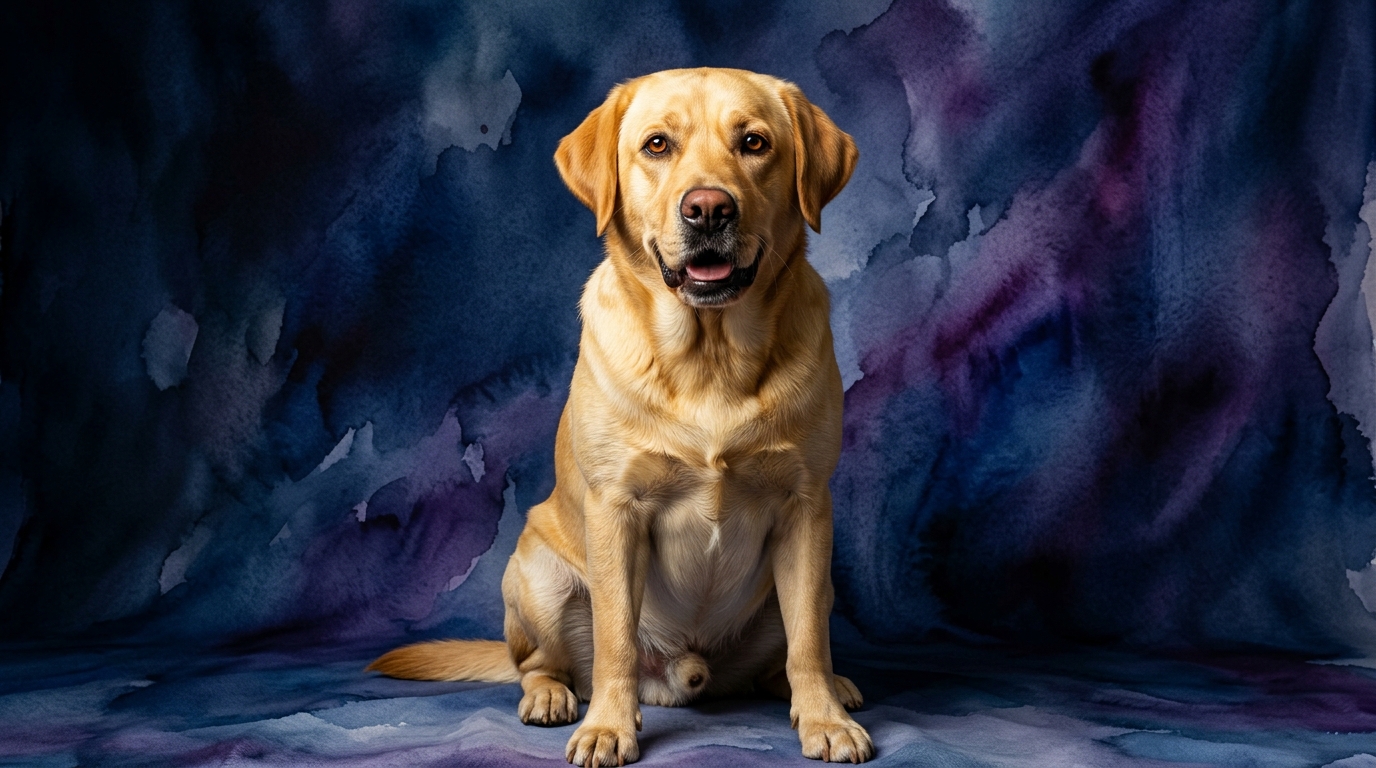

Side-by-Side IQ Profile: Lab vs. OES
The Cosmic Pet Pet IQ Lab employs a multi-dimensional assessment to evaluate canine intelligence, moving beyond simple obedience to understand the nuances of a breed's cognitive strengths. Here's how the Labrador Retriever and Old English Sheepdog compare across five key dimensions:
**Labrador Retriever (Sporting Group, Coren Rank #7):** As a top-tier performer in working and obedience intelligence, the Labrador excels in roles demanding quick learning and collaboration. Their **Problem Solving (4/5)** capacity means they efficiently figure out novel challenges, adapting strategies to retrieve hidden items or navigate complex scent trails. **Training Speed (5/5)** is a hallmark, as Labs typically require very few repetitions to master new commands, showcasing exceptional responsiveness. Their **Social Intelligence (5/5)** is outstanding; they are highly attuned to human communication, body language, and emotional states, forming deep, empathetic bonds. An inherent **Instinctive Drive (4/5)** for retrieving fuels their motivation for object interaction and persistent task completion. Finally, their **Memory (4/5)** is robust, allowing them to retain learned behaviors, routes, and complex associations over extended periods, contributing to their reliability.
**Old English Sheepdog (Herding Group, Coren Rank #44):** Positioned in the mid-range for working and obedience intelligence, the Old English Sheepdog offers a different cognitive blueprint. Their **Problem Solving (3/5)** ability indicates they can handle straightforward challenges, though they might not exhibit the same rapid innovation in complex, novel situations. **Training Speed (3/5)** is moderate; OES generally require more repetitions to grasp new commands and may learn at a more deliberate pace. Their **Social Intelligence (3/5)**, while allowing for affection with family, often leans towards independence; they process human cues with a degree of self-reliance rather than an immediate drive to please. The **Instinctive Drive (3/5)** is rooted in herding, manifesting as a desire to subtly manage their environment or 'flock' (family members), indicating a capacity for independent decision-making. Despite moderate training speed, their **Memory (4/5)** is solid, enabling them to recall established commands and routines effectively once learned, ensuring long-term retention of behaviors.
Where the Labrador Retriever Excels Cognitively
The Labrador Retriever's cognitive profile shines brightly in domains requiring rapid acquisition of skills and profound collaborative effort. Their perfect 5/5 rating for Training Speed means they absorb new commands with remarkable alacrity, often solidifying a new cue after just a handful of repetitions. This isn't merely about obedience; it reflects a neural architecture optimized for efficient association and reinforcement learning. Coupled with their superior 5/5 social intelligence, Labs are incredibly attuned to human intention and subtle emotional states. They don't just follow instructions; they often anticipate needs, demonstrating a deep understanding of their human companions' desires and non-verbal cues, making them highly intuitive partners in tasks and daily life. Their 4/5 problem-solving ability equips them to approach new situations with a practical, adaptive mindset, readily experimenting with solutions to achieve goals such as retrieving a distant object or navigating an intricate obstacle course. This powerful combination of quick learning, social attunement, and practical problem-solving positions them as outstanding candidates for complex roles demanding continuous learning and close human partnership, from assistance work to search and rescue.
Where the Old English Sheepdog Excels Cognitively
While the Old English Sheepdog might not exhibit the same rapid training speed, their cognitive strengths lie in different, yet equally valuable, domains. Both breeds share a commendable 4/5 memory rating, indicating that once an OES learns something, they tend to retain it reliably. This long-term retention is crucial for maintaining established routines and commands, even if the initial learning phase takes more time and repetition. Their instinctive drive, rated 3/5, is rooted in their herding heritage, imbuing them with a distinct spatial awareness and a subtle, persistent approach to managing their environment and 'flock' – often their human family. This drive, while not always overtly expressed as a Labrador's retrieving enthusiasm, demonstrates a capacity for independent decision-making and a nuanced understanding of group dynamics. Their moderate social intelligence (3/5) often translates to a thoughtful independence; they observe and process information without necessarily feeling compelled to immediate action or seeking constant human validation. This self-reliance, a hallmark of many herding breeds, means they can assess situations and make choices based on their own understanding, rather than solely relying on explicit human direction, which can be a valuable asset in certain working contexts where initiative is prized.
Training Dynamics: Labrador Retriever vs. Old English Sheepdog
Based on their respective IQ profiles, the Labrador Retriever is generally easier to train than the Old English Sheepdog. The Labrador’s Coren rank of #7, compared to the OES at #44, immediately signals a significant difference in working and obedience intelligence. This disparity is further illuminated by their training speed ratings: a perfect 5/5 for the Lab versus 3/5 for the OES. Labs possess an innate eagerness to please and a high motivation to work collaboratively with humans, which translates to fewer repetitions needed to grasp new commands. Their superior social intelligence (5/5 vs. 3/5) means they are highly attuned to human cues and intentions, making communication during training exceptionally fluid. A Lab typically seeks out human approval and finds satisfaction in performing tasks correctly, making them highly responsive to positive reinforcement.
In contrast, the OES, while intelligent, often exhibits a more independent and sometimes stubborn streak, characteristic of breeds historically tasked with working autonomously. They might question the necessity of a command or simply take more time to process and commit it to memory, demanding greater patience and consistent, engaging methods from their trainers. For the OES, training requires understanding their herding background, where initiative was often more valuable than immediate subservience, leading to a dog that learns but on its own terms and timeline. While both respond well to positive reinforcement, the Labrador's inherent drive to cooperate typically makes the training journey smoother and faster.
Lifestyle Suitability: Active vs. Relaxed Owners
For active owners seeking a highly engaged and cooperative companion, the Labrador Retriever is an ideal match. Their strong instinctive drive (4/5) for retrieving and their robust problem-solving skills (4/5) mean they thrive on structured activities like fetch, agility, scent work, and long hikes. Their boundless energy and desire to participate make them excellent partners for outdoor adventures and dog sports. They require consistent mental stimulation and physical exercise to prevent boredom and channel their intelligence constructively. A relaxed owner, however, might find the Lab’s constant need for engagement overwhelming, potentially leading to an under-stimulated dog.
Conversely, the Old English Sheepdog, with its moderate instinctive drive (3/5) and more independent nature, can be a better fit for owners who appreciate a dog that is less demanding of constant interactive tasks. While they still require regular exercise to maintain physical health, their mental stimulation often comes from observing their environment and engaging in more self-directed activities, rather than requiring constant human-led games. They are generally content with a good walk and then settling down, making them suitable for owners who prefer a calmer, less 'on-demand' interactive companion, provided their significant grooming needs are met and their occasional herding tendencies are understood and managed. Their solid memory ensures they retain routines, offering a predictable, comforting presence without the intense daily interactive demands of a Labrador.
The Verdict
Choose a Labrador Retriever if you seek an exceptionally trainable, socially intelligent, and eager-to-please companion for active lifestyles and roles requiring close partnership and rapid learning.
Opt for an Old English Sheepdog if you appreciate a thoughtful, independent companion with solid memory, who thrives in a home that respects their more self-reliant nature and moderate engagement needs.
🧠 Find Your Pet's IQ Score
Our Pet IQ Lab assessment covers 25+ tests across 5 cognitive dimensions — personalized to your breed.
Take the Full IQ Test →Frequently Asked Questions
Is the Old English Sheepdog difficult to train?
While not inherently difficult, the Old English Sheepdog's training speed is moderate (3/5), meaning they require more patience and consistency than breeds like the Labrador. Their independent nature also means trainers need engaging methods to maintain focus and achieve desired results.
Which breed is better for a first-time dog owner?
For a first-time owner, the Labrador Retriever's high training speed and social intelligence generally make them an easier and more forgiving breed to train and integrate into a home. The OES requires more experience with independent-minded dogs and a commitment to their unique grooming and training needs.
Do Old English Sheepdogs have good memory?
Yes, Old English Sheepdogs possess a solid memory (4/5), similar to Labradors. Once they learn commands or routines, they tend to retain that information effectively over time, contributing to their reliability in established behaviors and household rules.