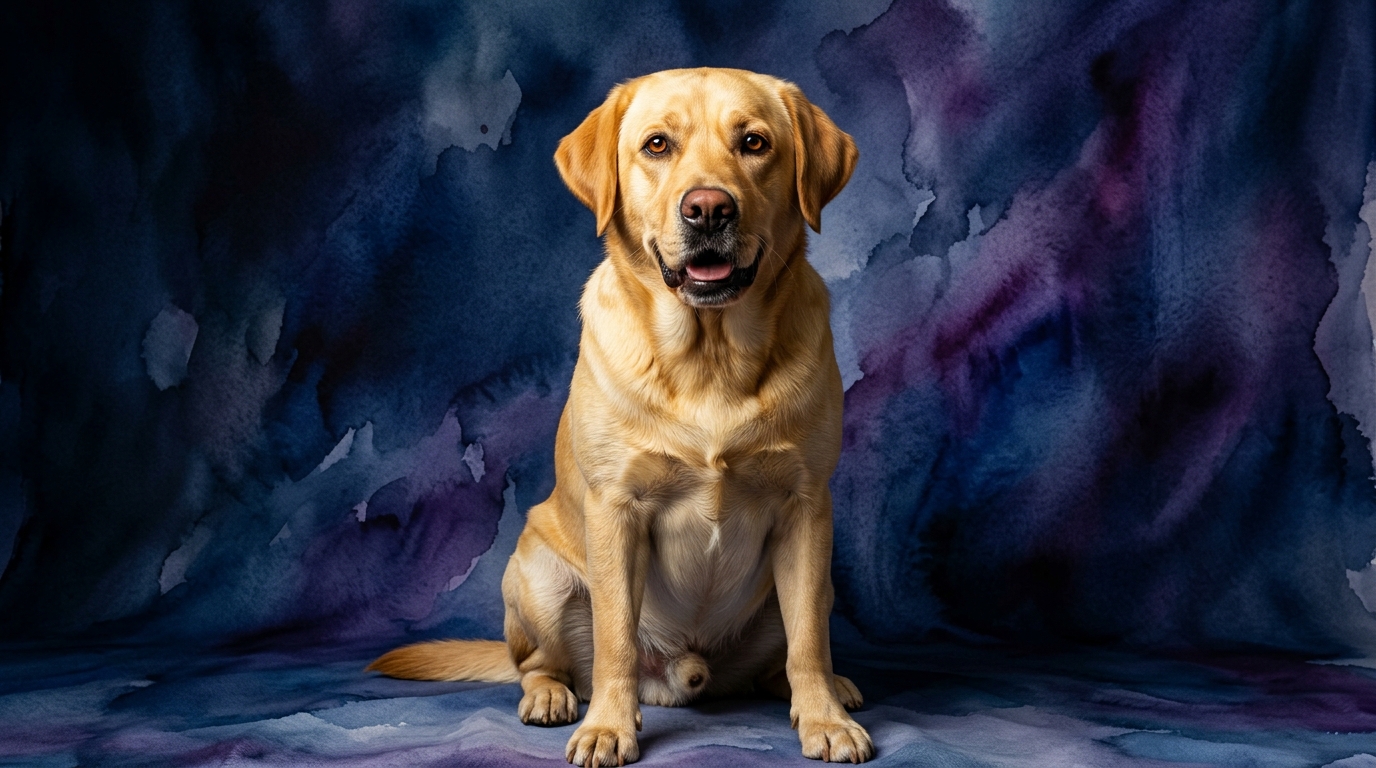

Side-by-Side IQ Profile: Labrador Retriever vs. Russian Toy
The Cosmic Pet Pet IQ Lab employs a comprehensive framework to assess canine intelligence, measuring five key dimensions. The Labrador Retriever, a Sporting group dog, holds a Coren ranking of #7, placing it among breeds recognized for their working aptitude and trainability. In contrast, the Russian Toy, a delightful Toy group dog, is not traditionally Coren-ranked, signifying a different focus in its historical development and cognitive strengths.
The Labrador Retriever's profile is characterized by a Problem Solving score of 4/5, indicating a strong capacity for figuring out novel situations, such as strategizing during complex retrieve games or navigating new environments. Their Training Speed is an impressive 5/5, reflecting rapid acquisition of new commands and routines. A Social Intelligence of 5/5 points to an exceptional ability to understand human cues, emotions, and group dynamics. Instinctive Drive at 4/5 highlights their inherent motivation for tasks like retrieving, scent work, or water activities, serving as a powerful engine for engagement. Finally, their Memory, rated 4/5, supports their ability to retain complex sequences and recall past experiences effectively.
The Russian Toy presents a different cognitive blueprint. Their Problem Solving score of 3/5 suggests they can navigate familiar challenges but might require more guidance for complex, unfamiliar puzzles. Training Speed is rated 3/5, implying a moderate pace for learning new commands, necessitating patience and consistent positive reinforcement. Social Intelligence at 3/5 indicates an ability to form strong bonds and understand close family members, though perhaps with less nuance in larger group settings. Their Instinctive Drive, also 3/5, means their motivation for specific tasks is present but typically lower intensity than a working breed, often directed towards companionship. Memory at 3/5 allows them to learn routines and remember familiar faces and places, though perhaps less complex sequences than their larger counterparts.
Where the Labrador Retriever Excels Cognitively
The Labrador Retriever’s superior Problem Solving (4/5) and Instinctive Drive (4/5) converge to make them adept at complex, multi-stage tasks. For instance, a Lab can be taught to retrieve a specific item from a cluttered room, requiring them to identify the object, navigate obstacles, and bring it back, often showing initiative if the initial approach fails. This capacity extends to activities like agility courses or scent detection, where they must interpret varying cues and adapt their strategy.
Their exceptional Training Speed (5/5) means they grasp new concepts with impressive alacrity, often anticipating the next step in a sequence of commands. This rapid learning curve allows for a vast repertoire of behaviors, from basic obedience to intricate service dog tasks. Coupled with their high Social Intelligence (5/5), Labs are remarkably attuned to human intentions and emotions, making them exceptionally responsive partners in cooperative ventures. They can discern subtle shifts in handler body language or tone, adjusting their performance accordingly.
The strong Memory (4/5) of a Labrador further enhances their performance in repetitive or sequential tasks. They remember specific training cues, the layout of frequently visited places, and even the routines of their household members with precision. This cognitive strength underpins their reliability in roles requiring consistent performance over time, whether it’s guiding a visually impaired individual or performing search and rescue operations where recalling scent trails or previous search patterns is crucial.
Where the Russian Toy's Cognition Shines
While the Russian Toy's cognitive scores are generally moderate, their profile excels in contexts requiring focused companionship and adaptability to specific environments. Their Social Intelligence (3/5) is perfectly suited for forging deep, intimate bonds with their primary caregivers, often displaying an acute sensitivity to their owner's mood within a close-knit family unit. This allows them to be highly empathetic and comforting companions, thriving on personal interaction rather than large-group dynamics.
The Russian Toy’s Problem Solving (3/5) and Instinctive Drive (3/5) are balanced in a way that makes them remarkably self-sufficient within a defined home territory, without constantly seeking complex external stimulation. They are adept at navigating household routines and finding comfortable spots, showing a practical intelligence focused on their immediate comfort and security. This means they are less likely to become destructive out of boredom or to constantly challenge boundaries, provided their basic needs for attention and engagement are met.
Their moderate Training Speed (3/5) and Memory (3/5) allow them to learn and retain essential household rules and basic commands, making them manageable pets for those who prefer a less demanding training regimen. They learn routines quickly, like potty schedules or where their toys are kept, and remember familiar faces and places. This cognitive makeup contributes to their role as charming, devoted companions who integrate seamlessly into quiet home lives, offering consistent affection without requiring constant, high-level mental engagement.
Training Dynamics: Which Breed is Easier to Train?
When evaluating ease of training, the Labrador Retriever clearly holds an advantage, primarily due to their stellar Training Speed (5/5) and high Social Intelligence (5/5). Labs are eager to please and quick to pick up new commands, often requiring fewer repetitions to solidify a behavior. Their strong social intelligence means they are highly attuned to human cues and intentions, making communication during training more fluid and effective. They actively seek to understand what is being asked of them, viewing training as a cooperative game.
The Russian Toy, with a Training Speed of 3/5, requires a more patient and consistent approach. While capable of learning, they may take longer to grasp new concepts and might not generalize behaviors as readily as a Labrador. Their Social Intelligence (3/5) means they form strong bonds but might be less broadly responsive to subtle cues from various handlers or in novel environments. Training a Russian Toy often benefits from short, positive, reward-based sessions, focusing on building confidence and maintaining engagement rather than rapid acquisition of complex tasks.
Furthermore, the Labrador's higher Problem Solving (4/5) allows them to troubleshoot and adapt during training, figuring out how to achieve a desired outcome even if the initial attempt is incorrect. This proactive approach reduces handler frustration. In contrast, a Russian Toy's Problem Solving (3/5) might mean they rely more heavily on direct instruction and repetition, potentially becoming overwhelmed by complex, multi-step commands without clear guidance. Their lower Instinctive Drive (3/5) also means they might not possess the same inherent motivation for 'work' or task completion that drives many Labs.
Matching Breeds to Owner Lifestyles: Active vs. Relaxed
For active owners seeking a canine partner for adventures, the Labrador Retriever is an ideal match. Their high Instinctive Drive (4/5) fuels a desire for engaging activities like hiking, swimming, retrieving games, and dog sports such as agility or flyball. Their Problem Solving (4/5) and Memory (4/5) equip them to learn intricate routes, follow complex commands during outdoor excursions, and adapt to varied environments. They thrive on having a 'job' to do, whether it's carrying a pack, fetching sticks from a lake, or participating in scent work.
The Russian Toy, with its moderate Instinctive Drive (3/5) and generally smaller stature, is better suited for owners with a more relaxed lifestyle. While they enjoy walks and playtime, their exercise requirements are significantly lower than a Labrador's. Their cognitive profile, particularly their Problem Solving (3/5) and Memory (3/5), is perfectly adequate for navigating the routines of a quiet household and enjoying gentle indoor games. They are content with being close companions, thriving on lap time and short, engaging bursts of play rather than extensive physical or mental exertion.
An active owner might find a Russian Toy's lower drive less fulfilling for high-energy pursuits, while a relaxed owner might struggle to meet the substantial physical and mental stimulation needs of a Labrador. The Labrador's robust Social Intelligence (5/5) also makes them excellent candidates for frequent outings and interactions with diverse people and animals, whereas a Russian Toy's Social Intelligence (3/5) is often more focused on their immediate family, making them potentially more comfortable in calmer, less chaotic social settings.
The Verdict
Choose the Labrador Retriever if you desire a highly engaged, cooperative partner for complex training, active outdoor adventures, and roles requiring exceptional responsiveness and problem-solving skills. They excel when given consistent mental and physical challenges.
Opt for the Russian Toy if you seek a devoted, charming companion perfectly content with a calm home environment, moderate exercise, and a training approach focused on building a strong, intimate bond rather than mastering intricate tasks.
🧠 Find Your Pet's IQ Score
Our Pet IQ Lab assessment covers 25+ tests across 5 cognitive dimensions — personalized to your breed.
Take the Full IQ Test →Frequently Asked Questions
Do Russian Toys learn quickly despite their lower training speed score?
While their Training Speed is rated 3/5, Russian Toys are capable of learning basic commands and household routines effectively. They benefit from consistent, positive reinforcement training sessions that are kept short and engaging to maintain their focus and enthusiasm.
How does a Labrador Retriever's social intelligence benefit a family?
With a Social Intelligence score of 5/5, Labrador Retrievers are exceptionally adept at understanding human emotions and family dynamics. This means they often anticipate needs, respond well to varying family members, and integrate smoothly into group activities, making them highly adaptable and empathetic family members.
Can a Russian Toy participate in dog sports?
Yes, Russian Toys can certainly participate in dog sports, particularly those suited to their size and temperament, such as beginner agility, obedience, or rally. While their Instinctive Drive is 3/5, consistent positive training can harness their desire to please and build confidence, allowing them to enjoy and succeed in these activities.