
Side-by-Side IQ Profile
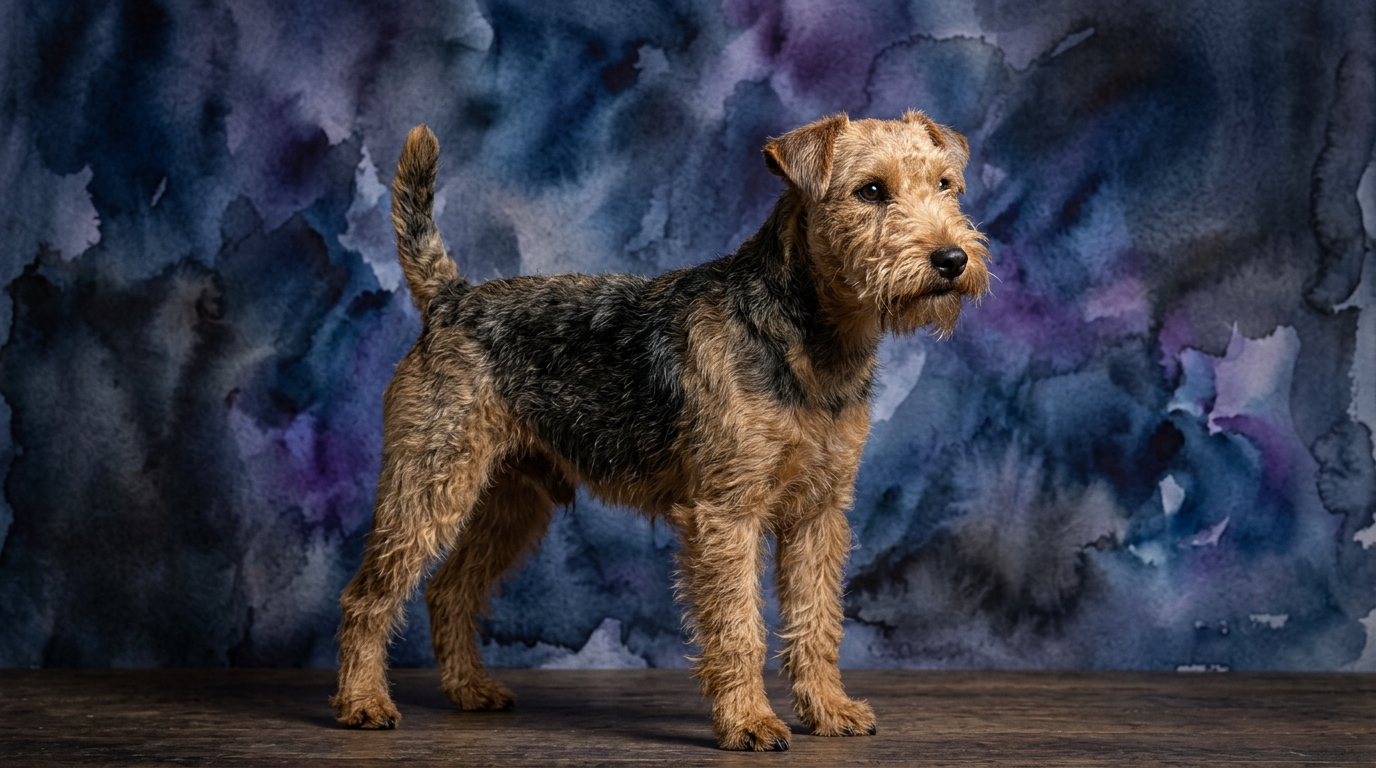
The Lakeland Terrier presents a balanced and practical cognitive profile, with a consistent 3 out of 5 across all five evaluated dimensions. Their problem-solving ability is hands-on and tenacious, excelling at figuring out how to achieve a goal through persistence rather than abstract reasoning. Training speed is steady; they learn through consistent repetition and clear, fair instruction, absorbing information at a moderate pace. Social intelligence, also rated 3/5, means they are observant of their human companions and their environment, but often maintain a degree of self-reliance, not constantly seeking direction. Their instinctive drive is pronounced, a 3/5 reflecting their heritage as working terriers with a strong impulse to hunt, dig, and explore. Memory, at 3/5, is reliable for practical, learned tasks and routines, allowing them to recall established commands and familiar paths.
In stark contrast, the Miniature Poodle showcases a highly specialized cognitive aptitude, particularly in areas of learning and retention. They achieve an impressive 5 out of 5 in both problem-solving and training speed, indicating an exceptional capacity for analytical thought and rapid acquisition of new skills. These dogs are quick to grasp complex concepts, generalize learning, and adapt to new situations with remarkable agility. Their social intelligence, like the Lakeland, is rated 3/5; they are attentive and can form strong bonds, but their primary cognitive strength lies not in social nuance but in individual learning capacity. Instinctive drive, also 3/5, is present but typically channeled into activities like retrieving or playing rather than the intense prey drive of a terrier. Memory is another stellar attribute at 5/5, allowing them to retain vast repertoires of commands, tricks, and routines over long periods, building on past learning with ease. This breed's overall cognitive profile, especially its #2 ranking in Stanley Coren's intelligence hierarchy, underscores its sophisticated learning capabilities.
Where the Lakeland Terrier's Mind Shines
The Lakeland Terrier's cognitive strengths are rooted in their independent, practical approach to the world, a direct result of their working heritage. Their 3/5 problem-solving isn't about abstract logic, but rather an earthy, determined effort to overcome physical obstacles or outwit prey. This manifests as a resourceful ability to navigate challenging terrains, unearth hidden objects, or strategize to get what they want – be it a dropped treat or a favorite toy under furniture. They possess a certain self-reliance, using their moderate social intelligence (3/5) to observe and understand their human's intentions without being overly dependent on constant guidance. This makes them adept at independent exploration and decision-making within their environment. Furthermore, their 3/5 instinctive drive, while needing management, is a cognitive asset in its original context, enabling them to focus intensely on a task once engaged, exhibiting impressive stamina and single-mindedness in pursuit of a goal. This balanced cognitive profile makes them resilient and capable of handling novel situations with a "figure it out" attitude, making them excellent companions for those who appreciate a dog with a strong, self-directed spirit.
The Miniature Poodle's Cognitive Edge
The Miniature Poodle's cognitive prowess lies in its exceptional capacity for rapid learning, analytical problem-solving, and superior memory. Their 5/5 rating in problem-solving means they can quickly assess novel situations, understand complex sequences, and devise solutions that often surprise owners. This isn't just about trial and error; it's about genuine comprehension and application. Paired with a 5/5 training speed, Miniature Poodles absorb new commands, tricks, and routines with remarkable efficiency, often requiring fewer repetitions than many other breeds. They excel at generalizing learned behaviors to new contexts, making them highly adaptable. The 5/5 memory is equally impressive; once a task or command is learned, it tends to stick, allowing for the building of vast and intricate behavioral repertoires. This means a Miniature Poodle can progress rapidly through advanced obedience, agility, or even complex trick training, recalling intricate sequences with precision. Their cognitive strength is in their mental agility and retentiveness, making them eager and capable participants in any activity that challenges their intellect, consistently demonstrating a sophisticated understanding of their environment and human expectations.
Training Trajectories: Understanding Behavioral Differences
Training a dog is a journey influenced by both the dog's cognitive profile and its inherent behavioral tendencies. For the Miniature Poodle, training is often a smooth and rewarding experience due to their stellar 5/5 training speed and memory. They are often eager to please and find mental stimulation in learning new commands, leading to rapid acquisition of skills. Their analytical problem-solving (5/5) means they quickly understand what is being asked of them, and their excellent memory ensures that once learned, behaviors are retained with minimal refreshers. Poodles typically enjoy the interactive process of training, often seeking out opportunities to engage with their handlers and demonstrate their understanding. In contrast, the Lakeland Terrier's training trajectory demands more patience and a different approach. While their 3/5 training speed means they are perfectly capable of learning, they require more consistency and engaging methods. Their problem-solving (3/5) is more about independent action than abstract compliance, and their significant instinctive drive (3/5) means they can be easily distracted by scents, movement, or the lure of exploration. A Lakeland Terrier might understand a command but choose not to comply if a more interesting environmental stimulus presents itself, or if they don't perceive the immediate value. Training a Lakeland often involves making lessons highly rewarding, demonstrating the benefit of cooperation, and managing their independent streak and strong prey drive with firm yet positive guidance. While a Poodle might learn a new trick in minutes, a Lakeland might take several sessions, but once they "get" it and decide it's worthwhile, they'll perform it with terrier tenacity.
Lifestyle Match: Activity Levels and Mental Engagement
Choosing between a Lakeland Terrier and a Miniature Poodle also involves aligning their cognitive and physical needs with an owner's lifestyle. Owners who thrive on structured, intense mental engagement and enjoy teaching complex sequences will find a Miniature Poodle to be an exceptional match. These dogs flourish in environments where their problem-solving and memory are regularly challenged through advanced obedience, agility, rally, or even creative trick training. They require consistent mental stimulation to prevent boredom, but their physical activity needs can be met with regular walks and play sessions, making them adaptable to both active and moderately relaxed households, provided their minds are kept busy. A "relaxed" owner for a Poodle might be someone who enjoys spending time teaching new things in short, frequent bursts rather than long, high-impact physical activities. The Lakeland Terrier, with its balanced cognitive profile and strong instinctive drive, is better suited for active owners who appreciate a dog with a purpose. Their problem-solving and drive make them excellent companions for activities like earthdog trials, extensive hiking where they can explore and "hunt" scents, or agility courses that tap into their tenacity. While they also need mental stimulation, it often needs to be hands-on and goal-oriented. A truly "relaxed" owner might find a Lakeland challenging, as their independent nature and instinctive drive can lead to mischief if not adequately channeled through consistent physical and mental outlets. They require an owner who understands and can manage their terrier spirit, providing outlets for their natural instincts rather than expecting passive companionship.
The Verdict
Choose the Lakeland Terrier if you seek a tenacious, independent companion who excels at practical problem-solving and thrives with consistent, engaging, and purpose-driven activities, appreciating their balanced, self-reliant nature.
Opt for the Miniature Poodle if you value rapid learning, high trainability, and a companion eager to engage in complex mental challenges and consistent training, appreciating their capacity for sophisticated understanding and retention.
🧠 Find Your Pet's IQ Score
Our Pet IQ Lab assessment covers 25+ tests across 5 cognitive dimensions — personalized to your breed.
Take the Full IQ Test →Frequently Asked Questions
Are Lakeland Terriers difficult to train?
Lakeland Terriers are not "difficult" in the sense of being unable to learn, but they do require consistent, patient, and engaging training methods. Their independent problem-solving and strong instinctive drive mean they need motivation and purpose to comply, often choosing to follow their own instincts if not properly guided.
Do Miniature Poodles need a lot of mental stimulation?
Yes, Miniature Poodles absolutely thrive on mental stimulation due to their high problem-solving and memory capabilities. They enjoy learning new commands, tricks, and participating in dog sports, and without adequate mental engagement, they can become bored or develop undesirable behaviors.
Which breed is better for first-time dog owners?
The Miniature Poodle is generally a more forgiving choice for first-time dog owners due to their high trainability and eagerness to please, making the learning process for both dog and owner smoother. The Lakeland Terrier's independent nature and strong instincts can be more challenging for those without prior experience in managing a terrier personality.