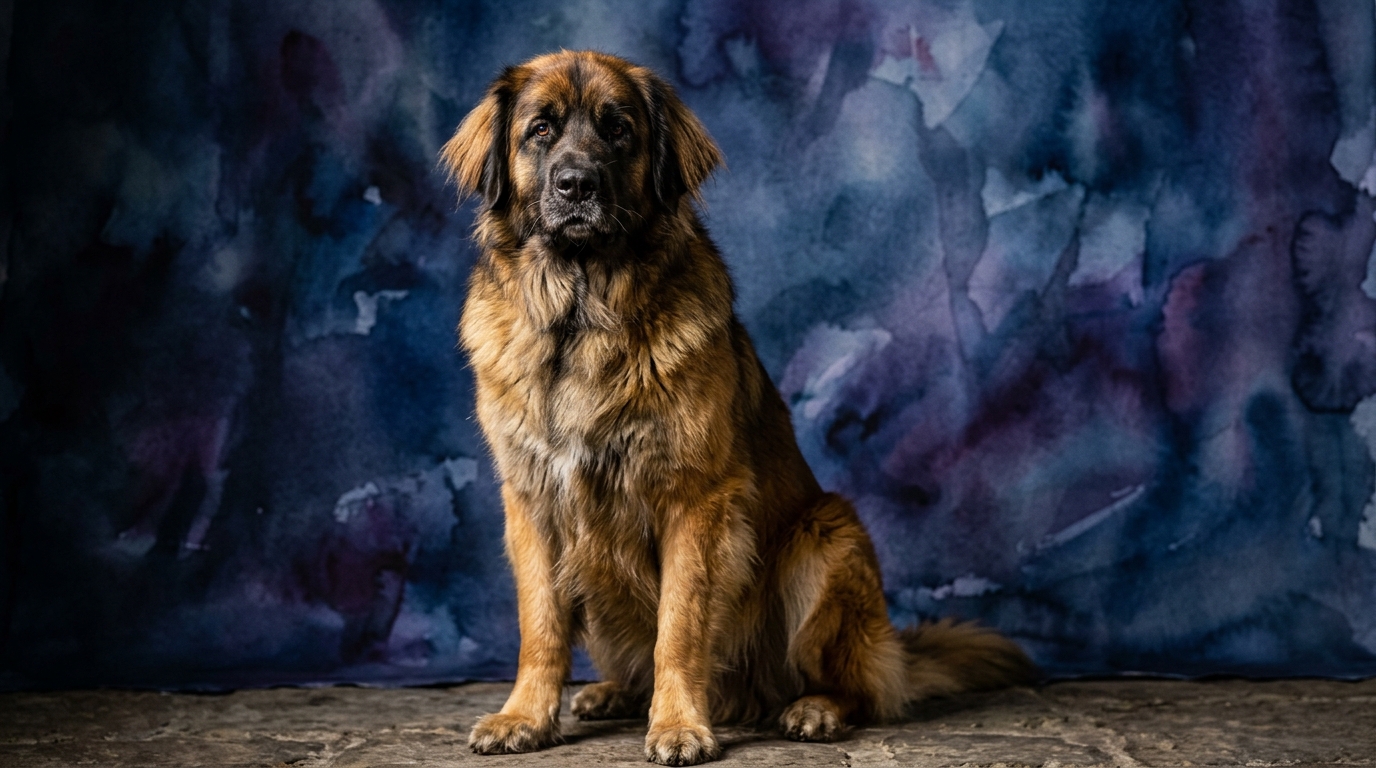

Side-by-Side IQ Profiles: Decoding the 3/5 Score
At first glance, the identical 3 out of 5 scores across all intelligence dimensions for both the Leonberger and the Affenpinscher might suggest a cognitive parity. However, the interpretation of these scores must be contextualized by each breed's inherent purpose, size, and temperament. A '3' signifies a solid, functional intelligence, capable of learning and adapting, but its manifestation differs profoundly between a Working Group behemoth and a Toy Group charmer.
For the Leonberger, a 3/5 in **Problem Solving** suggests they are capable of navigating moderately complex challenges, such as figuring out how to open a simple latch or retrieve a specific item from a known location. Their larger physique might mean their problem-solving often involves physical manipulation or persistence. In **Training Speed**, a 3/5 indicates they absorb new commands and routines at a reasonable pace with consistent, positive reinforcement, though their independence might sometimes necessitate patience. Their **Social Intelligence** at 3/5 reflects an ability to read human emotions and household dynamics effectively, fostering strong family bonds and discerning appropriate behavior with familiar individuals. The **Instinctive Drive** score of 3/5 points to a natural inclination for companionship and a protective instinct towards their family, rather than a strong prey or herding drive. Finally, their **Memory** at 3/5 ensures they retain learned commands, routines, and recognition of people and places with good reliability over time.
The Affenpinscher, despite sharing the same numerical scores, exhibits these traits differently. A 3/5 in **Problem Solving** for this small terrier-type might mean cleverly devising ways to access forbidden treats on a low shelf, navigating intricate indoor spaces, or outsmarting a puzzle toy designed for smaller paws. Their smaller size often means their problem-solving is more about agility and wit. Their **Training Speed** at 3/5 indicates they can learn new tricks and commands fairly quickly, especially when highly motivated by treats or play, though their independent and sometimes stubborn nature can make consistent execution a challenge. A 3/5 in **Social Intelligence** suggests they are adept at understanding their owner's moods and can be quite expressive in communicating their own desires, often using their charm to get their way. The **Instinctive Drive** of 3/5 reflects a lively curiosity, a desire to explore, and a typical terrier-like boldness, perhaps including a moderate prey drive for small critters. Their **Memory** at 3/5 means they will remember commands, routines, and the people they love, and perhaps even the location of a hidden toy, with good accuracy.
Where the Leonberger Demonstrates Unique Cognitive Strengths
While both breeds share identical numerical scores, the Leonberger's cognitive strengths often manifest in areas requiring both mental fortitude and physical presence. Their 3/5 in Problem Solving, when combined with their sheer size and working heritage, allows them to excel in tasks that demand a 'steady hand' and deliberate action. For instance, a Leonberger might methodically work out how to maneuver around a large obstacle to reach a family member, demonstrating a robust, physically integrated problem-solving approach that a smaller dog simply couldn't replicate.
Their Social Intelligence, also at 3/5, often translates into a profound understanding of family dynamics and a protective empathy. A Leonberger can sense distress in a child or a quiet sadness in an adult, responding with a comforting presence. This isn't just about reading a mood; it's about a deep-seated desire to be a supportive family member, making them particularly adept at roles that require a stable, reassuring emotional presence. Their memory aids this, allowing them to consistently recall who belongs to their 'pack' and what their expected behavior is within the household.
Furthermore, their Instinctive Drive, a 3/5, fuels a cooperative spirit in tasks that require partnership. While not a high-drive working dog in the traditional sense, their desire to be 'with' their people means they often engage enthusiastically in activities like canine good citizen tests or therapeutic visits. Their cognitive profile supports a role as a steadfast companion who learns routines and expectations for collaborative endeavors, demonstrating a patient, unwavering dedication that is a hallmark of their breed.
Where the Affenpinscher Shines Cognitively
The Affenpinscher's identical 3/5 scores belie a different set of cognitive advantages, often rooted in their terrier-like personality and compact size. Their Problem Solving at 3/5 frequently involves cleverness and agility, making them adept at navigating complex indoor environments or figuring out intricate ways to achieve a goal that might involve dexterity rather than brute force. They might, for example, quickly learn to manipulate a child-proof gate or discover how to 'herd' a toy into a desired location with surprising precision.
Their Social Intelligence, also a 3/5, is often expressed through an almost theatrical ability to engage and charm. An Affenpinscher can quickly learn which facial expressions or vocalizations elicit the desired response from their owner, whether it's an extra treat or more playtime. This isn't manipulation in a negative sense, but rather a sophisticated understanding of social cues that allows them to navigate their human world very effectively, often becoming the center of attention with their witty antics. Their memory supports this by allowing them to recall successful past interactions and apply them to new situations.
In terms of Training Speed, while rated 3/5, the Affenpinscher's eagerness to engage and their quick thinking can make them appear to learn individual tricks or short sequences very rapidly. Their mischievous nature means they are often 'thinking on their feet,' which, while sometimes challenging for consistency, also means they are constantly processing and reacting to their environment with an alert and curious mind. Their Instinctive Drive, also 3/5, fuels this curiosity and boldness, making them fearless explorers of their immediate surroundings, always ready for a new mental challenge disguised as play.
Training Dynamics: Leonberger's Steadfastness vs. Affenpinscher's Zest
When considering ease of training, the numerical 3/5 score for Training Speed for both breeds doesn't tell the whole story; the *experience* of training differs significantly. Training a Leonberger often involves managing their substantial size and ensuring early socialization. They are generally eager to please their family and respond well to positive reinforcement, but their sheer physical presence means that consistency in commands like 'stay' or 'heel' is paramount for safety. Their independent streak, while not oppositional, means they might take a moment to process or choose to comply, requiring a patient and consistent handler who understands their deliberate nature.
The Affenpinscher, by contrast, can be quick to pick up new commands and tricks due to their inherent zest and desire for engagement. However, their training often presents challenges related to their independent and sometimes stubborn 'big dog in a small package' personality. They can have a short attention span for repetitive drills and might decide that a particular command isn't worth their effort if the reward isn't appealing enough. Training an Affenpinscher requires creativity, high-value rewards, and a willingness to make sessions fun and varied to maintain their interest and overcome their potential for mischievousness or selective hearing. Consistency is key, but so is making it a game.
Ultimately, neither breed is inherently 'easier' to train, but rather requires a different approach. The Leonberger benefits from calm, consistent leadership and understanding their deliberate pace, while the Affenpinscher thrives on engaging, reward-driven sessions that keep their sharp, spirited mind stimulated. Both need early socialization and ongoing mental engagement to channel their respective cognitive strengths positively.
Matching Breeds to Lifestyles: Active Explorers vs. Calm Companions
The choice between a Leonberger and an Affenpinscher also heavily depends on an owner's lifestyle, particularly concerning activity levels and living space. A Leonberger, despite their calm demeanor indoors, requires significant outdoor activity to remain physically and mentally content. They thrive with owners who enjoy long walks, hiking, or other outdoor adventures, and ideally have a securely fenced yard where they can stretch their long legs. Their need for companionship means they do best in homes where they are integrated into family life and not left alone for extended periods. Owners should be prepared for their size and the commitment to regular, moderate exercise that their working heritage demands, blending periods of activity with serene family time.
The Affenpinscher, while small, is far from a sedentary lap dog. They possess a surprising amount of energy and curiosity, requiring daily walks and plenty of interactive playtime to satisfy their inquisitive minds and spirited personalities. They can adapt well to apartment living, provided their exercise needs are met through walks and indoor games. Their small stature makes them excellent companions for owners who enjoy short, brisk walks, frequent play sessions, and who appreciate a dog that is always ready for an adventure, even if it's just exploring the nuances of the living room. They are well-suited for owners who appreciate a lively, entertaining presence and can provide consistent mental stimulation through training and puzzle toys.
Therefore, active owners who seek a large, gentle companion for outdoor excursions and calm indoor presence will find a wonderful match in the Leonberger. Conversely, owners who desire a spirited, entertaining, and compact companion for interactive play and shorter, more frequent bursts of activity will likely adore the Affenpinscher. Both breeds demand attention and engagement, but the scale and type of that engagement differ considerably.
The Verdict
Choose the Leonberger if you seek a steadfast, gentle giant for a companion, valuing their protective nature, calm disposition, and willingness to participate in family activities, provided you can accommodate their size and exercise needs.
Opt for the Affenpinscher if you desire a spirited, clever, and entertaining companion in a compact package, appreciating their bold personality and readiness for interactive play and charming antics.
🧠 Find Your Pet's IQ Score
Our Pet IQ Lab assessment covers 25+ tests across 5 cognitive dimensions — personalized to your breed.
Take the Full IQ Test →Frequently Asked Questions
Are Leonbergers good with children and other pets?
Leonbergers are generally renowned for their gentle and patient nature with children and often coexist well with other pets, especially if socialized early. However, due to their immense size, supervision is always recommended with very young children to prevent accidental knocks.
Do Affenpinschers bark frequently?
Affenpinschers can be quite vocal, often using barks to alert their owners to strangers, express excitement, or sometimes just to voice their opinions. Early training can help manage excessive barking, but their terrier-like boldness means they're naturally inclined to be expressive.
What kind of mental stimulation is best for these breeds given their 3/5 IQ scores?
Both breeds benefit significantly from regular, engaging mental stimulation tailored to their personalities; this includes consistent positive reinforcement training, interactive puzzle toys, and varied environments to explore. For Leonbergers, tasks that involve problem-solving with their family, like retrieving specific items, can be rewarding, while Affenpinschers thrive on games that challenge their agility and wit, such as hide-and-seek with treats.