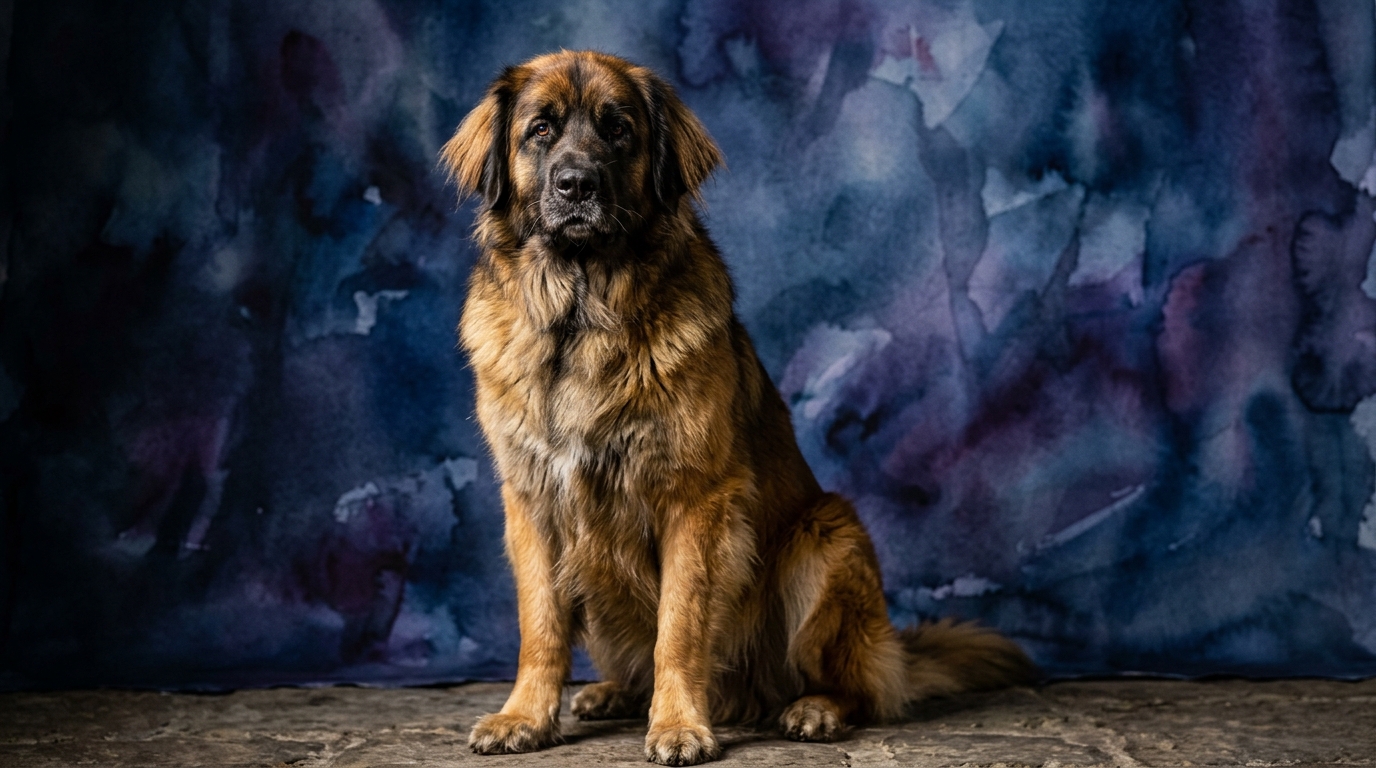
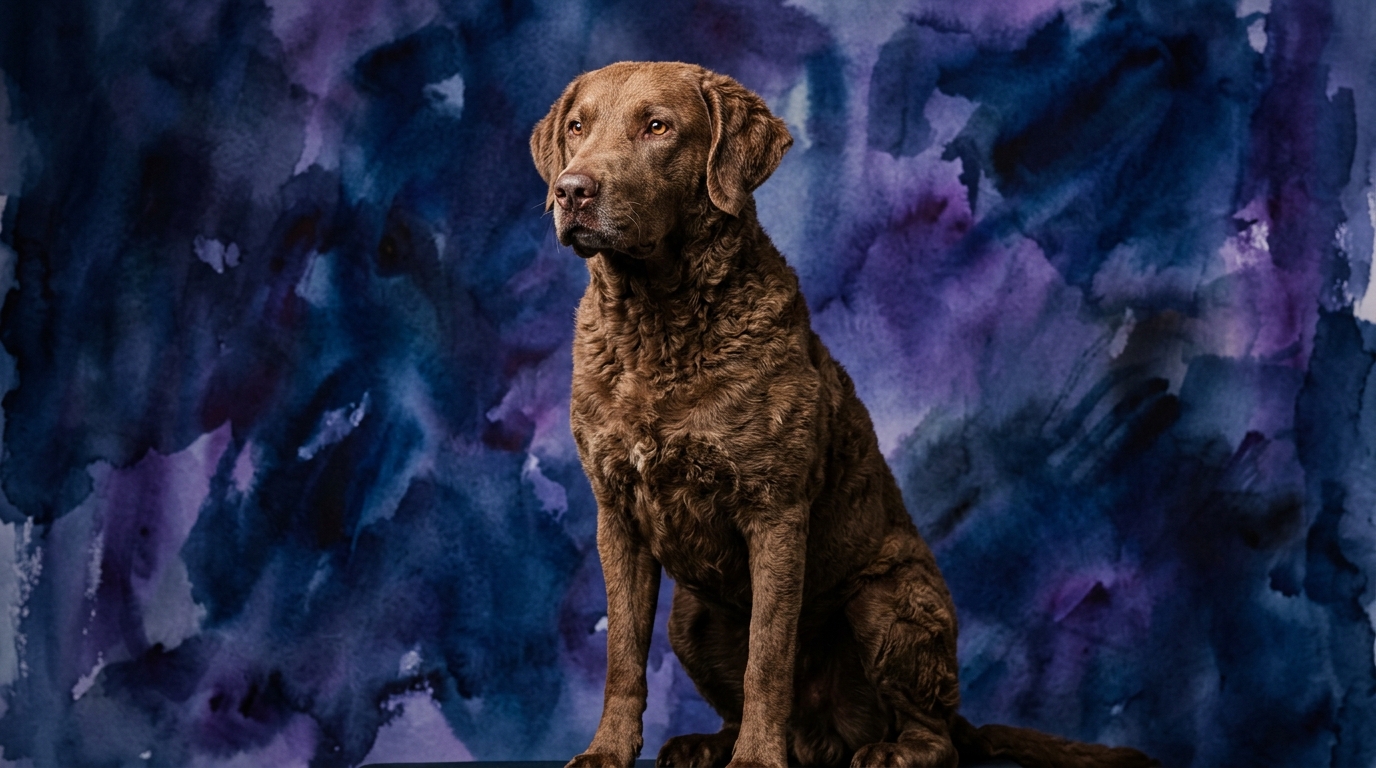
Side-by-Side Cognitive Profile: Leonberger vs. Chesapeake Bay Retriever
To understand the cognitive landscape of these two distinct breeds, we examine their mental faculties across five key dimensions, as assessed by The Cosmic Pet Pet IQ Lab. These dimensions offer a granular view beyond general perceptions, highlighting specific aptitudes that align with their historical roles.
Problem Solving: This dimension measures a dog's capacity to navigate novel situations or figure out how to achieve a goal independently. The Leonberger rates 3/5, demonstrating a moderate capacity, often employing a thoughtful, deliberate approach to overcome obstacles; they might process complex tasks more slowly but can succeed with consistent guidance, often relying on observation rather than immediate action. In contrast, the Chesapeake Bay Retriever scores 4/5, possessing a strong aptitude, quickly analyzing new scenarios and devising effective strategies, with their sporting background fostering ingenuity and efficiency in overcoming physical and mental hurdles.
Training Speed: This reflects how quickly a dog grasps and retains new commands and behaviors. The Leonberger scores 3/5, indicating they learn at a moderate pace; while capable, they may require more consistent repetition during initial phases, as their independence, characteristic of guardian breeds, means they evaluate commands rather than immediately complying, which can extend learning time. The Chesapeake Bay Retriever, with a 4/5, shows rapid uptake of new commands and routines; their eagerness to work and sharp cognitive processing allow them to absorb and execute instructions with notable speed, making them highly responsive to structured training.
Social Intelligence: This refers to the ability to understand and respond appropriately to human and other animal social cues. Both breeds rate 3/5 in social intelligence. The Leonberger exhibits a moderate level, generally perceptive of their family's moods and intentions, forming deep bonds; reserved with strangers, they typically discern friendly from threatening behavior, a crucial trait for a guardian. Similarly, the Chesapeake Bay Retriever also demonstrates a moderate level, attuned to their handler's cues and interacting well within their established social circle; while affectionate with family, they can display a reserved or independent demeanor with unfamiliar individuals.
Instinctive Drive: This encompasses the innate motivations and behaviors characteristic of the breed's historical purpose. Both breeds again score 3/5 here. The Leonberger possesses a moderate drive, primarily centered around guardianship; this manifests as a protective nature towards family and territory, expressed through watchful observation and a calm, confident presence, motivated to ensure safety. The Chesapeake Bay Retriever exhibits a moderate drive, strongly rooted in retrieving; this includes a robust prey drive, a persistent desire to retrieve objects (especially from water), and a tenacious work ethic, focusing on tasks fulfilling this innate urge.
Memory: This is the ability to recall past experiences, learned commands, and spatial information. The Leonberger has a 3/5 memory capacity, meaning they can recall learned behaviors and routines, and remember people and places over time, sufficient for retaining a stable repertoire of commands. The Chesapeake Bay Retriever displays a strong memory with a 4/5 rating; they excel at remembering complex sequences of commands, the location of retrieved items, and specific training protocols, invaluable for consistent, reliable performance in working roles.
Where the Leonberger's Cognition Shines
While no dimension shows a numerically higher score for the Leonberger, their specific blend of 3/5s across the board, particularly in social intelligence and instinctive drive, creates a cognitive profile uniquely suited for their historical role. Their deliberate approach to problem-solving (3/5) means they are not prone to impulsive reactions; instead, they assess situations with a calm, watchful demeanor. This measured thought process is crucial for a guardian breed, allowing them to differentiate between genuine threats and harmless activity, making them reliable, discerning protectors. Their social intelligence (3/5), though not the highest, allows them to form deep, empathetic bonds with their family, understanding nuances in human emotion and responding with gentle reassurance or protective vigilance as required. This cognitive steadiness, prioritizing thoughtful assessment over rapid action, makes them exceptionally well-suited for roles requiring a stable, dependable presence.
Where the Chesapeake Bay Retriever's Cognition Excels
The Chesapeake Bay Retriever's cognitive strengths are evident in their higher scores for problem-solving (4/5), training speed (4/5), and memory (4/5). These attributes combine to create a dog exceptionally adept at practical, task-oriented work. Their superior problem-solving allows them to quickly adapt to new challenges in the field, figuring out the best way to retrieve an object from difficult terrain or water. This quick thinking is coupled with a rapid training speed, meaning they absorb and execute new commands with fewer repetitions, making them highly efficient learners. Furthermore, their strong memory ensures they retain these complex command sequences and spatial information, allowing for consistent, reliable performance over time. This combination of quick processing, efficient learning, and robust recall makes the Chesapeake Bay Retriever a formidable partner for intricate tasks and demanding environments, a profile that also earned them a Coren rank of #27.
Trainability: A Tale of Two Speeds
Comparing training speed directly, the Chesapeake Bay Retriever, with a 4/5, generally proves easier and quicker to train than the Leonberger, which rates 3/5. The Chessie's rapid uptake of commands means they require fewer repetitions to solidify new behaviors. Their strong desire to work and please their handler, characteristic of many sporting breeds, translates into a focused eagerness during training sessions. This breed thrives on having a job and responds well to consistent, positive reinforcement, quickly forming associations between actions and rewards, making them a joy for experienced trainers.
In contrast, the Leonberger's 3/5 in training speed indicates they will learn, but at a more deliberate pace. Their independence, stemming from their guardian roots, means they might take more time to process a command and decide whether to comply, rather than offering immediate, eager obedience. This isn't a lack of ability, but a difference in cognitive style; they may weigh the instruction against their own assessment of the situation. Owners of Leonbergers often find that patience, consistency, and making training feel like a partnership rather than strict command are key to success. While both breeds are capable of becoming well-trained companions, the Chessie's innate drive for task completion and quicker information processing gives them an edge in terms of initial training ease and speed.
Matching Canine Cognition to Lifestyle
For active owners seeking a canine partner for demanding outdoor pursuits, the Chesapeake Bay Retriever is an excellent match. Their strong instinctive drive (3/5) to retrieve, coupled with their robust problem-solving (4/5) and memory (4/5), means they thrive when given a job to do, especially involving physical exertion and mental engagement. They need significant daily exercise, often including swimming, long hikes, or retrieving games, to satisfy their energetic nature and prevent boredom. Owners who enjoy hunting, competitive dog sports, or extended outdoor adventures will find the Chessie to be an enthusiastic and tireless companion, always ready for the next challenge.
Conversely, the Leonberger, while still requiring regular exercise to maintain their large physique, generally suits owners who appreciate a more relaxed, though watchful, presence indoors. Their moderate instinctive drive (3/5) is more focused on gentle guardianship and companionship rather than intense physical work. While they enjoy walks and family activities, they are often content to supervise their domain from a comfortable spot, making them suitable for owners who might prefer a calmer home environment but are committed to providing structured outdoor time. Their social intelligence (3/5) allows them to integrate seamlessly into family life, offering a loyal and affectionate, albeit sometimes reserved, companionship, valuing calm observation over constant activity.
The Verdict
Opt for a Leonberger if you value a thoughtful, deliberate guardian companion who forms deep family bonds and offers a calm, steady presence, and you are prepared for a patient, consistent training approach.
Select a Chesapeake Bay Retriever if you lead an active, outdoor-oriented lifestyle and desire an eager, quick-thinking partner for demanding physical and mental tasks, and you appreciate rapid trainability.
🧠 Find Your Pet's IQ Score
Our Pet IQ Lab assessment covers 25+ tests across 5 cognitive dimensions — personalized to your breed.
Take the Full IQ Test →Frequently Asked Questions
Are Leonbergers difficult to train?
Leonbergers are not difficult to train, but they learn at a moderate pace (3/5 training speed) and require consistent, patient methods. Their independent nature means they respond best to positive reinforcement and training that feels collaborative rather than purely command-driven.
Do Chesapeake Bay Retrievers need a lot of exercise?
Yes, Chesapeake Bay Retrievers have a high energy level and strong instinctive drive (3/5) for activity. They require substantial daily exercise, including vigorous play, swimming, or long runs, to keep them physically and mentally satisfied and prevent boredom.
How do these breeds interact with children?
Both breeds can be good with children, demonstrating moderate social intelligence (3/5). Leonbergers are often gentle giants with a watchful nature, while Chessies can be playful but may need supervision due to their energy and retrieving instincts. Proper socialization from a young age is crucial for both to ensure harmonious interactions.