
Side-by-Side Cognitive Profile
At The Cosmic Pet Pet IQ Lab, we assess canine intelligence across five key dimensions. For the Leonberger, a Working Group dog not featured in Coren's ranking, its scores are: problem Solving 3/5, training Speed 3/5, social Intelligence 3/5, instinctive Drive 3/5, and memory 3/5. This profile suggests a thoughtful, moderately paced learner with a balanced set of cognitive abilities.
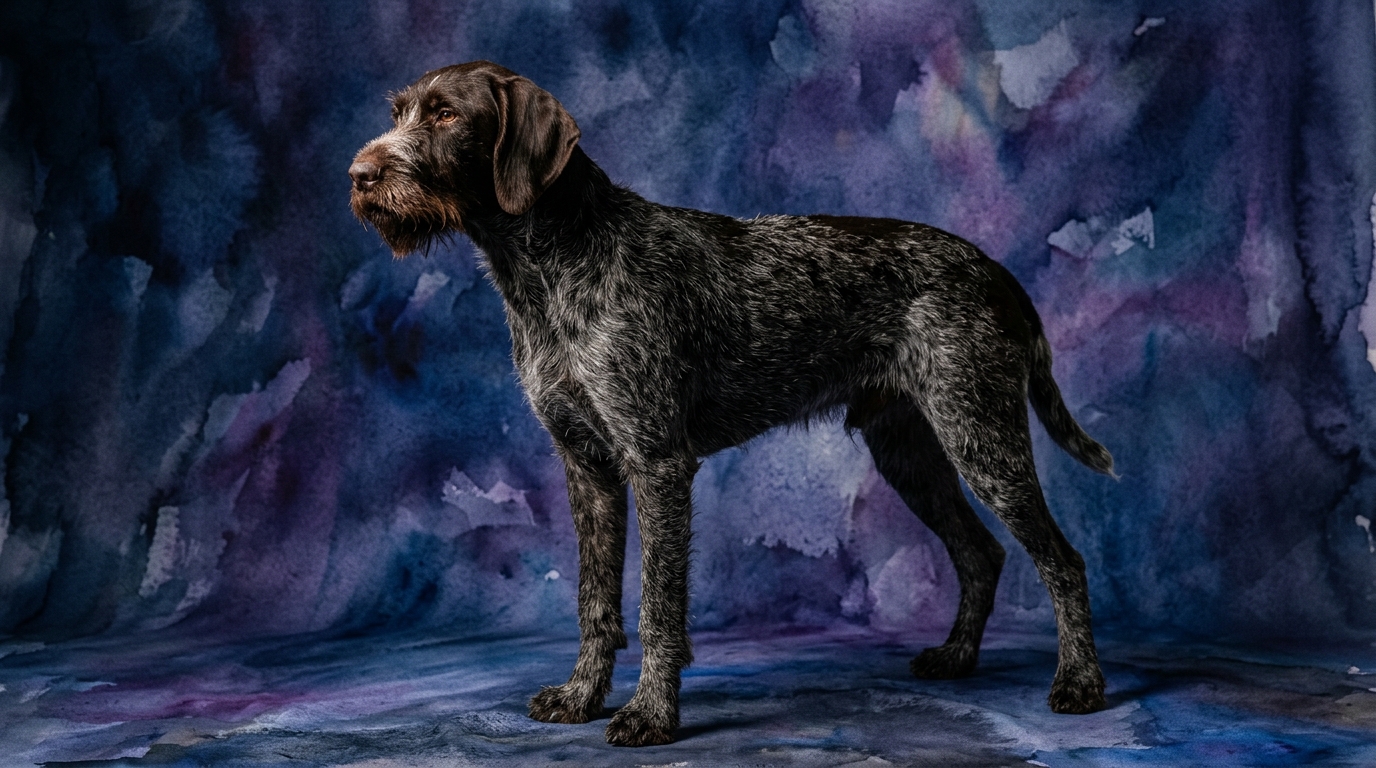
The German Wirehaired Pointer (GWP), a Sporting Group dog with a Coren rank of #28, presents a different cognitive blueprint: problem Solving 4/5, training Speed 4/5, social Intelligence 3/5, instinctive Drive 3/5, and memory 4/5. These higher scores in specific areas indicate a breed with a sharp intellect geared towards practical application and rapid acquisition of skills, typical of its working heritage. Let's delve into what these scores mean for each breed's unique way of thinking and interacting with their environment.
Where the Leonberger Excels Cognitively
The Leonberger's cognitive strengths often shine in scenarios requiring a calm, steady presence and thoughtful deliberation. While their problem-solving score is 3/5, their approach isn't about speed but rather a measured assessment of a situation. For instance, a Leonberger tasked with finding a lost item might methodically search, rather than frantically darting about, often relying on their sense of smell and a patient, systematic sweep. Their social intelligence, also rated 3/5, manifests as a deep, empathetic connection with their family members. They are particularly adept at sensing subtle shifts in human mood and offering comfort without explicit instruction, acting as intuitive emotional anchors. This isn't about rapid obedience but about an innate understanding of familial harmony and a desire to maintain it. Their instinctive drive, also 3/5, is geared towards guardianship and companionship, meaning they excel in roles where their cognitive function supports being a reliable, watchful family protector rather than a task-oriented worker. This protective instinct is a nuanced cognitive trait, requiring them to assess threats and decide on appropriate responses, often with a remarkable sense of discernment.
Where the German Wirehaired Pointer Shows Cognitive Prowess
The German Wirehaired Pointer's cognitive profile, boasting higher scores in problem-solving (4/5), training speed (4/5), and memory (4/5), clearly positions it as a highly capable working dog. Their problem-solving prowess is often demonstrated in complex field scenarios, such as navigating dense cover to locate game or figuring out how to retrieve a downed bird from challenging terrain. They don't just solve problems; they anticipate them, using their keen senses and past experiences to adapt quickly. Their rapid training speed is a direct result of their eagerness to learn and strong focus, allowing them to master intricate multi-step commands and hand signals with fewer repetitions than many breeds. This cognitive efficiency is vital for a breed designed for collaborative hunting. Furthermore, their superior memory (4/5) is a significant asset in retaining vast amounts of information related to their work, from remembering specific scent trails to recalling the location of previously encountered game or mastering extensive retrieving patterns. This robust memory ensures consistency and reliability in their performance, making them incredibly effective partners in the field.
Training Aptitude: Which Breed Learns Faster?
Based on their respective IQ profiles, the German Wirehaired Pointer (GWP) is generally easier to train, especially for complex tasks and obedience, primarily due to its higher training speed (4/5) and memory (4/5). GWPs typically exhibit an intense focus and a strong desire to work alongside their handlers, making them highly receptive to instruction. They grasp new concepts quickly and retain them for extended periods, meaning less repetition is required to solidify commands. Their inherent drive to hunt and retrieve also makes them naturally inclined towards tasks that align with these instincts, providing a powerful intrinsic motivator for learning. In contrast, the Leonberger, with a training speed of 3/5 and memory of 3/5, requires more patience and consistency. While perfectly capable of learning, they might not pick up new commands as rapidly or retain them as immediately as a GWP. Leonbergers can be thoughtful and sometimes a bit stubborn, requiring training sessions to be engaging and rewarding to maintain their interest. Their training is often more about building a strong bond and mutual respect, whereas the GWP's training capitalizes on its inherent drive and quick processing.
Matching Cognitive Needs to Owner Lifestyles
The German Wirehaired Pointer is unequivocally suited for active owners. Their robust instinctive drive (3/5), combined with their superior problem-solving and training speed, means they thrive on consistent physical and mental engagement. These dogs require daily, vigorous exercise that goes beyond a simple walk; they benefit immensely from activities like running, hiking, swimming, and especially dog sports that mimic their natural hunting behaviors, such as agility, field trials, or scent work. An owner who can dedicate several hours a day to their GWP's physical and cognitive stimulation will find a happy, well-adjusted companion. For owners seeking a more relaxed pace, the Leonberger is generally a better fit. While they are large and require regular exercise to maintain health, their energy levels are typically more moderate than a GWP's. Their instinctive drive (3/5) is geared more towards companionship and guarding, meaning they are content with daily walks, play sessions in the yard, and being a calm presence indoors. They appreciate mental stimulation through training and puzzles, but their need for constant, high-intensity activity is significantly lower, making them suitable for owners who enjoy a more leisurely but still engaged lifestyle.
The Verdict
Select the Leonberger if you value a thoughtful, calm companion who offers deep emotional support and a watchful presence, and if you can provide consistent, patient training for a moderately paced learner.
Opt for the German Wirehaired Pointer if you lead an active lifestyle, enjoy engaging in demanding outdoor activities, and desire a quick-learning, highly driven partner for sport or field work.
🧠 Find Your Pet's IQ Score
Our Pet IQ Lab assessment covers 25+ tests across 5 cognitive dimensions — personalized to your breed.
Take the Full IQ Test →Frequently Asked Questions
How does Coren ranking relate to these breeds?
The German Wirehaired Pointer is ranked #28, indicating it learns new commands quickly and obeys them reliably. The Leonberger is not Coren-ranked, suggesting it may require more repetitions or have a lower obedience success rate, though Coren's system focuses primarily on working/obedience intelligence.
Do Leonbergers need less mental stimulation than GWPs?
While Leonbergers have a lower overall activity demand, they still benefit from mental enrichment like puzzle toys and consistent training to keep their minds engaged and prevent boredom. GWPs, however, have a higher inherent need for complex mental tasks and problem-solving to satisfy their working drives.
Can a German Wirehaired Pointer be a good family dog?
Yes, GWPs can be wonderful family dogs, especially for active families who can meet their substantial exercise and mental stimulation needs. Their social intelligence allows them to bond well with family members, though early socialization is crucial for harmonious interactions with children and other pets.