Side-by-side IQ profile
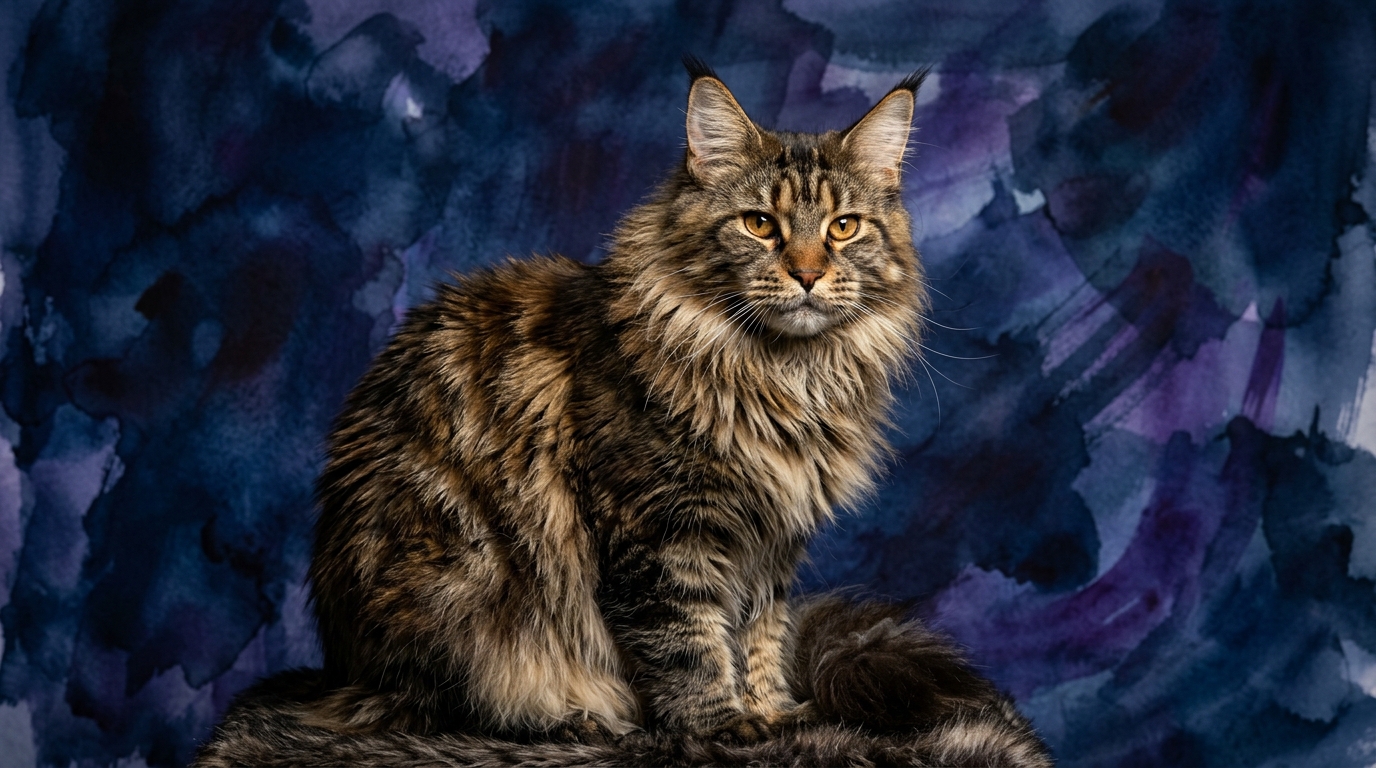
The Cosmic Pet Pet IQ Lab's five-dimensional framework provides a distinct view of feline intelligence for these two breeds. The majestic Maine Coon exhibits a robust cognitive toolkit: Problem Solving at 4/5 indicates a cat adept at navigating its environment, often figuring out how to manipulate objects. Training Speed, also at 4/5, suggests a quick grasp of commands and routines, making it a responsive learner. The Maine Coon truly shines in Social Intelligence with a perfect 5/5, demonstrating an exceptional capacity for understanding human cues and forming deep bonds. Its Instinctive Drive at 4/5 means a moderate but effective drive for hunting and exploration, often channeled into play. Finally, a Memory score of 4/5 suggests strong retention of learned behaviors, people, and places.
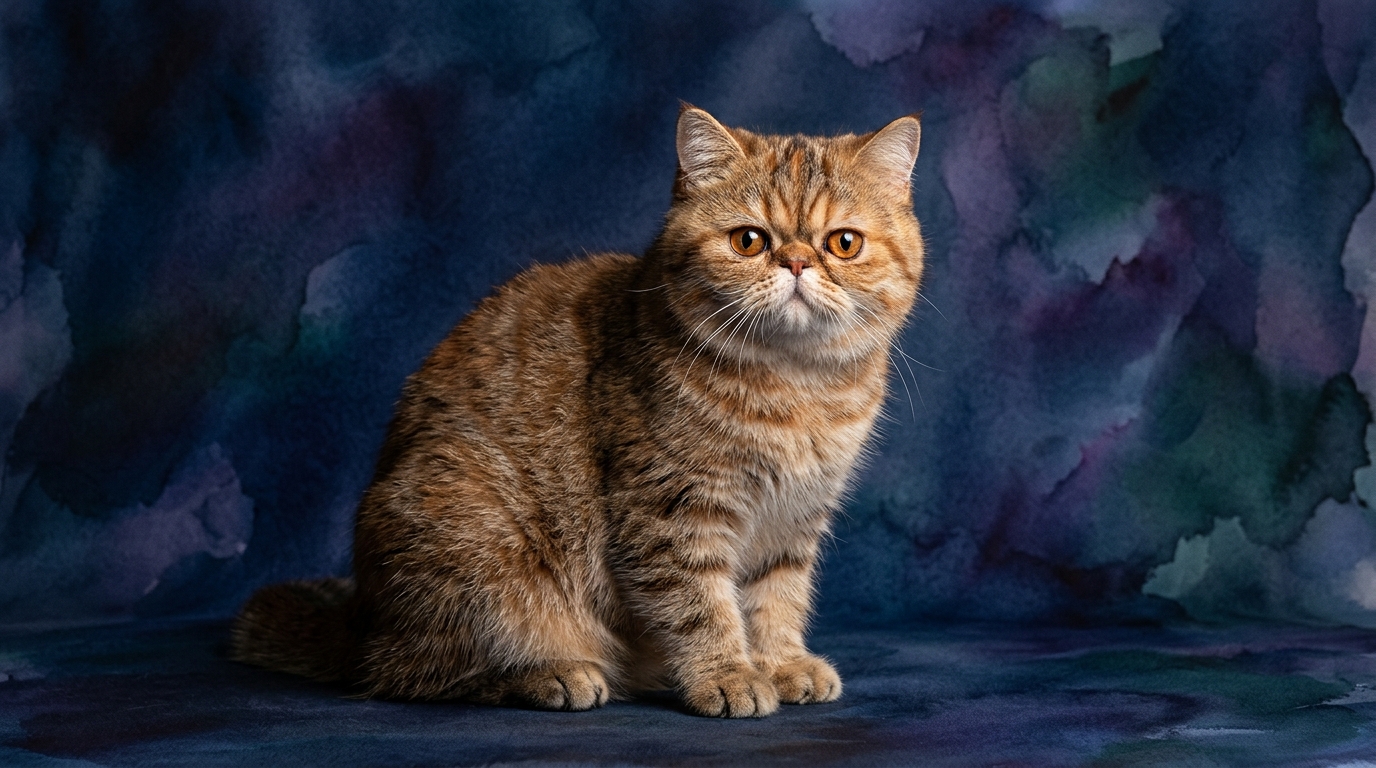
In contrast, the charming Exotic Shorthair presents a uniformly moderate cognitive profile, with all dimensions scoring 3/5. This signifies a different emphasis rather than a deficit. Its Problem Solving at 3/5 points to a cat that can generally figure out immediate needs but may not actively seek complex mental challenges. A Training Speed of 3/5 means it learns basic commands and house rules, though it might require more consistent repetition and patience. Social Intelligence at 3/5 indicates an affectionate cat that enjoys companionship but may not seek the same level of interactive engagement. Instinctive Drive at 3/5 suggests a relatively low prey drive, making it a less demanding hunter. Similarly, its Memory at 3/5 allows it to remember routines and familiar faces, but perhaps with less detail for intricate sequences.
Where Maine Coon wins cognitively
The Maine Coon's cognitive strengths are evident across the board. Its 4/5 Problem Solving score means it's more likely to actively engage with puzzle toys or strategize how to access tempting spaces, contrasting with the Exotic Shorthair's preference for simpler solutions. The Maine Coon's superior Training Speed (4/5) translates into a cat that picks up new tricks and commands with fewer repetitions, often eager to please and quick to form associations. This breed thrives on mental engagement, making it a more enthusiastic participant in structured learning activities.
The most striking advantage lies in the Maine Coon's Social Intelligence, rated 5/5 compared to the Exotic Shorthair's 3/5. This allows Maine Coons to read human emotions and intentions with exceptional accuracy, often responding with comforting purrs or anticipating routines. They actively seek interaction, engage in "conversations" with trills and chirps, fostering a more participatory and emotionally resonant companionship. Their higher Instinctive Drive (4/5) also means they channel natural predatory instincts into more elaborate play, enjoying games that simulate hunting with greater enthusiasm and persistence.
Where Exotic Shorthair wins cognitively
While the Exotic Shorthair's cognitive scores are uniformly moderate at 3/5, this profile offers distinct advantages for certain lifestyles. Its lower Instinctive Drive (3/5 versus Maine Coon's 4/5) means it is less prone to intense hunting behaviors, resulting in a more placid housemate less likely to relentlessly pursue perceived prey. Owners seeking a cat content with gentle play rather than high-energy simulations will find this a significant "win," contributing to a calmer home environment.
Furthermore, the Exotic Shorthair's moderate Social Intelligence (3/5) can benefit owners who appreciate affection without constant demand for interaction. Unlike the highly socially intelligent Maine Coon, the Exotic Shorthair is often content to simply be near its human, offering quiet companionship. This profile results in a cat less likely to exhibit separation anxiety or become bored if left alone for reasonable periods, thriving in a serene home where its presence is a comforting anchor. Its 3/5 Problem Solving and Memory scores also imply a cat less likely to outsmart its environment for mischief, contributing to a generally more manageable household dynamic.
Which is easier to train and why
Based on The Cosmic Pet Pet IQ Lab scores, the Maine Coon (Training Speed 4/5) generally proves easier to train than the Exotic Shorthair (Training Speed 3/5). The Maine Coon's higher problem-solving capacity and memory allow it to quickly grasp the association between a command, action, and reward. Their innate curiosity and strong social intelligence (5/5) also fuel a desire to engage with their human companions, making them enthusiastic participants in training sessions. They often enjoy the mental stimulation of learning new tricks, leash walks, or playing fetch, viewing it as a shared activity.
The Exotic Shorthair, while certainly trainable, requires a different approach. Its more relaxed temperament and moderate social drive mean it may not possess the same intrinsic motivation for complex commands. Training an Exotic Shorthair often demands greater patience, more frequent repetition, and simpler, clearer commands. They respond best to positive reinforcement delivered calmly and consistently. While they may not perform elaborate tricks with the same alacrity as a Maine Coon, they are perfectly capable of mastering essential behaviors like litter box use and coming when called, particularly when training aligns with their desire for comfort and routine.
Which suits active owners vs relaxed owners
The distinct cognitive profiles align these breeds with different owner lifestyles. The Maine Coon, with its impressive 5/5 Social Intelligence and 4/5 scores across other dimensions, is an ideal match for active owners. These are individuals who thrive on interactive engagement, enjoy teaching tricks, providing complex puzzle toys, and perhaps even taking their feline companion on leash walks. An active owner will appreciate the Maine Coon's desire for mental stimulation and its enthusiastic participation in play. They seek a true partner in daily activities, one that actively seeks out interaction and contributes to a lively home.
Conversely, the Exotic Shorthair, with its consistent 3/5 scores, is perfectly suited for relaxed owners. This breed appeals to those who cherish a tranquil home and prefer a companion that is affectionate without being overly demanding. A relaxed owner will appreciate the Exotic Shorthair's calm demeanor, its contentment with quiet companionship, and its generally lower need for intense mental or physical exertion. They are happy with gentle petting sessions and the comforting presence of a cat curled up nearby. This breed thrives in a predictable, serene setting, making it an excellent choice for individuals seeking a peaceful, undemanding feline friend.
The Verdict
Choose the Maine Coon if you seek a highly interactive, trainable, and socially engaged feline companion eager for shared activities and mental challenges.
Opt for the Exotic Shorthair if your ideal companion is a calm, affectionate, and low-maintenance cat that thrives in a serene home with gentle interaction.
🧠 Find Your Pet's IQ Score
Our Pet IQ Lab assessment covers 25+ tests across 5 cognitive dimensions — personalized to your breed.
Take the Full IQ Test →Frequently Asked Questions
Do Maine Coons require more mental stimulation than Exotic Shorthairs?
Yes, Maine Coons, with their higher Problem Solving (4/5) and Social Intelligence (5/5), generally require more mental engagement through puzzle toys, interactive play, and training to prevent boredom and foster their cognitive growth.
Is an Exotic Shorthair easier to care for than a Maine Coon due to intelligence differences?
While both breeds require attention, the Exotic Shorthair's moderate cognitive profile (all 3/5) often translates to less demand for complex mental stimulation and high-energy play, potentially making it a lower-maintenance companion in terms of active engagement.
Can Exotic Shorthairs learn tricks like Maine Coons?
Exotic Shorthairs can certainly learn tricks, though their Training Speed (3/5) and lower instinctive drive mean it might take more patience and repetition compared to the Maine Coon's (4/5) eagerness and quicker grasp of concepts. They prefer simpler, reward-based training.