Side-by-Side IQ Profile: A Cognitive Blueprint
Our Pet IQ Lab evaluates five key cognitive dimensions to provide a comprehensive understanding of each breed's mental architecture.
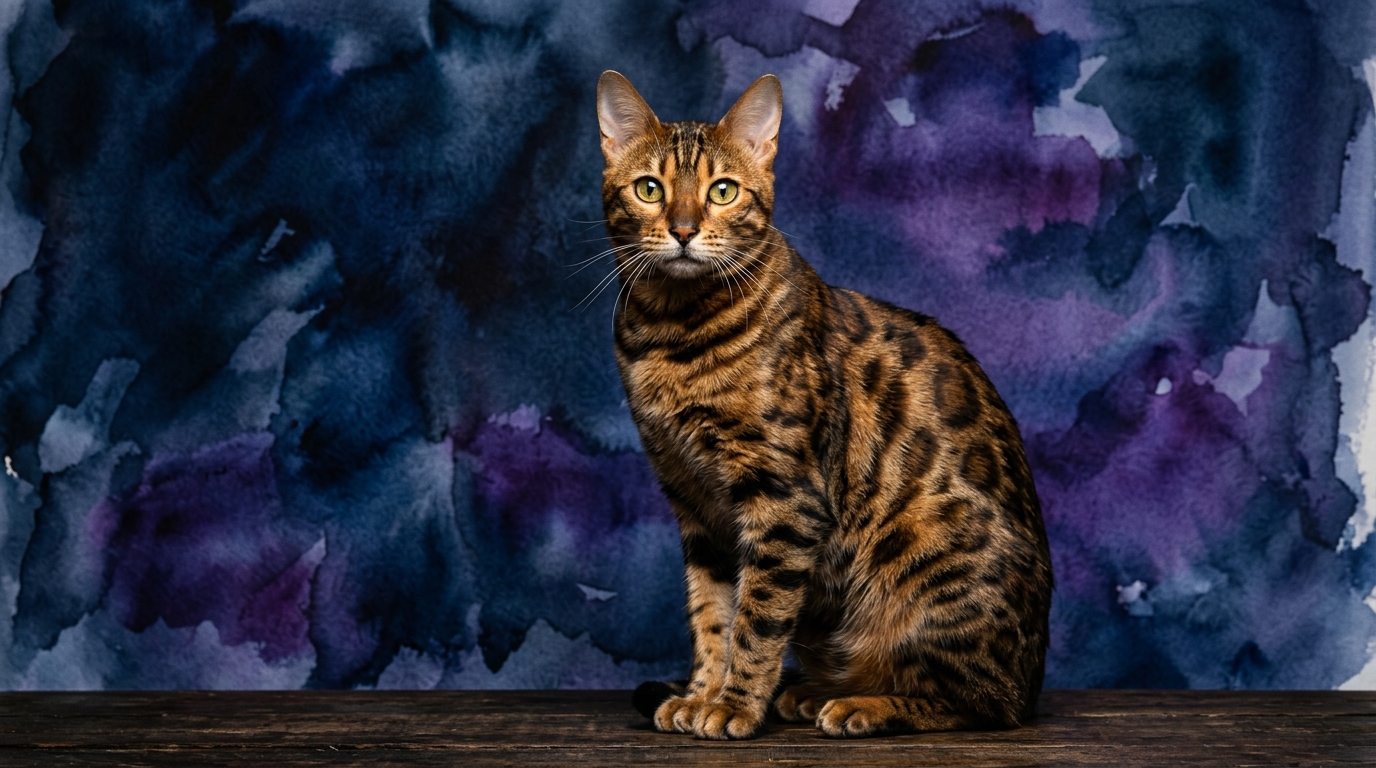
The Bengal cat demonstrates exceptional prowess in Problem Solving (5/5), indicating a superior capacity for navigating complex environmental challenges, quickly deciphering puzzle feeders, or manipulating objects to achieve a goal. Their analytical prowess often manifests as persistent, trial-and-error exploration until a solution is found. With a Training Speed of 4/5, Bengals learn new commands and routines with impressive alacrity, often picking up complex sequences in fewer repetitions than many other breeds. Their Social Intelligence is rated 4/5; while capable of forming deep bonds and understanding human cues, their social interactions often carry an independent streak, processing social information well but engaging on their own terms. Instinctive Drive is a perfect 5/5, reflecting an exceptionally strong innate motivation for exploration, hunting, and climbing, underpinning much of their energetic curiosity. Finally, their Memory is also a perfect 5/5, indicating outstanding retention of routines, learned behaviors, and environmental layouts with remarkable accuracy.
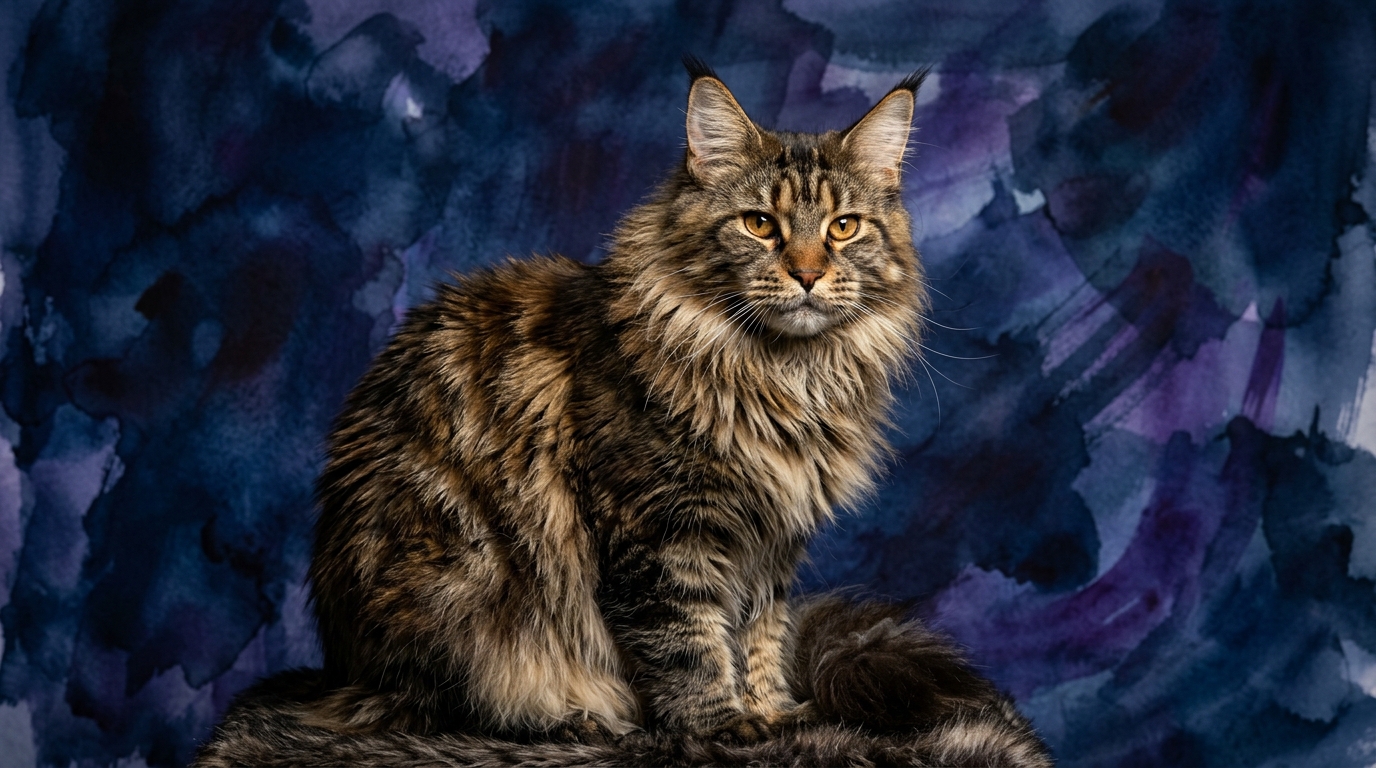
The Maine Coon offers a different, yet equally impressive, cognitive profile. Their Problem Solving ability is strong at 4/5, showcasing a solid capacity for figuring out moderately complex puzzles or strategies for desired outcomes. While not at the Bengal's top tier, their methodical approach allows them to overcome many environmental obstacles with consistent effort. Like the Bengal, their Training Speed is 4/5, demonstrating a rapid uptake of new information and commands, responding well to consistent positive reinforcement. Where the Maine Coon truly shines is in Social Intelligence, scoring a perfect 5/5; they display an exceptional understanding of human emotions, intentions, and communication cues, actively seeking and genuinely enjoying interaction. Their Instinctive Drive is 4/5, robust and present in playful hunting and environmental curiosity, but often tempered with a more relaxed demeanor compared to the intense focus seen in Bengals. Their Memory also scores 4/5, indicating a good retention of places, people, and routines, contributing to their consistent and predictable nature.
Where the Bengal Wins Cognitively
The Bengal cat's cognitive advantages are most evident in its superior Problem Solving and Memory capabilities, alongside its potent Instinctive Drive. With a perfect 5/5 in Problem Solving, Bengals are demonstrably more adept at navigating novel situations, quickly unraveling complex puzzle feeders, or figuring out how to access off-limits areas. Their cognitive approach is often characterized by persistent experimentation and a deep analytical dive into environmental challenges, making them true strategists in their domestic domains. This active mental engagement keeps them seeking new stimuli.
Furthermore, their perfect score in Memory (5/5) gives them a significant edge in retaining learned solutions and mapping their environment with exceptional detail. A Bengal will not only solve a new latch on a cabinet but will remember the precise manipulation needed for weeks, applying that knowledge instantly. This robust memory also strongly supports their advanced problem-solving by allowing them to quickly recall and adapt successful past strategies to new but similar contexts. Their potent Instinctive Drive (5/5), stemming from their wild ancestry, fuels an intense curiosity and a relentless push to explore and master their surroundings, consistently pushing their problem-solving and memory functions to their limits in pursuit of engagement or simulated prey.
Where the Maine Coon Wins Cognitively
The Maine Coon shines brightest in Social Intelligence, a dimension where they truly stand apart from many other breeds, including the Bengal. With a perfect score of 5/5, their exceptional ability to read and respond to human emotions and subtle cues makes them profoundly attuned companions. A Maine Coon often anticipates needs, responds to verbal and non-verbal communication with remarkable accuracy, and actively seeks reciprocal interaction, demonstrating a deep understanding of social dynamics within the household. This heightened social acumen means they integrate seamlessly into family life, often becoming integral, communicative members rather than merely observant residents.
Their cognitive strength in this area fosters an environment of mutual understanding, making them incredibly intuitive and gentle companions who thrive on harmonious coexistence. While Bengals understand social cues, the Maine Coon's cognitive advantage lies in their eagerness and adeptness at forming complex social bonds and participating actively in a relational give-and-take, often initiating interactions and responding with nuanced affection. This profound social engagement is a hallmark of their personality, making them highly desirable for owners seeking a deeply connected feline companion.
Which Is Easier to Train and Why
Both the Bengal and the Maine Coon exhibit a comparable Training Speed (4/5), meaning both breeds are adept at learning new commands and routines with efficiency. However, the *perceived ease* of training can diverge based on their other cognitive traits and primary motivators. Bengals, propelled by their exceptional Instinctive Drive (5/5) and Problem Solving acumen (5/5), can learn complex tricks and agility courses rapidly. Their internal motivation to engage with puzzles and chase simulated prey makes them highly receptive to training that offers mental and physical challenges. The 'why' behind their trainability often stems from their desire to *do* something and figure things out. However, this same drive can sometimes make them less inclined to comply with arbitrary commands if they don't perceive a clear personal benefit or challenge, potentially testing an owner's consistency and creativity.
In contrast, the Maine Coon, with its superior Social Intelligence (5/5), often finds training sessions inherently rewarding due to the positive interaction with their human. While they also learn quickly, their motivation frequently stems from the desire for companionship and pleasing their people, making them very cooperative. Their good Memory (4/5) reinforces learned behaviors, and their slightly less intense Instinctive Drive (4/5) means they are generally less distracted by external stimuli than a Bengal might be during a focused training session. For an owner seeking a cooperative partner who enjoys the *process* of learning together, the Maine Coon might feel "easier" to train due to their affable nature and eagerness to connect, even if the pure learning speed is similar. Ultimately, both are highly trainable, but the Bengal responds best to challenge and utility, while the Maine Coon responds most readily to connection and social reward.
Family Pet Suitability: Active vs. Relaxed Owners
For active owners seeking a highly interactive and engaging companion, the Bengal cat stands out as an ideal choice, largely due to its high Instinctive Drive (5/5) and exceptional Problem Solving abilities (5/5). These cats thrive on engagement, requiring consistent mental and physical stimulation to prevent boredom and channel their abundant energy. An active owner who enjoys interactive play, puzzle toys, teaching complex tricks, or even harness training for outdoor excursions will find the Bengal an eager and capable participant. Their perfect Memory (5/5) means they recall learned activities and routines, eagerly anticipating their next play session or intellectual challenge, integrating well into homes where their innate curiosity and need for exploration are met with enthusiasm and structured activity.
Conversely, for relaxed owners or families seeking a more placid yet still engaging feline presence, the Maine Coon is an excellent choice. Their perfect score in Social Intelligence (5/5) means they are profoundly attuned to their human companions, often content to simply "be" with their family, whether that means curling up nearby, quietly observing household activities, or engaging in gentle, conversational "chirps." While they possess a good Instinctive Drive (4/5) for play, it's generally less intense and more easily satisfied than a Bengal's, making them less demanding of constant structured activity. Their strong social connection often translates into a comforting, predictable presence. They appreciate interaction and play, but their cognitive profile allows them to be equally content with quiet companionship, offering affection and a serene presence without the incessant need for high-octane mental gymnastics that a Bengal typically demands.
The Verdict
Choose a Bengal if you are an active, dedicated owner prepared to provide daily, intensive mental and physical stimulation for a highly driven, problem-solving companion who thrives on challenge.
Opt for a Maine Coon if you value a highly social, intuitive, and affectionate companion who integrates seamlessly into family life with a more relaxed yet still playful demeanor, prioritizing connection.
🧠 Find Your Pet's IQ Score
Our Pet IQ Lab assessment covers 25+ tests across 5 cognitive dimensions — personalized to your breed.
Take the Full IQ Test →Frequently Asked Questions
Are Bengals considered 'wild' cats in temperament?
While Bengals possess a strong instinctive drive and a visually striking coat reminiscent of their wild Asian Leopard Cat ancestors, they are domestic cats, several generations removed from their wild lineage. Their unique cognitive profile reflects this heritage in their high energy and problem-solving skills, but they are fully capable of forming deep bonds in a domestic setting with appropriate engagement.
Do Maine Coons require less attention than Bengals?
Maine Coons, with their superior social intelligence, thrive on interaction and companionship, often positioning themselves near their human family members. While they may not demand the constant, high-intensity play sessions a Bengal does, they still require significant social engagement and affection to be happy and well-adjusted companions.
Which breed is better suited for engaging with complex puzzle toys?
Both breeds enjoy puzzle toys, but the Bengal, with its 5/5 problem-solving ability, will likely master and "solve" new puzzles faster and require more complex, evolving challenges to stay engaged. A Maine Coon (4/5 problem-solving) will also enjoy puzzles, perhaps approaching them with more methodical persistence rather than rapid analytical leaps, and will appreciate the social interaction with their owner during play.