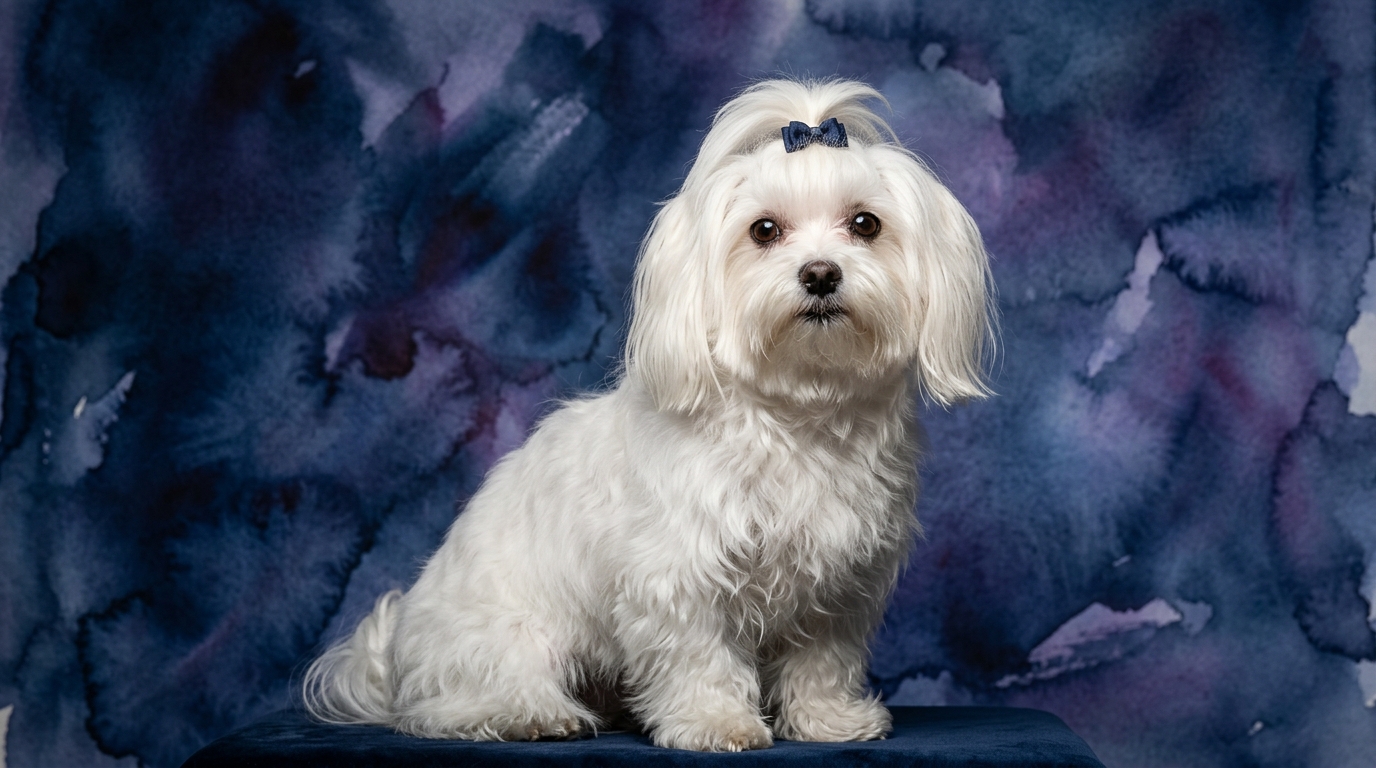

Side-by-Side IQ Profile: Maltese vs. Flat-Coated Retriever
**Maltese (Coren Rank #59)** * **Problem Solving (3/5):** Maltese dogs exhibit a moderate capacity for problem-solving, capable of learning basic routines and navigating familiar household challenges. While they might not excel at complex puzzle toys or multi-step tasks requiring abstract thought, they can certainly figure out how to get attention or locate a favorite treat. Their approach to problems often leans more towards social manipulation than independent logical deduction. * **Training Speed (3/5):** These charming companions possess a moderate training speed, responding well to consistent, positive reinforcement methods. They can acquire new commands and tricks effectively, though their focus may occasionally wander, requiring patience and engaging techniques from their trainers. Success often hinges on making the training feel like a social interaction rather than a rigid task. * **Social Intelligence (5/5):** Here, the Maltese truly shines, demonstrating exceptional social intelligence. They are incredibly attuned to human emotions, capable of sensing subtle shifts in mood and responding with comforting presence or playful antics. Their ability to form deep, empathetic bonds and adapt seamlessly to various social dynamics is a hallmark of their cognitive makeup. * **Instinctive Drive (2/5):** With a low instinctive drive, Maltese dogs are not typically motivated by strong prey instincts or complex working tasks. Their historical role as companions means their drive is primarily focused on social interaction and comfort rather than hunting, retrieving, or guarding. This low drive contributes to their gentle, adaptable nature within a home environment. * **Memory (3/5):** Maltese dogs possess a solid memory for routines, people, and pleasant experiences. They readily recall familiar faces and places, and can remember learned commands, especially those associated with positive reinforcement. While they might not retain long sequences of abstract information, their memory for social cues and daily patterns is reliable.
**Flat-Coated Retriever (Coren Rank #17)** * **Problem Solving (4/5):** Flat-Coated Retrievers display a strong aptitude for problem-solving, readily engaging with challenges that require strategic thinking. They can quickly learn to navigate obstacle courses, figure out how to open gates, or devise methods to reach desired objects. Their cognitive flexibility allows them to adapt and innovate when faced with novel situations. * **Training Speed (4/5):** These energetic dogs boast a high training speed, eagerly absorbing new commands and concepts with remarkable quickness. Their desire to please combined with their focused energy makes them highly receptive to structured learning. They typically pick up new skills rapidly and enjoy the mental engagement that training provides. * **Social Intelligence (3/5):** Flat-Coated Retrievers possess a robust social intelligence, characterized by their outgoing, friendly, and generally agreeable disposition. They interact well with a wide range of people and other animals, showing an open and enthusiastic approach to social encounters. While perhaps not as nuanced in reading subtle human micro-expressions as the Maltese, their broad sociability makes them excellent family companions. * **Instinctive Drive (3/5):** Possessing a moderate instinctive drive, Flat-Coats have a natural inclination for retrieving, stemming from their hunting dog heritage. This drive translates into a keen interest in games of fetch, a desire to carry objects, and a general enthusiasm for tasks that involve working alongside their human partners. This drive is manageable but requires outlets. * **Memory (5/5):** The memory of a Flat-Coated Retriever is exceptional, allowing them to retain vast amounts of information, from complex command sequences to intricate routes and past experiences. They rarely forget a lesson learned or a person they've met, making them highly reliable in trained behaviors and familiar environments. This strong recall supports advanced training and consistency.
Where the Maltese Wins Cognitively
The Maltese’s cognitive strengths are most evident in its unparalleled social intelligence. Scoring a perfect 5/5, this breed excels at interpreting the subtle cues of human interaction, making them exceptional emotional support companions. They possess an innate ability to read facial expressions, body language, and vocal tones, allowing them to respond with remarkable empathy and adjust their behavior to suit the mood of their household. This profound attunement fosters deep, reciprocal bonds, making them masters of relational cognition.
Where the Flat-Coated Retriever Wins Cognitively
In contrast, the Flat-Coated Retriever’s cognitive prowess shines in areas demanding active engagement and retention. With a 4/5 in problem-solving, a 4/5 in training speed, and an exceptional 5/5 in memory, they are adept at mastering complex tasks and retaining a broad repertoire of commands and skills over long periods. Their ability to quickly grasp new concepts and recall intricate sequences of actions makes them formidable learners, thriving in environments that challenge their intellect and physical capabilities.
Which is Easier to Train and Why
When considering ease of training, the Flat-Coated Retriever generally presents a more straightforward experience for owners seeking to teach a wide array of commands and advanced skills. Their higher scores in training speed and memory, coupled with a moderate instinctive drive that often translates into a desire to "work" and please, mean they pick up new lessons rapidly and retain them consistently. They thrive on the structured engagement of training sessions, often eager to perform and benefit from clear, consistent instruction, making them responsive and reliable students.
The Maltese, while certainly trainable, may require a different approach. Their moderate training speed and memory, combined with an intense focus on social intelligence rather than task-oriented drive, means training success often hinges on leveraging their desire for companionship and positive social interaction. They might be more prone to distraction if not emotionally invested in the session, and their smaller stature can sometimes lead owners to be less rigorous with their training. However, when motivated by affection and gentle encouragement, they can learn a substantial number of commands and house manners effectively, though perhaps not with the same speed or precision as a Flat-Coated Retriever tackling complex obedience routines.
Which Suits Active Owners vs. Relaxed Owners
For active owners seeking a canine partner for adventures and structured activities, the Flat-Coated Retriever is an ideal match. Their moderate instinctive drive and high problem-solving capacity mean they thrive on regular physical exercise combined with mental challenges like retrieving games, agility, or obedience trials. They possess the stamina and intellectual curiosity to engage enthusiastically in long hikes, runs, and complex training regimens, making them excellent companions for an owner with an energetic lifestyle.
Conversely, the Maltese is better suited for relaxed owners who prioritize companionship and gentle interaction over strenuous physical activity. Their lower instinctive drive and primary focus on social intelligence mean they are content with moderate daily walks and indoor play, preferring to spend much of their time close to their human family. They excel as lap companions, offering comfort and emotional support without demanding extensive physical or mental exertion, making them perfect for those seeking a devoted, less demanding presence.
The Verdict
Choose a Maltese if your lifestyle prioritizes deep emotional connection, a calm home environment, and a devoted companion content with moderate activity and abundant affection.
Opt for a Flat-Coated Retriever if you lead an active life, enjoy engaging in structured training, and seek a spirited, intelligent partner for outdoor adventures and mental challenges.
🧠 Find Your Pet's IQ Score
Our Pet IQ Lab assessment covers 25+ tests across 5 cognitive dimensions — personalized to your breed.
Take the Full IQ Test →Frequently Asked Questions
Are Maltese difficult to train?
Maltese dogs are not inherently difficult to train, but they respond best to positive reinforcement and training methods that leverage their strong social bond with their owner. While they might not be as quick to learn complex tasks as some working breeds, consistency and patience will yield excellent results, especially with house manners and basic commands.
Do Flat-Coated Retrievers need a lot of mental stimulation?
Absolutely, Flat-Coated Retrievers have a high cognitive capacity and thrive on mental stimulation. Their excellent memory and problem-solving skills mean they require regular engagement through training, puzzle toys, and interactive games to prevent boredom and channel their energy constructively.
Which breed is better with children?
Both breeds can be good with children, but their interactions differ. Flat-Coated Retrievers are generally robust and playful, enjoying active games with older, respectful children. Maltese dogs, due to their delicate size, are often better suited for homes with older, gentle children who understand how to interact safely with a small dog, or as companions for adults.