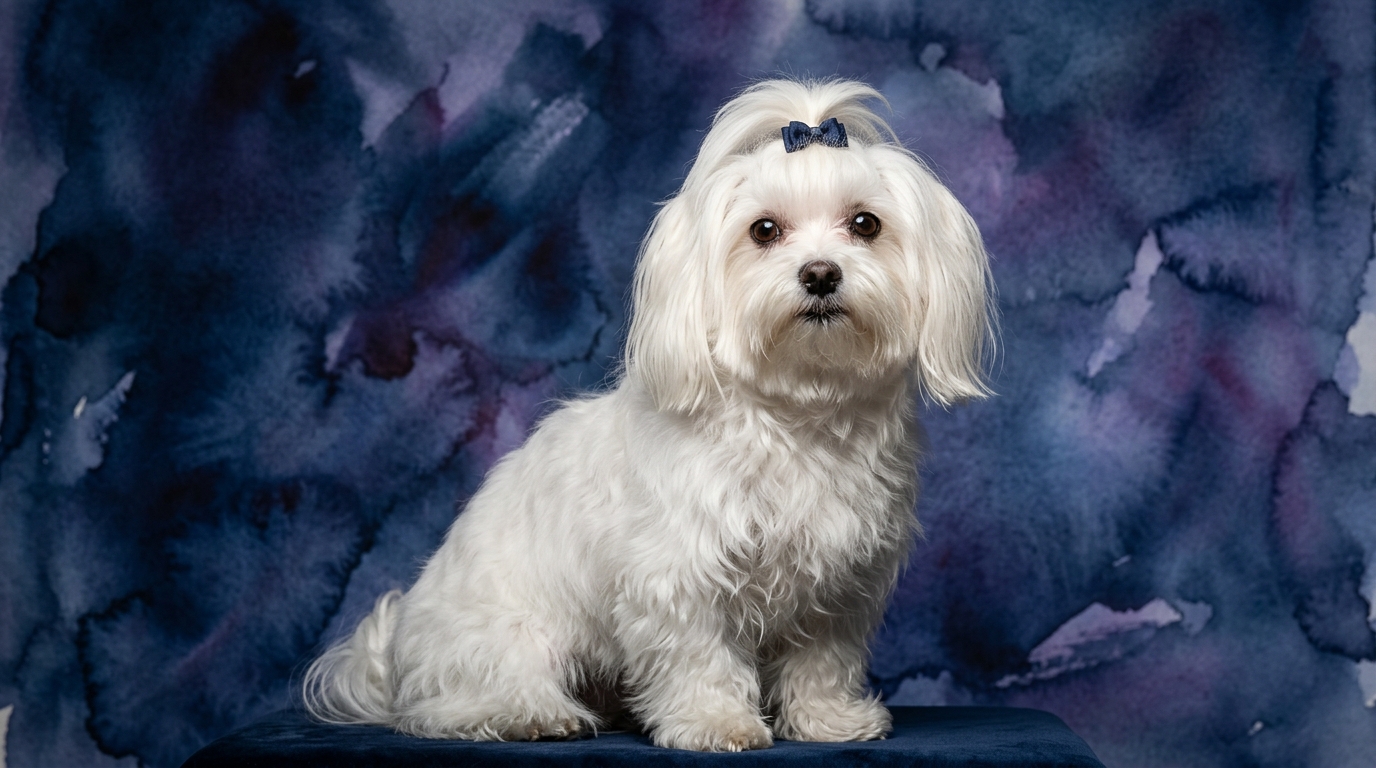

Side-by-Side Cognitive Profiles: Maltese vs. Manchester Terrier
The Cosmic Pet Pet IQ Lab employs a five-dimensional framework to assess canine cognition, offering a granular view beyond generic labels. Let's delve into how the Maltese, a Toy Group stalwart, and the Manchester Terrier, a vibrant member of the Terrier Group, measure up across these specific intellectual facets.
The Maltese, with a Coren ranking of #59, demonstrates a nuanced cognitive style primarily oriented towards social engagement. Their problem-solving capabilities, rated 3/5, often manifest in navigating human-centric routines and understanding subtle cues, rather than complex environmental puzzles. Their training speed, also 3/5, indicates a steady learning curve, particularly when positive reinforcement and social connection are central to the process. Where the Maltese truly shines is in social intelligence, scoring an exceptional 5/5; they are exquisitely attuned to human emotions and social dynamics, often anticipating needs and reacting with remarkable empathy. Their instinctive drive is notably low at 2/5, prioritizing companionship over independent hunting or exploration. Finally, their memory, rated 3/5, is solid for routines, commands, and the preferences of their human family.
The Manchester Terrier, while not included in Coren's original ranking, presents a cognitive profile shaped by its terrier heritage. Their problem-solving ability, like the Maltese, stands at 3/5, but often leans towards practical, environmental challenges or figuring out how to achieve a self-directed goal. Their training speed, also 3/5, suggests they learn effectively, though their independent streak means engaging and consistent methods are crucial to maintain focus. The Manchester Terrier's social intelligence is rated 3/5; they are attentive and form strong bonds, but their focus is more on understanding direct communication and boundaries than the profound emotional mirroring seen in the Maltese. Their instinctive drive is a moderate 3/5, reflecting a natural curiosity, a desire to explore, and a discernible prey drive. Their memory, also 3/5, serves their practical intelligence well, allowing them to recall learned behaviors, spatial layouts, and environmental details.
Where the Maltese Wins Cognitively
The Maltese's undeniable cognitive strength lies in their extraordinary social intelligence. At 5/5, they possess an unparalleled ability to read and respond to human emotional states and social nuances. This isn't merely about recognizing commands; it's about understanding the subtle shifts in tone, body language, and mood that indicate a human's feelings. A Maltese might intuitively offer comfort when their person is distressed or adapt their play style to match a quiet evening, demonstrating a profound empathic capacity. This high social acumen allows them to form exceptionally deep, reciprocal bonds, making them masters of companionship and emotional support. Their cognitive processing is deeply integrated with their desire for human connection, making them highly responsive to social feedback.
Where the Manchester Terrier Wins Cognitively
The Manchester Terrier's cognitive advantages are rooted in their inherent terrier characteristics, manifesting as resourceful and independent thinking. While their problem-solving score is similar to the Maltese, it’s often applied to more self-directed tasks, such as figuring out how to access a desired object or navigate a complex outdoor environment. Their moderate instinctive drive (3/5) fuels a practical curiosity, making them adept at exploring and understanding their physical surroundings. This breed tends to excel in scenarios requiring a degree of autonomy and persistence, driven by their own internal motivations rather than solely by human direction. Their cognitive strengths lean towards practical application and a sturdy independence of thought.
Which is Easier to Train and Why
When considering ease of training, the Maltese often presents as more straightforward for many owners, primarily due to their exceptional social intelligence and strong desire to please their human companions. Their cognitive focus is intensely directed towards human interaction, meaning they are highly motivated by praise, affection, and the opportunity to remain close to their person. This social drive makes them receptive to learning commands and routines that strengthen their bond. However, their small size sometimes leads owners to be less consistent, which can inadvertently hinder their progress, as any dog benefits from clear expectations.
The Manchester Terrier, while equally capable of learning, can pose a different set of training challenges due to their independent terrier spirit and moderate instinctive drive. They might be more inclined to question a command or become distracted by environmental stimuli, such as a scurrying leaf or distant sound, which triggers their natural curiosity. Training a Manchester Terrier requires a firm but fair approach, high consistency, and making sessions dynamic and engaging to hold their attention against their innate desire for self-directed exploration. Their focus can be external, requiring more effort to redirect it back to the trainer.
Which Suits Active Owners vs. Relaxed Owners
For relaxed owners who cherish quiet companionship and intimate indoor interactions, the Maltese is often the more fitting choice. Their cognitive makeup, with its emphasis on social intelligence and low instinctive drive, means they thrive in environments where their primary role is that of a devoted companion. While they enjoy gentle walks and play, their physical exercise needs are moderate, and their mental stimulation is largely satisfied by engaging with their human family. They integrate seamlessly into a calm household rhythm, perfectly content with lap time and close proximity.
Conversely, the Manchester Terrier is better suited for active owners who enjoy a more dynamic lifestyle and can provide consistent mental and physical engagement. Their moderate instinctive drive and independent nature mean they require more than just a casual stroll; they benefit from structured play, regular opportunities to explore, and activities that challenge their practical problem-solving skills. Owners who appreciate a dog with a spirited personality and can channel their energy into training, sports, or outdoor adventures will find the Manchester Terrier a rewarding and engaging partner, preventing boredom and potential misdirection of their natural drives.
The Verdict: When to Choose Each Breed
The Verdict
Choose the Maltese if you seek a deeply empathetic, emotionally attuned companion whose cognitive strengths lie in understanding human nuances and forming profound social bonds, thriving in a nurturing, companion-centric home.
Opt for the Manchester Terrier if you desire a spirited, independent thinker with a zest for practical exploration and activity, and are prepared to provide consistent mental and physical challenges to channel their terrier drive.
🧠 Find Your Pet's IQ Score
Our Pet IQ Lab assessment covers 25+ tests across 5 cognitive dimensions — personalized to your breed.
Take the Full IQ Test →Frequently Asked Questions
Are Maltese difficult to train?
Maltese are generally receptive to training, especially with positive reinforcement, because they are so eager to please their people and thrive on social interaction. Challenges often arise from their small size leading to less rigorous owner expectations, not a lack of cognitive ability.
Do Manchester Terriers require a lot of exercise?
Yes, Manchester Terriers are energetic and possess a significant instinctive drive, meaning they need regular, engaging exercise and mental stimulation to be content. Daily walks, playtime, and puzzle toys are essential to channel their natural curiosity and prevent boredom.
Which breed is better with children?
The Maltese, with its high social intelligence and gentle nature, generally adapts well to respectful children who understand how to interact with a small dog. The Manchester Terrier can be good with older, considerate children, but their terrier energy and occasional independent streak might require more supervision with very young kids.