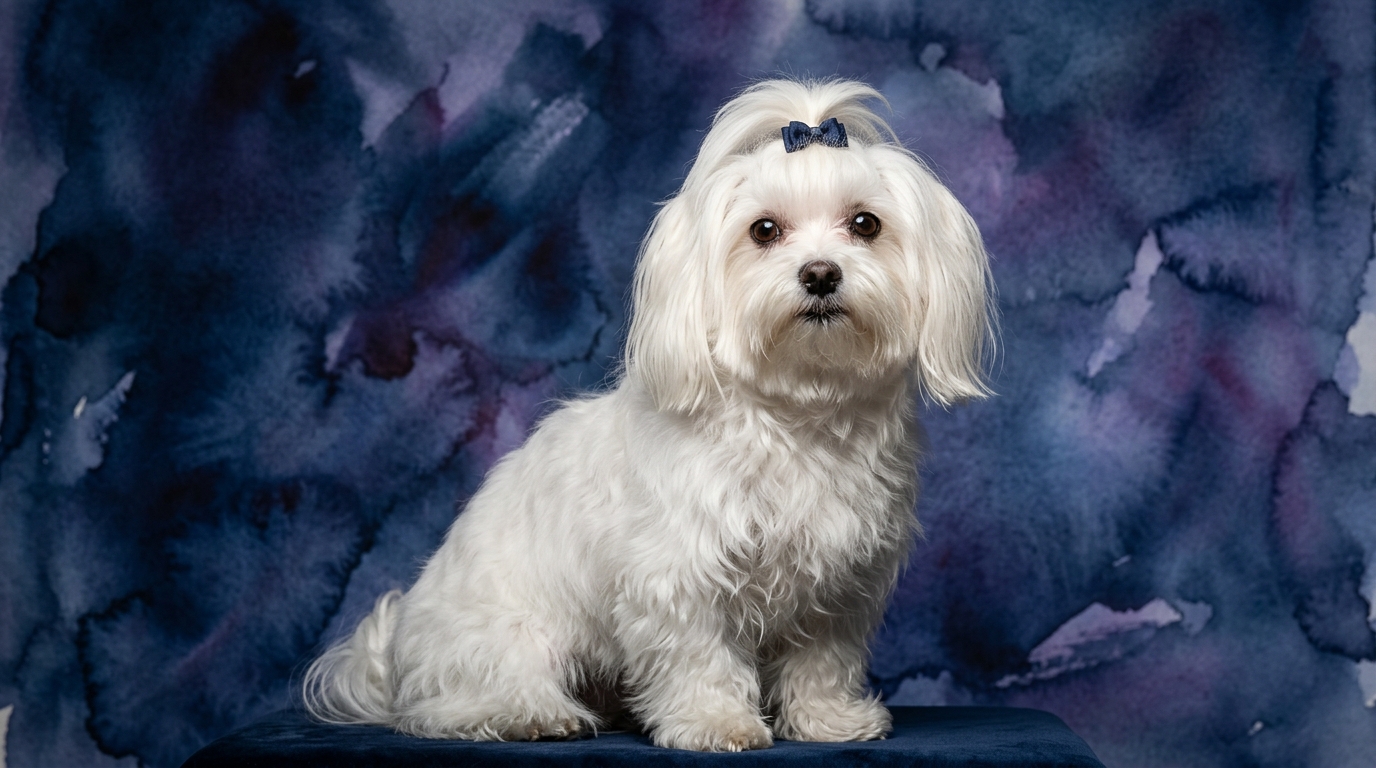

Side-by-Side IQ Profile: Maltese vs. Mastiff
Let's examine the cognitive architecture of these two breeds through the Cosmic Pet Pet IQ Lab's five dimensions:
*Maltese (Toy, Coren rank #59)* Problem Solving (3/5): The Maltese exhibits a moderate capacity for navigating new challenges, capable of figuring out simple puzzles or adapting to household routines with some guidance. Training Speed (3/5): These spirited companions learn new commands at an average pace, requiring consistent positive reinforcement to solidify understanding. Social Intelligence (5/5): A standout trait, the Maltese possesses exceptional social acumen, excelling at reading human emotions, understanding social cues, and forming deep, intuitive bonds with their family. Instinctive Drive (2/5): Their drive for traditional canine tasks like hunting or guarding is relatively low, reflecting their primary role as companions. Memory (3/5): The Maltese maintains a moderate memory, recalling learned commands, routines, and experiences over a reasonable duration.
*Mastiff (Working, Coren rank #72)* Problem Solving (3/5): The Mastiff also demonstrates a moderate ability to solve problems, understanding spatial relationships and learning to manipulate objects, often with a deliberate approach. Training Speed (3/5): Like the Maltese, Mastiffs learn new tasks at an average rate, benefiting from patient, consistent training methods that respect their independent nature. Social Intelligence (3/5): Mastiffs show a solid, functional level of social intelligence, understanding hierarchical structures and forming strong, protective bonds, though less overtly expressive than some breeds. Instinctive Drive (3/5): Possessing a moderate instinctive drive, Mastiffs retain a natural inclination towards guarding and protection, reflecting their historical working roles. Memory (3/5): Their memory is also moderate, allowing them to recall training, routines, and significant events, contributing to their reliability once a lesson is learned.
Where the Maltese Wins Cognitively
The Maltese clearly excels in social intelligence, scoring a perfect 5 out of 5. This signifies a profound ability to interpret subtle human cues, emotional states, and social dynamics. A Maltese is particularly adept at understanding when its owner is happy, sad, or stressed, often responding with comforting gestures or playful attempts to lighten the mood. This heightened social awareness makes them incredibly responsive to nuanced interactions, allowing them to anticipate human intentions and adapt their behavior, fostering exceptionally deep and intuitive companionship. Their capacity for social mirroring and emotional attunement is a hallmark of their cognitive profile.
Where the Mastiff Wins Cognitively
The Mastiff shows a distinct cognitive edge in instinctive drive, registering a 3 out of 5 compared to the Maltese's 2 out of 5. This difference represents a significant divergence in their foundational cognitive wiring. A Mastiff's instinctive drive manifests as a robust natural inclination towards specific tasks, particularly guarding and protection. This isn't merely learned behavior; it's an inherent predisposition to survey their environment, identify potential threats, and act as a deterrent. Their brain is wired to prioritize vigilance and security, making them formidable guardians even without extensive specific training, a direct reflection of their historical working lineage.
Which is Easier to Train and Why
While both breeds share a training speed score of 3 out of 5, their other cognitive dimensions influence the training experience. The Maltese, with its exceptional social intelligence (5/5), often presents as more eager to please and more attuned to its trainer's desires. This high social acumen means a Maltese is likely to pick up on subtle cues, respond positively to praise, and actively seek interaction, making the training process feel more collaborative. Their desire for human closeness translates into a strong motivation to comply. In contrast, the Mastiff, with a social intelligence of 3/5 and a stronger instinctive drive (3/5), might approach training with a more independent mindset. While capable of learning, their size and protective instincts mean early, consistent socialization and obedience training are crucial to channel their natural drives. A Mastiff might require more patience and a firmer, yet always positive, approach to ensure they understand their role and respect boundaries. Therefore, the Maltese's profound social connection often makes it a more immediately responsive student, whereas the Mastiff requires a trainer who understands and can harness its more independent, driven nature effectively.
Suitability for Active vs. Relaxed Owners
The cognitive profiles of these breeds point to distinct owner preferences. The Maltese thrives on consistent social interaction, a direct result of its exceptional social intelligence. This breed flourishes with owners who are present, enjoy frequent interaction, and provide gentle mental stimulation through trick training and ample cuddle time. While not needing strenuous physical exercise, a Maltese appreciates owners who include them in social activities where their social skills can shine. They are ideally suited for relaxed owners prioritizing intimate companionship and indoor activities, committed to daily engagement that stimulates their keen social minds. The Mastiff, with its moderate instinctive drive and more independent social intelligence, requires an owner who understands its need for purpose and structure, often guarding the home. While physically imposing, Mastiffs are not typically high-energy; they are content with moderate daily walks. However, their cognitive makeup means they need calm, confident leaders, providing consistent boundaries and early, thorough socialization to manage protective instincts. They suit relaxed owners who appreciate a steadfast, watchful companion and are prepared to dedicate time to foundational training and ensuring a secure environment. Both require engaged owners, but their engagement needs differ significantly.
The Verdict
Choose a Maltese if you seek a highly socially attuned companion who thrives on emotional connection and subtle communication, making them perfect for those prioritizing intimate, responsive companionship in a smaller package.
Opt for a Mastiff if you desire a steadfast, protective presence with a strong sense of territory and a deliberate demeanor, suited for owners who can provide calm, consistent leadership and appreciate a monumental, watchful friend.
🧠 Find Your Pet's IQ Score
Our Pet IQ Lab assessment covers 25+ tests across 5 cognitive dimensions — personalized to your breed.
Take the Full IQ Test →Frequently Asked Questions
Does the Maltese's high social intelligence make it prone to separation anxiety?
Their exceptional social acumen means Maltese dogs form incredibly strong bonds with their families. If left alone for extended periods without proper training, this deep attachment can indeed manifest as separation distress, requiring owners to foster independence gently.
Are Mastiffs difficult to train due to their size and guarding instincts?
Mastiffs are not inherently difficult to train, but their size and moderate instinctive drive for protection mean consistency and early socialization are paramount. Training should focus on clear boundaries and positive reinforcement to channel their natural tendencies effectively.
How do their problem-solving scores (both 3/5) translate into daily life?
A 3/5 in problem-solving indicates both breeds can navigate common household challenges and learn routines, but they won't typically devise complex solutions independently. They will benefit from clear guidance and consistent environments rather than being expected to figure out intricate puzzles on their own.