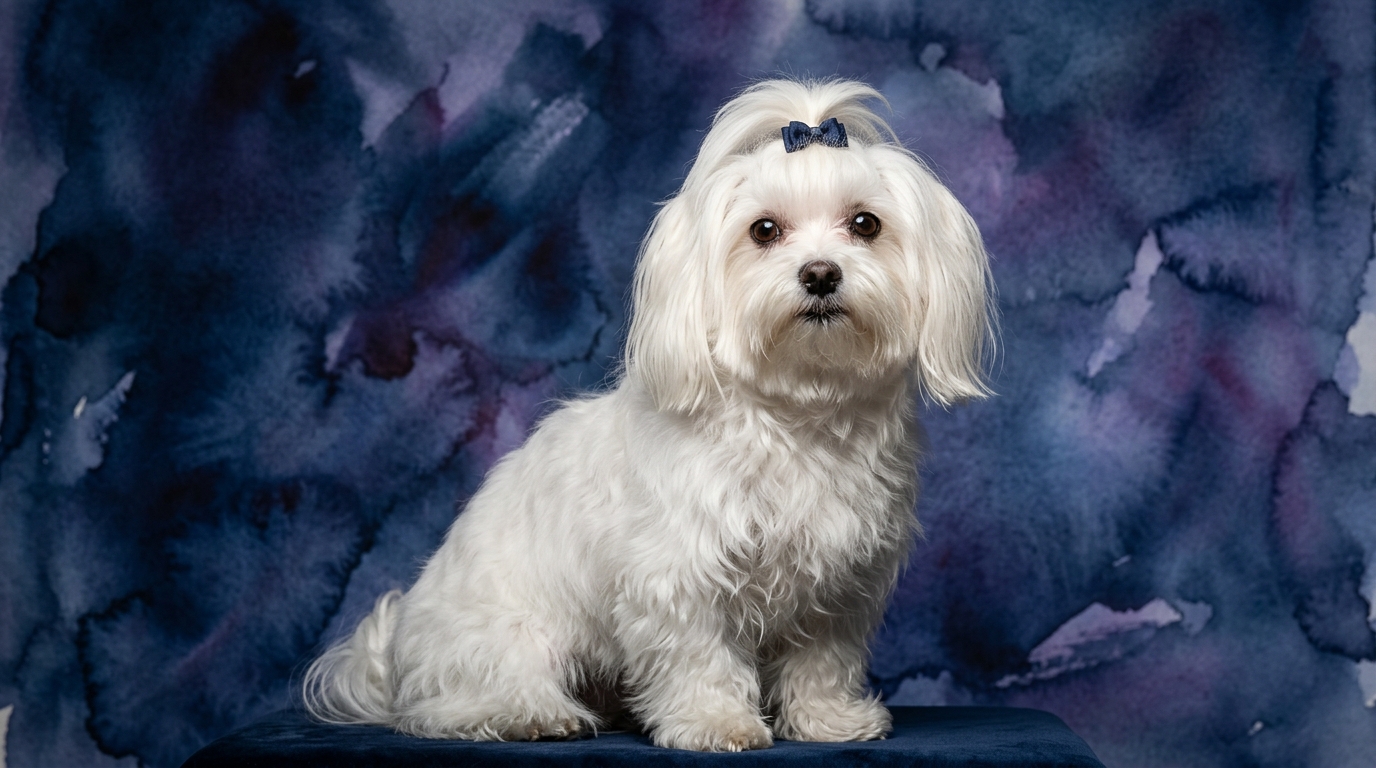

Side-by-Side IQ Profile: Maltese vs. Miniature Poodle
To understand the cognitive differences, The Cosmic Pet Pet IQ Lab assesses five key dimensions of intelligence. Let's examine how the Maltese (Coren rank #59) and the Miniature Poodle (Coren rank #2) measure up.
For the Maltese:
Problem Solving (3/5): The Maltese shows a moderate ability to navigate novel challenges or figure out tasks independently, often preferring human guidance. Their problem-solving efforts frequently aim at social outcomes, like gaining attention.
Training Speed (3/5): Learning new commands generally takes a moderate number of repetitions. While capable, they may require more patience and consistency, with motivation often tied to social reward.
Social Intelligence (5/5): This is a standout trait; the Maltese possesses an exceptional capacity to understand human emotions, read body language, and adapt behavior to social cues. Their deep empathy fosters strong bonds and makes them highly attuned companions.
Instinctive Drive (2/5): With low instinctive drive, the Maltese exhibits minimal inclination for traditional roles like hunting or herding, rarely acting on primal urges to chase or retrieve.
Memory (3/5): A solid, moderate memory allows them to recall learned commands and routines. They retain lessons, though complex sequences might require refreshers more often than for breeds with higher scores.
For the Miniature Poodle:
Problem Solving (5/5): Miniature Poodles excel at independently analyzing and overcoming obstacles, quickly deciphering how to open gates or retrieve hidden objects, often employing novel strategies. They actively seek and enjoy mental challenges.
Training Speed (5/5): This breed absorbs new commands and behaviors with remarkable efficiency, requiring very few repetitions to grasp concepts. This makes them highly responsive and engaging for advanced training.
Social Intelligence (3/5): While capable of strong bonds, their social intelligence is moderate. They are attentive but may not possess the same innate empathetic depth or subtle emotional attunement as the Maltese, often engaging more through activity than quiet connection.
Instinctive Drive (3/5): Displaying a moderate instinctive drive, reflecting their water retriever heritage, this can manifest as an inclination to chase, retrieve, or engage in active play, useful for dog sports.
Memory (5/5): With a perfect score, Miniature Poodles demonstrate an exceptional ability to recall commands, past experiences, and routines over extended periods. Once learned, lessons are deeply ingrained, ensuring consistent understanding.
Where the Maltese Wins Cognitively
The Maltese's cognitive strength lies overwhelmingly in its sophisticated social intelligence, scoring a perfect 5/5. Unlike breeds focused on independent tasks, the Maltese excels at reading the nuanced emotional states of humans, often anticipating needs or moods without explicit cues. This profound capacity for empathy allows them to offer unparalleled emotional support, adapting their behavior to comfort or engage their human companions with remarkable precision. Their cognitive landscape prioritizes interpersonal connection, making them masters of harmonious cohabitation and devoted, responsive family members who can sense when a quiet cuddle is needed versus a gentle play session.
Where the Miniature Poodle Wins Cognitively
The Miniature Poodle demonstrates a formidable cognitive profile, particularly in problem-solving (5/5), training speed (5/5), and memory (5/5). Their exceptional problem-solving acumen means they don't just follow instructions; they actively analyze situations, often devising creative solutions to novel challenges, whether it’s figuring out how to open a treat container or navigating a complex agility course. This analytical prowess, combined with a rapid acquisition of new information and an enduring memory, means a Miniature Poodle learns quickly and retains those lessons for the long term. They are adept at complex sequential tasks and can perform intricate routines with consistent accuracy, reflecting a deep cognitive processing capability that allows them to connect actions with outcomes efficiently.
Which is Easier to Train and Why
Based on their cognitive profiles, the Miniature Poodle is demonstrably easier to train for obedience, tricks, and complex tasks due to its perfect scores in training speed and memory. They grasp new commands with minimal repetition, often understanding a concept after only a few tries, and they retain that knowledge for extended periods. Their moderate instinctive drive can also be channeled effectively into motivational training. In contrast, the Maltese, with moderate scores in training speed (3/5) and memory (3/5), requires more patience and consistency. While they are eager to please their beloved humans (a function of their high social intelligence), their learning curve for abstract commands is longer, and their recall might need more frequent reinforcement. Training a Maltese often relies heavily on leveraging their desire for social connection and positive reinforcement, rather than their innate drive to perform complex cognitive tasks.
Which Suits Active Owners vs. Relaxed Owners
For active owners seeking a canine partner for sports, advanced obedience, or regular mental stimulation, the Miniature Poodle is an ideal match. Their high problem-solving ability, rapid training speed, and excellent memory make them highly capable in activities like agility, rally obedience, or even scent work, thriving on challenges that engage their sharp minds and moderate instinctive drive. They require consistent engagement to prevent boredom. Conversely, the Maltese is better suited for relaxed owners who prioritize companionship and emotional connection over strenuous activities or complex training regimens. Their exceptional social intelligence makes them content with gentle walks, cuddle sessions, and being an integral part of daily family life, thriving on close physical and emotional proximity. While they enjoy play, their lower instinctive drive and moderate problem-solving mean they are not constantly seeking demanding mental or physical tasks, preferring the comfort of routine and human interaction.
The Verdict
Choose the Maltese if your primary desire is an exceptionally empathetic, emotionally attuned companion who thrives on close social bonds and gentle interaction, valuing connection over complex cognitive tasks.
Opt for the Miniature Poodle if you seek an intellectually agile canine partner capable of rapid learning, excelling in dog sports, and engaging in stimulating activities, thriving on mental challenges and consistent engagement.
🧠 Find Your Pet's IQ Score
Our Pet IQ Lab assessment covers 25+ tests across 5 cognitive dimensions — personalized to your breed.
Take the Full IQ Test →Frequently Asked Questions
Do Maltese dogs require a lot of mental stimulation?
Maltese dogs benefit from moderate mental stimulation, primarily through social interaction, gentle play, and learning basic house manners. While they aren't driven by complex puzzle-solving like some breeds, consistent positive reinforcement and engaging with their human family keep their minds active and content.
Can Miniature Poodles be good emotional support dogs despite their moderate social intelligence score?
Yes, Miniature Poodles can make excellent emotional support dogs due to their high trainability, memory, and ability to learn specific tasks to assist their owners. While their social intelligence score is moderate, their strong bond with their handler, combined with their capacity to be trained for specific comforting behaviors, makes them highly effective in this role.
Is there a significant difference in grooming needs related to their cognitive profiles?
Grooming needs are primarily related to coat type, not cognitive profiles, though a more cooperative dog (often linked to trainability) might make grooming easier. Both breeds require regular grooming to maintain their long, non-shedding coats, but neither their cognitive strengths nor weaknesses directly influence the physical necessity of brushing, bathing, or clipping.