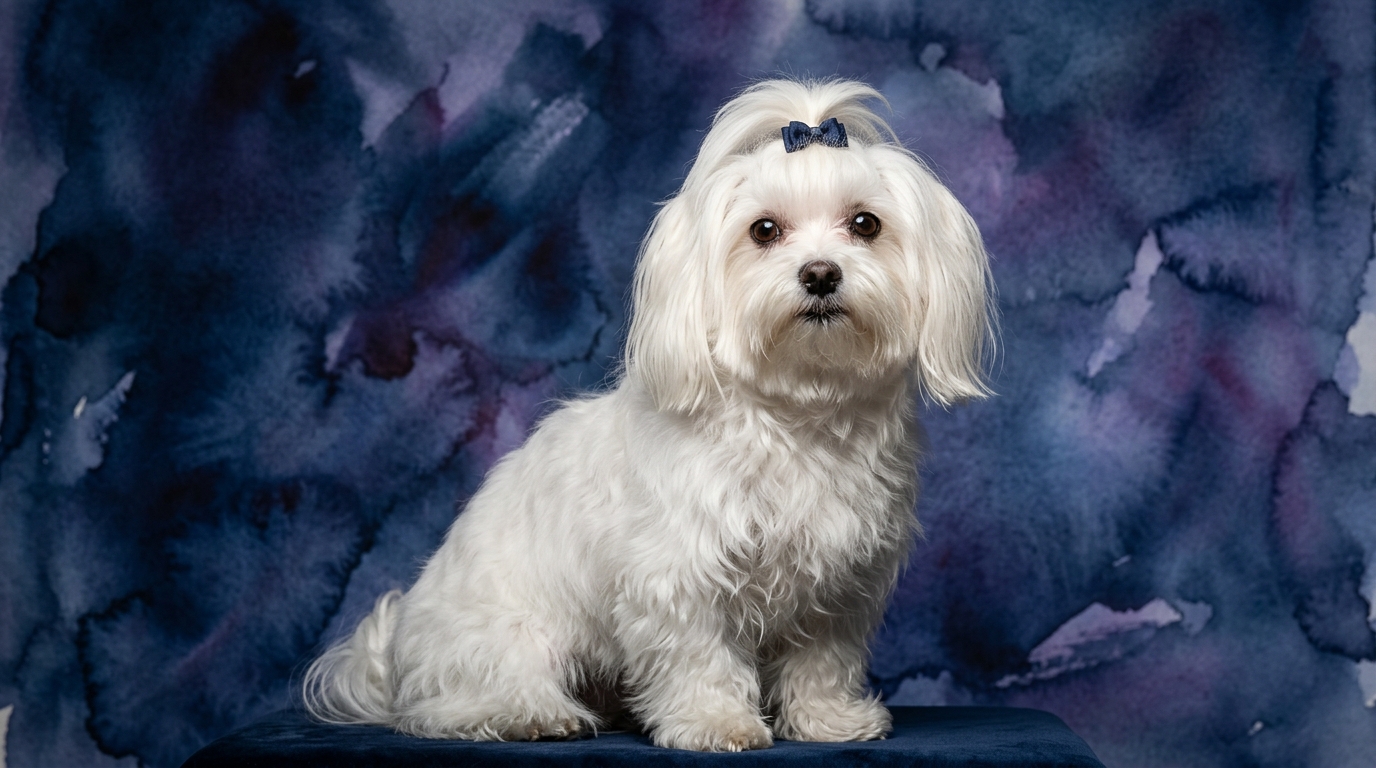

Side-by-Side IQ Profile
The Cosmic Pet Pet IQ Lab employs a multi-faceted approach to assess canine cognition, evaluating five distinct dimensions: problem solving, training speed, social intelligence, instinctive drive, and memory. For the Maltese, a breed recognized by Stanley Coren at rank #59 for working and obedience intelligence, their profile shows a Problem Solving score of 3/5, indicating a moderate ability to navigate novel challenges and figure out solutions independently. Their Training Speed also registers at 3/5, suggesting they grasp new commands at a steady, average pace. Where the Maltese truly shines is in Social Intelligence, scoring an exceptional 5/5, reflecting an acute sensitivity to human emotions, intentions, and communication cues. Their Instinctive Drive is lower at 2/5, meaning they exhibit less inherent motivation for traditional canine activities like hunting or guarding, and their Memory stands at 3/5, indicating a solid ability to recall past experiences and learned behaviors.
In contrast, the Russian Toy, a breed not yet ranked by Coren, presents a different cognitive landscape. Their Problem Solving ability matches the Maltese at 3/5, demonstrating a similar capacity for independent thought when faced with new puzzles. Their Training Speed also aligns at 3/5, suggesting an equivalent rate of learning new skills and commands. However, the Russian Toy's Social Intelligence is rated 3/5, an average score that implies they are capable of forming bonds and understanding human cues, but perhaps with less profound sensitivity than the Maltese. Their Instinctive Drive is slightly higher at 3/5, hinting at a more pronounced natural inclination towards exploration, chasing, or other inherent canine behaviors. Finally, their Memory score is 3/5, on par with the Maltese, indicating a reliable capacity for retaining information.
Where Maltese Wins Cognitively
The Maltese’s undisputed cognitive advantage lies in their exceptional Social Intelligence, scoring a perfect 5/5 compared to the Russian Toy’s 3/5. This isn't merely about friendliness; it signifies a profound capacity for emotional attunement and sophisticated communication with their human companions. A Maltese is acutely perceptive to subtle shifts in tone, body language, and mood, often anticipating their owner's needs or reactions before they are overtly expressed. This heightened social awareness means they are often more responsive to non-verbal cues, making them incredibly intuitive companions who seem to “get” their people on a deeper level. They are masters of reading human intentions, which translates into a dog that can offer comfort, engage in reciprocal play, or adjust their behavior based on their human’s emotional state with remarkable precision. This superior social cognition fosters intensely strong bonds and contributes to their reputation as devoted, empathetic companions.
Where Russian Toy Wins Cognitively
The Russian Toy exhibits a cognitive edge in their Instinctive Drive, rated 3/5 compared to the Maltese’s 2/5. While neither breed is a working dog, this slightly elevated drive in the Russian Toy points to a greater natural inclination for engaging with their environment and pursuing innate canine behaviors. This manifests as a more pronounced curiosity, a tendency to explore novel scents, or a keen interest in chasing small moving objects, even if just toys. This higher drive suggests a dog that might be more independently motivated to investigate their surroundings, potentially displaying more zest for active play or even some rudimentary “hunting” of squeaky toys. For owners who enjoy engaging their dog in small-scale scent games, indoor agility, or general exploratory activities, the Russian Toy's slightly more robust instinctive curiosity offers a subtle but distinct cognitive advantage, indicating a dog that is perhaps more self-driven to interact with and investigate the world around them.
Which is Easier to Train and Why
When assessing ease of training, both the Maltese and the Russian Toy share an identical Training Speed score of 3/5, suggesting they learn new commands at a comparable, average pace. However, the Maltese's superior Social Intelligence (5/5) provides a distinct advantage in the practical application of training. A Maltese, with their profound sensitivity to human cues and strong desire for connection, is often more intrinsically motivated to please their handler. They are more likely to pay close attention to their owner's verbal and non-verbal signals, making them highly responsive to positive reinforcement and eager to comply to maintain that cherished human bond. Their cognitive ability to deeply understand human intentions and emotions means they often “try harder” to meet expectations.
In contrast, while the Russian Toy also learns at an average speed, their lower Social Intelligence (3/5) and slightly higher Instinctive Drive (3/5) mean they might be somewhat more independent or easily distracted by environmental stimuli. They are certainly trainable and capable of learning complex tasks, but their motivation might stem more from the reward itself or their own curiosity rather than the deep desire for social harmony that characterizes the Maltese. This isn't to say they are difficult, but the Maltese's cognitive makeup makes them inherently more inclined to actively collaborate in the training process, often appearing more “eager to please” due to their keen social perception.
Which Suits Active Owners vs. Relaxed Owners
Considering their distinct cognitive profiles, the Maltese generally aligns better with relaxed owners seeking a deeply connected companion, while the Russian Toy might appeal more to owners who enjoy engaging their dog in varied, light activities. The Maltese’s profound Social Intelligence (5/5) and lower Instinctive Drive (2/5) make them supremely content as lapdogs and devoted house companions. They thrive on close human interaction, finding immense satisfaction in simply being near their people and participating in quiet, shared moments. Their cognitive strengths are best utilized in environments where their emotional perceptiveness and desire for companionship are prioritized, rather than demanding physical or mentally stimulating tasks.
The Russian Toy, with its slightly higher Instinctive Drive (3/5) and moderate Social Intelligence (3/5), offers a bit more versatility for owners who enjoy gentle engagement. While still a toy breed perfectly happy indoors, their increased curiosity and drive suggest they might appreciate short, interesting walks, simple fetch games, or even introductory scent work. Their cognitive profile indicates a dog that can appreciate quiet companionship but also benefits from opportunities to explore and interact with their surroundings in a more active, albeit still miniature, way. They can adapt to relaxed owners but might nudge for a bit more varied mental and physical stimulation than the Maltese, making them a good fit for owners who enjoy a balance of cuddles and playful interaction.
The Verdict
Opt for the Maltese if your primary desire is an exceptionally socially intelligent and emotionally attuned companion who thrives on deep human connection and quiet devotion.
Select the Russian Toy if you appreciate a charming, adaptable companion with a slightly more pronounced instinctive curiosity and a balanced capacity for both affection and gentle exploratory play.
🧠 Find Your Pet's IQ Score
Our Pet IQ Lab assessment covers 25+ tests across 5 cognitive dimensions — personalized to your breed.
Take the Full IQ Test →Frequently Asked Questions
Does the Coren ranking affect the overall intelligence comparison?
The Coren ranking specifically assesses working and obedience intelligence, placing the Maltese at #59. While the Russian Toy is unranked, our IQ Lab scores indicate similar problem-solving and training speed, suggesting both breeds possess comparable foundational learning capabilities.
How does 'instinctive drive' impact a toy breed's daily life?
In toy breeds, instinctive drive typically manifests as curiosity, interest in scents, or playful chasing of toys, rather than strong hunting or guarding behaviors. A higher drive, like the Russian Toy's 3/5, means they might be slightly more engaged with their environment and enjoy varied play.
Can a Russian Toy be as affectionate as a Maltese despite lower social intelligence?
Absolutely, a Russian Toy can be very affectionate and form strong bonds. 'Social Intelligence' at 3/5 means they are capable of connection, but perhaps not with the same profound, almost telepathic emotional sensitivity and anticipatory responses that characterize the Maltese's 5/5 score.