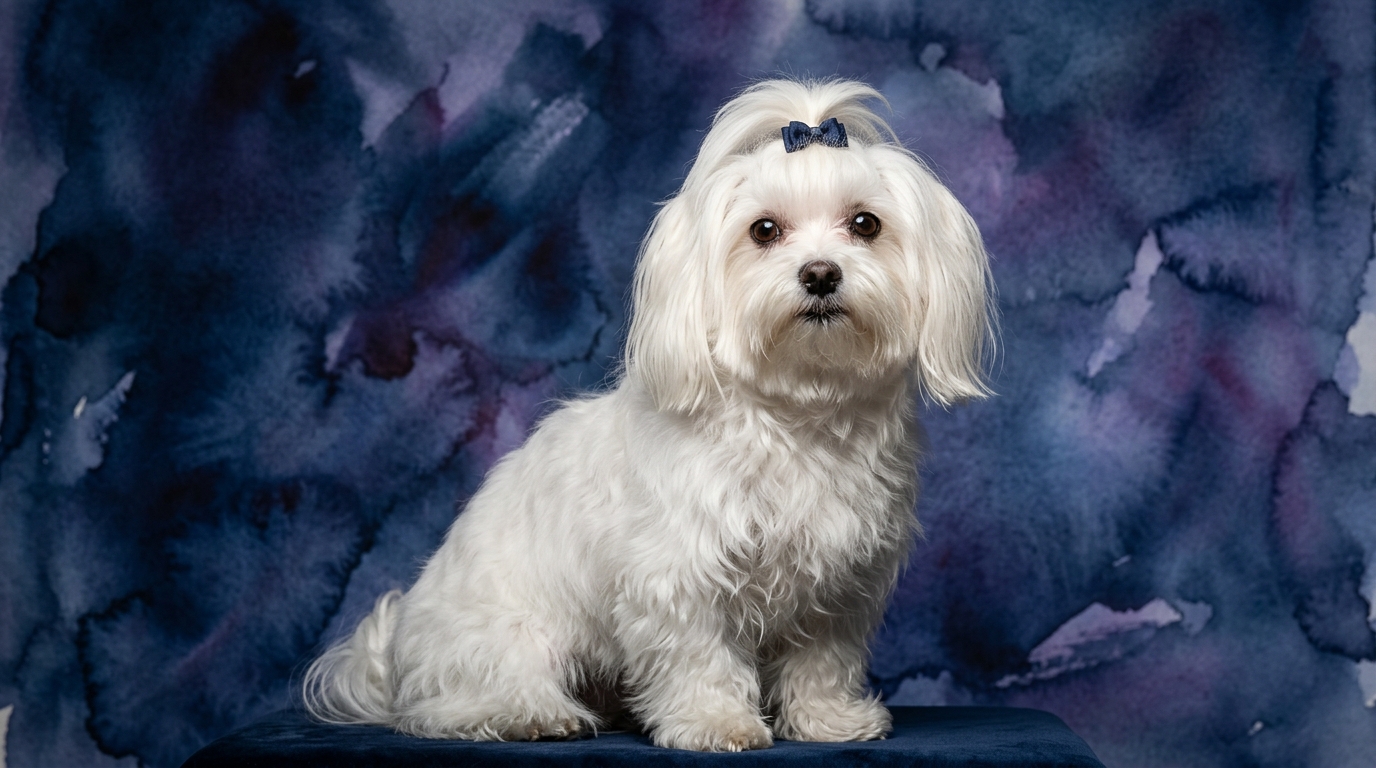

Side-by-Side IQ Profile: Maltese vs. Wirehaired Pointing Griffon
The Cosmic Pet Pet IQ Lab assesses canine cognition across five crucial dimensions, offering a nuanced view beyond simple rankings. Here's how the Maltese and Wirehaired Pointing Griffon compare:
**Maltese (Coren Rank #59)**
**Problem Solving (3/5):** Moderately able to navigate novel situations or figure out desired objects, learning routines but less inclined to devise complex independent solutions.
**Training Speed (3/5):** Learns commands at a moderate pace, thriving with consistent positive reinforcement and short sessions, influenced by attention and desire to please.
**Social Intelligence (5/5):** Exceptionally attuned to human cues and emotions, forming deep bonds and adapting behavior based on household dynamics, demonstrating profound emotional connection.
**Instinctive Drive (2/5):** Relatively low drive, primarily focused on companionship rather than hunting or guarding, engaging in playful chasing but not complex working tasks.
**Memory (3/5):** Shows moderate retention of learned behaviors, commands, and associations, remembering people and places well for family adaptability.
**Wirehaired Pointing Griffon (Not Coren-Ranked)**
**Problem Solving (3/5):** Moderately adept at practical problem-solving, often applying persistence to overcome obstacles, linking solutions to concrete goals like finding objects.
**Training Speed (3/5):** Learns skills at a moderate pace, benefiting from clear, consistent training that leverages natural working inclinations and makes learning feel purposeful.
**Social Intelligence (3/5):** Possesses moderate social understanding, forming bonds and interacting appropriately within the family, cooperative and responsive to direction.
**Instinctive Drive (3/5):** Exhibits a moderate, distinct drive rooted in sporting heritage, desiring to explore, scent, and engage in purposeful, stimulating activities.
**Memory (3/5):** Displays moderate recall for training, environmental layouts, and scent trails, useful for repetitive tasks and navigating outdoor spaces.
Where the Maltese Wins Cognitively
The Maltese's standout cognitive strength is its exceptional social intelligence (5/5), demonstrating an uncanny ability to read human emotions, subtle body language, and vocal inflections. This deep-seated capacity allows them to understand and respond to their human companions' moods and needs, perhaps offering comfort when distressed or adjusting playfulness to household energy. This high social attunement makes them remarkably adaptable to family dynamics, often acting as the home's emotional barometer and engaging in nuanced communication, fostering a sense of conversational partnership.
Their superior social intelligence, coupled with a low instinctive drive (2/5), contributes significantly to their ease of integration into varied domestic environments. With fewer external distractions like prey drive, they focus almost entirely on their human family. This cognitive prioritization of social bonds, alongside moderate problem-solving, allows them to quickly learn household routines and thrive where close human interaction is paramount. They adeptly understand unwritten home rules, adjusting behavior to maintain harmony.
Where the Wirehaired Pointing Griffon Wins Cognitively
The Wirehaired Pointing Griffon's cognitive strengths are rooted in its sporting heritage, particularly its moderate instinctive drive (3/5). It channels moderate problem-solving (3/5) and memory (3/5) into tangible, goal-oriented tasks. Excelling at navigating complex outdoor environments, Griffons utilize senses to track, locate, and retrieve. This involves processing sensory information, making dynamic decisions, and executing action sequences for outcomes like finding hidden objects. Their drive ensures satisfaction from applying cognitive skills to practical "work."
The Griffon's cognitive framework allows it to process and adapt to a wider array of environmental stimuli than the Maltese. Its moderate social intelligence (3/5) makes it a cooperative partner in the field, attentive to handler directions yet capable of independent action. This balance of responsiveness and self-reliance, combined with moderate memory and problem-solving, makes them adept at learning and performing tasks in diverse, challenging conditions. They effectively assess and interact with novel outdoor situations.
Which is Easier to Train and Why?
Training ease depends on owner goals, as both breeds have moderate training speed (3/5), but their motivations differ. The Maltese, with exceptional social intelligence (5/5) and low instinctive drive (2/5), faces fewer distractions in obedience settings. They are highly motivated by human approval, making positive reinforcement very effective. Maltese readily engage in training as interactive play or bonding, eager to please. Challenges might include a shorter attention span for repetitive tasks or using social charm to avoid less appealing commands.
The Wirehaired Pointing Griffon, also with moderate training speed (3/5), requires a different approach. Its moderate instinctive drive (3/5) means it's more compelled by environmental stimuli and tasks tapping into natural inclinations. Successful Griffon training feels purposeful, like mimicking retrieving or scent work. They are cooperative but might be distracted by scents, needing a handler to maintain focus and channel drives constructively. For owners pursuing advanced obedience or field trials, the Griffon's intrinsic motivation makes them capable, rewarding students, even if initial focus demands more effort.
Which Suits Active Owners vs. Relaxed Owners?
Choosing between a Maltese and a Wirehaired Pointing Griffon largely depends on an owner's lifestyle. For relaxed owners, perhaps in apartments or with limited outdoor access, the Maltese is more fitting. Its low instinctive drive (2/5) means minimal vigorous activity is needed; short walks and indoor play suffice. Its exceptional social intelligence (5/5) translates into a strong desire for human companionship and adaptability to a quieter, home-centric life. They thrive on close interaction, making them ideal for those valuing a constant, emotionally attuned presence without extensive outdoor demands.
Conversely, active owners enjoying outdoor pursuits like hiking or hunting will find the Wirehaired Pointing Griffon a more suitable match. Its moderate instinctive drive (3/5) signifies an innate desire to explore, scent, and engage with its environment, requiring consistent physical and mental stimulation. Active owners can leverage the Griffon's moderate problem-solving and memory in activities like agility, scent work, or field training, fulfilling its cognitive and physical needs. Without sufficient outlets, a Griffon may become restless, making it unsuitable for a sedentary lifestyle.
The Verdict
Choose the Maltese if you prioritize an emotionally attuned companion who thrives on close human connection, requires minimal outdoor exercise, and seamlessly integrates into a relaxed, home-centric lifestyle.
Opt for the Wirehaired Pointing Griffon if you are an active individual or family seeking a cooperative partner for outdoor adventures and enjoy engaging a dog in purposeful physical and mental tasks.
🧠 Find Your Pet's IQ Score
Our Pet IQ Lab assessment covers 25+ tests across 5 cognitive dimensions — personalized to your breed.
Take the Full IQ Test →Frequently Asked Questions
Does the Maltese's Coren rank of #59 indicate it's less capable than the Wirehaired Pointing Griffon?
Coren's rankings primarily assess 'working intelligence' or obedience and working IQ. The Maltese's rank reflects its moderate training speed and lower instinctive drive for traditional 'work,' not a lack of cognitive capacity, especially in social intelligence, where it excels.
How does the Wirehaired Pointing Griffon's 'Not Coren-ranked' status affect understanding its IQ?
The absence of a Coren rank for the Wirehaired Pointing Griffon doesn't imply a lack of intelligence. It simply means it wasn't included in that specific study. Our IQ Lab data provides a granular look at its specific cognitive dimensions, highlighting its practical problem-solving and instinctive drives.
Are both breeds good with children, considering their different social intelligence levels?
The Maltese's high social intelligence makes it very attuned to family dynamics, but its small size requires gentle handling from children. The Wirehaired Pointing Griffon's moderate social intelligence means it can be a good family dog, often with a patient and playful demeanor, but its energy levels require active engagement rather than just passive interaction.