
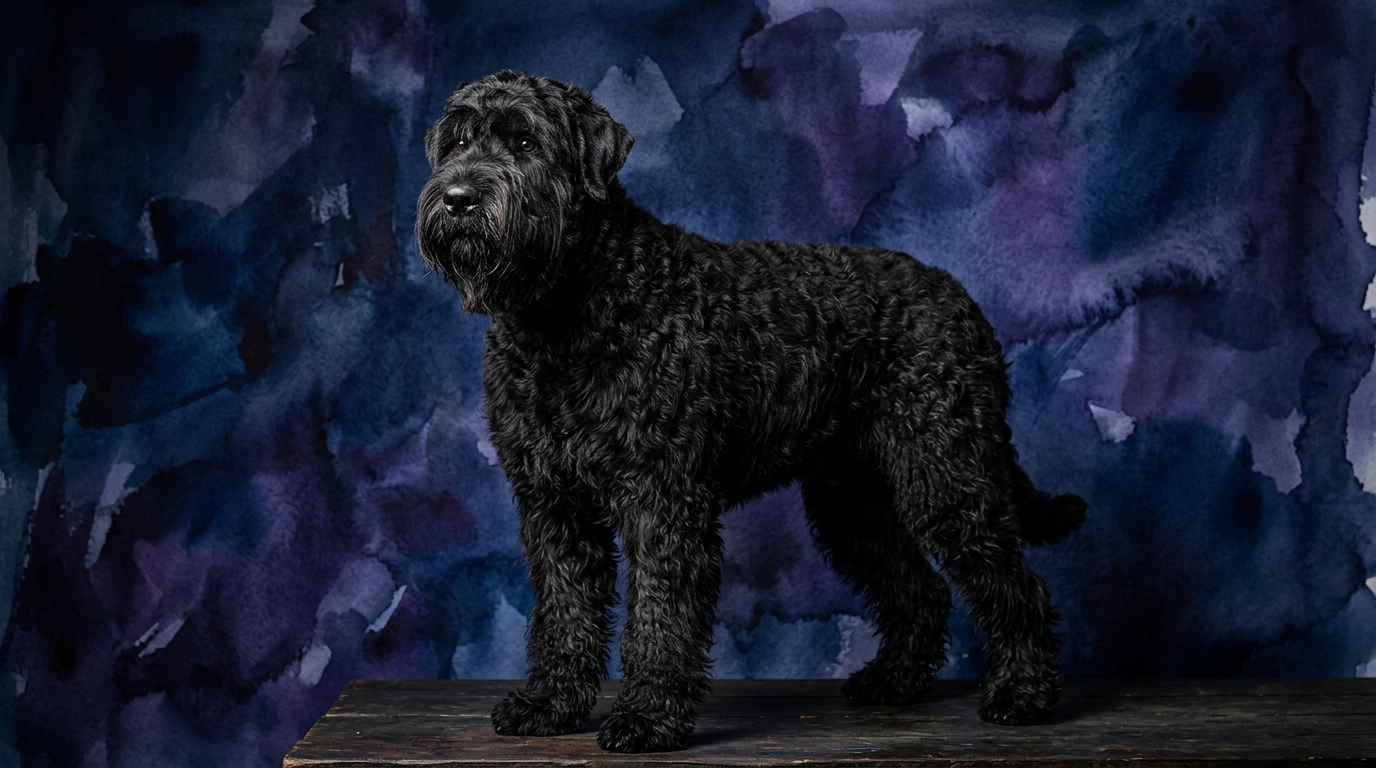
Side-by-Side IQ Profile: Mastiff vs. Black Russian Terrier
**Mastiff (Working Group)**: This majestic breed, ranked Coren #72, demonstrates a balanced set of cognitive skills, with a consistent 3/5 across all dimensions. For the Mastiff, **Problem Solving (3/5)** indicates a practical, rather than abstract, capacity. They are adept at navigating familiar environments, finding comfortable resting spots, or gently maneuvering objects to achieve a desired outcome, often related to comfort or proximity to their family. Their solutions tend to be straightforward and effective for their immediate needs. **Training Speed (3/5)** means Mastiffs learn at a moderate pace, often requiring consistent, positive reinforcement and patience. While they grasp commands, their motivation might be more tied to pleasing their beloved family members rather than an inherent drive for complex obedience. Repetition helps solidify new behaviors, but they might not always execute them with lightning speed. In **Social Intelligence (3/5)**, Mastiffs exhibit a profound, almost empathic understanding of human emotions and social cues within their family unit. They are skilled at reading moods, offering quiet comfort, and adjusting their behavior to the household's rhythm, demonstrating a gentle awareness of their human companions' states. Their **Instinctive Drive (3/5)** primarily centers on guardianship and companionship, manifesting as a strong, protective bond with their family, often expressed through a watchful presence rather than overt aggression. They possess a moderate drive to protect their territory and loved ones, rooted in their historical role as estate guardians. Finally, **Memory (3/5)** provides Mastiffs with a solid recall for routines, specific people, and positive experiences, contributing to their generally predictable and reliable demeanor within a familiar setting.
**Black Russian Terrier (Working Group)**: The Black Russian Terrier, while not Coren-ranked, also exhibits a consistent 3/5 across all cognitive dimensions, but these manifest through the lens of its intense working heritage. For the BRT, **Problem Solving (3/5)** often manifests differently, with solutions geared towards security and utility, such as figuring out how to patrol a perimeter effectively or assessing potential threats in their environment. They apply their cognitive resources to practical challenges related to their protective instincts. In **Training Speed (3/5)**, Black Russian Terriers learn at a moderate pace, but their working heritage often means they approach training with a serious, task-oriented mindset. While they can pick up commands, their inherent independence and strong will may require a confident and consistent handler to ensure compliance and precision, rather than a quick, eager-to-please response. A Black Russian Terrier's **Social Intelligence (3/5)** is deeply intertwined with its guardian role. They are astute observers of social dynamics, particularly in discerning who belongs and who might pose a threat. They read strangers with a discerning eye and are highly attuned to their handler's cues regarding social interactions, prioritizing the safety of their family. Their **Instinctive Drive (3/5)** is strongly channeled into protection, territorial defense, and loyalty. Bred for military service, they possess a formidable drive to guard and patrol, coupled with a moderate prey drive that can be directed into working tasks, making them vigilant and dedicated protectors. Lastly, **Memory (3/5)** demonstrates a good recall for training commands, established boundaries, and individuals, both friend and potential foe, crucial for their working capabilities.
Where the Mastiff Wins Cognitively
Despite identical numerical scores, the Mastiff's cognitive strengths shine in areas demanding subtle emotional understanding and gentle adaptability. Their 3/5 social intelligence often translates into a superior capacity for empathy and emotional support within a family. A Mastiff seems to instinctively know when a family member needs quiet companionship or a comforting presence, often responding with a gentle lean, showcasing a nuanced reading of human distress. This isn't about complex problem-solving, but rather an intuitive, comforting connection. Furthermore, their problem-solving (3/5) often involves finding the most comfortable, least confrontational path, making them masters of peaceful coexistence. They excel at "solving" the problem of maintaining harmony, subtly influencing the mood with their placid demeanor. Their memory (3/5) is particularly strong for positive interactions and established routines, reinforcing their gentle nature.
Where the Black Russian Terrier Wins Cognitively
The Black Russian Terrier's 3/5 cognitive scores, while numerically equal, are leveraged for a different set of strengths, primarily rooted in their working and protective heritage. Their problem-solving (3/5) often manifests as a more analytical approach to environmental assessment, such as discerning the most effective way to survey a property or identify anomalies requiring investigation. This isn't about comfort, but utility and security. The Black Russian Terrier's social intelligence (3/5) excels in discernment and vigilance; they are highly attuned to subtle shifts in body language or tone from strangers, making them exceptional at evaluating potential threats. This acute perception allows them to differentiate between a harmless visitor and someone requiring protective attention, a critical cognitive skill. Their instinctive drive (3/5) is more focused and purposeful, driving them to perform tasks with unwavering commitment, whether obedience work or guarding duties, showcasing focused mental tenacity.
Which is Easier to Train and Why
Assessing which breed is "easier" to train when both share a 3/5 training speed is less about raw learning capacity and more about temperament and motivation. The Mastiff, with its profound social intelligence and desire to be a gentle family member, often responds well to positive reinforcement rooted in affection and praise. Their training might be slower due to their more independent, sometimes "couch potato" nature, but they typically aim to please their beloved people. They might be less inclined towards repetitive, high-energy drills, preferring calm, consistent guidance. Consistency is key, and a patient, gentle approach yields the best results. The Black Russian Terrier, while also scoring 3/5 in training speed, brings a different dynamic. Their working background instills a drive for purpose and structure. They are capable learners, but their strong will, independent thought, and discerning nature mean they require a confident, experienced handler who can establish clear boundaries and consistent expectations. They might challenge authority more readily than a Mastiff, testing limits. While they can achieve high levels of obedience, it often takes a handler who understands their protective instincts and can channel their intense focus into productive tasks. Training a BRT requires a firm but fair hand, unwavering consistency, and an understanding of their inherent seriousness. Therefore, for a novice owner, the Mastiff might present fewer immediate training challenges, whereas the BRT demands a more dedicated and experienced training commitment.
Which Suits Active Owners vs. Relaxed Owners
For the relaxed owner seeking a formidable yet placid companion, the Mastiff is often the more fitting choice. While they require regular, moderate exercise, their overall energy level is lower, content with shorter walks and ample time lounging with family. Their cognitive strengths are geared towards creating a calm, harmonious home environment, making them ideal for owners who appreciate a large, gentle presence without demanding constant mental or physical engagement. Their problem-solving often involves finding the most comfortable spot for a nap. Conversely, the Black Russian Terrier, despite also scoring 3/5 across the board, is better suited for active owners who thrive on purposeful engagement. Their historical role as working dogs means they possess a higher intrinsic need for mental stimulation and structured activity. They excel when given a job, whether advanced obedience, protection sports, or challenging walks with specific "tasks." Their cognitive profile, particularly problem-solving and instinctive drive, thrives on being directed and utilized. Owners providing consistent training and varied exercise will find the BRT a rewarding partner.
The Verdict
Choose Mastiff if you seek a gentle, empathetic giant whose cognitive strengths lie in harmonious companionship and a calm household presence, and you appreciate a dog whose primary joy is being a devoted, low-key family member.
Choose Black Russian Terrier if you are an experienced, active owner ready to provide consistent, firm training and purposeful engagement for a discerning, protective, and highly capable working companion.
🧠 Find Your Pet's IQ Score
Our Pet IQ Lab assessment covers 25+ tests across 5 cognitive dimensions — personalized to your breed.
Take the Full IQ Test →Frequently Asked Questions
Are Mastiffs good with children?
Mastiffs, with their high social intelligence (3/5) and gentle nature, are generally excellent with children, often acting as patient and protective guardians. Supervision is always advised due to their immense size, ensuring their gentle interactions remain safe.
Do Black Russian Terriers require a lot of grooming?
Yes, Black Russian Terriers have a dense, coarse double coat that requires significant grooming, including regular brushing and professional stripping or clipping every 6-8 weeks, to prevent matting and maintain coat health. This is a consistent commitment for owners.
Can a Mastiff live in an apartment?
While their size suggests otherwise, a Mastiff can potentially adapt to apartment living if they receive adequate daily exercise and mental stimulation. Their lower energy levels and preference for lounging make them surprisingly adaptable, provided space for movement and outdoor access are consistent.