Side-by-Side Cognitive Profiles: Mastiff vs. Chesapeake Bay Retriever
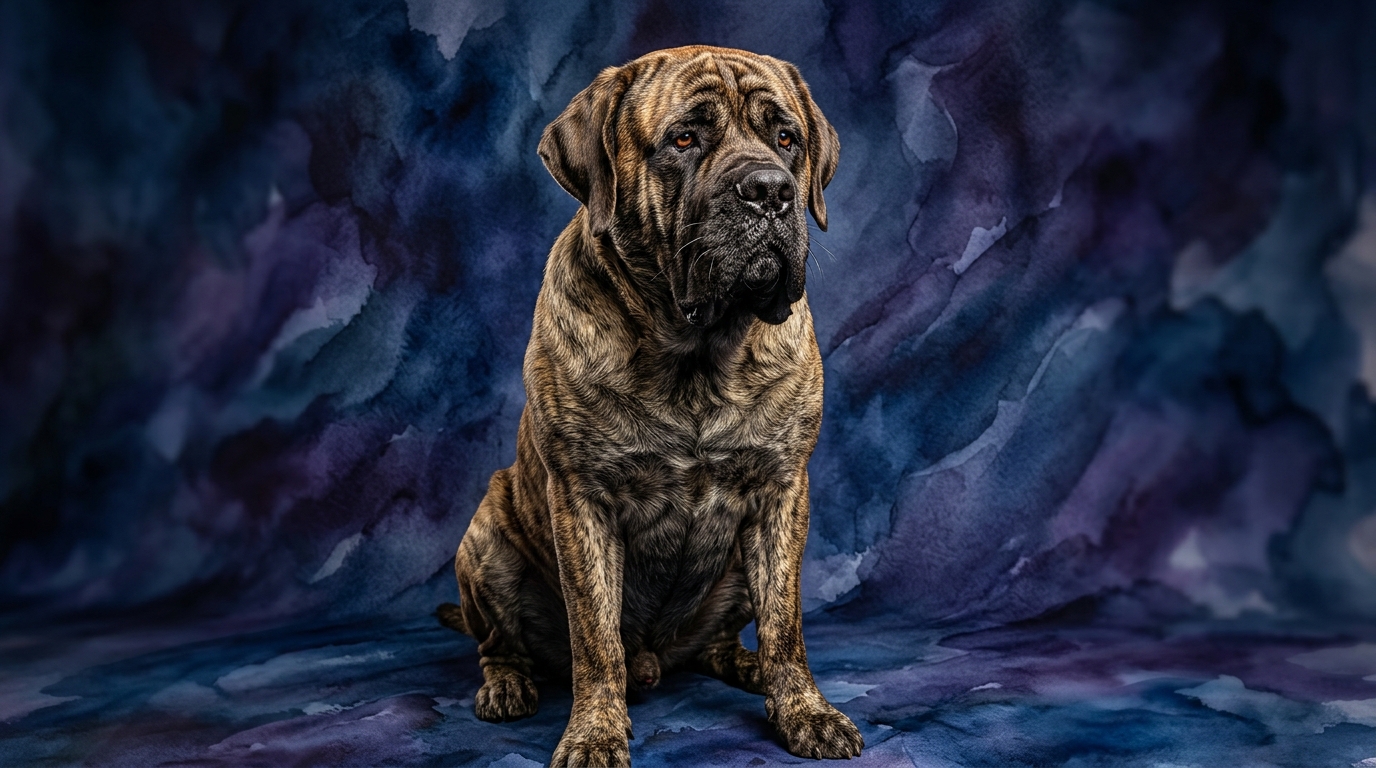
The Cosmic Pet Pet IQ Lab employs a five-dimensional framework to assess canine intelligence, offering a nuanced view beyond simple rankings. For the Mastiff, a Working breed with a Coren ranking of #72, its profile reflects a thoughtful, deliberate intelligence. Its Problem Solving is rated 3/5, indicating a capacity for navigating moderately complex situations, often with a considered approach rather than immediate action. Training Speed is also 3/5, suggesting a steady, consistent learning pace where repetition and patience yield success. Social Intelligence stands at 3/5, signifying a deep understanding of family dynamics and emotional cues within its established circle. Instinctive Drive is 3/5, manifesting as a watchful, protective presence, and Memory is 3/5, allowing for reliable retention of learned routines and experiences.
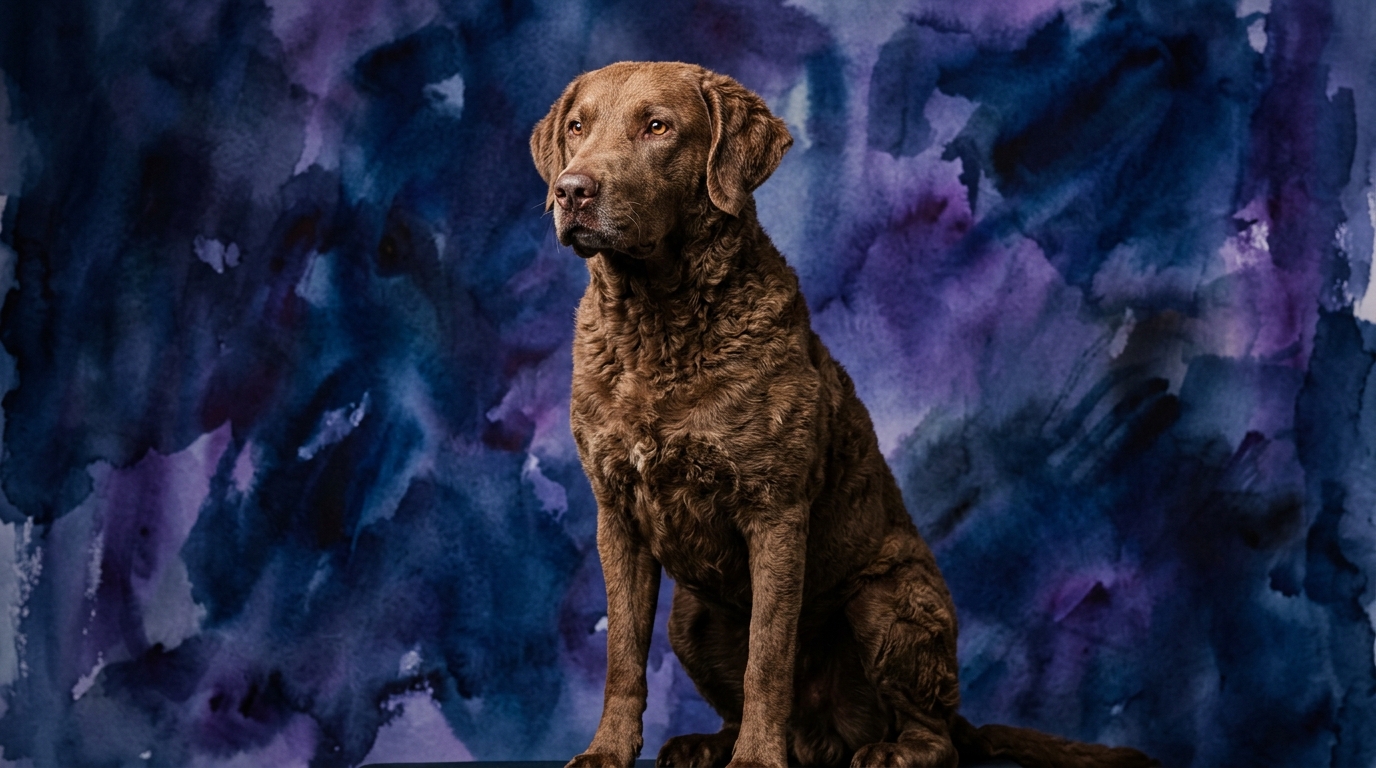
In contrast, the Chesapeake Bay Retriever, a Sporting breed ranked #27 by Coren, presents a profile geared towards active engagement and rapid task mastery. Its Problem Solving is a robust 4/5, showcasing an adaptability and ingenuity, particularly in environmental challenges relevant to its retrieving heritage. Training Speed is 4/5, indicating an efficient and eager uptake of new commands and tasks. Social Intelligence matches the Mastiff at 3/5, reflecting strong bonds with its human partners, though often expressed through a task-oriented focus. Instinctive Drive is 3/5, driven by a strong impulse for retrieving and working, especially in water. Finally, Memory is 4/5, underscoring its capacity for retaining extensive repertoires of commands and intricate sequences of actions, crucial for sustained performance in demanding roles.
Where the Mastiff Cognitively Excels
While the Chesapeake Bay Retriever often shines in rapid learning, the Mastiff possesses a unique cognitive advantage rooted in its historical role: discerning judgment and a measured approach to novel situations. Their Problem Solving score of 3/5, combined with a Training Speed of 3/5, doesn't imply a lack of mental capacity but rather a different processing style. A Mastiff might not race to solve a puzzle, but when they do, their solution is often considered and deliberate, reflecting a thoughtfulness born from their guardian heritage. They excel in situations requiring a calm, steady presence and an assessment of threats rather than immediate, energetic action.
Their Social Intelligence, also at 3/5, translates into a profound, nuanced understanding of their immediate family's emotional states and routines, making them incredibly perceptive companions within their established social circle. This measured cognitive style allows them to process social cues deeply, offering a quiet, comforting presence that requires a subtle form of awareness. This specific strength makes them excellent at sensing shifts in mood or environment, responding with a quiet, reassuring presence that many owners value deeply.
Where the Chesapeake Bay Retriever Cognitively Shines
The Chesapeake Bay Retriever, with its higher scores in Problem Solving (4/5), Training Speed (4/5), and Memory (4/5), demonstrates a distinct cognitive profile geared towards active engagement and rapid task mastery. Their superior problem-solving skills are evident in their ability to navigate complex environments, such as locating fallen birds in dense cover or retrieving from challenging water conditions. This involves spatial reasoning, quick adaptation, and a capacity to learn from experience, allowing them to formulate effective strategies in dynamic settings.
Their accelerated training speed means they absorb new commands and multi-step tasks with impressive efficiency, often requiring fewer repetitions than many other breeds. This quick uptake is supported by their robust memory, allowing them to retain vast repertoires of commands and recall intricate sequences of actions, essential for sustained performance in demanding working roles. The Chessie's cognitive strengths lie in their capacity for focused work, efficient learning, and the application of learned behaviors in dynamic, real-world scenarios, making them adept at processing and acting upon information swiftly and reliably.
Training Dynamics: Mastiff Patience vs. Chessie Responsiveness
When considering ease of training, the Chesapeake Bay Retriever generally presents a more straightforward path for many owners due to its higher Training Speed score of 4/5. Chessies often exhibit a keen desire to work alongside their human partners, absorbing new commands and complex sequences with relative swiftness. Their strong drive to retrieve and their focused nature mean they are typically motivated by task completion and handler praise, making them responsive to positive reinforcement methods. They tend to be less prone to questioning commands, often eager to understand and execute what is asked of them, which facilitates a fluid training experience.
In contrast, the Mastiff, with a Training Speed score of 3/5, requires more patience and a different approach. Their independent nature and thoughtful disposition mean they might take longer to internalize commands, often needing more repetitions and a clear understanding of 'why' a task is important. They are not necessarily stubborn, but rather deliberate; they process information and decide on cooperation rather than reacting instantly. Owners training a Mastiff will find success with consistent, gentle methods that build trust and respect, avoiding harshness which can cause them to shut down. The Chessie's natural inclination towards active collaboration makes its training journey often feel more fluid and responsive, while the Mastiff's requires a more nuanced, relationship-based strategy.
Matching Cognitive Needs to Owner Lifestyles
The cognitive profiles of these two breeds clearly delineate which might better suit different owner lifestyles. The Chesapeake Bay Retriever, with its strong working drive and efficient learning capabilities, thrives with active owners who can provide consistent mental and physical stimulation. Their problem-solving prowess and memory make them excellent candidates for advanced obedience, field trials, hunting, or canine sports like agility and dock diving. An owner who enjoys daily vigorous exercise, structured training sessions, and engaging their dog in purposeful activities will find a Chessie to be an incredibly rewarding and engaged companion. Their energy and focus require an outlet, and without it, they may channel their intelligence into less desirable behaviors.
Conversely, the Mastiff, with its more measured pace and steady disposition, is often a better match for relaxed owners seeking a devoted, calm presence. While they still require regular, moderate exercise for health, their cognitive strengths lean towards companionship and watchful guardianship rather than high-octane performance. An owner who appreciates quiet evenings, leisurely strolls, and a deep, empathetic connection with their dog will find the Mastiff's thoughtful social intelligence and steady nature to be a perfect fit. Their cognitive needs are met through consistent routines, gentle interaction, and a stable home environment rather than constant new challenges, making them well-suited to a more tranquil household.
The Verdict
Choose a Mastiff when you prioritize a calm, discerning companion who offers a profound, steady presence and thoughtful guardianship, thriving in a relaxed home with consistent, gentle guidance.
Choose a Chesapeake Bay Retriever when you desire an energetic, highly trainable partner for active pursuits, seeking a dog that excels in problem-solving tasks and thrives on purposeful work and outdoor adventures.
🧠 Find Your Pet's IQ Score
Our Pet IQ Lab assessment covers 25+ tests across 5 cognitive dimensions — personalized to your breed.
Take the Full IQ Test →Frequently Asked Questions
Do Mastiffs learn new commands quickly?
Mastiffs learn new commands at a moderate pace, scoring 3/5 in Training Speed. They benefit from consistent, patient training methods and a clear understanding of expectations rather than rapid-fire instruction. Their deliberate nature means they take time to process and internalize information.
Are Chesapeake Bay Retrievers good at solving complex problems?
Yes, Chesapeake Bay Retrievers are adept at solving complex problems, scoring 4/5 in Problem Solving. This ability is particularly evident in their capacity to navigate challenging environments and figure out solutions during retrieving tasks, making them very adaptable working dogs.
How do their social intelligence scores compare?
Both breeds score 3/5 in Social Intelligence. The Mastiff's social intelligence often manifests as a deep, nuanced understanding of their immediate family's emotions, while the Chesapeake Bay Retriever's can be more task-oriented, focusing on handler cues during work, though both form strong bonds.