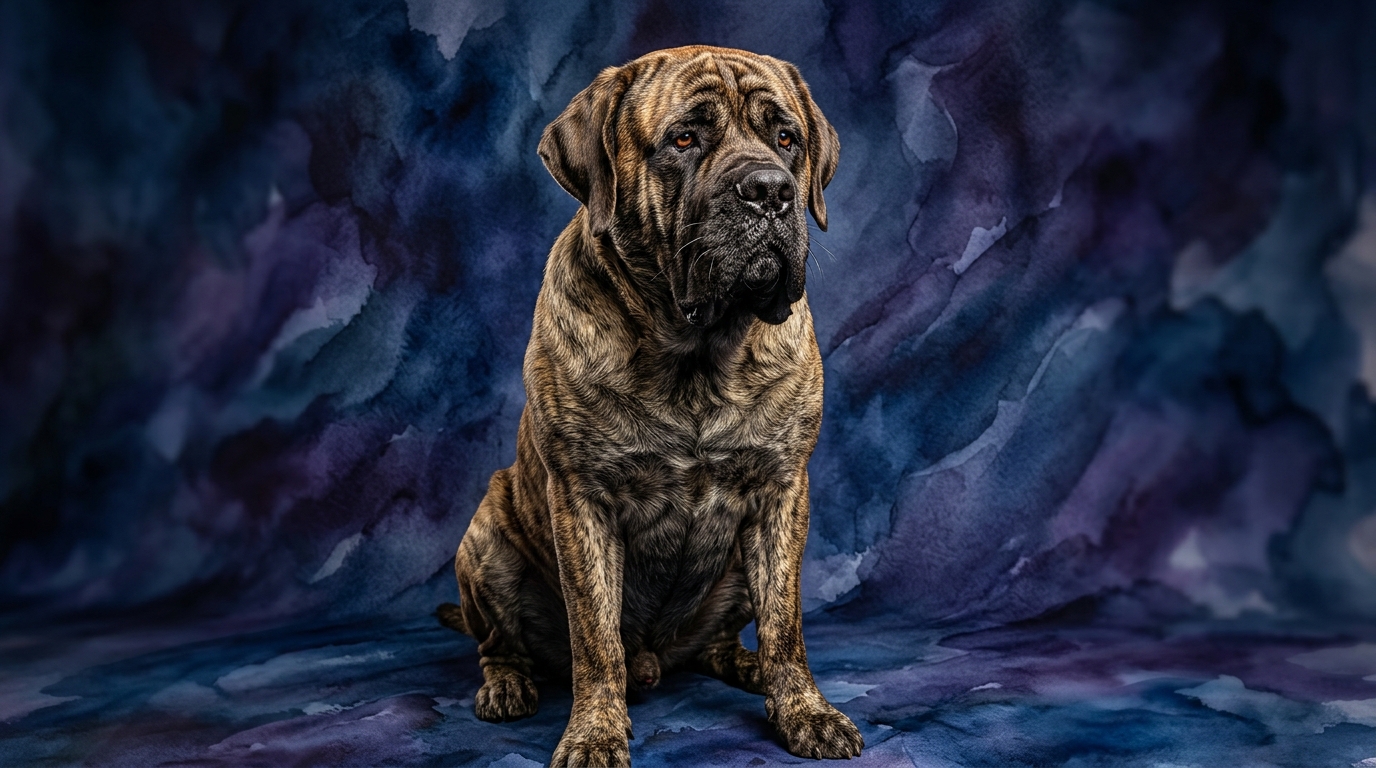
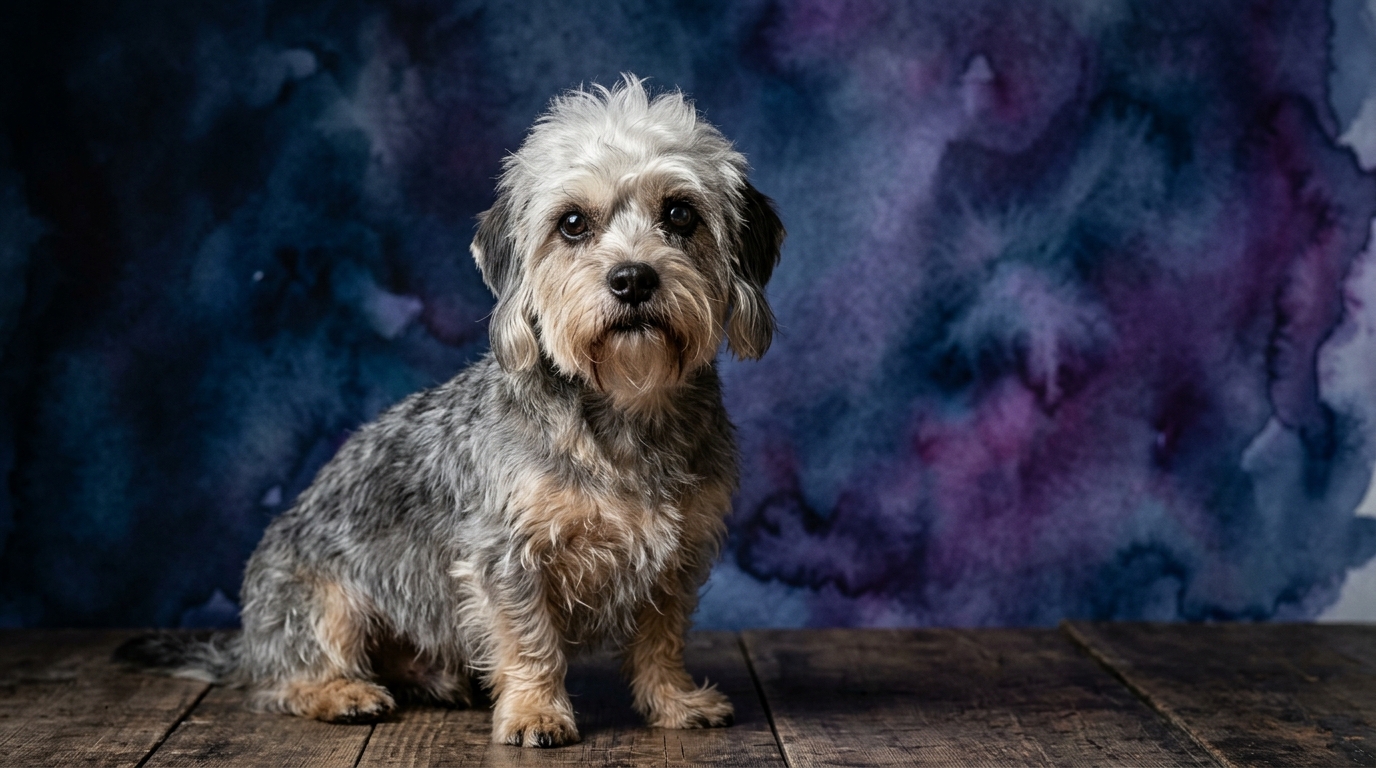
Side-by-Side IQ Profile: Gentle Giant vs. Tenacious Terrier
At The Cosmic Pet Pet IQ Lab, we analyze canine intelligence across five key dimensions. While both the Mastiff and the Dandie Dinmont Terrier share identical scores in these categories, the manifestation of these cognitive traits is distinctly shaped by their breed-specific histories and temperaments.
**Mastiff (Working Group):** This breed's cognitive strengths lean into its role as a protector. Its **Problem Solving (3/5)** often manifests in assessing complex social situations, particularly regarding family and perceived threats, leading to calm, deliberate strategies rather than impulsive actions. **Training Speed (3/5)** for a Mastiff is influenced by its desire for reasoned cooperation; they respond well to positive reinforcement and clear instruction, often taking time to process and decide if commands are logical from their perspective. **Social Intelligence (3/5)** is a profound trait, allowing them to read human emotional states with sensitivity, providing comfort or protection as needed, and exhibiting a gentle demeanor with those they trust. Their **Instinctive Drive (3/5)** is primarily rooted in guardianship, appearing as a steadfast desire to survey territory and family, more about presence and deterrence than active pursuit. Finally, their **Memory (3/5)** is solid, particularly for people, places, and routines, contributing to their consistent temperament and reliability once trained.
**Dandie Dinmont Terrier (Terrier Group):** This spirited terrier's intelligence is characterized by its independent and persistent nature. Its **Problem Solving (3/5)** is adept at figuring out how to get to a perceived “prey” or circumvent obstacles, often driven by instinct and resulting in creative, persistent solutions. The Dandie's **Training Speed (3/5)** is moderate, but heavily influenced by its independent, sometimes stubborn streak; they understand commands but may only obey if it aligns with their current interest, requiring patient, game-like training. **Social Intelligence (3/5)** is unique, fostering strong bonds with chosen humans while maintaining a distinct terrier aloofness towards strangers; they observe household dynamics and can be sensitive to owner moods, though they express empathy differently. Their **Instinctive Drive (3/5)** is strongly tied to their historical role as a hunter, manifesting as a persistent prey drive, digging impulse, and a keen sense of smell. Their **Memory (3/5)** is good, especially for routines, boundaries, and past training experiences, helping them recall where they buried a favorite toy or the location of interesting smells.
Where the Mastiff Wins Cognitively
The Mastiff's cognitive strengths shine in areas demanding calm judgment and protective reasoning. Their ability to assess and react to nuanced social cues, particularly regarding perceived threats to their family, is a hallmark. Unlike some breeds that might bark indiscriminately, a Mastiff often processes a situation, deciding whether a genuine danger exists before acting, showcasing a deliberate, calculated form of problem-solving. Their sheer physical presence, combined with this thoughtful assessment, makes them exceptionally effective deterrents. Furthermore, their capacity for deep emotional bonding and sensitivity to human moods speaks to a sophisticated social intelligence that fosters profound companionship, making them exceptional family anchors.
Where the Dandie Dinmont Terrier Wins Cognitively
The Dandie Dinmont Terrier excels in cognitive domains requiring independent thought, persistence, and problem-solving focused on achieving a specific goal, often related to their innate terrier drive. Their ability to strategize how to reach a hidden toy or follow a faint scent trail, undeterred by obstacles, demonstrates a focused and determined form of intelligence. This breed's self-reliance means they aren't constantly looking to their owner for direction; instead, they often devise their own solutions to environmental puzzles. Their keen observation skills and ability to learn complex sequences of actions through trial and error, especially when motivated by a reward or an interesting “hunt,” highlight their clever, independent mind, making them masters of their immediate environment.
Which Is Easier to Train and Why?
Training ease significantly differs between these two breeds due to their inherent temperaments and historical roles. The Mastiff, with its background as a guardian, typically possesses a desire to please its human companions and a strong pack mentality, making it generally more amenable to structured obedience training. While they might take time to process commands and require patient, consistent reinforcement, their motivation to cooperate and their steady demeanor often translate into a more straightforward training experience for an owner willing to invest the effort. Their substantial size, however, necessitates early and thorough training to ensure manageability and prevent accidental harm.
In contrast, the Dandie Dinmont Terrier's terrier heritage imbues it with a robust independent streak and a stubborn nature. While capable of learning, a Dandie will often weigh a command against its own interests or instincts. Their strong prey drive and tendency to follow their nose can make recall a particular challenge, and they may resist repetitive drills if they don't see the immediate benefit. Training a Dandie requires significant patience, creativity, and a consistent approach that makes learning feel like a fun game rather than a chore. Owners must be prepared to use high-value rewards and maintain a firm yet positive leadership to guide this spirited breed through its independent tendencies.
Which Suits Active Owners vs. Relaxed Owners?
The Mastiff, despite its imposing size, often suits more relaxed owners. While they benefit from regular, moderate exercise like daily walks, they are not typically high-energy dogs requiring extensive, vigorous activity. Their calm, watchful nature makes them content to spend much of their time lounging near their family, observing their surroundings. They thrive in homes where their gentle companionship and protective presence are valued, and where owners appreciate a dog that is generally quiet indoors and enjoys a slower pace of life, making them ideal for a tranquil household.
The Dandie Dinmont Terrier, conversely, often suits more active owners, or at least owners who enjoy engaging with their dog's mental and physical needs regularly. While not requiring marathon runs, their terrier instincts demand consistent mental stimulation and opportunities to explore, dig, and chase. Daily walks are essential, but also opportunities for scent work, puzzle toys, and interactive play that taps into their problem-solving and prey drives. Owners who enjoy training challenges, have a secure yard for digging, and appreciate a lively, curious companion will find a Dandie a rewarding fit, as long as they can provide consistent engagement and outlets for their natural drives.
The Verdict
Choose the Mastiff if you seek a calm, thoughtful guardian with a profound connection to its family, thriving in a relaxed home environment where its gentle giant nature is appreciated.
Opt for the Dandie Dinmont Terrier if you desire a spirited, independent companion with a tenacious problem-solving approach, suited to owners who enjoy consistent engagement and appreciate a dog with a big personality in a smaller package.
🧠 Find Your Pet's IQ Score
Our Pet IQ Lab assessment covers 25+ tests across 5 cognitive dimensions — personalized to your breed.
Take the Full IQ Test →Frequently Asked Questions
Do Mastiffs require a lot of exercise despite their calm demeanor?
Mastiffs need moderate, consistent exercise to maintain health and prevent obesity, typically 30-60 minutes of walking daily. While not high-energy, regular movement is crucial for their large joints and overall well-being, but they are not suited for endurance activities like long-distance running.
Are Dandie Dinmont Terriers good with children and other pets?
Dandie Dinmont Terriers can be good with respectful children and other pets if socialized early, but their terrier instincts mean they might chase smaller animals. Supervision is always recommended, and introductions should be gradual and positive, especially with cats or pocket pets, to ensure harmonious living.
How do their protective instincts differ?
A Mastiff's protective instinct is typically a calm, watchful deterrence through presence and size, escalating only if truly necessary with a deliberate response. A Dandie Dinmont Terrier's protection is often expressed through alert barking and a feisty, confident demeanor, more focused on alerting and confronting perceived threats with terrier tenacity.