Side-by-Side IQ Profile: Unpacking the 3/5 Scores
The Cosmic Pet Pet IQ Lab assesses five crucial cognitive dimensions, and both the Mastiff and the Harrier surprisingly score a consistent 3 out of 5 across the board. This indicates a moderate aptitude in each area, but the *manifestation* of these scores differs dramatically between the two breeds due to their distinct evolutionary paths and purposes.
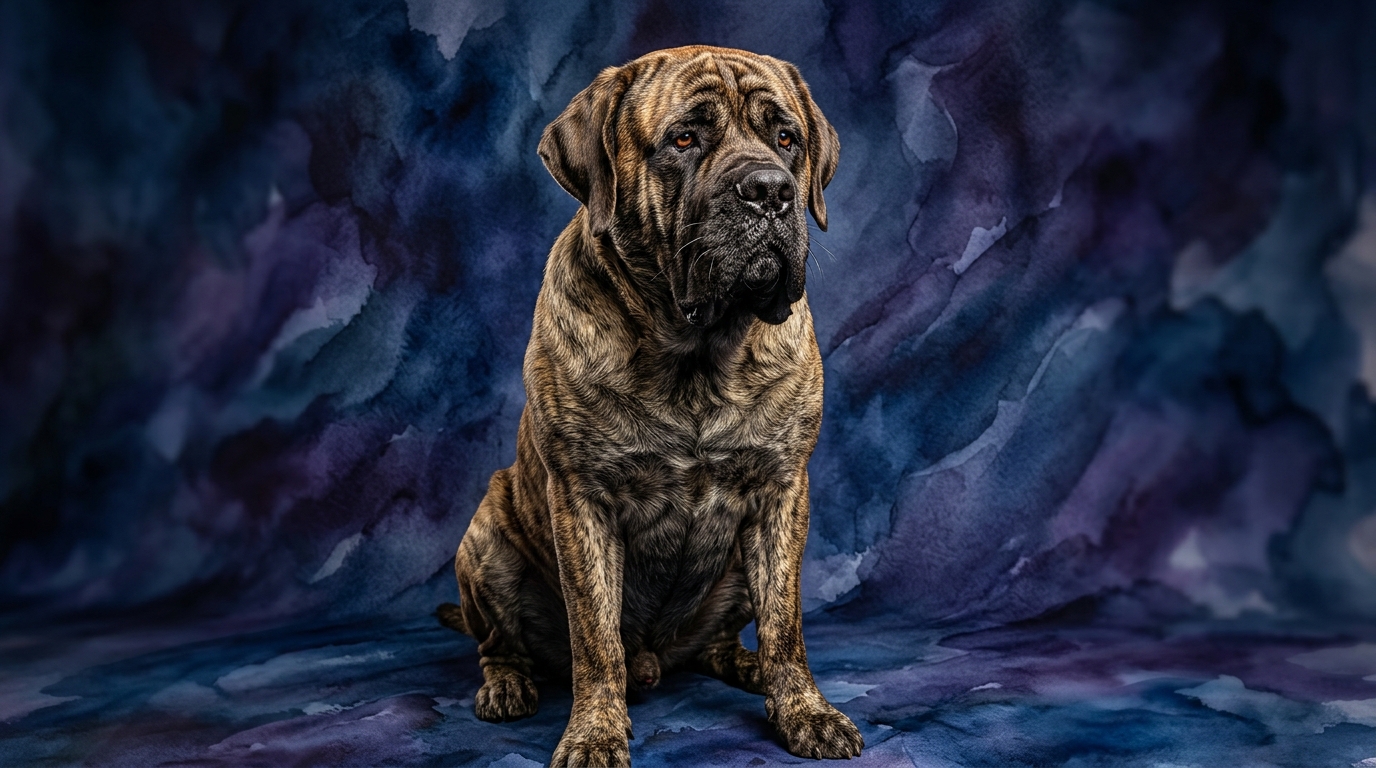
For the Mastiff, a member of the Working Group and Coren-ranked #72, a 3/5 in Problem Solving often translates to a nuanced ability to assess social situations, identify potential threats, and make independent guardian decisions within their familiar environment. Their 3/5 Training Speed reflects a capacity to learn commands at a steady pace, often requiring understanding the 'why' behind an instruction rather than immediate, eager compliance. Social Intelligence at 3/5 means they are perceptive of human emotions and family dynamics, communicating subtly. Their Instinctive Drive of 3/5 is primarily expressed as a watchful, protective nature over their territory and family, while their 3/5 Memory allows them to retain routines, people, and experiences reliably.
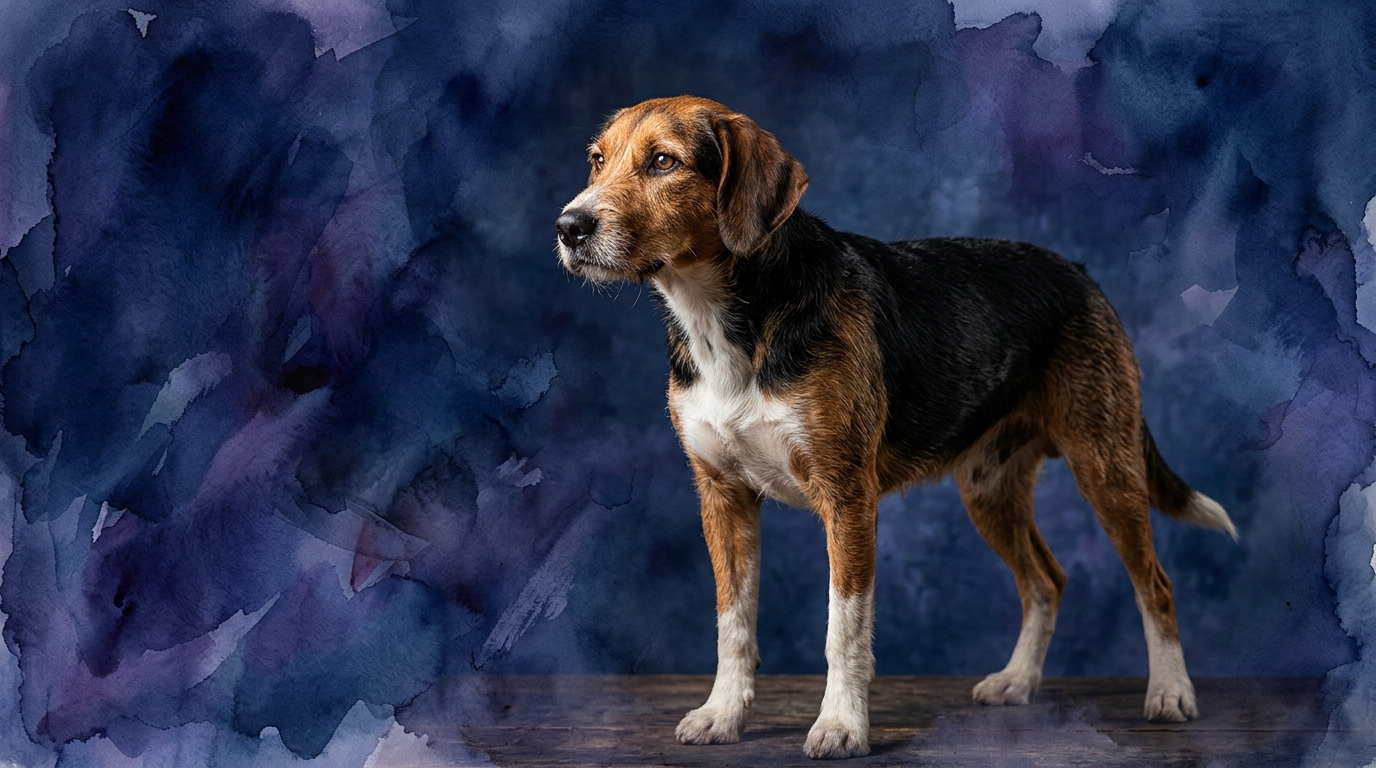
The Harrier, a traditional Hound and not Coren-ranked, interprets these same 3/5 scores through a different lens. Their Problem Solving at 3/5 is acutely focused on scent-based challenges, meticulously untangling complex trails and navigating environments using their nose. Training Speed at 3/5 indicates they can learn, but their powerful scent drive can be a significant distraction, often making human-centric commands secondary to a compelling aroma. Their Social Intelligence (3/5) shines within a pack dynamic, understanding canine hierarchies, and with humans, they are affectionate but can be singularly focused when on a scent. The Harrier's 3/5 Instinctive Drive is overwhelmingly dedicated to tracking and hunting, a relentless pursuit that defines their cognitive priorities. Their 3/5 Memory is strongest for scent trails and learned hunting patterns, though general obedience commands are also retained with consistent reinforcement.
Where the Mastiff Wins Cognitively
Despite identical raw IQ scores, the Mastiff demonstrates distinct cognitive strengths, particularly in areas valued for companionship and guarding. Their Coren rank of #72, unlike the unranked Harrier, suggests a greater 'Working & Obedience Intelligence' – an aptitude for understanding and executing human commands in a structured environment. This indicates a more direct responsiveness to human instruction and a higher capacity for formal obedience training.
Furthermore, the Mastiff's 3/5 Problem Solving and Social Intelligence manifest as a profound ability to read and respond to the subtle cues of their human family and home environment. They excel at independent judgment in protective roles, assessing situations for potential threats with a calm, discerning intelligence. This nuanced understanding of social dynamics and their environment gives them an edge in roles requiring thoughtful, rather than purely instinctual, decision-making within a domestic setting.
Where the Harrier Wins Cognitively
The Harrier's cognitive prowess truly shines in its specialized application of problem-solving and instinctive drive. While both breeds score 3/5 for Problem Solving, the Harrier's ability to decipher complex scent puzzles across varied terrains is a unique cognitive feat. This involves sophisticated sensory processing, memory of a vast scent library, and sustained focus over long periods, demonstrating a form of intelligence unparalleled in a Mastiff.
Their 3/5 Instinctive Drive, deeply rooted in their hound heritage, fuels an incredible cognitive endurance. This isn't just a physical drive; it's a mental one that enables them to meticulously follow a scent trail for miles, processing countless pieces of olfactory information. This specialized form of intelligence, dedicated to their primal purpose, showcases a profound mastery of their sensory world and an unwavering determination in pursuit of a goal, a different but equally impressive form of cognitive strength.
Which Is Easier to Train and Why
When considering ease of training, the Mastiff, despite their 3/5 Training Speed, generally presents fewer situational hurdles for the average owner. Their independence means they might ponder a command before executing it, but their focus remains primarily on their human handler in most environments. Training a Mastiff requires patience, consistency, and positive reinforcement, appealing to their desire to understand and cooperate within the family unit. Distractions, while present, are typically manageable.
The Harrier's 3/5 Training Speed is significantly impacted by their powerful 3/5 Instinctive Drive. While intelligent, their nose often dictates their attention. Once a Harrier catches a compelling scent, their cognitive focus shifts almost entirely to tracking, making recall or other obedience commands extraordinarily challenging in that moment. Training a Harrier demands exceptional patience, high-value rewards to compete with their natural drives, and often specialized techniques to channel their scent work constructively. Therefore, while both learn at a moderate pace, the *context* and *intensity* of their distractions make the Harrier a more demanding training partner for general obedience in varied environments.
Which Suits Active Owners vs. Relaxed Owners
The Mastiff is an ideal match for relaxed owners who appreciate a calm, dignified presence. While they require moderate daily exercise to stay healthy, they are not high-energy athletes demanding hours of intense activity. Their cognitive needs are largely met through companionship, light training, and their role as a watchful guardian within the home. A Mastiff thrives in a stable, comfortable environment where they can be close to their family and enjoy a predictable routine.
Conversely, the Harrier is best suited for active owners who can wholeheartedly embrace and channel their substantial physical and mental energy. These hounds thrive on long walks, runs, hikes, and, critically, opportunities for scent work or other mentally stimulating activities. A relaxed owner might find themselves overwhelmed by a Harrier's intrinsic need to explore, track, and engage its powerful nose and body. To truly flourish, a Harrier requires an owner committed to providing consistent, engaging outlets for its robust hound instincts.
The Verdict
Choose the Mastiff if you seek a calm, thoughtful companion offering subtle protection, thriving on a stable home life with moderate exercise and consistent, patient training.
Choose the Harrier if you are an active owner passionate about outdoor activities, willing to embrace and channel a strong scent drive, and enjoy the challenge of training an independent hound with a unique cognitive focus.
🧠 Find Your Pet's IQ Score
Our Pet IQ Lab assessment covers 25+ tests across 5 cognitive dimensions — personalized to your breed.
Take the Full IQ Test →Frequently Asked Questions
Do Mastiffs and Harriers learn new commands at the same rate?
While both breeds score 3/5 for Training Speed, indicating a moderate learning pace, the *nature* of their learning differs. Mastiffs are generally more focused on their human in typical training scenarios, whereas Harriers can be profoundly distracted by scents, making consistent command adherence more challenging in certain environments.
How does their 'problem-solving' differ if both are 3/5?
Their 3/5 Problem Solving manifests in distinct ways: Mastiffs excel at social problem-solving, assessing threats and navigating household dynamics. Harriers, conversely, are masters of scent-based problem-solving, tirelessly untangling complex olfactory trails to locate a target, a highly specialized form of intelligence.
Are Harriers more 'stubborn' than Mastiffs?
Neither breed is inherently 'stubborn' in a negative sense, but their independence presents differently. Mastiffs might be more thoughtful or discerning before complying, while Harriers appear 'stubborn' when their powerful instinctive drive for scenting overrides human commands, making them seem unresponsive rather than disobedient.