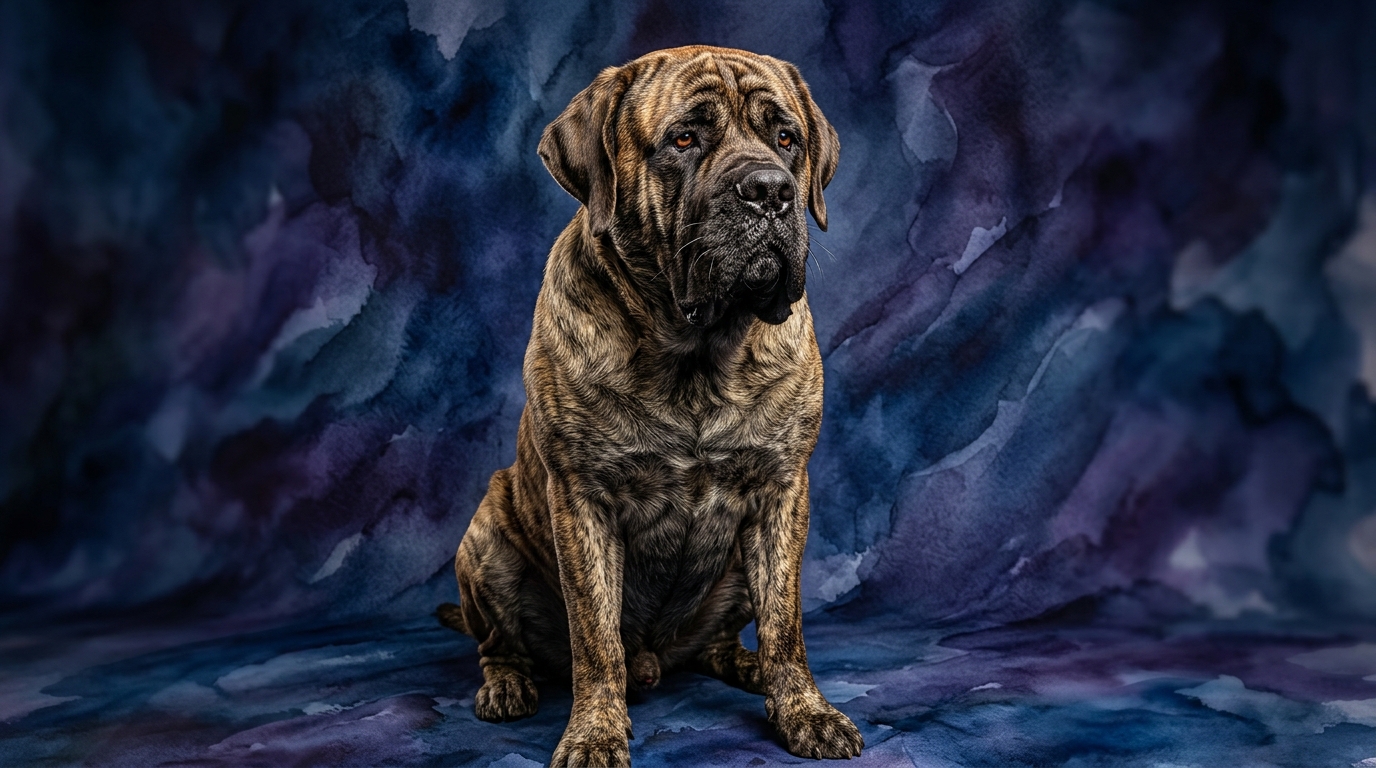
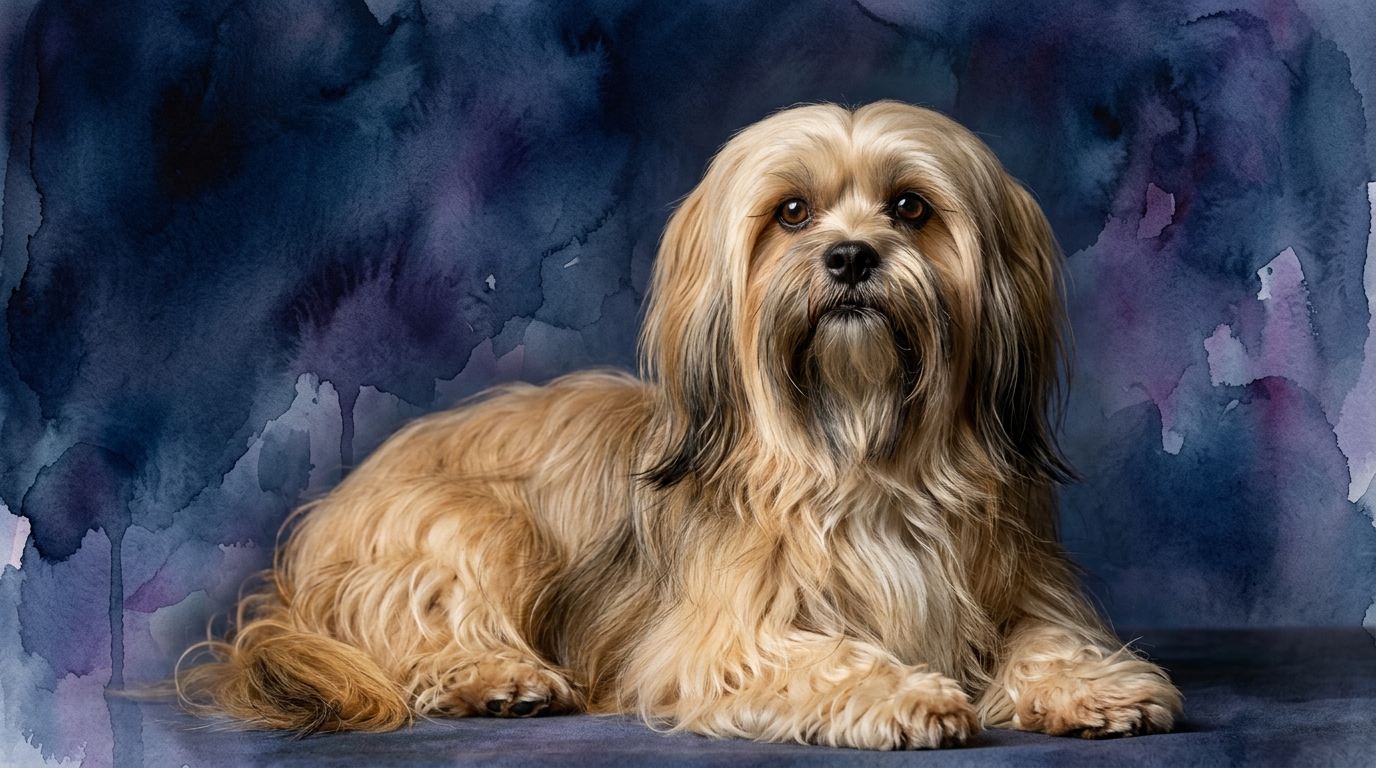
Side-by-Side IQ Profile: Mastiff vs. Lhasa Apso
The Cosmic Pet Pet IQ Lab assesses canine intelligence across five key dimensions, providing a granular view of each breed’s cognitive strengths. For both the Mastiff and the Lhasa Apso, our analysis shows a consistent score of 3/5 across all categories, indicating a solid, functional intelligence that manifests uniquely for each breed.
For the **Mastiff** (Working Group, Coren Rank #72): Their **Problem Solving (3/5)** involves a deliberate, methodical approach, particularly when assessing their environment or family’s safety. A Mastiff might take time to figure out how to navigate a complex gate latch, but once grasped, the solution is applied consistently. **Training Speed (3/5)** requires patience and positive reinforcement; they learn steadily but need motivation to overcome their independent nature. Their **Social Intelligence (3/5)** is expressed through calm observation and discernment, making them acutely aware of household dynamics and potential threats. The Mastiff’s **Instinctive Drive (3/5)** centers on protection and guardianship, a powerful, inherent sense of responsibility for their family and territory. Finally, their **Memory (3/5)** is robust, recalling routines, people, and training cues over extended periods, contributing to their consistent and reliable behavior.
For the **Lhasa Apso** (Non-Sporting Group, Coren Rank #68): Their **Problem Solving (3/5)** is often clever and self-serving, as they adeptly figure out how to achieve comfort or attention, like finding the warmest sunbeam or charming a treat out of a hand. **Training Speed (3/5)**, while capable, is influenced by their independent and sometimes stubborn streak; engaging, reward-based sessions are key to success. Their **Social Intelligence (3/5)** is highly attuned to human emotions and household rhythms, allowing them to adapt their behavior and often become central, endearing figures. The Lhasa Apso’s **Instinctive Drive (3/5)** is rooted in their historical role as an alert companion, manifesting as a keen awareness of their surroundings and a propensity for vocalizing alerts. Their **Memory (3/5)** is strong for routines, preferred spots, and the habits of their human companions, aiding their navigation of the domestic world.
Where the Mastiff Wins Cognitively
While both breeds exhibit a 3/5 score across cognitive dimensions, the Mastiff's strengths are particularly pronounced in scenarios demanding calm, deliberate judgment and a powerful, deterrent presence. Their 3/5 social intelligence translates into an unparalleled ability to discern actual threats from harmless activity. They process environmental cues with a steady, watchful focus, making decisions based on subtle shifts in atmosphere rather than immediate excitement. This allows them to effectively guard property and family, a task where their methodical problem-solving (3/5) ensures they consider the full scope of a situation before reacting. For instance, a Mastiff might observe a delivery person for several minutes, assessing their intent, before deciding whether to offer a low rumble or remain silently vigilant.
Their memory (3/5) ensures consistent application of these judgments, remembering past interactions and categorizing individuals as friend or foe. This cognitive consistency reinforces their role as a steadfast protector. The sheer physical presence of a Mastiff amplifies their cognitive output; their deliberate decision-making carries significant weight, making their calm assessment a powerful asset in maintaining household security and tranquility. This isn't about aggression, but about a profound, silent understanding of their protective role.
Where the Lhasa Apso Wins Cognitively
The Lhasa Apso, despite its smaller stature, demonstrates cognitive advantages in areas requiring quick wit, adaptability within a human household, and charming persistence. Their 3/5 problem-solving often manifests as clever strategies to achieve comfort or attention, such as strategically placing themselves to maximize sun exposure or finding the most comfortable lap. Their social intelligence (3/5) allows them to master the art of canine manipulation, subtly influencing their human companions through endearing glances or playful nudges to get what they desire. They are acutely aware of their family's routines and emotional states, often adapting their behavior to match the household's rhythm.
The Lhasa Apso's instinctive drive (3/5) for companionship, coupled with their alertness, makes them exceptional at identifying and announcing novelties in their environment, acting as a highly efficient, vocal alarm system. Their memory (3/5) aids them in remembering which household member is most susceptible to their charms, or which treat container holds the best rewards, making them adept at navigating complex human-dog social structures. Their compact size belies a sharp, independent mind that excels at domestic ingenuity.
Which is Easier to Train and Why
Despite both breeds registering a 3/5 for training speed, the *experience* of training them diverges considerably due to their inherent temperaments and physical attributes. The Mastiff, with its imposing size and calm demeanor, requires a trainer who understands the importance of clear, consistent commands and positive reinforcement to motivate compliance. Their independent streak means they are not inherently driven to please in the same way some other breeds are; instead, they need to understand the *value* of the command. A Mastiff might physically resist a leash correction simply due to their mass, making early, gentle, and reward-based training paramount. Their training is often about guiding a gentle giant, ensuring they learn to use their strength appropriately.
Conversely, the Lhasa Apso's training journey is often characterized by a battle of wits. While they are intelligent and capable of learning, their strong-willed and independent nature means they can be selective about when and if they choose to obey. They respond best to engaging, varied training sessions that prevent boredom and appeal to their desire for interaction and rewards. A Lhasa Apso might feign deafness or offer an alternative, charming behavior instead of the requested command. Both breeds demand patience, but the Mastiff requires a firm, gentle hand to guide immense power, while the Lhasa Apso needs creative persuasion to engage an independent spirit and overcome their charming stubbornness.
Which Suits Active Owners vs. Relaxed Owners
When considering an owner's lifestyle, the Mastiff and Lhasa Apso present distinct matches. The Mastiff, despite its imposing size, is generally suited for owners who appreciate a more relaxed, unhurried pace of life, yet understand the commitment required for a giant breed. They thrive in environments where they have ample space, a comfortable routine, and consistent, calm companionship. While they require daily walks for health and mental stimulation, they are not high-energy dogs seeking intense physical activity like long runs or agility courses. Their ideal owner is one who enjoys a watchful, serene presence, capable of managing their considerable strength during walks and ensuring they receive appropriate mental engagement to prevent boredom. For instance, a Mastiff might enjoy a leisurely stroll around the neighborhood followed by a long nap in a sunny spot, rather than an intense hike.
In contrast, the Lhasa Apso can also suit relaxed owners, but their 'relaxation' often involves a more spirited, interactive companionship. They are content with indoor play, short walks, and being a constant, charming presence by their owner's side. Their energy is often expressed in bursts of playful antics or alert barking, rather than sustained physical exertion. An owner who enjoys a dog with a big personality in a small package, and who is prepared for their independent streak and vocal alerts, would find a Lhasa Apso a delightful companion. They are ideal for those who prefer to engage their dog through games, training challenges, and close companionship within the home, rather than extensive outdoor adventures.
The Verdict
Choose a Mastiff if you desire a calm, watchful, and deeply loyal guardian who offers a serene presence and you are prepared to manage their immense size with gentle, consistent guidance.
Opt for a Lhasa Apso if you seek a spirited, charming, and independent companion who will keep you entertained with their wit and alert you to every novelty, and you appreciate a dog with a strong personality in a compact form.
🧠 Find Your Pet's IQ Score
Our Pet IQ Lab assessment covers 25+ tests across 5 cognitive dimensions — personalized to your breed.
Take the Full IQ Test →Frequently Asked Questions
Do Mastiffs need a lot of exercise despite their calm demeanor?
While Mastiffs are not high-energy dogs, they do require moderate daily exercise to maintain their health and prevent boredom. This typically involves regular, leisurely walks and opportunities for gentle play in a secure yard, rather than intense physical activity.
Are Lhasa Apsos good apartment dogs given their small size?
Yes, Lhasa Apsos can be excellent apartment dwellers due to their compact size and moderate exercise needs. However, their alert barking instinct means early training to manage vocalizations is crucial to ensure harmony in shared living spaces.
How do their guarding instincts differ?
The Mastiff's guarding instinct is primarily deterrent and watchful, relying on their imposing presence and discerning judgment to protect. The Lhasa Apso, while also protective, expresses its guarding through keen alertness and persistent vocalization, acting as a lively alarm system for their territory.