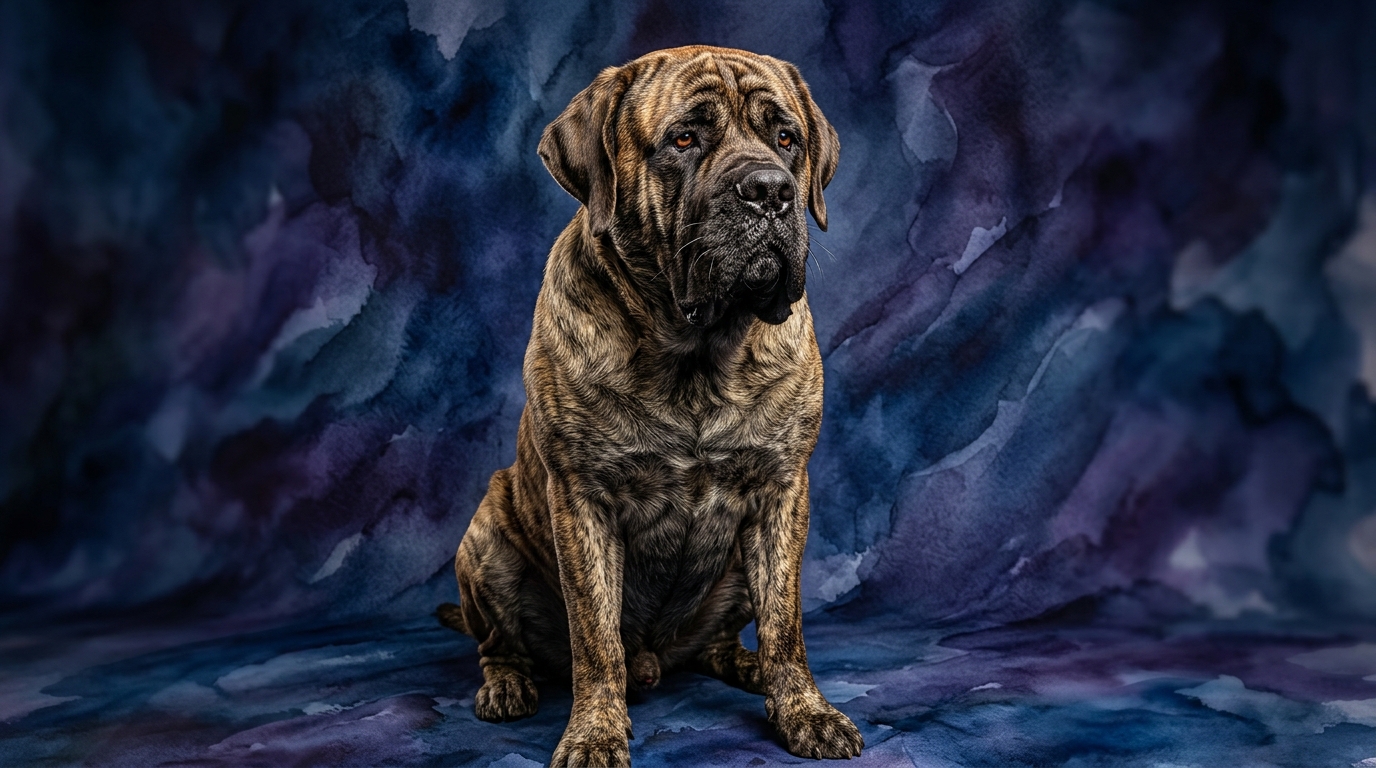
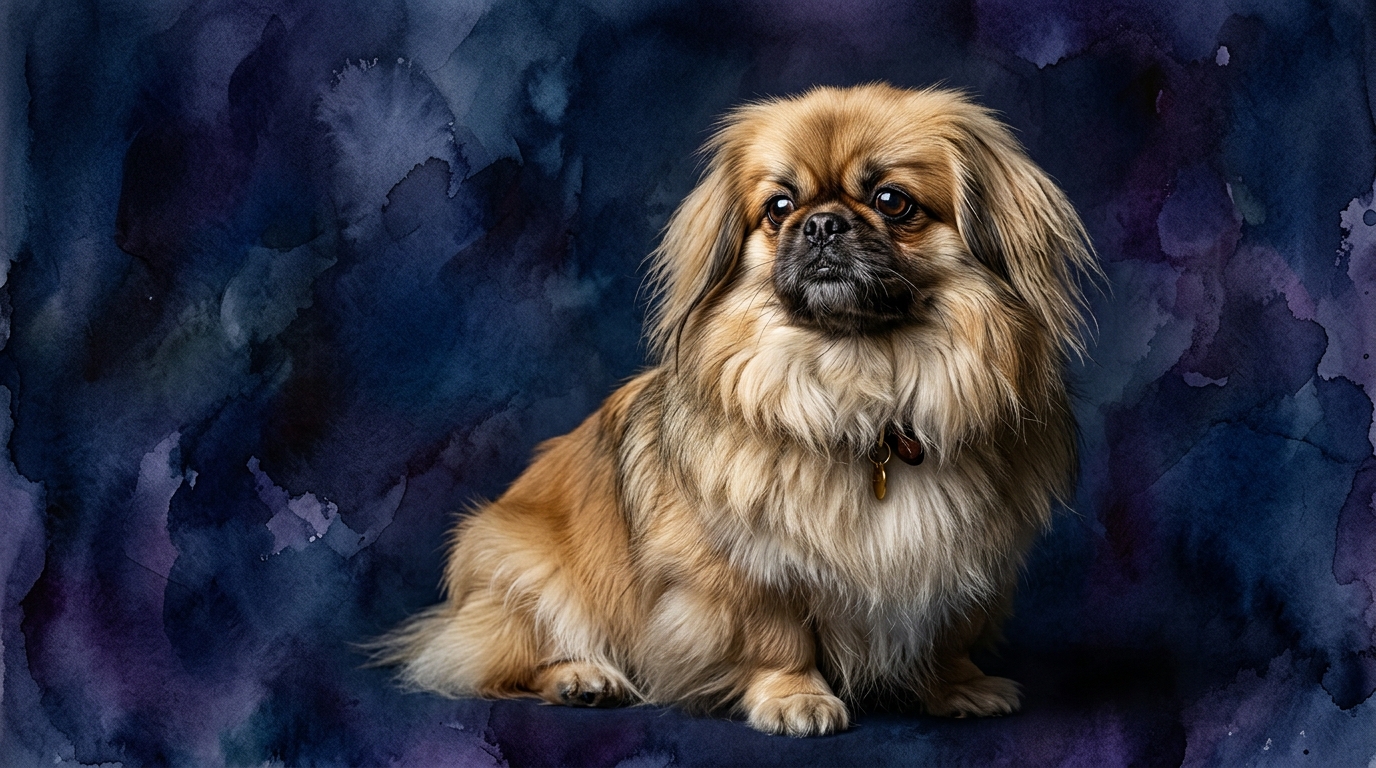
Side-by-Side IQ Profile: Unpacking Identical Scores
The Cosmic Pet Pet IQ Lab assesses canine intelligence across five critical dimensions, each rated on a 1-5 scale. Intriguingly, both the Mastiff and the Pekingese register a consistent 3/5 across the board. This doesn't imply identical cognitive performance, but rather a similar level of aptitude that expresses itself uniquely within their breed-specific contexts and Coren ranks (Mastiff #72, Pekingese #77).
For the Mastiff, a score of 3/5 in Problem Solving indicates a capacity to figure out practical challenges, often related to their protective instincts or navigating their environment, but not necessarily complex, multi-step puzzles. Their Training Speed at 3/5 suggests they are capable learners, yet require consistent, patient instruction to ingrain commands. Social Intelligence at 3/5 means they can read human cues and intentions, crucial for their guardian role, but might be reserved or discerning with strangers. An Instinctive Drive of 3/5 points to a moderate yet present drive for guarding and territoriality, a core aspect of their working heritage. Finally, a Memory score of 3/5 implies they retain routines, learned behaviors, and social interactions with a reliable, but not exceptional, recall.
The Pekingese, despite its toy breed classification, mirrors these scores. Its 3/5 in Problem Solving often manifests as cleverness in navigating household dynamics, finding comfort, or subtly influencing their owners, rather than engaging in physical feats. A Training Speed of 3/5 suggests they can learn, but their independent spirit often means they need strong motivation and a patient approach, as their primary goal isn't always to please. Social Intelligence at 3/5 indicates they are attuned to their chosen human companions, capable of forming deep bonds, but their social circle is typically smaller, and they may exhibit aloofness towards outsiders. Their Instinctive Drive at 3/5 leans towards a strong sense of self-preservation, a desire for comfort, and a surprising boldness for their size, rather than a working drive. A Memory score of 3/5 ensures they remember routines, preferred people, and past experiences, both positive and negative, which can contribute to their sometimes particular nature.
Where the Mastiff Cognitively Excels
While both breeds share identical raw scores, the Mastiff's cognitive strengths shine in the application of its 3/5 metrics within its role as a formidable guardian. Its 3/5 problem-solving, coupled with its protective 3/5 instinctive drive, allows it to effectively assess and respond to perceived threats within its territory. This isn't about solving a canine Rubik's Cube; it's about the practical cognition of discerning unusual activity and acting as a deterrent. Their social intelligence, also at 3/5, is particularly effective in identifying familiar family members versus potential intruders, a nuanced social skill amplified by their sheer physical presence.
The Mastiff's memory, rated 3/5, is crucial for consistently remembering who belongs and who doesn't, ensuring reliable protective behavior over time. This cognitive consistency in a large, powerful package is where its intelligence truly 'wins' in its intended function. It's about a steady, unwavering cognitive presence, making calculated assessments in situations demanding a calm, authoritative response, rather than quick, flashy intellectual displays.
Where the Pekingese Cognitively Excels
The Pekingese, with its identical 3/5 scores, demonstrates cognitive excellence in a vastly different domain: navigating complex human social environments with an air of independent charm. Its 3/5 problem-solving often manifests as a sophisticated ability to manipulate situations to its advantage, whether it's securing the most comfortable spot on the sofa or eliciting specific attention from its owner. This isn't about guarding a property, but rather optimizing its personal comfort and social standing within the household hierarchy.
The Pekingese's 3/5 social intelligence is highly refined for understanding the subtle cues of its immediate human family, often forming incredibly deep, almost telepathic bonds with its chosen few. Its instinctive drive, also 3/5, contributes to a self-assured, sometimes regal demeanor, allowing it to hold its own despite its size. This cognitive self-possession enables the Pekingese to thrive as a companion animal, requiring respect for its boundaries while offering profound, if selective, affection. Their memory, at 3/5, helps them recall preferred routines and people, reinforcing their selective social engagements and personal preferences.
Which is Easier to Train and Why?
Both the Mastiff and the Pekingese score 3/5 in training speed, indicating that neither is inherently 'easy' to train in the way some higher-ranking breeds might be. However, the *nature* of the training challenge differs significantly. For the Mastiff, early and consistent training is paramount due to their immense size and strength. A poorly trained Mastiff, even with a 3/5 training speed, can be unmanageable simply because of its physical power. Motivation often comes from a desire to please their handler and a strong bond, but their learning process requires patience and repetition. Their 3/5 memory ensures commands stick, but the initial acquisition can be slow.
The Pekingese, despite its small stature, presents a different set of training hurdles. Their 3/5 training speed is often tempered by their independent nature and strong-willed 3/5 instinctive drive. They are not always motivated by an inherent desire to please; instead, training often becomes a negotiation, requiring high-value rewards and making the process enjoyable for them. Potty training, in particular, can be a prolonged endeavor due to their size and preference for comfort over immediate obedience. While their 3/5 social intelligence allows them to understand human intentions, their 3/5 problem-solving might lead them to find loopholes if the rewards aren't compelling enough. Neither breed is for the faint of heart when it comes to training consistency, but the Mastiff's size makes its training a safety imperative, while the Pekingese's independence makes its training a test of wills.
Which Suits Active Owners vs. Relaxed Owners?
The distinction between active and relaxed owners is less about the dog's raw IQ scores and more about how their breed-specific needs, influenced by those scores, align with a lifestyle. A Mastiff, despite its often calm demeanor, suits an owner who is consistently active in a structured way. While they aren't marathon runners, their 3/5 instinctive drive for guarding and their substantial physical presence necessitate regular, moderate exercise, significant mental stimulation to prevent boredom, and extensive socialization from a young age. Their 3/5 social intelligence needs careful cultivation to ensure they are discerning guardians, not overly reactive. An 'active' owner for a Mastiff is one who is actively engaged in their dog's mental and physical well-being daily, even if it's not high-impact activity.
The Pekingese, conversely, is generally better suited for a more relaxed owner, though 'relaxed' should never imply neglect of mental stimulation. Their 3/5 instinctive drive for self-preservation and comfort means they are content with shorter walks, indoor play, and exploring their immediate environment. Their 3/5 social intelligence means they thrive in a home where they receive ample, focused attention from their chosen human companions without necessarily needing a large, boisterous social circle. A relaxed owner for a Pekingese is someone who appreciates their independent spirit, provides a comfortable, safe indoor environment, and engages in gentle, consistent interaction and mental enrichment, such as puzzle toys or short training sessions, without demanding strenuous physical activity.
The Verdict
Choose the Mastiff if you are seeking a steadfast, protective companion for a larger home, prepared for consistent, patient training to manage its size and strong, albeit moderately driven, guardian instincts.
Opt for the Pekingese if you desire an independent, charming companion for a more relaxed lifestyle, appreciating its clever navigation of a domestic environment and its deep, selective bonds with its human family.
🧠 Find Your Pet's IQ Score
Our Pet IQ Lab assessment covers 25+ tests across 5 cognitive dimensions — personalized to your breed.
Take the Full IQ Test →Frequently Asked Questions
Do identical IQ scores mean Mastiffs and Pekingese are equally 'smart' in every way?
Not exactly. Identical scores of 3/5 across the five dimensions indicate a similar *level* of cognitive aptitude, but how that aptitude manifests is vastly different. A Mastiff's problem-solving might involve spatial reasoning for guarding, while a Pekingese's might be about manipulating a situation for comfort, both being 3/5 but applied to different contexts.
How do their Coren ranks of #72 and #77 relate to their 3/5 IQ scores?
Coren ranks primarily measure 'working and obedience intelligence,' reflecting how quickly a dog learns and obeys commands. Both #72 and #77 place them in the 'fair working/obedience intelligence' category, requiring more repetitions to learn. This aligns with their 3/5 training speed, indicating they are capable learners but require significant patience and consistency, rather than being naturally quick to pick up commands.
Can a Mastiff and a Pekingese live together harmoniously?
Coexistence is possible but requires careful management, largely due to their differing instinctive drives and social intelligence applications. The Mastiff's protective 3/5 drive might initially view the Pekingese as something to guard or, if not socialized, a potential nuisance. The Pekingese's independent 3/5 drive and boldness might lead it to challenge the larger dog. Early, positive introductions and supervision are crucial to foster mutual respect and safety.