
Side-by-Side IQ Profile: Unpacking 3/5 for Each Breed
The Cosmic Pet Pet IQ Lab assesses five crucial dimensions of canine intelligence, and interestingly, both the Mastiff and the Rat Terrier score a steady 3/5 in each. However, the manifestation of this 'average' capability is uniquely tailored to their ancestral roles and physical attributes.
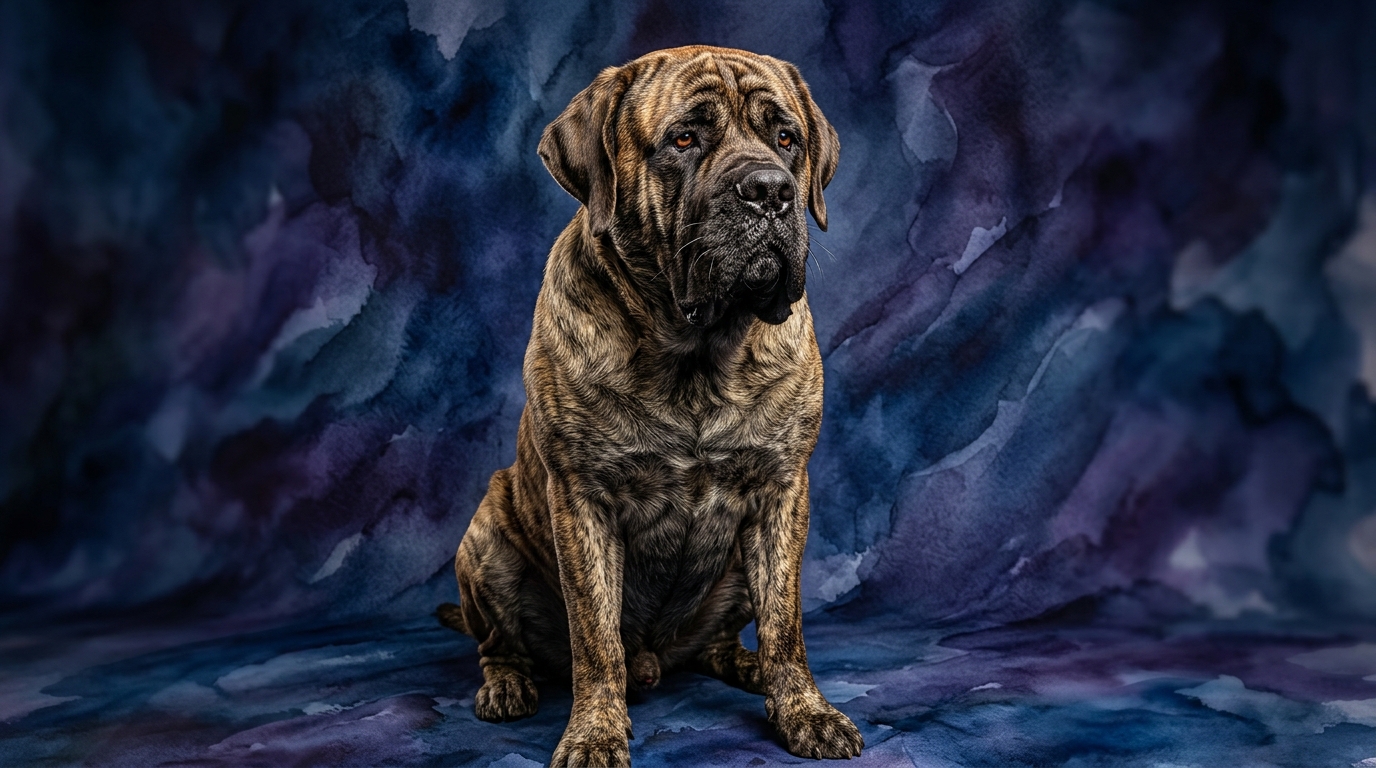
For the **Mastiff**, a Working group dog, Problem Solving at 3/5 often translates into a deliberate, observational approach. They might not react instantly to novel situations but instead take time to assess potential threats or unusual changes in their environment, applying their considerable size and presence as part of their 'solution.' Training Speed, also 3/5, indicates they learn at a moderate pace, requiring consistent, patient repetition rather than quick, flashy sessions. Their Social Intelligence (3/5) is characterized by a calm, discerning nature, typically reserved with strangers but deeply bonded and protective of their family unit, reading their primary caretakers' cues with quiet attentiveness. The Instinctive Drive (3/5) in a Mastiff is predominantly expressed as a strong guarding instinct, a deep-seated desire to protect their territory and loved ones, rather than a drive for complex tasks. Memory (3/5) means they retain learned commands and experiences well over time, particularly routines and boundaries, but might not recall every single minor interaction with perfect clarity.
The **Rat Terrier**, a Terrier group dog, approaches Problem Solving (3/5) with a vastly different energy. Their solutions are often quick, tenacious, and physical, focused on achieving a goal like finding a hidden toy or navigating an obstacle course, reflecting their history of dispatching vermin. Training Speed (3/5) implies they can pick up commands relatively quickly, especially when motivated, but their independent terrier spirit can sometimes lead to selective hearing or a preference for self-directed activity over repetitive drills. Social Intelligence (3/5) for a Rat Terrier often means they are alert, curious, and can be quite adept at reading human emotions, often seeking interaction and attention from their family, though they can be wary of unfamiliar situations or people. Their Instinctive Drive (3/5) is powerfully geared towards hunting and chasing, an inherent desire to pursue small, fast-moving objects, which profoundly influences their behavior and attention. Memory (3/5) ensures they remember commands and routines, but their high drive might mean they 'forget' a command when a more stimulating chase opportunity arises, recalling it once the distraction passes.
Where the Mastiff Wins Cognitively
Despite sharing the same 3/5 rating, the Mastiff demonstrates a superior cognitive advantage in situations demanding calm, measured judgment and an imposing presence. Their Problem Solving, while not rapid, excels in scenarios requiring a deliberate assessment of a situation, such as determining if an approaching stranger is a threat or merely a curious passerby. This 'slow burn' problem-solving, combined with their 3/5 Social Intelligence, allows them to process complex social cues within their familiar environment, making them exceptionally reliable guardians. Their memory, at 3/5, solidifies their understanding of established routines and boundaries, contributing to their steadfast nature. They are less prone to impulsive reactions, instead offering a thoughtful, protective response shaped by their working heritage, which prioritizes observation and deterrence over immediate physical engagement.
Where the Rat Terrier Wins Cognitively
The Rat Terrier's cognitive strengths shine in environments demanding quick wits, agility, and persistent focus on a singular task. Their 3/5 Problem Solving manifests as a remarkable ability to find creative, often physical, solutions to immediate challenges, like navigating a complex scent trail or extracting a toy from a tight space. This is directly linked to their 3/5 Instinctive Drive, which fuels their tenacity and focus when engaged in pursuits that mimic their historical role. Their Training Speed, also 3/5, often appears faster in novel, engaging tasks where their prey drive can be channeled, allowing them to quickly grasp new tricks or agility sequences that provide mental and physical stimulation. They excel in dynamic, changing environments where rapid assessment and action are paramount, showcasing a nimble mental processing that complements their physical dexterity.
Which is Easier to Train and Why
Determining which breed is 'easier' to train is less about raw intellectual capacity and more about their inherent motivations and behavioral predispositions. The Mastiff, with its 3/5 Training Speed and more sedate demeanor, generally responds well to calm, consistent, and positive reinforcement. Their sheer size means early training and socialization are critical, but once a command is learned, their 3/5 memory ensures good retention. They are less prone to self-employment, making them generally more agreeable to following instructions, provided the training is patient and not overly repetitive, which can bore them.
The Rat Terrier, also at 3/5 for Training Speed, can learn commands quickly when motivated, but their high 3/5 Instinctive Drive and independent terrier spirit can present unique training challenges. They are easily distracted by environmental stimuli, particularly anything that triggers their chase instinct. Training requires creativity, variety, and a strong understanding of their prey drive to channel it constructively. While they are clever at 3/5 Problem Solving, this cleverness can sometimes be used to outwit their handlers if not engaged properly. Consistency is key for both, but for the Rat Terrier, it must be coupled with high-value rewards and dynamic sessions to maintain their focus against their strong internal drives and prevent boredom.
Which Suits Active Owners vs. Relaxed Owners
For owners with a more relaxed lifestyle, the **Mastiff** is generally a fitting companion. Their lower energy requirements and 3/5 Instinctive Drive for guarding mean they are typically content with moderate daily exercise—a leisurely walk and time in a secure yard. Their calm demeanor and 3/5 Social Intelligence make them excellent housemates, often preferring to be near their family rather than constantly seeking activity. They thrive on quiet companionship and a stable, predictable routine, making them ideal for individuals or families who appreciate a large, gentle presence without demanding constant engagement.
Conversely, the **Rat Terrier** is better suited for active owners who can provide consistent mental and physical stimulation. Their energetic nature, combined with their 3/5 Problem Solving and powerful 3/5 Instinctive Drive, means they require outlets for their intelligence and desire to chase and explore. Owners who enjoy dog sports like agility, obedience, or earthdog trials will find a highly engaged partner. A Rat Terrier needs regular, vigorous exercise, interactive play, and training sessions to prevent boredom and destructive behaviors. They thrive with owners who can match their zest for life and provide structured activities to channel their sharp minds and boundless energy.
The Verdict
Choose a Mastiff if you seek a calm, steadfast companion requiring moderate exercise and valuing deliberate, protective intelligence in a relaxed home environment.
Opt for a Rat Terrier if you are an active owner prepared to engage a quick-witted, tenacious dog with high energy and a strong drive for interactive play and mental challenges.
🧠 Find Your Pet's IQ Score
Our Pet IQ Lab assessment covers 25+ tests across 5 cognitive dimensions — personalized to your breed.
Take the Full IQ Test →Frequently Asked Questions
Do Mastiffs and Rat Terriers learn at the same pace?
Both breeds are rated 3/5 for Training Speed, indicating a moderate learning pace. However, the Mastiff learns with calm consistency, while the Rat Terrier, though quick, requires more engaging, varied training to combat distractions from its strong instinctive drives.
Which breed is better at problem-solving?
Both score 3/5 in Problem Solving, but their styles differ. Mastiffs excel in deliberate assessment and protective solutions, while Rat Terriers are adept at quick, physical solutions, especially when motivated by their hunting instincts.
How does social intelligence differ between these two breeds?
Each breed has 3/5 Social Intelligence, yet it manifests differently. Mastiffs are discerning and protective of their family, typically reserved with strangers. Rat Terriers are alert and curious, often seeking interaction with their family but can be wary of new situations or people.