
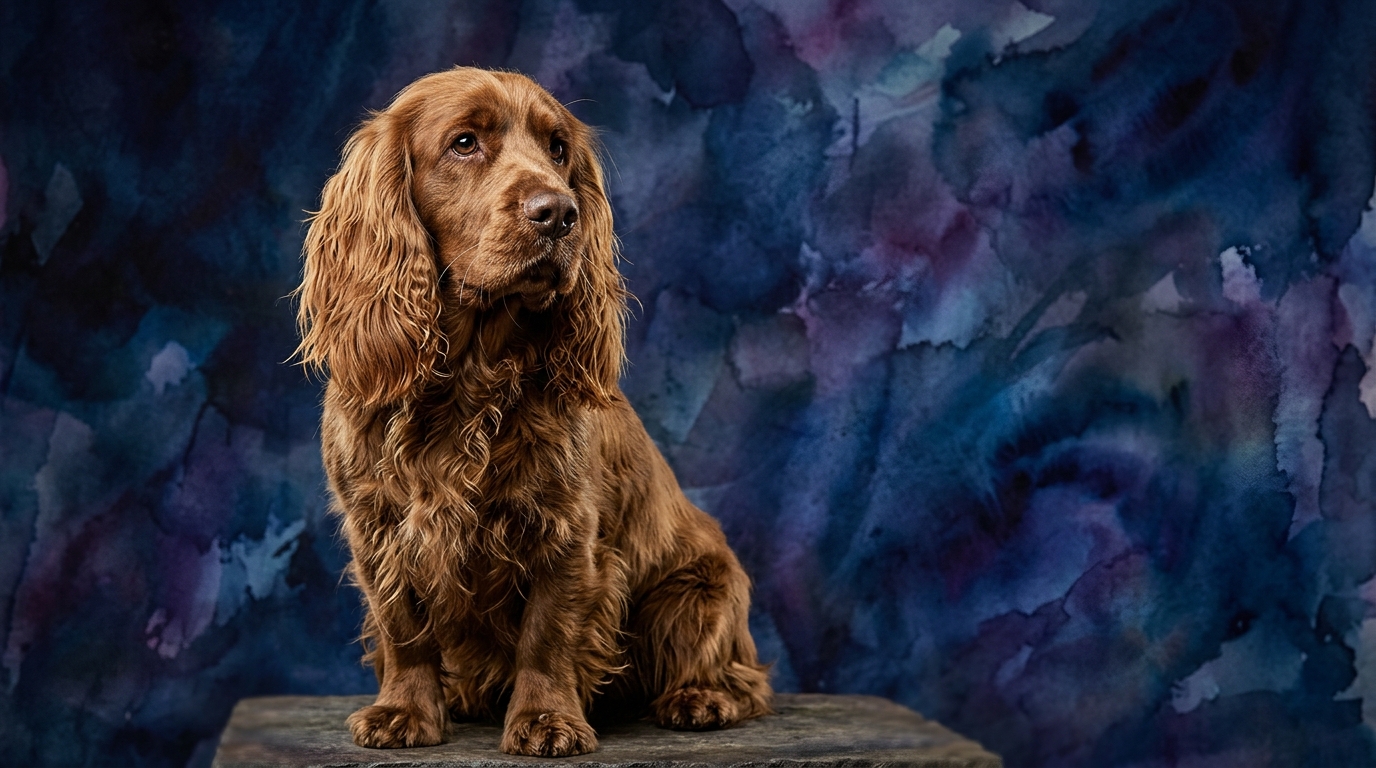
Side-by-Side IQ Profile: Mastiff vs. Sussex Spaniel
The Cosmic Pet Pet IQ Lab's assessment offers a fascinating glimpse into the mental landscapes of the Mastiff and the Sussex Spaniel. While their Coren Ranks – #72 for the Mastiff and #62 for the Sussex Spaniel – suggest a slight edge in adaptive intelligence for the spaniel, their core cognitive dimensions present a striking uniformity. Both breeds score a consistent 3/5 across all five key intellectual metrics: Problem Solving, Training Speed, Social Intelligence, Instinctive Drive, and Memory. This parity challenges us to delve deeper into what these identical scores signify for each breed's unique expression of cognition, rather than just the raw numbers.
For Problem Solving (3/5), both breeds demonstrate a moderate capacity for navigating novel challenges. The Mastiff typically approaches issues with a calm, observational patience, carefully assessing situations before acting, particularly concerning its environment or family. The Sussex Spaniel, driven by its sporting curiosity, often employs a more persistent, trial-and-error method to explore and manipulate its surroundings. Neither is predisposed to complex multi-step solutions without guidance, but both can learn to overcome obstacles with consistent exposure.
Training Speed (3/5) indicates a moderate requirement for repetition to grasp new commands. The Mastiff’s inherent independence and thoughtful nature mean it processes information deliberately, prioritizing understanding. The Sussex Spaniel, while generally eager, can be distracted by its scent drive or exhibit a stubborn streak, demanding engaging and patient instruction to maintain focus and accelerate learning.
Their Social Intelligence (3/5) reflects a balanced ability to interpret human cues. A Mastiff’s social cognition often manifests as discerning loyalty, understanding family moods and reacting with protective calm. The Sussex Spaniel’s acumen is expressed through its desire for companionship and sensitivity to handler emotions, often seeking to please or comfort, sometimes with spirited expressiveness. Both form strong bonds and communicate needs effectively.
Instinctive Drive (3/5) highlights moderate breed-specific behaviors. For the Mastiff, this signifies deep-seated guardian instincts—a strong, yet usually measured, territoriality. For the Sussex Spaniel, the score represents its sporting heritage: a moderate desire to follow scents, flush game, and retrieve, alongside a natural inclination for companionship. These drives are present but generally manageable.
Finally, Memory (3/5) suggests both breeds possess a good capacity to recall learned commands, routines, and experiences. A Mastiff reliably remembers training and family, often associating specific places or people with past events. A Sussex Spaniel similarly retains learned behaviors and social interactions, crucial for building trust. For both, regular reinforcement helps solidify memories.
Where the Mastiff Wins Cognitively
Despite identical cognitive scores, the Mastiff's unique historical role and formidable physical presence offer distinct cognitive advantages in specific scenarios. Their sheer size and inherent protective instincts translate into a superior ability to deter potential threats through presence and a calm, unwavering vigilance. This isn't just a physical trait; it's a cognitive function of risk assessment and environmental monitoring. A Mastiff excels in situations demanding steadfast discernment, evaluating newcomers or unusual sounds with a quiet, observant intelligence rather than reactive impulsivity. Their problem-solving, while rated 3/5, is often deployed with a measured, deliberate approach when it comes to family safety, a cognitive strength rooted in their historical role as estate guardians. They possess a deep, almost stoic understanding of their boundaries and responsibilities, making them exceptionally reliable anchors in a home environment where a steady, protective presence is paramount.
Where the Sussex Spaniel Wins Cognitively
The Sussex Spaniel, while physically smaller, showcases cognitive strengths that are equally valuable, particularly in environments requiring adaptability and focused engagement. Their sporting background imbues them with a nuanced ability to track and follow scent trails, demonstrating a complex form of problem-solving centered around sensory input and persistence. This isn't just "instinctive drive"; it's a cognitive process of interpreting environmental cues to achieve a goal. A Sussex Spaniel's problem-solving, also rated 3/5, often manifests as a clever persistence in exploring their surroundings or figuring out how to access a desired object. Their moderate social intelligence, combined with their desire to work alongside humans, makes them highly responsive to subtle body language and vocal inflections, often anticipating a handler's next move in a field or during interactive play. This keen observational skill allows them to integrate smoothly into varied social settings and adapt quickly to new routines, provided they feel secure and engaged.
Which Is Easier to Train and Why
When evaluating ease of training, the identical 3/5 Training Speed scores for both breeds can be deceptive, as real-world application often highlights behavioral nuances. The Sussex Spaniel, generally, might present as "easier" for an owner seeking a dog that is keen to please and actively participate in training sessions. Their sporting heritage means they often enjoy working with a handler, and their moderate instinctive drive can be channeled into focused tasks like retrieving or scent work. However, they can also be prone to a certain spaniel stubbornness or a tendency to get sidetracked by interesting smells, requiring a trainer to maintain high engagement and positive reinforcement. Their sensitivity means harsh corrections are counterproductive; they respond best to patience and encouragement.
The Mastiff, on the other hand, while equally capable of learning, approaches training with a more independent and thoughtful demeanor. Their 3/5 Training Speed score reflects a need for consistency and clarity, as they process information deliberately. They are not dogs that will perform simply for the sake of pleasing; they need to understand the 'why' behind a command and respect the trainer. This often means training requires more patience and a firm, yet gentle, hand. Their sheer size and potential for slowness in movement mean that physical execution of commands might be less agile than a spaniel's. For an owner, the Mastiff's training journey is less about speed and more about building a respectful, trusting partnership that values consistent routine and clear communication over flashy tricks. Therefore, while both require moderate effort, the style of training and the owner's approach will determine perceived ease.
Which Suits Active Owners vs. Relaxed Owners
The cognitive profiles and inherent drives of these two breeds naturally align with different owner lifestyles. The Sussex Spaniel, despite its moderate instinctive drive (3/5), is undeniably a breed better suited for active owners. Their sporting background means they thrive on regular, engaging activity that stimulates both their body and mind. This includes daily walks, opportunities for scent work or retrieving games, and participation in dog sports like agility or obedience. Their moderate problem-solving and social intelligence mean they enjoy interactive play and benefit from owners who incorporate mental challenges into their exercise routines. A relaxed owner might find a Sussex Spaniel becomes restless or prone to mischievous self-entertainment if their needs for activity and mental engagement are not met.
Conversely, the Mastiff is an ideal companion for more relaxed owners, provided their need for thoughtful engagement is understood. While they still require daily, moderate exercise to maintain health, their energy levels are generally lower than a spaniel's. Their problem-solving (3/5) often manifests in a calm observational manner, and their social intelligence (3/5) makes them content to be a steadfast, comforting presence alongside their family. They appreciate routine and a predictable environment. What a relaxed owner must provide, however, is mental stimulation through gentle training, puzzle toys, and consistent social interaction, ensuring their profound memory (3/5) and social intelligence are respectfully engaged. A highly active owner looking for a jogging partner might find the Mastiff's pace too slow, while an owner who appreciates a calm, watchful companion will find the Mastiff's cognitive style perfectly complementary.
The Verdict
For those seeking a steadfast, calm, and protective companion who offers a quiet, discerning presence, the Mastiff is an exceptional choice.
If your lifestyle involves more consistent outdoor activity and you appreciate a biddable yet occasionally spirited partner for engaging tasks, the Sussex Spaniel will thrive by your side.
🧠 Find Your Pet's IQ Score
Our Pet IQ Lab assessment covers 25+ tests across 5 cognitive dimensions — personalized to your breed.
Take the Full IQ Test →Frequently Asked Questions
Do Mastiffs and Sussex Spaniels differ in their ability to learn new tricks?
Both breeds have a Training Speed of 3/5, indicating they learn at a moderate pace. The Sussex Spaniel might appear quicker due to its biddable nature and eagerness, while the Mastiff learns deliberately, requiring more patience and consistent, clear instruction to master commands.
How do their social intelligence scores of 3/5 play out with children or other pets?
A 3/5 Social Intelligence means both can integrate well, but with differences. Mastiffs are typically gentle giants with children, exhibiting protective calm and tolerance, while Sussex Spaniels are affectionate and playful, though their bursts of energy might need management around very young children or timid pets.
Is one breed more prone to separation anxiety given their memory and social intelligence?
Both breeds form strong bonds (3/5 Social Intelligence) and remember their routines (3/5 Memory). While neither is inherently more prone to separation anxiety based on these scores alone, any dog can develop it if not properly socialized and accustomed to alone time, regardless of their specific IQ profile.