
Side-by-Side Pet IQ Lab Profiles
At The Cosmic Pet Pet IQ Lab, we assess canine intelligence across five key dimensions, moving beyond simple obedience to understand the nuances of a breed's mind. For the Mastiff, a member of the Working group, ranked #72 by Coren, its profile shows a balanced set of attributes. Its Problem Solving is rated 3/5, indicating a capability to navigate moderately complex challenges, though often with a calm, deliberate approach rather than frantic trial-and-error. Training Speed also sits at 3/5, meaning a Mastiff will learn new commands and routines at an average pace, responding best to consistent, gentle methods that build trust. Social Intelligence is likewise 3/5; these gentle giants are adept at understanding human cues and their role within a family, often expressing their understanding through quiet devotion rather than boisterous displays. Their Instinctive Drive is 3/5, reflecting a moderate, controlled guarding instinct balanced by their generally placid nature. Finally, their Memory is 3/5, allowing them to retain learned behaviors and experiences reasonably well over time.
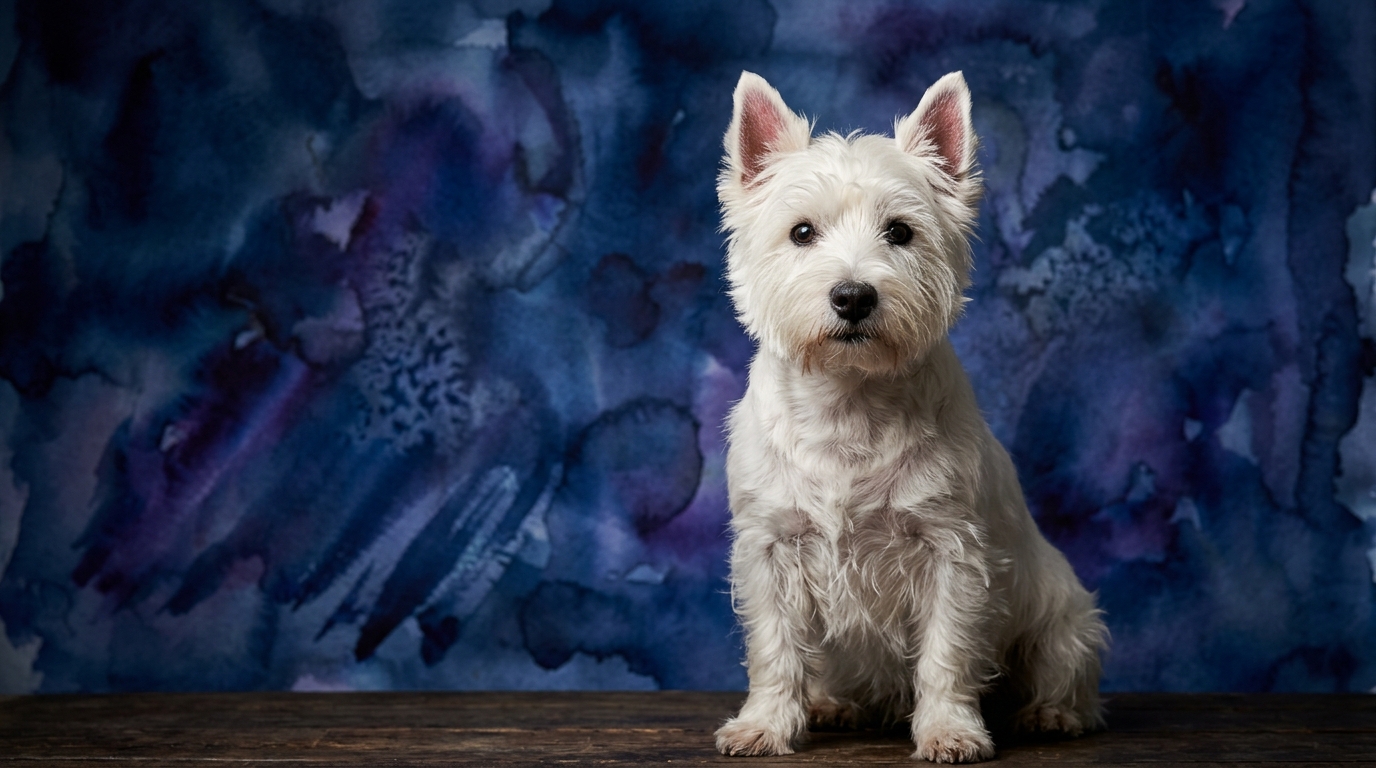
In contrast, the West Highland White Terrier, a spirited member of the Terrier group, holds a higher Coren rank at #47, suggesting a greater capacity for working intelligence. Its Problem Solving matches the Mastiff at 3/5, yet this manifests differently; a Westie often approaches challenges with a tenacious curiosity, driven by their inherent terrier persistence to figure things out, whether it's accessing a favorite toy or navigating a tricky scent trail. Their Training Speed is also 3/5, indicating an average learning rate, but this is often paired with an independent streak that can make consistent compliance a more engaging endeavor for the owner. Social Intelligence, rated 3/5, means they are quite capable of reading social signals and integrating into family dynamics, though their assertive personality can sometimes lead them to test boundaries. Their Instinctive Drive is a pronounced 3/5, showcasing strong prey drive and digging tendencies, hallmarks of their heritage as vermin hunters. The Westie's distinct cognitive advantage lies in its Memory, rated 4/5. This higher score suggests a superior ability to recall past events, learned commands, and environmental cues, potentially making them highly aware of their surroundings and consistent in their learned behaviors, both desired and undesired.
Where the Mastiff Wins Cognitively
While both breeds share several 3/5 scores, the Mastiff's cognitive strengths often manifest through its inherent temperament and physical presence. Its problem-solving, though rated 3/5, is typically executed with a thoughtful, measured approach. This deliberate nature means a Mastiff is less prone to impulsive decisions, potentially making it more reliable in situations requiring a calm assessment rather than quick, reactive action. In social intelligence, their 3/5 rating, combined with their imposing but gentle demeanor, allows them to convey a powerful, deterrent presence without needing overt aggression. This nuanced social understanding means they can often de-escalate potential threats simply by their quiet authority. Furthermore, their instinctive drive, also 3/5, is geared towards protection with a remarkable degree of discernment; they are not prone to indiscriminate barking or reactivity, but rather a watchful, steady understanding of their territory and family. This calm, consistent application of their cognitive abilities, rather than raw speed, is where the Mastiff truly shines.
Where the West Highland White Terrier Wins Cognitively
The Westie’s definitive cognitive advantage emerges in its Memory, boasting a 4/5 rating compared to the Mastiff's 3/5. This superior recall means a Westie is more likely to remember specific commands, intricate routines, and even the precise location of a hidden treat or a particular scent from a previous walk. This enhanced memory is a powerful tool for learning and navigating their world, allowing them to build complex mental maps and recall past successes or failures with greater accuracy. While their problem-solving is also 3/5, their tenacious terrier spirit often means they apply this problem-solving capacity with relentless determination. They are less likely to give up on a puzzle or a desired outcome, leveraging their sharp memory to refine their approach based on previous attempts. Their instinctive drive, also 3/5, is channeled through this memory, enabling them to become highly skilled at tasks requiring persistence and recall, such as scent work or agility challenges, remembering sequences and cues with precision.
Which is Easier to Train and Why
Both the Mastiff and the West Highland White Terrier share a 3/5 rating for Training Speed, suggesting they learn new commands at an average pace. However, the ease of training them can vary significantly due to their inherent behavioral differences. A Mastiff, despite its size, often possesses a strong desire to please its owner and a generally calmer, more compliant temperament. Once a Mastiff understands a command, its less independent nature means it is often more consistent in its response, making the training process feel smoother and more predictable. Their social intelligence helps them grasp the intent behind commands and the importance of adhering to family rules.
Conversely, the Westie, while equally capable of learning, presents a different training dynamic. Their robust terrier independence and strong instinctive drives mean they can be more easily distracted by environmental stimuli, like interesting smells or potential prey. They might understand a command perfectly but choose to "selectively hear" it if something more engaging captures their attention. Their 4/5 memory can be a double-edged sword; they'll remember the training, but also remember if they successfully got away with ignoring a command once. Therefore, training a Westie requires exceptional consistency, creative motivation, and a patient understanding of their spirited, sometimes stubborn, nature to channel their intelligence effectively and overcome their ingrained desire to follow their own agenda.
Cognitive Needs for Active vs. Relaxed Owners
The Mastiff is generally an ideal companion for relaxed owners or those who prefer a more sedate lifestyle. Their substantial size belies a relatively low energy level; they are content with leisurely walks, quiet companionship, and ample opportunities for rest. Their cognitive engagement thrives in a calm home environment where their intelligence is stimulated through gentle, consistent training, social interaction, and simply being a cherished family member. They are not dogs that require intense physical exertion to be mentally content, making them well-suited for owners who appreciate a steadfast presence without demanding constant activity.
The West Highland White Terrier, despite its smaller stature, is better suited for more active owners or those committed to providing regular mental and physical stimulation. Their terrier heritage imbues them with significant stamina, a keen sense of curiosity, and a drive for purposeful activity. They require daily opportunities for brisk walks, engaging playtime, and structured activities that challenge their problem-solving skills and allow them to express their instinctive drives, such as scent games, agility, or even supervised digging in a designated area. Their higher memory score means they will remember exciting outings and stimulating tasks, and will actively seek out engagement, making them a vibrant companion for owners who enjoy an interactive and dynamic relationship with their pet.
The Verdict
For owners seeking a gentle, calm companion whose cognitive engagement comes from companionship and consistent, low-key training, valuing their steady temperament and protective presence, the Mastiff is an excellent choice.
For those who appreciate a spirited, tenacious companion with a sharp memory, ready for engaging activities and consistent, stimulating training that channels their inherent terrier drive, the West Highland White Terrier will prove a rewarding partner.
🧠 Find Your Pet's IQ Score
Our Pet IQ Lab assessment covers 25+ tests across 5 cognitive dimensions — personalized to your breed.
Take the Full IQ Test →Frequently Asked Questions
Do Mastiffs learn quickly despite their large size?
While their training speed is rated 3/5, indicating an average learning pace, Mastiffs respond well to gentle, consistent methods. Their desire to please their family often aids in their learning process, making them receptive though not lightning-fast learners.
How does the Westie's strong memory impact its behavior?
A Westie's 4/5 memory means they retain training, routines, and experiences effectively. This can be beneficial for consistent behavior, but also means they might remember negative experiences or learn unwanted habits quickly, requiring diligent early training.
Are there major cognitive differences in problem-solving between these breeds?
Both breeds share a 3/5 rating for problem-solving, suggesting a similar capacity to figure out tasks. The difference often lies in motivation and application; a Westie might apply its problem-solving with more persistent terrier drive, while a Mastiff might be more deliberate in its approach.