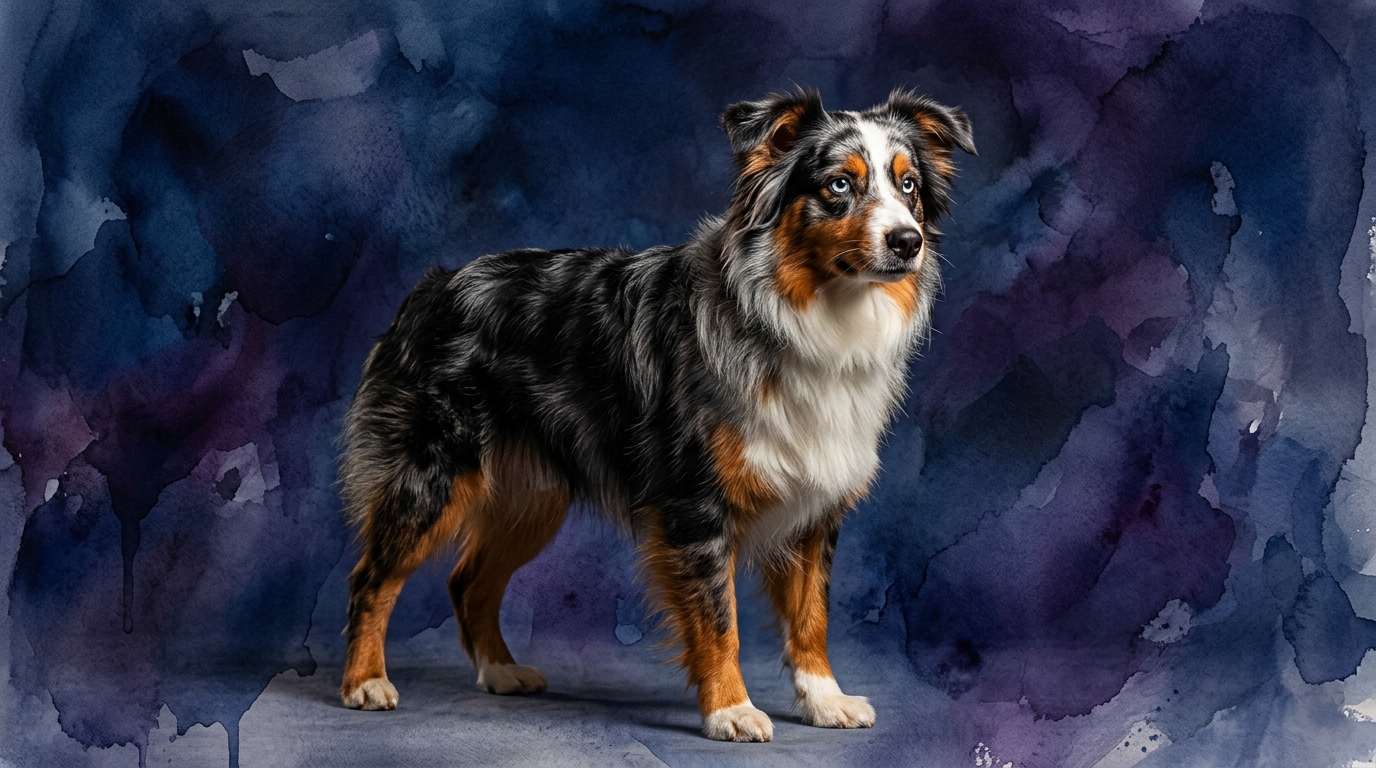
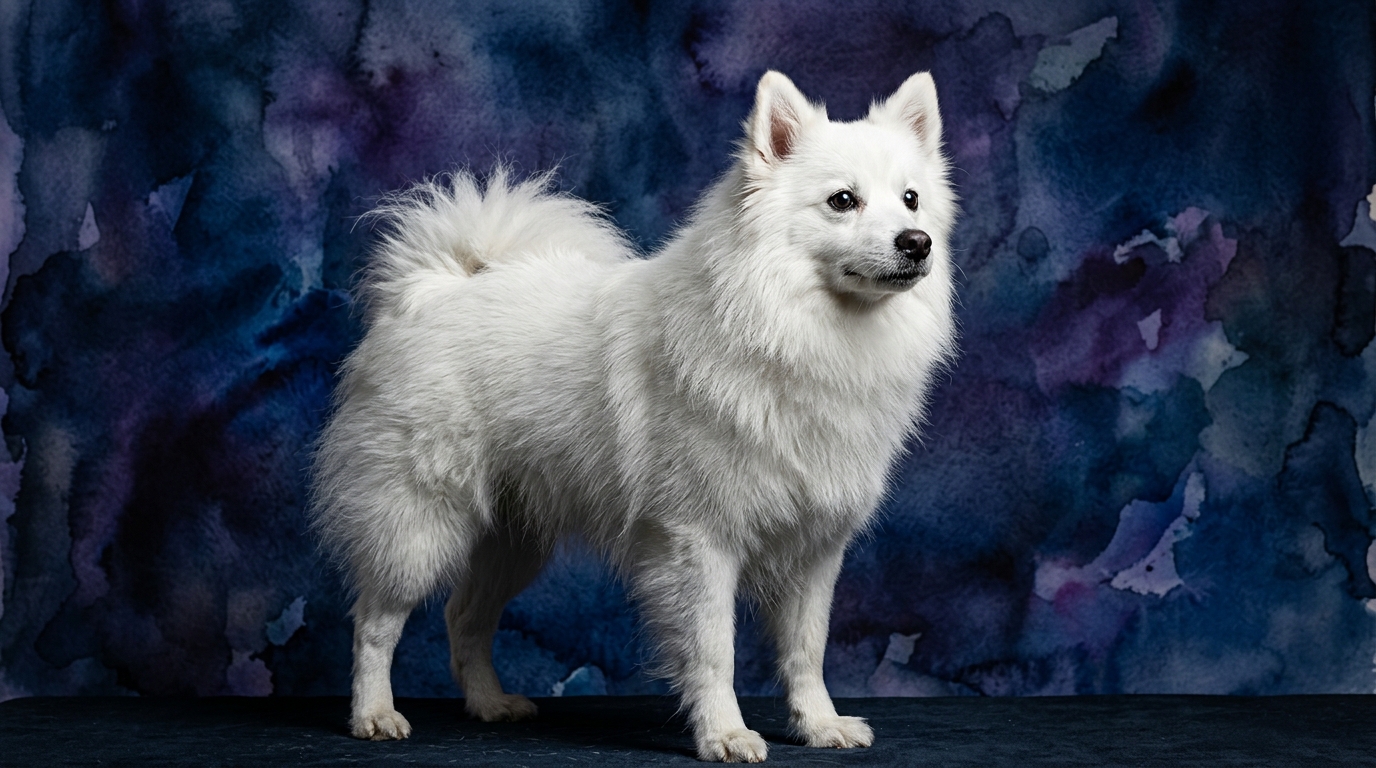
Side-by-Side Cognitive Profile
The Cosmic Pet Pet IQ Lab assesses five key cognitive dimensions, and interestingly, both the Miniature American Shepherd (MAS) and the American Eskimo Dog (AED) receive a 3/5 rating across the board. However, these identical scores belie distinct expressions of intelligence rooted in their breed origins and intended functions. Understanding these subtle differences is crucial for appreciating their unique mental aptitudes.
For the **Miniature American Shepherd**, a Herding group dog, their cognitive strengths are often task-oriented and collaborative. Their **Problem Solving (3/5)** acumen is typically seen in strategic thinking related to spatial awareness and managing dynamic elements, such as navigating an agility course or understanding complex multi-step commands. Their **Training Speed (3/5)** reflects a strong eagerness to engage and comply, crucial for a working partner who needs to absorb new commands efficiently, driven by a desire to collaborate and fulfill a perceived role. **Social Intelligence (3/5)** is vital for interpreting subtle cues from both humans and livestock, fostering deep, perceptive bonds and responding appropriately in a working partnership. Their **Instinctive Drive (3/5)** is heavily influenced by their herding heritage, manifesting as a specific impulse to gather, control, and organize, which fuels their cognitive framework for order and focus. Finally, their **Memory (3/5)** is robust, allowing them to recall vast arrays of commands, complex sequences, and past experiences essential for consistent, reliable performance in dynamic working environments.
The **American Eskimo Dog**, a Non-Sporting group dog, applies its cognitive strengths with a different emphasis, often focused on companionship and ingenuity within a domestic setting. Their **Problem Solving (3/5)** frequently manifests as creative exploration in their environment, such as figuring out how to open a cabinet, retrieve a forgotten toy, or manipulate a puzzle feeder. This often involves persistence and a playful, sometimes mischievous, approach to satisfying curiosity or desires. Their **Training Speed (3/5)** is characterized by an eagerness to please and a quick grasp of new concepts, especially when training is engaging and reward-based, though their independent streak means consistent motivation is key. **Social Intelligence (3/5)** allows them to adeptly read human emotions and intentions, using this understanding to foster strong companion bonds, often expressing their needs or desires through a range of vocalizations and body language. Their **Instinctive Drive (3/5)** is less about a specific working role and more about a generalized alertness and desire for interaction, manifesting as a keen awareness of surroundings, a tendency to vocalize warnings, and a strong impetus for companionship and play. Their **Memory (3/5)** demonstrates solid recall for learned behaviors, intricate trick sequences, and household routines, contributing to their ability to learn and perform complex routines for entertainment and interaction.
Where the Miniature American Shepherd Shines Cognitively
While both breeds share identical 3/5 ratings across all cognitive dimensions, the Miniature American Shepherd often exhibits a nuanced edge in applying their problem-solving and memory within structured, task-oriented scenarios. Their herding lineage primes them for strategic thinking related to spatial awareness and predictive behavior; they excel at understanding and executing multi-step commands that involve navigating obstacles or managing dynamic elements, such as in agility or rally obedience. This breed's instinctive drive, while rated identically, is specifically channeled towards organization and control, giving them an inherent cognitive advantage in tasks requiring precise execution and a methodical approach. Their social intelligence is finely tuned to collaborating with a handler towards a shared goal, making them exceptionally responsive to subtle directional cues and anticipatory of the next step in a sequence. This focus on cooperative work means their memory is optimized for retaining complex sequences and consistent routines that directly contribute to a productive partnership, rather than solely for personal gain or amusement.
Where the American Eskimo Dog Shines Cognitively
The American Eskimo Dog, despite matching the MAS in raw scores, often shines brighter in cognitive areas requiring creative adaptation, independent thought, and social engagement focused on companionship. Their problem-solving skills, also 3/5, are frequently applied to novel situations within a domestic context, such as devising clever ways to access desired items or figuring out complex puzzle toys without direct human instruction. Their social intelligence, while equally rated, often manifests as a more expressive and persuasive form of communication, adept at 'negotiating' for attention, play, or comfort through a range of vocalizations and body language. This breed’s memory capacity, also 3/5, is particularly strong for recalling social interactions, personal preferences of family members, and a diverse repertoire of entertaining tricks. Their instinctive drive, while also a 3/5, fuels a broader curiosity and a desire for varied mental stimulation, making them particularly adept at learning new tricks for the sheer joy of interaction and the opportunity to 'perform' for their loved ones.
Ease of Training: A Nuanced Perspective
Evaluating ease of training between these two breeds requires looking beyond identical raw scores to their intrinsic motivations. Both the Miniature American Shepherd and the American Eskimo Dog score 3/5 in training speed, indicating they are generally quick learners. However, the Miniature American Shepherd's herding background instills a strong desire for cooperative work and a keen responsiveness to handler direction. They often view training as a collaborative task, eager to please and fulfill a role, which translates into a more straightforward and consistent training experience for many owners. Their focus is typically on precision and execution. Conversely, the American Eskimo Dog, while equally capable of learning quickly, often brings a more independent and sometimes playful spirit to training. Their motivation is often rooted in engagement, fun, and rewards, and they may be more prone to 'testing' boundaries or offering alternative, often amusing, behaviors if not sufficiently challenged or if training becomes repetitive. While they learn fast, maintaining their attention and channeling their cleverness requires a creative and consistent approach, meaning they might present more variability in their 'ease' of training depending on the handler's style.
Matching Breeds to Lifestyles
For owners seeking a highly active and mentally engaged companion, the Miniature American Shepherd is often an ideal match. Their strong instinctive drive and problem-solving abilities thrive when given structured 'jobs,' whether through herding sports, agility, obedience trials, or extensive hiking. They require consistent physical and mental stimulation to prevent boredom and channel their inherent working tendencies constructively. A relaxed owner might find their persistent need for engagement overwhelming. The American Eskimo Dog, while also active and requiring regular exercise, can adapt more readily to varying levels of activity. While they certainly enjoy brisk walks, playtime, and learning new tricks, their activity needs can be met with a slightly less intense daily commitment than the MAS. Their social intelligence and companionship drive mean they are content to be involved in family activities, whether it's a bustling outdoor adventure or a cozy evening of puzzle toys and cuddles. They suit owners who appreciate an interactive and playful companion but may not necessarily be seeking a partner for demanding canine sports.
The Verdict
Choose the Miniature American Shepherd if you are an active individual or family seeking a highly engaged, cooperative partner for structured activities like dog sports, extensive outdoor adventures, or a 'job' to perform, appreciating their focused work ethic and precise cognitive application.
Opt for the American Eskimo Dog if you desire a clever, expressive, and adaptable companion who thrives on social interaction, enjoys learning tricks for fun, and fits well into a home that offers consistent engagement, play, and a slightly more flexible daily routine.
🧠 Find Your Pet's IQ Score
Our Pet IQ Lab assessment covers 25+ tests across 5 cognitive dimensions — personalized to your breed.
Take the Full IQ Test →Frequently Asked Questions
Do Miniature American Shepherds or American Eskimo Dogs bark more?
Miniature American Shepherds tend to use barking as a communication tool, often related to their herding instincts, alerting to perceived threats, or expressing excitement during play. American Eskimo Dogs are generally more vocal, using a wider range of barks, howls, and 'talk' to communicate with their families and alert them to anything unusual, a trait stemming from their watchdog history.
Are either of these breeds good with children?
Both breeds can be wonderful with children, but their approaches differ. Miniature American Shepherds are often gentle and watchful, sometimes attempting to 'herd' children, requiring supervision to ensure appropriate interaction. American Eskimo Dogs are typically playful and affectionate, enjoying games and being part of family activities, though their vocal nature might need management in quieter homes.
Which breed is more independent?
The American Eskimo Dog tends to exhibit a more independent streak, capable of entertaining themselves and sometimes making their own decisions, even if eager to please. The Miniature American Shepherd, while capable of independent thought, is generally more handler-focused, preferring to work in close partnership and seeking direction from their human companions.