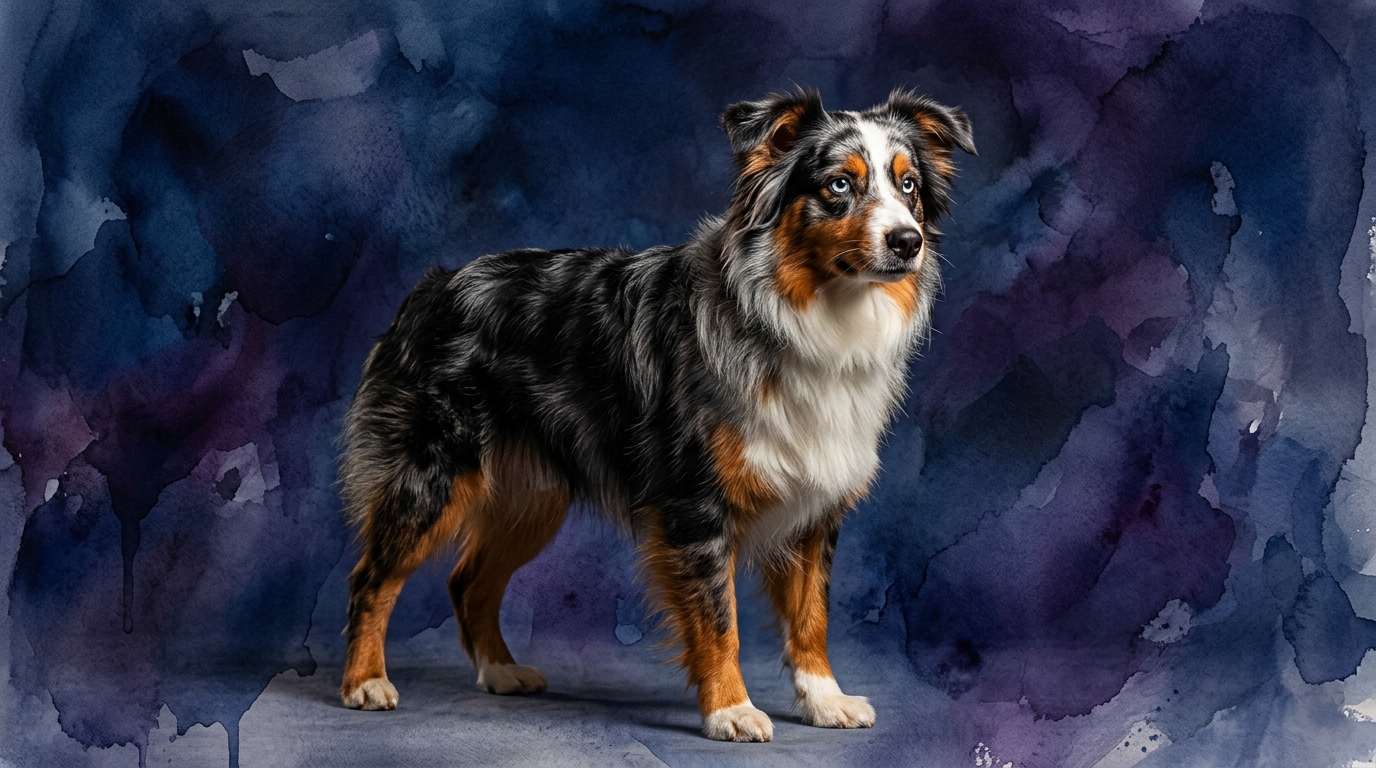
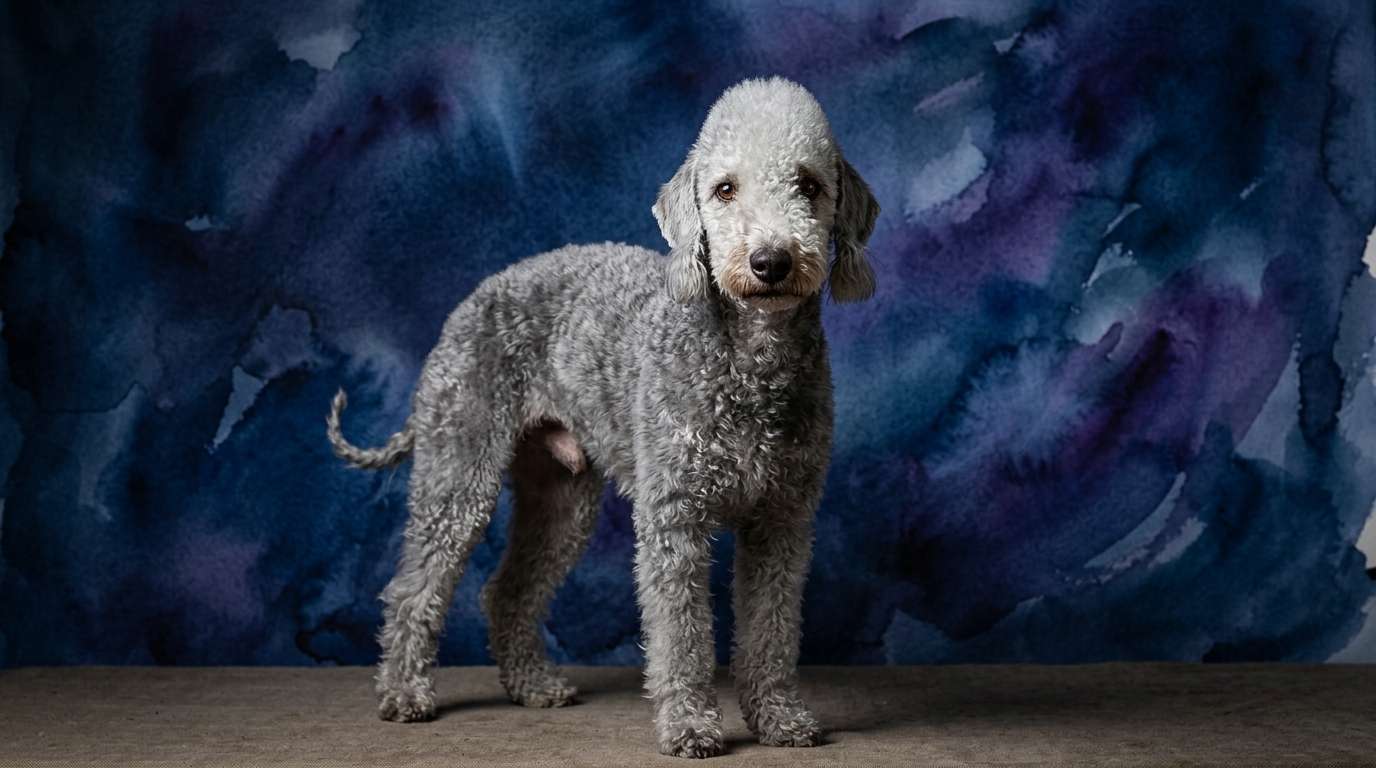
Side-by-Side Cognitive Profile: Identical Scores, Distinct Expressions
Both the Miniature American Shepherd (MAS) and the Bedlington Terrier (BT) register a consistent 3 out of 5 across all five cognitive dimensions: Problem Solving, Training Speed, Social Intelligence, Instinctive Drive, and Memory. This unusual parity demands a deeper look into how their breed-specific roles shape the manifestation of these scores, rather than just the raw numbers.
For Problem Solving (3/5), the MAS, a herding breed, often applies this skill in dynamic, spatial contexts, such as anticipating livestock movement or navigating complex agility courses with strategic foresight. Their solutions are typically collaborative, aimed at managing a situation with their handler. The BT, a terrier, exhibits problem-solving with tenacious independence, often focused on a specific goal like finding a hidden toy or navigating obstacles to reach a perceived 'prey' item, demonstrating resourcefulness in pursuit.
Training Speed (3/5) in the MAS reflects their eagerness to please and inherent desire for partnership, allowing them to grasp new commands and routines with relative quickness when given clear, consistent direction. The BT also learns quickly, but their terrier tenacity can sometimes translate into an independent streak, meaning they understand a command but might choose to execute it on their own terms or if sufficiently motivated, requiring a more engaging approach to maintain focus.
Social Intelligence (3/5) for the MAS is rooted in their history of working closely with humans and livestock, making them adept at reading subtle cues and adapting their behavior within a structured social environment. They are often attuned to their handler's emotional state and intentions. The BT's social intelligence allows them to integrate well into a family unit, understanding dynamics and boundaries, but they retain a strong sense of self-reliance, sometimes prioritizing their own perceived tasks over direct human directives.
Instinctive Drive (3/5) is where their fundamental differences truly emerge. The MAS possesses a pronounced herding drive, which manifests as a desire to gather, control movement, and work collaboratively, sometimes seen in attempts to 'herd' family members or other pets. The BT, conversely, has a strong prey drive, digging instinct, and tenacious pursuit, stemming from their vermin-hunting heritage, which can lead to focused chasing of small animals or determined excavation in the yard.
Memory (3/5) in the MAS is vital for recalling complex sequences of commands, routines, and the spatial layout of their environment, crucial for sustained work and performance tasks. The BT's memory is often tied to sensory input and goal-oriented tasks, remembering scent trails, the location of hidden objects, or specific training cues associated with a high-value reward, demonstrating excellent recall for things that pique their interest.
Where the Miniature American Shepherd Wins Cognitively
The Miniature American Shepherd's cognitive strengths truly shine in cooperative, structured environments that leverage their herding heritage. Their problem-solving ability, combined with high social intelligence, makes them excel at tasks requiring precise execution in partnership with a human, such as advanced obedience, rally, or agility. They demonstrate an exceptional capacity for understanding complex sequences of commands and adapting their strategy in real-time based on handler cues, making them highly effective in dog sports where teamwork is paramount. This breed's instinctual drive for order and control, channeled correctly, translates into an impressive focus and desire to perform tasks exactly as taught, demonstrating a cognitive 'win' in directed, collaborative work.
Their memory is particularly strong for routines and learned behaviors, allowing them to master and retain a vast repertoire of commands and tricks over time. This makes them highly predictable and reliable partners once a skill is ingrained. The MAS's ability to anticipate and respond to environmental changes within a directed task, like adjusting a herding pattern based on livestock movement, showcases a practical, dynamic intelligence. They thrive on having a 'job' that requires mental engagement and consistent application of their learned skills, demonstrating a cognitive edge in sustained, purposeful activity.
Where the Bedlington Terrier Wins Cognitively
The Bedlington Terrier's cognitive strengths are most apparent in situations demanding independent thought, tenacity, and resourceful problem-solving, hallmarks of their terrier group. Their problem-solving (3/5) is characterized by a determined, often single-minded approach to achieving a goal, particularly when it taps into their instinctive drive. They excel at figuring out how to bypass obstacles or access desired items, demonstrating a cleverness born of self-reliance rather than direct human instruction. This makes them particularly adept at scent work or puzzle toys, where their persistence and ingenuity are rewarded.
Their memory (3/5), while equally rated, often manifests as a keen recall for locations of interest or highly rewarding experiences, enabling them to navigate complex environments or return to a previously successful 'hunting ground.' The Bedlington's social intelligence allows them to be charming and engaging companions, but their cognitive 'win' lies in their ability to maintain their independent spirit while integrating into a family, offering a unique blend of affection and self-sufficiency. They demonstrate a cognitive edge in tasks requiring sustained focus and determination to overcome challenges, often without constant human guidance, highlighting their innate self-sufficiency and courage.
Which is Easier to Train and Why
Despite identical 'Training Speed' scores, the Miniature American Shepherd is generally perceived as easier to train for a broader range of tasks, primarily due to their strong cooperative drive and desire to please. Their herding background has ingrained a natural inclination to work in partnership, making them highly responsive to commands and eager to learn new behaviors from their handler. They thrive on positive reinforcement and clear direction, often picking up complex routines quickly because they are motivated by the interaction and the 'job' itself. Their problem-solving skills are typically applied within the framework of human instruction, making them more pliable.
The Bedlington Terrier, while certainly capable of learning quickly, can present more training challenges due to their independent nature and pronounced instinctive drives. Their terrier tenacity means they might understand a command but choose not to comply if their own interests (like chasing a squirrel or digging) are more compelling at the moment. Training a Bedlington requires exceptional consistency, patience, and creativity to make lessons highly engaging and rewarding enough to override their self-directed tendencies. Their problem-solving often involves finding their own way, which can sometimes conflict with a handler's expectations, necessitating a more nuanced and persistent approach to achieve desired behaviors. Therefore, while both learn at a similar rate, the MAS often appears 'easier' due to inherent temperament differences that align more readily with human training goals.
Which Suits Active Owners vs. Relaxed Owners
The Miniature American Shepherd is unequivocally better suited for active owners who are prepared to provide consistent mental and physical stimulation. Their strong herding drive and high energy levels demand a 'job' to do, whether it's participating in dog sports like agility, obedience, or flyball, or engaging in extensive daily walks, hikes, and training sessions. A MAS thrives on structured activities that engage both their body and their collaborative mind; without sufficient outlets, their cognitive energy can manifest as destructive behaviors or excessive vocalization. They are not content with a purely relaxed, sedentary lifestyle, needing an owner who enjoys an active, shared pursuit with their canine companion.
The Bedlington Terrier can adapt to a wider range of owner activity levels, though they are by no means couch potatoes. They possess bursts of intense energy, particularly when their prey drive is engaged, making them suitable for active owners who enjoy brisk walks, secure off-leash play in a fenced area, or engaging in scent work and earthdog trials. However, after these intense bursts, they are often content to relax and cuddle, displaying a calmer demeanor indoors. This makes them potentially suitable for owners who appreciate a dog with periods of high energy interspersed with significant downtime, provided their instinctive drives for chasing and digging are appropriately managed and channeled. They are less demanding of constant, structured 'work' than the MAS, offering a blend of athleticism and quiet companionship.
The Verdict: Choosing Your Canine Companion
The Verdict
Choose the Miniature American Shepherd if you seek a highly cooperative, engaged partner for dog sports, complex training, or an active lifestyle that involves consistent, shared, structured activities and a desire for a canine 'teammate'.
Opt for the Bedlington Terrier if you appreciate an independent, spirited companion with a unique blend of athletic bursts and calm relaxation, willing to engage in shorter, intense activities and mental puzzles while also enjoying affectionate, self-sufficient companionship.
🧠 Find Your Pet's IQ Score
Our Pet IQ Lab assessment covers 25+ tests across 5 cognitive dimensions — personalized to your breed.
Take the Full IQ Test →Frequently Asked Questions
Are Miniature American Shepherds good family dogs?
Miniature American Shepherds can be excellent family dogs, especially for active families who include them in daily activities and provide consistent training. They are typically loyal and affectionate with their family members, but their herding instincts mean they might try to 'herd' small children, requiring supervision.
Do Bedlington Terriers bark excessively?
Bedlington Terriers are not typically known for excessive barking, but like all terriers, they can be vocal, especially when alerting to strangers or if their prey drive is stimulated. Consistent training and early socialization can help manage any potential for nuisance barking.
What kind of grooming do these breeds require?
The Miniature American Shepherd requires regular brushing, typically several times a week, to manage their double coat and prevent matting. The Bedlington Terrier has a unique, low-shedding coat that needs regular professional grooming every 4-8 weeks, including clipping and scissoring, to maintain its distinctive lamb-like appearance.