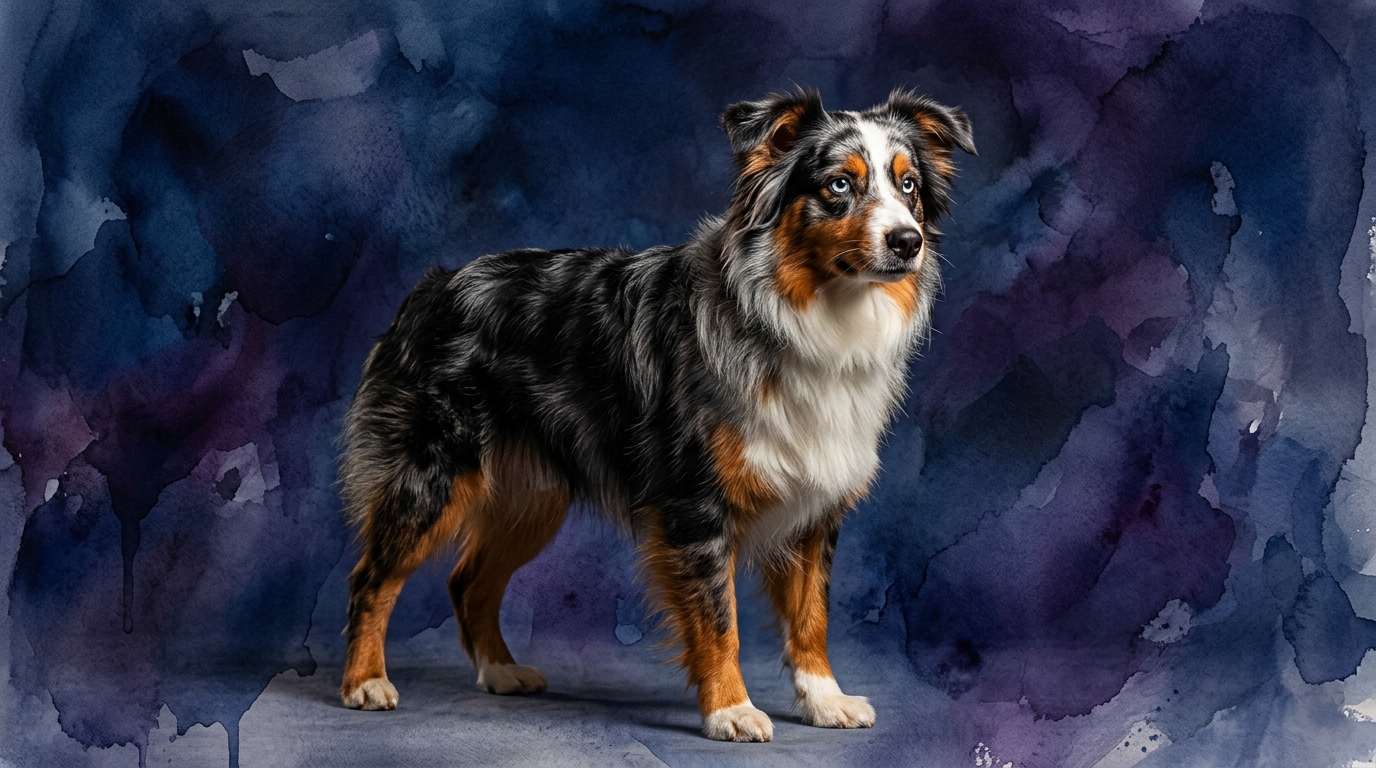
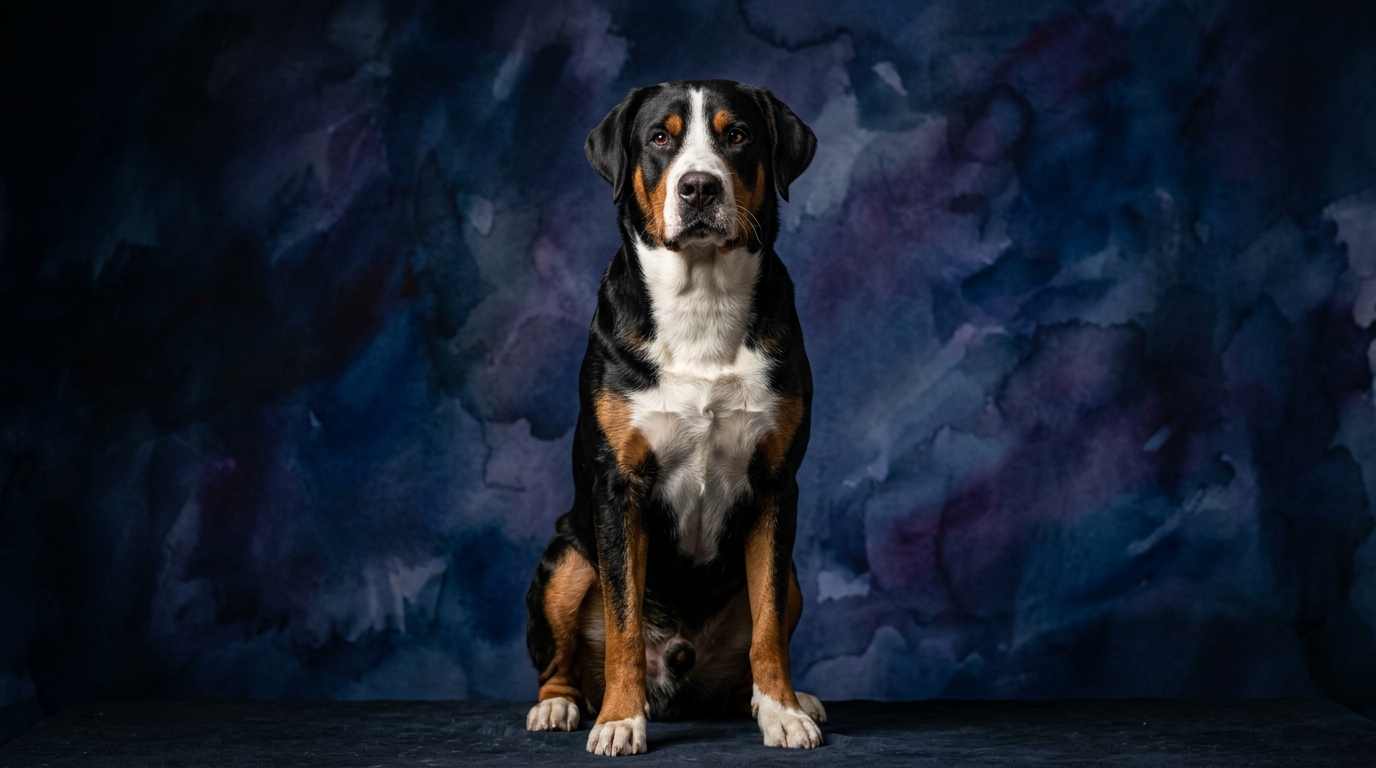
Side-by-Side IQ Profile: Miniature American Shepherd vs. Greater Swiss Mountain Dog
At The Cosmic Pet Pet IQ Lab, both the Miniature American Shepherd and the Greater Swiss Mountain Dog register a consistent 3/5 across all five measured cognitive dimensions. This identical numerical rating underscores that 'intelligence' is multifaceted, and how these capabilities manifest in daily life is deeply influenced by a breed's historical role and inherent temperament. To truly understand their mental prowess, we must look beyond the scores and into their specific cognitive behaviors.
Both breeds share a 3/5 score in problem-solving, but their methods reflect their heritage. The Miniature American Shepherd typically approaches challenges with agile, quick-thinking adaptability, suited for dynamic situations like herding where rapid spatial adjustments are key. The Greater Swiss Mountain Dog, conversely, often employs a more deliberate, sequential strategy, excelling at methodical tasks requiring sustained effort and physical execution.
In terms of training speed, both breeds receive a 3/5, yet their learning styles present differently. The Miniature American Shepherd often grasps new commands quickly due to its eagerness to engage and focus on its handler, thriving on interactive sessions. The Greater Swiss Mountain Dog, while equally capable of learning, may take a more considered approach, requiring clear, consistent communication to build a solid understanding and reliable execution.
Their social intelligence also rates at 3/5 for both, with distinct expressions. The Miniature American Shepherd is highly attuned to its human companions and flock dynamics, often demonstrating a keen ability to read subtle cues and anticipate intentions within a social group. The Greater Swiss Mountain Dog, a family-oriented working breed, exhibits its social cognition through calm, patient interactions and a deep understanding of household routines and emotional states, fostering strong bonds with its human family.
Regarding instinctive drive, both breeds score 3/5, channeling their inherent motivations in breed-specific ways. The Miniature American Shepherd possesses a strong herding instinct, manifesting as a desire to gather, direct, and engage in purposeful activity, often seeking a 'job' to do. The Greater Swiss Mountain Dog's working drive is rooted in its history of drafting and guarding, leading to a desire for physical tasks, a watchful demeanor, and a steadfast companionship role.
Finally, memory for both breeds is rated at 3/5. The Miniature American Shepherd demonstrates excellent recall for complex sequences, routes, and learned behaviors, particularly those associated with dynamic tasks or structured training. The Greater Swiss Mountain Dog exhibits strong retention of routines, specific commands, and the identities of family members, contributing to their dependable nature and consistent performance of learned tasks over time.
Where the Miniature American Shepherd Excels Cognitively
The Miniature American Shepherd's cognitive strengths lie in its exceptional agility of thought and rapid response. Its herding lineage has honed its ability to process multiple environmental stimuli concurrently, making split-second decisions and adapting its actions fluidly in fast-paced scenarios. This manifests not just as physical quickness, but as a mental processing speed that allows them to excel in dog sports requiring intricate navigation and predictive thinking.
This breed also shows a particular aptitude for strategic thinking in motion. When presented with complex spatial challenges or tasks requiring precise object manipulation within a dynamic context, the Miniature American Shepherd often demonstrates an intuitive, efficient approach to problem-solving. Furthermore, their social intelligence, while a 3/5, enables a nuanced interpretation of handler cues, allowing for precise, real-time adjustments during intricate tasks.
Where the Greater Swiss Mountain Dog Excels Cognitively
The Greater Swiss Mountain Dog's cognitive strengths are found in its deliberate problem-solving, sustained mental focus, and robust contextual understanding. This breed shines in tasks demanding a precise series of steps executed with strength and consistency, such as drafting or complex obedience routines. Their problem-solving is less about rapid improvisation and more about methodically working through a challenge with determination.
Even with a 3/5 in problem-solving, their mental fortitude allows them to persist through distractions or physical obstacles with a calm, unwavering focus, making them exceptionally reliable in varied conditions. Their memory and training speed, also 3/5, contribute to a deep understanding of *when* and *where* a learned behavior is appropriate, rather than mere rote memorization. This creates a highly dependable and trustworthy companion and worker in structured environments.
Which is Easier to Train, and Why?
While both breeds score 3/5 in training speed, their inherent temperaments dictate different training experiences. The Miniature American Shepherd's eagerness to please and focus on its handler means it often picks up new commands quickly. However, its high instinctive drive and acute environmental awareness can make it easily distracted by external stimuli, requiring consistent focus training and proofing in various settings to solidify learned behaviors. Channeling their energy effectively is key to successful training.
The Greater Swiss Mountain Dog can appear more deliberate or even stubborn during training as it processes information. They thrive on clear, consistent communication and positive reinforcement to build trust and motivation, and may take a few more repetitions to 'buy in' to a new concept. Once a behavior is understood and accepted, their retention is excellent, leading to a reliable, steady performance. Their lower distraction threshold in calm environments can make initial learning straightforward, but they might resist perceived inconsistencies or lack of clarity.
Suitability for Active vs. Relaxed Owners
For owners with an active lifestyle, the Miniature American Shepherd is generally a more fitting choice. They thrive on consistent activity, extensive mental stimulation, and having a 'job' to perform. Owners who enjoy dog sports like agility, long hikes, or engaging in regular, varied training sessions will find the MAS a willing, agile, and enthusiastic partner. Their cognitive strengths are best utilized when regularly challenged and given an outlet for their keen mental and physical drive.
Owners seeking a calmer, more deliberate companion will likely find the Greater Swiss Mountain Dog more suitable. While they still require regular exercise and mental engagement to prevent boredom, their needs are typically less intense and sustained than those of the MAS. They appreciate a steady routine, quality family time, and can be content with moderate daily activity followed by relaxed companionship. Their protective instincts mean they are often watchful and attentive, even during periods of rest.
The Verdict
Choose the Miniature American Shepherd if you seek an agile, quick-thinking partner for dynamic activities like dog sports, herding, or high-energy outdoor adventures, and are prepared to channel their keen mental and physical drive consistently.
Opt for the Greater Swiss Mountain Dog if you prefer a steadfast, deliberate companion for a family setting, appreciating a dog that excels in structured tasks and offers a calm, protective presence, with a moderate need for consistent physical and mental engagement.
🧠 Find Your Pet's IQ Score
Our Pet IQ Lab assessment covers 25+ tests across 5 cognitive dimensions — personalized to your breed.
Take the Full IQ Test →Frequently Asked Questions
Do Miniature American Shepherds get along with children?
Yes, Miniature American Shepherds can be wonderful family dogs, often forming strong bonds with children. However, their herding instincts might lead them to gently 'herd' kids, so early socialization and teaching appropriate interactions are crucial. They thrive on active play with their family.
Are Greater Swiss Mountain Dogs good for apartment living?
While Greater Swiss Mountain Dogs are large, their generally lower overall energy levels compared to some other working breeds mean they can adapt to apartment living. This is contingent on receiving sufficient daily exercise and mental stimulation. They are often calm indoors, but adequate space for their size is still an important consideration.
How much mental stimulation do these breeds need daily?
Both breeds benefit significantly from daily mental challenges. The Miniature American Shepherd typically requires more frequent and varied engagement, such as structured training sessions, puzzle toys, and interactive games, to prevent boredom. The Greater Swiss Mountain Dog also needs daily mental work, like obedience practice or scent games, but can be content with slightly less intense or prolonged sessions.