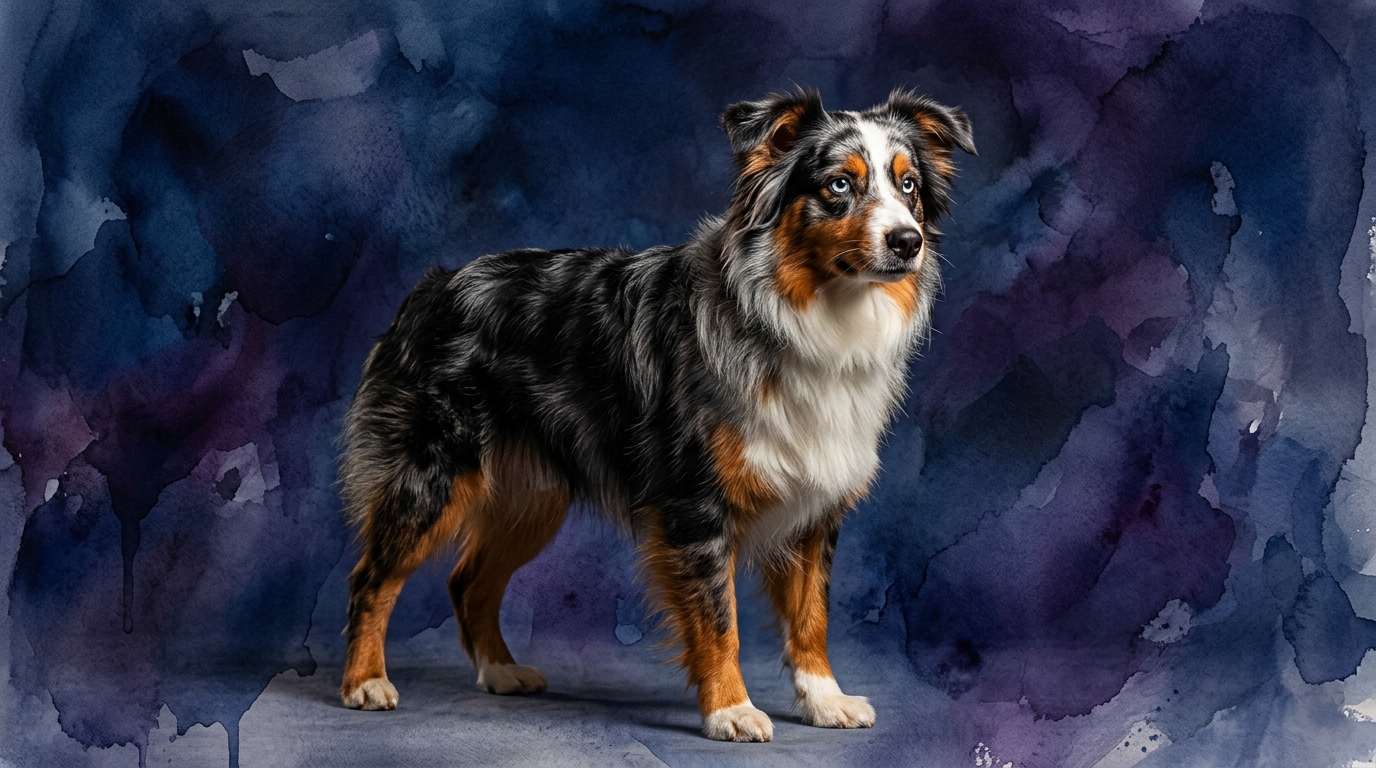
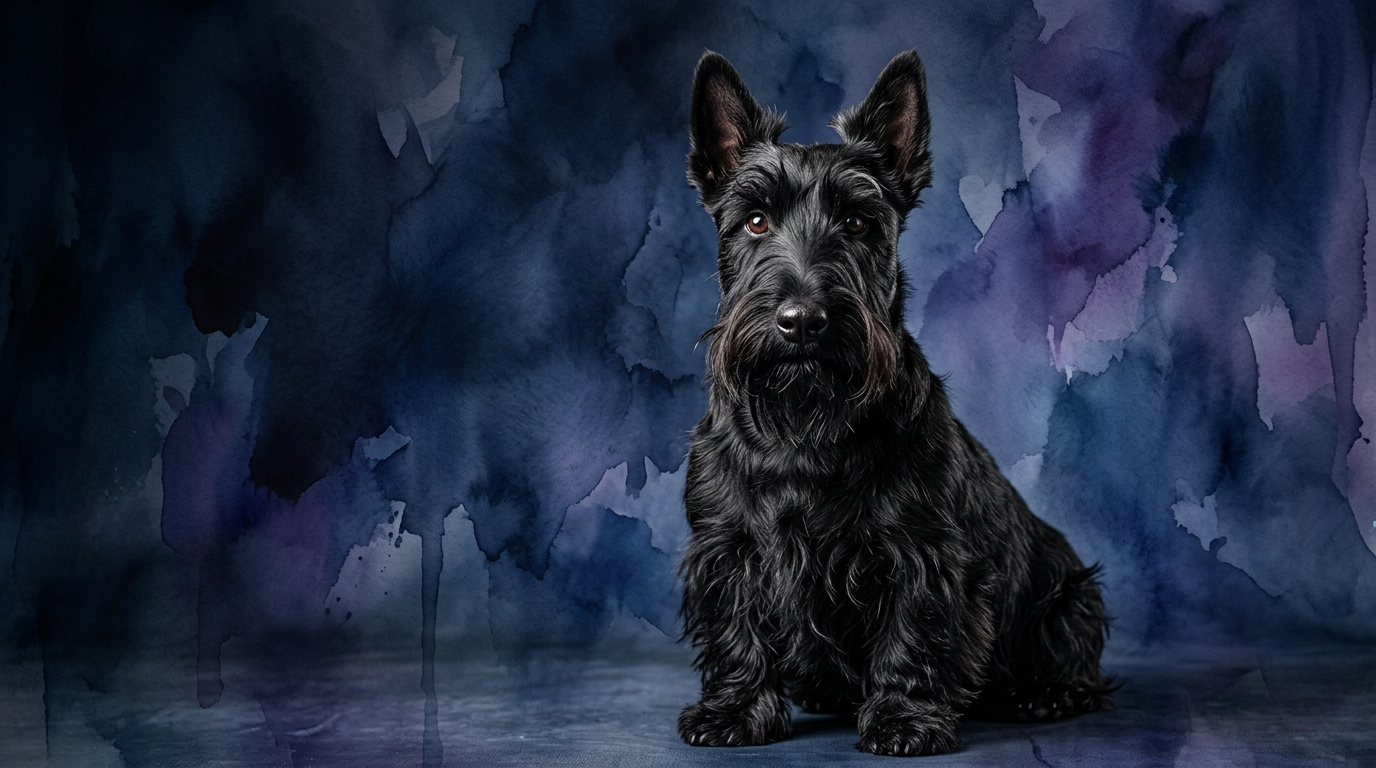
Side-by-Side IQ Profile: Miniature American Shepherd vs. Scottish Terrier
Despite both breeds scoring a 3/5 across all five of our core intelligence dimensions, the manifestation of these cognitive capacities is profoundly influenced by their ancestral roles. Understanding these nuances is key to appreciating their individual mental landscapes.
**Miniature American Shepherd (MAS): The Agile Herding Mind** The Miniature American Shepherd, a descendant of the Herding Group, displays a cognitive profile geared towards cooperative work and environmental management.
**Problem Solving (3/5):** The MAS exhibits a tactical approach to problem-solving, rooted in their herding lineage. Faced with an obstacle, they often assess the situation, perhaps looking for a flank, a subtle manipulation of the environment, or a way to guide a “stubborn” object (or person) where it needs to go. This manifests in their ability to anticipate movements during play or navigate complex agility courses with strategic foresight rather than just speed.
**Training Speed (3/5):** Their eagerness to engage and work alongside a handler contributes to their solid training speed. A MAS typically grasps new commands and sequences with efficiency, particularly when the training involves collaboration and a clear objective. They thrive on structured learning and repetitive practice, quickly integrating new information into their existing behavioral repertoire, driven by a desire to be part of a productive team.
**Social Intelligence (3/5):** Miniature American Shepherds exhibit a keen awareness of their human companions’ emotional states and intentions. They often respond to subtle cues, adapting their behavior to fit the mood of the household or the demands of a task. This social attunement allows them to integrate smoothly into family dynamics, often acting as sensitive companions who understand when to be playful and when to offer quiet support.
**Instinctive Drive (3/5):** Their strong herding instinct remains a core part of their cognitive makeup, even in companion settings. This drive manifests as an impulse to gather, control, and organize, whether it’s family members, other pets, or even toys. This isn’t just a physical urge; it’s a mental framework that influences how they perceive and interact with their environment, often seeking to establish order and maintain proximity to their “flock.”
**Memory (3/5):** The MAS possesses a reliable memory for routines, commands, and the spatial layout of their environment. They can recall complex sequences of actions, making them proficient in advanced obedience or dog sports. This memory is also evident in their ability to remember past interactions and learn from experiences, contributing to their adaptability and consistent performance over time.
**Scottish Terrier (Scottie): The Tenacious Terrier Mind** The Scottish Terrier, firmly rooted in the Terrier Group, showcases a cognitive style defined by independence, persistence, and a focused drive.
**Problem Solving (3/5):** The Scottish Terrier’s problem-solving is characterized by tenacity and independent thought, a legacy of their badger-hunting past. When faced with a challenge, a Scottie will often employ a determined, singular focus, digging under, squeezing through, or persistently trying different approaches until they achieve their objective. Their solutions are typically direct and driven by their own internal motivation, often showing ingenuity in overcoming physical barriers or accessing desired items.
**Training Speed (3/5):** Scotties are capable of learning new commands at a respectable pace, but their training speed is often tempered by their independent spirit. They absorb information efficiently but may require consistent motivation and a clear understanding of “what’s in it for them.” While they are not slow learners, their willingness to execute a command can sometimes be contingent on their current interest, making effective training a balance of positive reinforcement and understanding their inherent motivations.
**Social Intelligence (3/5):** Scottish Terriers demonstrate social intelligence through their discerning nature and deep, albeit sometimes reserved, bonds with their chosen family. They are observant of their surroundings and can read human moods, often choosing to engage on their own terms. Their social interactions are typically direct and honest; they form strong attachments but may not feel the same compulsion as a herding dog to constantly monitor and manage group dynamics, preferring selective engagement.
**Instinctive Drive (3/5):** Their terrier instincts are pronounced, driving a strong prey drive, a desire to dig, and a resolute independence. This manifests as a keen interest in small, scurrying creatures, an impulse to excavate interesting spots in the yard, and a confident self-reliance. This drive is a powerful cognitive force, influencing their focus and decision-making, often leading them to pursue their own agendas with unwavering determination.
**Memory (3/5):** Scotties have a robust memory, particularly for locations of interest, past experiences, and the outcomes of their independent ventures. They remember where the best digging spots are, which commands lead to rewards, and who their trusted companions are. While they may not always immediately obey a command, it’s rarely due to a lack of recall; rather, it often reflects a conscious decision based on their memory of past incentives or perceived value.
Where the Miniature American Shepherd Wins Cognitively
The Miniature American Shepherd’s cognitive architecture truly excels in cooperative tasks and environments requiring fluid adaptation to group dynamics. Their 3/5 social intelligence, combined with their problem-solving, allows them to anticipate a handler’s next move in agility or obedience with a subtle glance, making them exceptionally responsive partners in structured activities. This breed also demonstrates a superior ability to manage and influence groups, whether it’s gently nudging children away from danger or orchestrating play with other pets, a manifestation of their herding drive translated into social management skills. Their focus often extends beyond a single task, encompassing the well-being and positioning of their entire “flock.”
Where the Scottish Terrier Wins Cognitively
The Scottish Terrier’s unique cognitive strengths lie in their independent problem-solving and unyielding focus on a singular objective. Their 3/5 problem-solving is less about teamwork and more about individual ingenuity, making them masters at figuring out how to bypass obstacles to reach a desired outcome, whether it’s a hidden treat or an interesting scent. This tenacity, fueled by their instinctive drive, means they won’t easily give up on a mental challenge once engaged. Furthermore, their discerning social intelligence allows them to form incredibly deep, loyal bonds with their chosen few, exhibiting a profound understanding of their immediate family’s routines and preferences, often expressed through subtle, knowing interactions rather than overt displays.
Training Dynamics: Miniature American Shepherd vs. Scottish Terrier
When considering ease of training, the Miniature American Shepherd generally presents a more straightforward experience. Their 3/5 training speed is coupled with a strong desire to please and a natural inclination towards cooperation, hallmarks of a herding breed. They are typically eager to engage with their handler, respond well to positive reinforcement, and quickly learn complex sequences of commands because they understand their role as a working partner. Their social intelligence means they are often attuned to their trainer’s body language and vocal cues, facilitating smoother communication.
The Scottish Terrier, while possessing the same 3/5 training speed, offers a different training dynamic due to their independent nature and strong instinctive drives. They are certainly capable of learning, but their willingness to perform a command is often more conditional. A Scottie might understand what’s asked but will weigh it against their own immediate interests or perceived value. Training a Scottie requires patience, consistency, and a deep understanding of their terrier motivations, often leveraging their prey drive or desire for specific rewards to maintain engagement. They respond best to trainers who respect their independent spirit and make training feel like a collaborative challenge rather than a strict imposition.
Matching Breeds to Owner Lifestyles
The Miniature American Shepherd is an ideal companion for active owners who relish consistent engagement and shared activities. Their 3/5 instinctive drive and memory mean they thrive on having a “job” to do, whether it’s participating in dog sports like agility or frisbee, going on long hikes, or even just managing the household’s “flock.” They require regular mental and physical stimulation to prevent boredom and channel their herding energy constructively. Owners who enjoy teaching new tricks, engaging in structured play, and providing a dynamic environment will find the MAS a fulfilling partner.
The Scottish Terrier, while not a couch potato, is better suited for owners who appreciate a more independent companion and can provide bursts of focused activity rather than sustained, high-intensity exercise. Their 3/5 instinctive drive for hunting and digging means they benefit from opportunities to explore scents and engage in supervised “terrier work” in a secure yard. While they enjoy walks and playtime, they are generally content with a more relaxed pace indoors, provided their cognitive need for independent investigation and occasional bursts of physical exertion are met. Owners who enjoy a confident, self-reliant dog with a charmingly stubborn streak, and who can appreciate their selective bursts of energy, will find a devoted friend in the Scottie.
The Verdict
Choose the Miniature American Shepherd if you seek an eager, cooperative partner for active pursuits and enjoy a dog deeply attuned to family dynamics and collaborative learning.
Opt for the Scottish Terrier if you appreciate an independent, tenacious companion with a discerning loyalty, suited for owners who value a confident spirit and can provide engaging, self-directed mental challenges.
🧠 Find Your Pet's IQ Score
Our Pet IQ Lab assessment covers 25+ tests across 5 cognitive dimensions — personalized to your breed.
Take the Full IQ Test →Frequently Asked Questions
Do Miniature American Shepherds "herd" their families?
Yes, their 3/5 instinctive drive often translates into a tendency to gather family members, especially children, and nudge them into a group. This is a natural manifestation of their herding heritage and can be managed with consistent training and redirection to appropriate outlets like herding balls.
Are Scottish Terriers difficult to train because of their independence?
While their 3/5 training speed indicates they can learn, their independence means "difficult" is less about capacity and more about approach. Training a Scottish Terrier requires patience, creative motivation, and consistency, as they may choose to follow their own agenda if not properly engaged and incentivized.
How do their 3/5 memory scores differ in practical terms?
The Miniature American Shepherd's memory often focuses on complex sequences and handler cues for cooperative tasks, while the Scottish Terrier's memory is more geared towards recalling locations of interest, successful independent strategies, and the value of specific rewards. Both are robust, but their application reflects their breed roles.