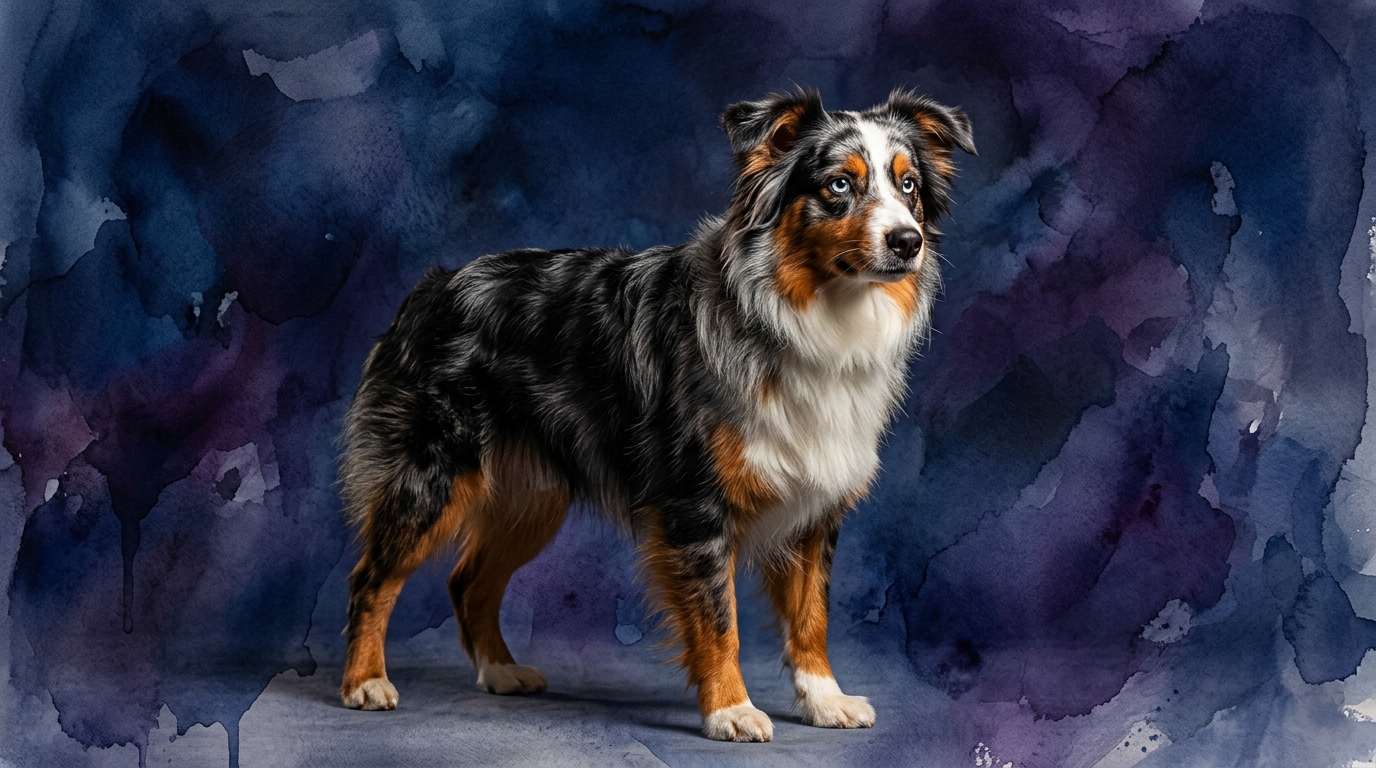
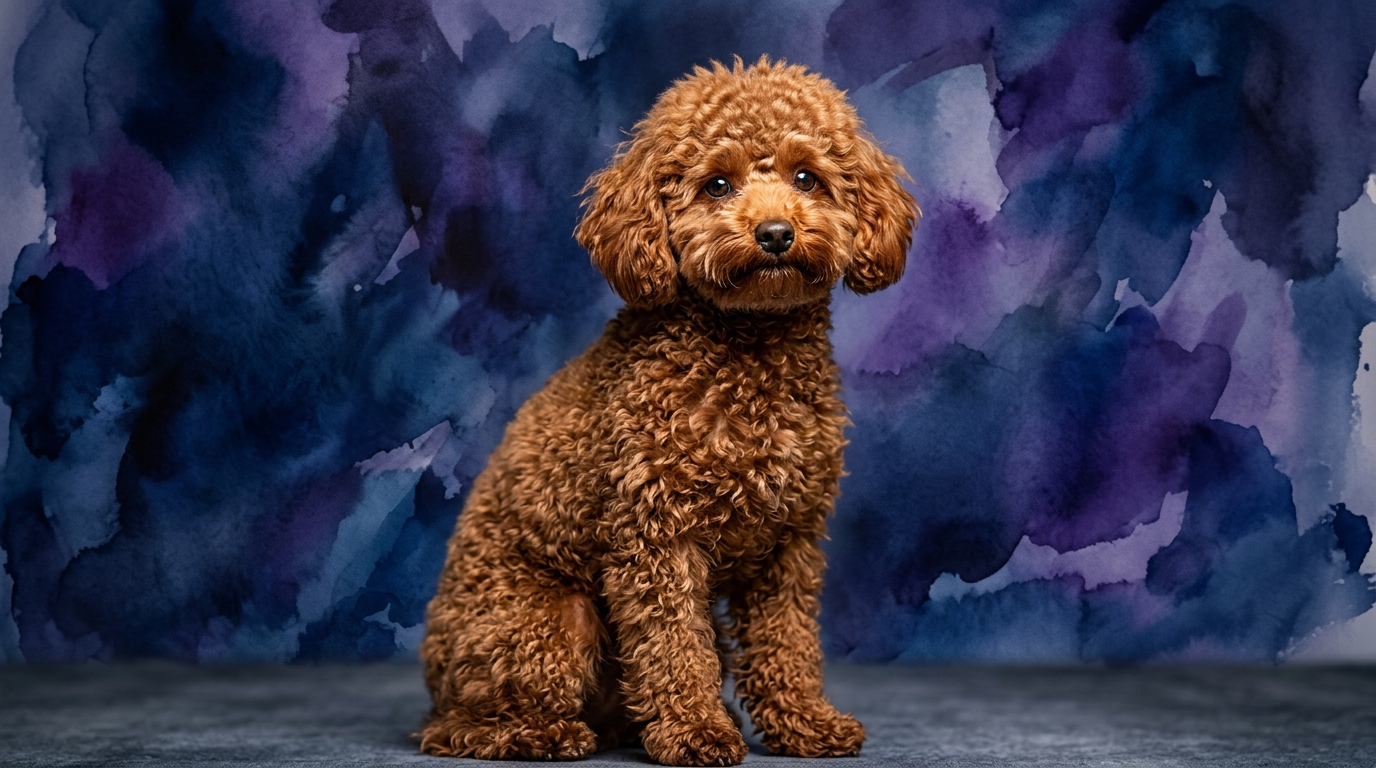
Unpacking Cognitive Profiles: Miniature American Shepherd vs. Toy Poodle
The Cosmic Pet Pet IQ Lab assesses canine cognition across five key dimensions: problem-solving, training speed, social intelligence, instinctive drive, and memory. These scores offer a nuanced view beyond general perceptions, highlighting the unique mental architecture of each breed.
The Miniature American Shepherd's profile shows a balanced cognitive approach: Problem Solving 3/5, Training Speed 3/5, Social Intelligence 3/5, Instinctive Drive 3/5, and Memory 3/5. This suggests a capable and consistent learner, one who processes information steadily and reliably applies learned behaviors. Their problem-solving indicates a capacity to understand and resolve challenges, often through repetition and established patterns, rather than spontaneous innovation. Their social intelligence reflects a dog that forms strong, responsive bonds within its family, reading cues effectively but potentially showing reservation with unfamiliar individuals.
In contrast, the Toy Poodle's cognitive scores reveal a mind geared for rapid assimilation and retention: Problem Solving 5/5, Training Speed 5/5, Social Intelligence 3/5, Instinctive Drive 3/5, and Memory 5/5. This breed exhibits a profound capacity for abstract thought and quick comprehension, allowing them to devise novel solutions and grasp new concepts with remarkable swiftness. Their social intelligence, matching the Miniature American Shepherd at 3/5, means they are attuned to human emotions and deeply bonded to their companions, often sensitive to shifts in household dynamics. Both breeds share a 3/5 instinctive drive, indicating a moderate level of inherent motivation for task-oriented engagement, which can be channeled effectively.
Where the Miniature American Shepherd Shines Cognitively
The Miniature American Shepherd's cognitive strengths lie in its consistency and the balanced application of its mental faculties. Its 3/5 scores across most dimensions signify a dog that, while not demonstrating extreme aptitude in any single area, offers a reliable and steady cognitive partner. This breed excels in environments where clear routines and consistent expectations are provided, allowing its solid memory (3/5) to effectively retain a repertoire of learned behaviors and commands without needing constant re-teaching.
Its 3/5 instinctive drive is a particular advantage for owners seeking a dog with a manageable work ethic; it possesses sufficient motivation for engaging in structured activities like agility or rally, but without an overwhelming, ceaseless need for mental and physical exertion. This allows the Miniature American Shepherd to be a dedicated participant in dog sports, applying its cognitive resources to master sequences and obstacles through steady practice. Its social intelligence, at 3/5, enables it to form deep, responsive relationships, particularly with its primary caregivers, making it a highly engaged and cooperative partner in activities once a bond of trust is established.
The Toy Poodle's Cognitive Edge
The Toy Poodle's cognitive profile reveals a mind with exceptional processing speed and retention capabilities. Its remarkable 5/5 in problem-solving means these dogs are adept at navigating complex scenarios, quickly figuring out how to bypass obstacles, open latches, or solve intricate puzzle toys. This capacity for innovation allows them to adapt rapidly to new situations and learn unconventional solutions, often surprising owners with their ingenuity.
Coupled with a 5/5 training speed, the Toy Poodle absorbs new information and commands with astonishing rapidity, requiring fewer repetitions to cement new behaviors. This means they can progress through training stages at an accelerated pace, mastering advanced tricks and obedience routines with apparent ease. Furthermore, their 5/5 memory ensures that once a concept is learned, it is retained over long periods, making them exceptionally reliable in recalling a vast array of commands and routines, a trait that makes them highly adaptable and versatile companions for various roles, from performance sports to assistance work.
Training Dynamics: Which Breed Learns Faster?
Based on The Cosmic Pet Pet IQ Lab data, the Toy Poodle is demonstrably the quicker learner in formal training settings. Its 5/5 training speed and 5/5 problem-solving capabilities mean a Toy Poodle can often grasp new commands and behaviors in just a few repetitions, sometimes even anticipating the desired action. They thrive on varied and challenging training sessions, quickly connecting actions to rewards and generalizing learned concepts to new situations with impressive ease.
The Miniature American Shepherd, with a 3/5 training speed, requires a more consistent and patient approach. While certainly capable of learning a wide range of commands, they typically need more repetitions and a clearer, more structured teaching methodology to ingrain new behaviors securely. An owner training a Miniature American Shepherd will find success with positive reinforcement and breaking tasks into smaller, manageable steps, allowing their solid memory to build upon a strong foundation. Unlike the Toy Poodle, which might experiment with different solutions, the Miniature American Shepherd tends to stick to established patterns once learned, making clear initial guidance crucial.
Lifestyle Suitability: Active vs. Relaxed Owners
For active owners seeking a dedicated partner for structured activities and regular engagement, the Miniature American Shepherd presents a compelling choice. Its 3/5 instinctive drive provides a solid foundation for participating in dog sports like agility, obedience, or herding, where consistent effort and a moderate level of focus are key. These dogs appreciate having a job to do and thrive with owners who can provide consistent physical exercise and mental challenges that channel their herding-oriented energy and problem-solving skills. They form deep, responsive bonds, making them cooperative and steady companions for adventurous outings.
The Toy Poodle, while adaptable to various lifestyles, is particularly well-suited for owners who appreciate a dog with a sharp mind that requires consistent mental stimulation, regardless of physical activity levels. Its exceptional problem-solving and memory mean it needs constant engagement to prevent boredom, which can manifest even in a less physically demanding home. A relaxed owner who enjoys teaching complex tricks, providing interactive puzzle toys, or engaging in extensive brain games will find the Toy Poodle's cognitive needs are well-met. Their moderate instinctive drive (3/5) means they enjoy active play but are equally content with a mentally stimulating indoor environment, making them versatile companions for those who can commit to intellectual enrichment.
The Verdict
Opt for a Miniature American Shepherd if you seek a balanced, consistent partner for active, structured activities and appreciate a dog that thrives on clear routines and dedicated engagement. They are best for owners who can provide regular physical and mental outlets for their moderate herding instincts.
Select a Toy Poodle if you are captivated by a dog with exceptional learning speed, problem-solving prowess, and a remarkable memory, ideal for complex training, dog sports, or a companion that enjoys intricate mental challenges. They excel with owners who prioritize consistent mental stimulation and relish teaching advanced behaviors.
🧠 Find Your Pet's IQ Score
Our Pet IQ Lab assessment covers 25+ tests across 5 cognitive dimensions — personalized to your breed.
Take the Full IQ Test →Frequently Asked Questions
How do their social intelligence scores impact their family life?
Both breeds score 3/5 in social intelligence, indicating they form strong bonds with their families and read human cues well. The Miniature American Shepherd might be more reserved with strangers, while the Toy Poodle can be quite sensitive to household moods, thriving on consistent positive interaction and emotionally responsive companionship.
Is the Miniature American Shepherd truly less adaptable than the Toy Poodle?
Not necessarily less adaptable, but the Miniature American Shepherd's cognitive profile suggests it thrives best with clear structure and purpose, showing solid reliability once routines are established. The Toy Poodle's superior problem-solving and training speed allow it to adjust to new situations and learn new routines with greater ease and speed, making it highly versatile in varied environments.
What kind of mental enrichment is best for each breed given their IQ profiles?
For the Miniature American Shepherd, consistent training, agility, or herding-inspired games that reinforce learned skills and provide a sense of purpose are excellent. For the Toy Poodle, complex puzzle toys, advanced trick training, and novel problem-solving tasks will best satisfy its high cognitive demands and exceptional memory, keeping its sharp mind engaged and challenged.