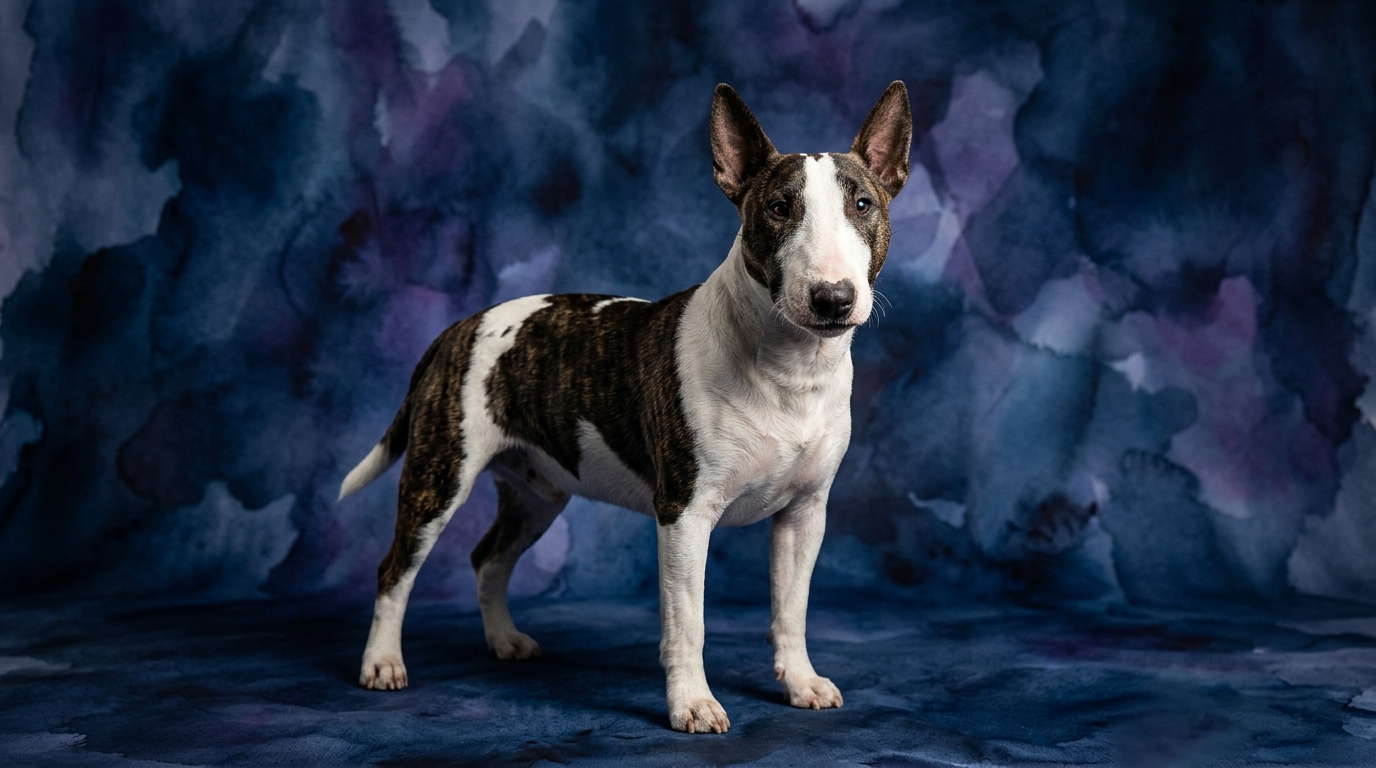
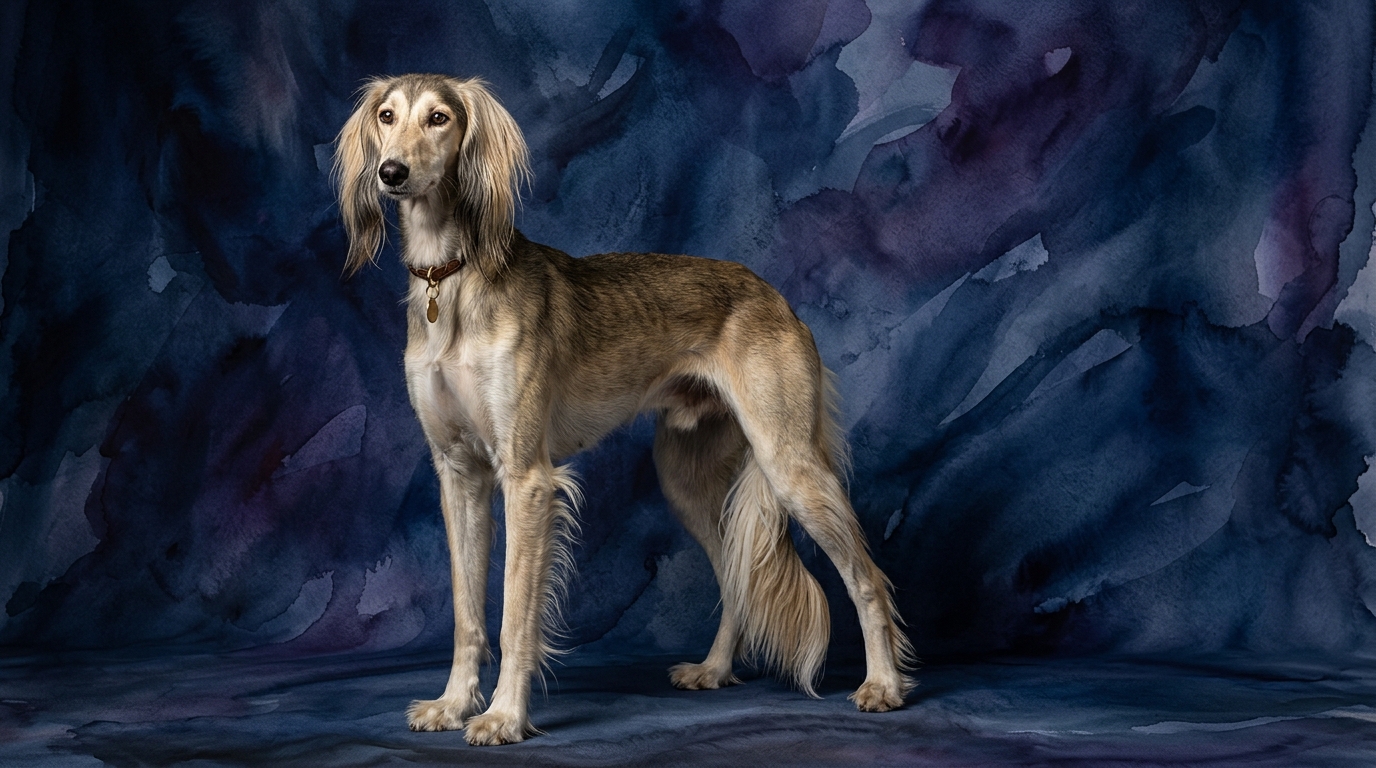
Side-by-Side IQ Profile: Identical Scores, Distinct Minds
On paper, the Miniature Bull Terrier and the Saluki present an identical cognitive blueprint according to The Cosmic Pet Pet IQ Lab. Both breeds register a consistent 3 out of 5 across all five assessed dimensions: Problem Solving, Training Speed, Social Intelligence, Instinctive Drive, and Memory. This numerical parity, however, belies the rich tapestry of how these capacities manifest within each breed, shaped by centuries of selective breeding for specific purposes.
For the Miniature Bull Terrier, a 3/5 in Problem Solving often translates into a tenacious approach to overcoming physical obstacles or figuring out how to access desired objects, a trait honed from their badger-baiting ancestry where persistence in tight spaces was paramount. Their 3/5 Training Speed indicates they are capable learners, but their independent and sometimes mischievous nature means engagement and motivation are key. A 3/5 in Social Intelligence suggests they can read human cues and form strong bonds, though their boisterous personality might occasionally push boundaries. Their 3/5 Instinctive Drive is strongly tied to a prey drive for small, scurrying animals, coupled with a desire to 'worry' or manipulate objects. Finally, a 3/5 in Memory means they retain learned behaviors and associations effectively, for better or worse.
The Saluki, in contrast, applies its identical scores through the lens of a sighthound. Their 3/5 in Problem Solving typically manifests as efficient decision-making during a high-speed chase, calculating optimal pursuit paths or navigating complex open terrain to catch sight of prey, rather than manipulating objects. A 3/5 Training Speed for a Saluki implies they learn commands but often require patience, as their independent spirit and strong visual distractions can make repetitive drills less appealing than their innate desire to observe and run. Their 3/5 Social Intelligence often presents as a reserved demeanor with strangers, coupled with deep, sensitive bonds with their trusted family, showing a nuanced understanding of their human companions' moods. The 3/5 Instinctive Drive is overwhelmingly a powerful urge to chase anything that moves quickly and at a distance, a legacy of hunting gazelles and hares across vast landscapes. Their 3/5 Memory is often exceptional for terrain, familiar routes, and the location of resources, crucial for their historical hunting practices.
Where the Miniature Bull Terrier Excels Cognitively
Despite the identical numerical scores, the Miniature Bull Terrier often demonstrates a unique cognitive advantage in situations requiring persistent, hands-on problem-solving within confined or intricate environments. Their terrier lineage instilled a relentless determination to overcome physical barriers, making them adept at puzzle toys or figuring out complex latches. A Miniature Bull Terrier's 3/5 Problem Solving, when coupled with their tenacious 3/5 Instinctive Drive, means they are less likely to give up on a task once engaged, especially if it involves manipulation or 'defeating' an object. This can translate into a superior ability to adapt to novel indoor challenges or engage with human-devised games that require a more direct, physical approach to understanding and manipulating their surroundings.
Their social intelligence, while rated the same, often exhibits a more direct and expressive engagement with their immediate human family. A Miniature Bull Terrier's 3/5 Social Intelligence allows them to be highly attuned to their owners' moods and intentions, often using their cleverness to initiate play or gain attention. This directness can make them particularly responsive to interactive training games where their physical and mental energy is channeled into a shared activity, allowing them to 'win' by outsmarting their human companion in a playful context. Their memory supports this, as they will readily recall which behaviors yield the most rewarding human interaction.
Where the Saluki Holds a Cognitive Edge
The Saluki's cognitive strengths, while numerically equivalent, shine brightest in expansive, visually driven contexts. Their 3/5 Problem Solving is oriented towards efficient, independent action in open spaces, making them exceptional at evaluating and executing the most effective course of action during a high-speed chase. This isn't about manipulating objects but about superior spatial reasoning, visual tracking, and anticipating movement over long distances. Their incredible visual acuity combined with their 3/5 Instinctive Drive for pursuit means they are unparalleled in their ability to process and react to distant stimuli, making split-second decisions that would overwhelm many other breeds.
Furthermore, the Saluki's 3/5 Memory is often applied to vast territories and the subtle nuances of their environment. They possess a remarkable ability to recall specific hunting grounds, safe running paths, or the location of resources across wide-open landscapes, a cognitive skill essential for their historical role. Their social intelligence, while reserved, is profoundly perceptive within their trusted circle. A Saluki might not be overtly demonstrative, but their 3/5 Social Intelligence allows them to read subtle shifts in their family's demeanor, offering a quiet, empathetic presence that speaks volumes without boisterous demands. This reserved nature often means they are less prone to engaging in manipulative behaviors to gain attention, preferring a more dignified interaction.
Training Dynamics: Navigating Independence and Drive
Both the Miniature Bull Terrier and the Saluki carry a 3/5 rating in Training Speed, yet their specific behavioral tendencies mean training approaches must differ significantly. Miniature Bull Terriers, with their tenacious terrier spirit, can be wonderfully bright and quick to learn, but their independence and occasional stubbornness mean consistency and strong motivation are paramount. They respond best to training that feels like a game, where their problem-solving skills are engaged, and positive reinforcement is delivered enthusiastically. If a task seems pointless or boring, their 3/5 Problem Solving might be directed towards finding a more interesting alternative, often to the owner's chagrin. Owners must be prepared for a dog that will test boundaries and requires creative engagement to maintain focus.
Salukis, while equally capable of learning, present a different set of training considerations due to their sighthound nature. Their 3/5 Training Speed is often influenced by their strong 3/5 Instinctive Drive to chase and their inherent independence. They can learn commands quickly but may choose to obey only if they perceive a valid reason or if an even more compelling visual stimulus isn't present. Repetitive drills might bore them, and their focus can easily be broken by a distant movement. Training a Saluki requires immense patience, understanding of their independent spirit, and a keen awareness of their environment to minimize distractions. Short, engaging sessions that tap into their natural desire for movement and observation, rather than strict obedience, often yield the best results.
Suitability for Active vs. Relaxed Owners
The Miniature Bull Terrier generally thrives with active owners who enjoy interactive play and structured daily activities. Their boisterous nature and strong desire for companionship mean they need a significant outlet for their physical and mental energy. Owners who can provide consistent training, engaging games, and plenty of opportunities for socialization will find a Miniature Bull Terrier to be a delightful, albeit demanding, companion. Without sufficient stimulation, their 3/5 Problem Solving and Instinctive Drive can lead to boredom-driven behaviors like chewing or digging. They are not typically suited for owners seeking a purely relaxed, low-maintenance companion; they thrive on being an integral, active part of the family's daily life.
The Saluki, while requiring bursts of intense physical activity, can surprisingly suit owners who appreciate periods of relaxed companionship indoors. These sighthounds need regular opportunities to gallop at full speed in a securely fenced area, fulfilling their powerful 3/5 Instinctive Drive. However, once their exercise needs are met, Salukis are typically calm, quiet, and elegant house dogs, content to lounge on soft surfaces. They are less demanding of constant interactive play than a Miniature Bull Terrier but still form deep, sensitive bonds with their families. Owners must be prepared to provide secure, expansive running spaces and understand their dog's need for independent activity, rather than expecting constant engagement, making them suitable for active owners who also value a serene indoor presence.
The Verdict
Choose a Miniature Bull Terrier if you are an engaged owner who enjoys a tenacious, interactive companion, ready to channel their cleverness and energy into structured play and consistent training.
Opt for a Saluki if you appreciate an elegant, independent companion, can provide secure open spaces for their powerful running instincts, and value a calm, reserved presence indoors.
🧠 Find Your Pet's IQ Score
Our Pet IQ Lab assessment covers 25+ tests across 5 cognitive dimensions — personalized to your breed.
Take the Full IQ Test →Frequently Asked Questions
Do Miniature Bull Terriers and Salukis have similar temperaments?
Despite identical IQ scores, their temperaments differ significantly due to breed purpose. Miniature Bull Terriers are often described as spirited, mischievous, and boisterous, while Salukis are typically reserved, dignified, and independent, forming deep bonds with their families but often aloof with strangers.
Which breed is better for first-time dog owners?
Neither breed is typically recommended for novice owners without prior research and commitment. Both require owners who understand their unique needs: the Miniature Bull Terrier's strong will and energy, and the Saluki's independent sighthound nature and intense exercise requirements.
Are there significant health differences between the two breeds?
Yes, like all purebreds, they have breed-specific health concerns. Miniature Bull Terriers can be prone to deafness, kidney disease, and heart issues, while Salukis are generally robust but can be sensitive to anesthesia and prone to certain cancers or heart conditions, making breed-specific health screening important for both.