Side-by-Side Cognitive Profiles: A Deep Dive
To understand the cognitive landscape of these two breeds, The Cosmic Pet Pet IQ Lab employs a five-dimensional framework, allowing for a nuanced comparison that moves beyond superficial observations. Each dimension offers insight into how these dogs perceive, process, and interact with their world.
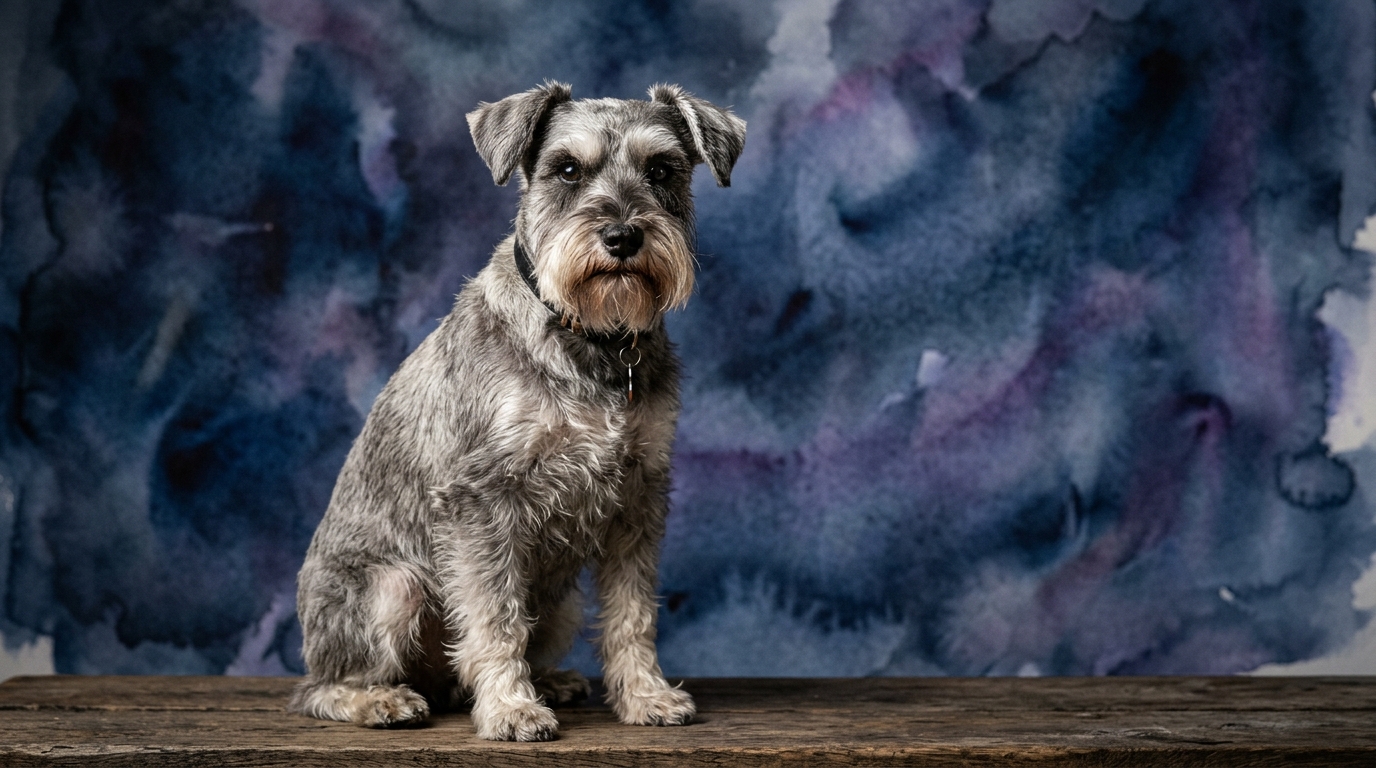
The Miniature Schnauzer, a Terrier, holds a Coren rank of #12, indicating a strong capacity for working intelligence. Their Problem Solving score of 4/5 reveals an aptitude for figuring out puzzles and adapting to new situations. With a Training Speed of 5/5, they are remarkably quick to grasp new commands and routines, often eager to engage in structured learning. Their Social Intelligence at 4/5 means they are generally adept at interpreting human cues and forming strong, interactive bonds. An Instinctive Drive of 4/5 points to a manageable yet present terrier drive for activities like chasing or digging, while their Memory at 4/5 ensures they retain learned behaviors and experiences effectively.
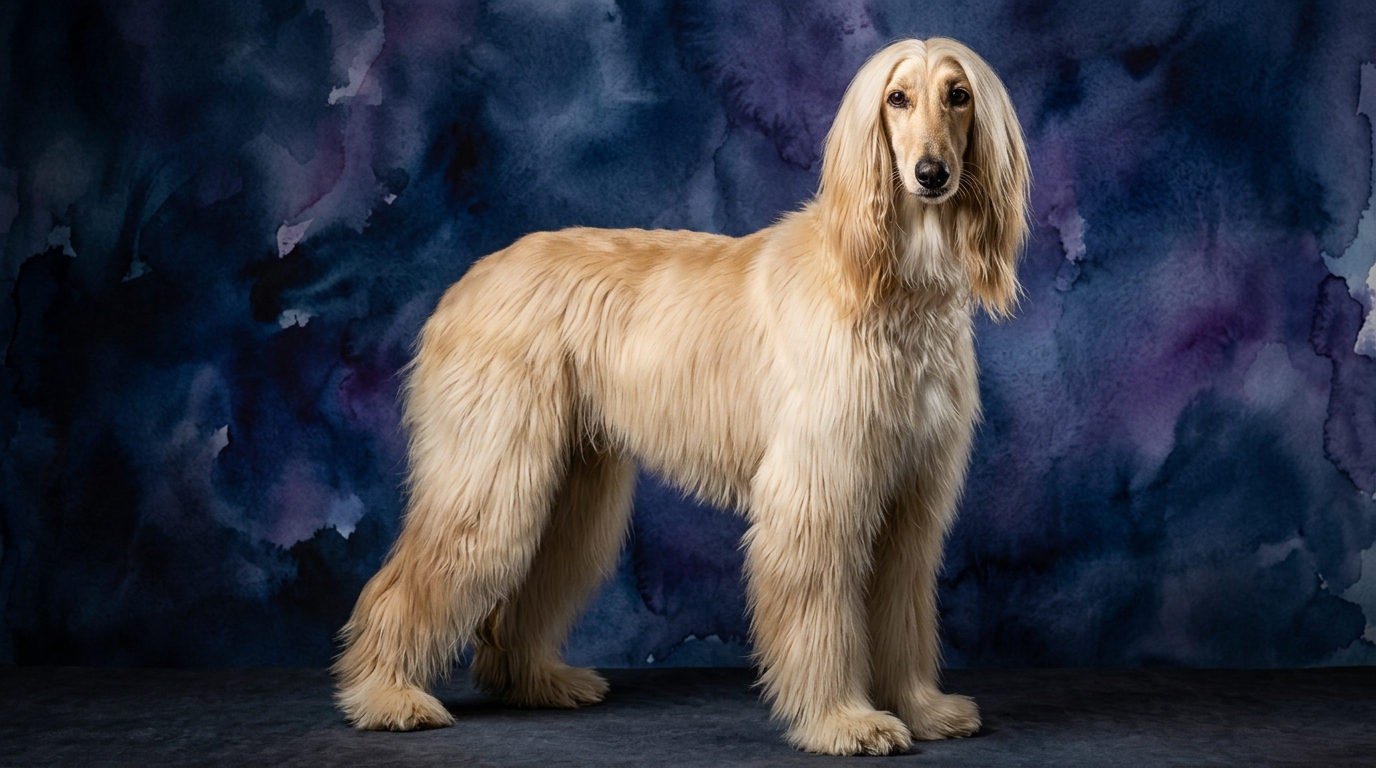
Conversely, the Afghan Hound, a Hound, occupies a Coren rank of #79, suggesting a more specialized form of intelligence. Their Problem Solving is also rated 4/5, indicating a capability for complex thought, though often applied to their own independent agendas rather than human-directed tasks. The most striking contrast is their Training Speed, rated 1/5; these hounds require immense patience and consistency, as their motivation is rarely rooted in pleasing an owner. A Social Intelligence score of 2/5 reflects their typically aloof and independent nature, less inclined towards constant human interaction for guidance. Their Instinctive Drive is a profound 5/5, highlighting an extremely powerful prey drive and an innate desire to run and hunt independently. Lastly, their Memory at 3/5 suggests they retain experiences, but might not prioritize human-centric lessons in the same way a Miniature Schnauzer would.
Where the Miniature Schnauzer Shines Cognitively
The Miniature Schnauzer's cognitive strengths primarily lie in their high receptivity to human instruction and their social engagement. Their 5/5 Training Speed is a significant advantage, making them exceptionally quick learners in formal settings, whether it's basic obedience, agility, or complex trick training. This rapid acquisition of skills stems from a combination of their innate curiosity and a strong desire to participate in activities with their human companions. Their 4/5 Social Intelligence further enhances this, as they are adept at reading human body language and vocal tones, allowing for a more fluid and responsive communication exchange.
Furthermore, their balanced 4/5 Instinctive Drive, while present, is typically channeled into constructive outlets rather than overriding human directives. This means their inherent terrier traits, like alertness and a moderate prey drive, can be managed and even utilized in activities like earthdog trials or scent work. Their impressive Memory (4/5) ensures that once a lesson is learned or a boundary established, it is retained, contributing to a consistently well-behaved and predictable companion, especially within a structured home environment. This overall cognitive profile makes them highly adaptable to diverse family dynamics and urban living, thriving on mental stimulation and a clear sense of purpose within their human pack.
Where the Afghan Hound Excels Cognitively
The Afghan Hound's cognitive strengths manifest in a distinctly different, more independent manner. While their Problem Solving is rated 4/5, similar to the Schnauzer, this capability is often directed towards self-preservation or pursuit of their own interests, rather than solving human-initiated puzzles. They possess a profound, ancient intelligence rooted in their sighthound heritage, enabling them to make swift, autonomous decisions in dynamic environments, particularly when it comes to visual tracking and pursuit. This independent problem-solving is not about pleasing an owner, but about effective action in their world.
Their overwhelming 5/5 Instinctive Drive is where the Afghan Hound truly excels in its specialized cognition. This drive is a powerful, ingrained impulse for running, chasing, and spotting distant movement, a characteristic that was vital for their historical role as hunters in challenging terrains. This isn't merely a physical attribute; it's a cognitive imperative that shapes their perception and priorities. They possess an exceptional visual acuity and a focus that can filter out extraneous information when a potential 'prey' object is in sight. While their 3/5 Memory might not prioritize obedience commands, they certainly remember significant events, locations, and individuals, often demonstrating a selective recall that reflects their independent nature rather than a cognitive deficit. Their aloof Social Intelligence (2/5) isn't a lack of awareness, but rather a preference for dignified self-reliance, observing rather than constantly seeking interaction.
Trainability: A Tale of Two Temperaments
When it comes to trainability, the Miniature Schnauzer and Afghan Hound present a stark contrast rooted in fundamental behavioral differences. The Miniature Schnauzer, with its 5/5 Training Speed and 4/5 Social Intelligence, is often described as a dream student. They possess an innate eagerness to learn and please, readily forming associations between commands and actions. Their responsiveness means they actively seek to understand what is being asked of them, thriving on positive reinforcement and consistent guidance. This makes them highly adaptable to various training methodologies, from basic obedience to advanced canine sports, and they typically excel in environments where clear structure and mental engagement are provided.
The Afghan Hound, however, represents a significant challenge for conventional training, largely due to its 1/5 Training Speed and 2/5 Social Intelligence. These hounds process information, but their compliance is often discretionary, based on their own assessment of the situation or their independent agenda rather than a strong desire to please a human. Their high 5/5 Instinctive Drive further complicates training; once their attention is captured by a visual stimulus or a scent, human directives often become secondary. Training an Afghan Hound requires exceptional patience, creativity, and a deep understanding of their sighthound nature, often focusing on motivation through play or high-value rewards rather than expecting eager submission. Their independent spirit means they respond best to training that feels like a collaboration, not a command-and-obey relationship.
Owners: Active Engagement vs. Independent Spirit
The ideal owner profiles for these two breeds diverge significantly, reflecting their distinct cognitive and behavioral needs. The Miniature Schnauzer is an excellent fit for active owners who relish structured engagement and shared activities. They thrive with consistent mental stimulation, whether it's through regular training sessions, puzzle toys, or participating in dog sports like agility or rally obedience. Owners who enjoy teaching new tricks, going on brisk walks, and providing a clear routine will find a highly responsive and gratifying companion in a Schnauzer. Their desire to be involved and their manageable instinctive drives make them wonderful partners for a variety of active lifestyles, provided their minds are kept busy.
The Afghan Hound, while possessing immense physical energy, suits a different kind of active owner – one who understands and respects their profound need for independent, vigorous exercise. These hounds require opportunities to run at full speed in vast, securely fenced areas, satisfying their powerful 5/5 Instinctive Drive. This isn't about structured training runs; it's about allowing them to express their natural athleticism and sighthound instincts. Owners must be prepared for a dog that is often aloof indoors, requiring less direct interaction than a Schnauzer, yet demands significant effort in providing appropriate outlets for their physical and instinctual needs. They are not for the 'relaxed' owner in terms of management or exercise provision, but rather for those who appreciate a dignified, self-sufficient companion and can accommodate their unique exercise requirements without expecting constant interactive engagement.
The Verdict
Choose the Miniature Schnauzer if you seek a highly trainable, socially interactive companion eager to participate in various activities and learn quickly from your guidance.
Choose the Afghan Hound if you are an experienced owner who appreciates an independent, visually driven companion, willing to invest significant effort in understanding and managing their unique instincts and extensive exercise needs.
🧠 Find Your Pet's IQ Score
Our Pet IQ Lab assessment covers 25+ tests across 5 cognitive dimensions — personalized to your breed.
Take the Full IQ Test →Frequently Asked Questions
Does an Afghan Hound's lower Coren rank mean it's less capable of complex thought?
Not at all. The Coren rank primarily assesses 'working intelligence' based on trainability and obedience. Afghan Hounds demonstrate complex problem-solving (4/5) in their independent decision-making and sighthound tasks, showcasing a specialized cognitive prowess rather than a general deficit in thought.
How does the 'instinctive drive' score impact daily life for these breeds?
For the Miniature Schnauzer (4/5), their drive translates to alertness and a desire for engaging activities like chasing toys, which is generally manageable. For the Afghan Hound (5/5), their extreme drive means an almost irresistible urge to chase anything that moves, requiring secure containment and careful management during outdoor exercise to prevent them from pursuing perceived prey.
Can an Afghan Hound ever be trained for advanced obedience or tricks?
While their 1/5 training speed makes it challenging, an Afghan Hound can learn advanced obedience or tricks with an exceptionally patient, consistent, and creative trainer. Success hinges on finding strong motivators that appeal to the individual hound, respecting their independent nature, and making training feel like an engaging, rewarding choice for them.