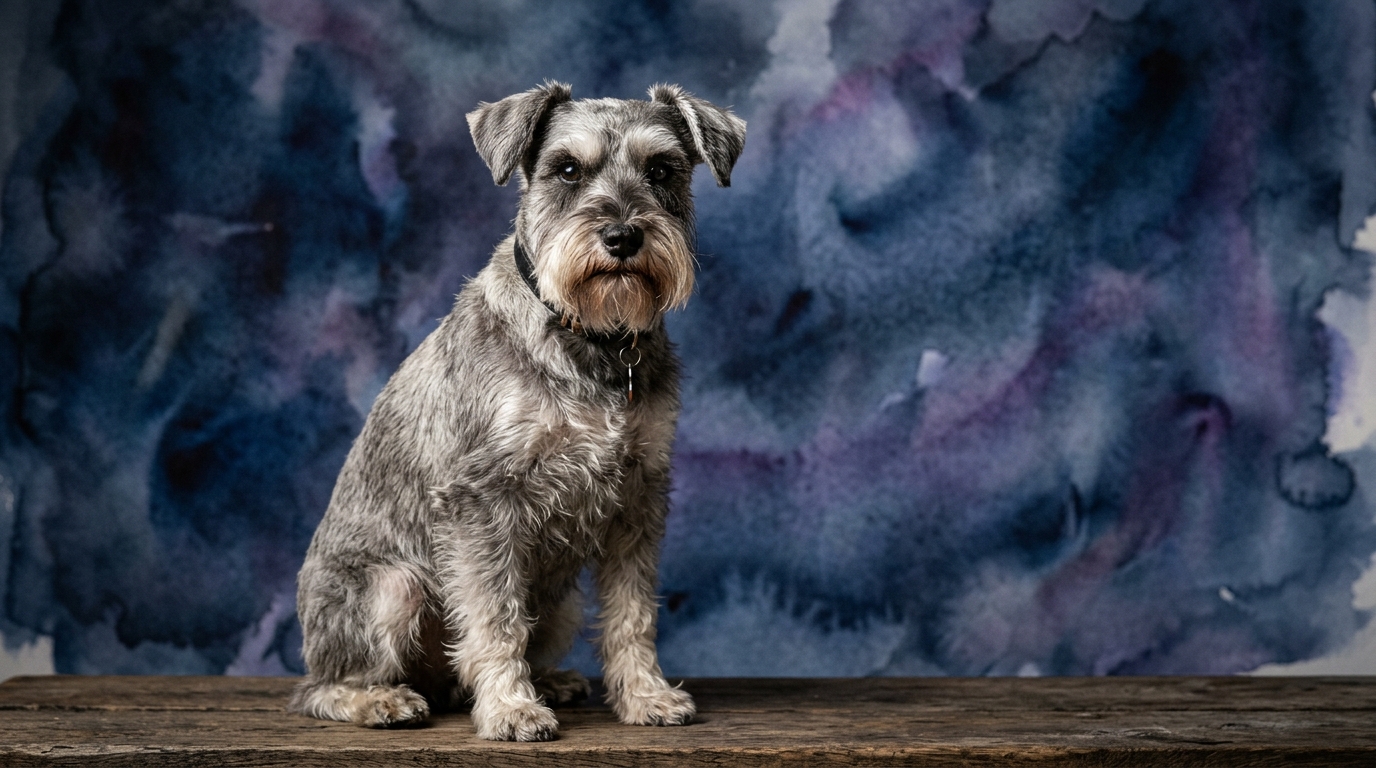
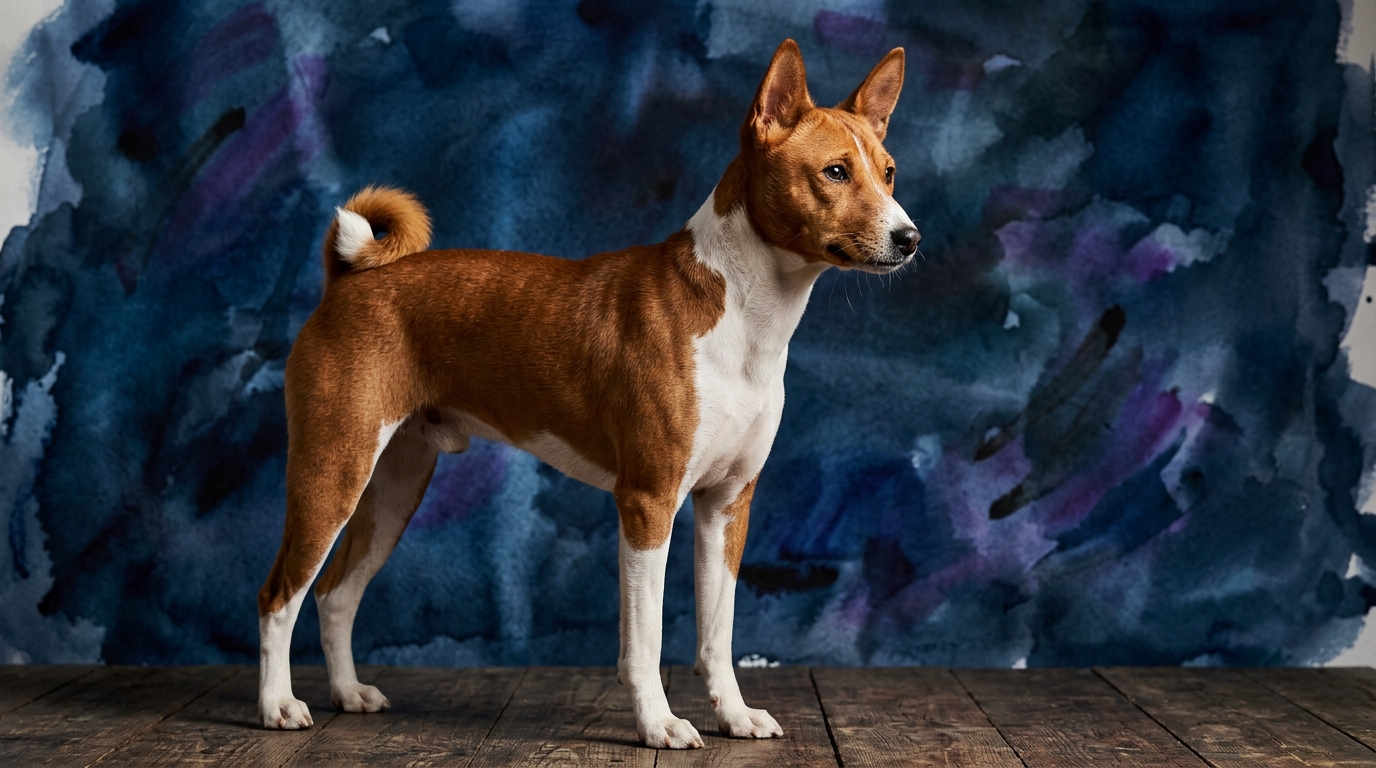
Side-by-side IQ Profile
The Miniature Schnauzer, ranking impressively at Coren's #12, exhibits a well-rounded cognitive profile tailored for partnership and adaptability. Their Problem Solving is rated 4/5, indicating a capacity for practical solutions within a structured environment. A standout Training Speed of 5/5 highlights their exceptional willingness and quickness to learn human-directed tasks. Social Intelligence at 4/5 demonstrates their adeptness at interpreting and responding to human cues, while an Instinctive Drive of 4/5 reflects their foundational Terrier tenacity and watchfulness. Finally, a Memory score of 4/5 ensures they retain learned behaviors and experiences effectively.
In contrast, the Basenji, positioned at Coren's #78, presents a unique cognitive blueprint rooted in ancient self-sufficiency. Their Problem Solving reaches an outstanding 5/5, showcasing a profound ability to independently strategize and overcome obstacles. However, their Training Speed is a notably low 1/5, reflecting a strong preference for self-directed action over human compliance. Social Intelligence stands at 3/5, indicating a more selective engagement with human interaction. Their Instinctive Drive is a powerful 5/5, underscoring their inherent hunting instincts and independent motivations. A Memory score of 4/5 means they recall information efficiently, often using it to their own advantage.
Where Miniature Schnauzer Wins Cognitively
The Miniature Schnauzer truly shines in areas demanding close partnership and rapid learning, reflected in their stellar Training Speed of 5/5 and strong Social Intelligence of 4/5. These dogs possess an innate eagerness to understand and comply with human directives, making them highly responsive to cues and adept at mastering complex sequences of behaviors. Their cognitive strength lies in their ability to quickly forge connections between actions and consequences within a human-centric framework, often anticipating owner expectations and adapting their responses accordingly.
This capacity for quick assimilation and cooperative engagement means Miniature Schnauzers excel in environments where precise communication and shared goals are paramount, making them exceptionally rewarding partners in structured learning activities like obedience or agility. Their robust memory (4/5) further compounds this advantage, allowing them to build an extensive repertoire of learned behaviors and social etiquette, contributing to their reputation as capable and adaptable companions in diverse family settings.
Where Basenji Wins Cognitively
Conversely, the Basenji's cognitive prowess is most evident in its exceptional Problem Solving score of 5/5 and powerful Instinctive Drive of 5/5, which together paint a picture of a supremely resourceful and self-reliant thinker. Unlike breeds that look to humans for solutions, Basenjis are masters of independent strategizing, capable of devising intricate plans to achieve their own objectives, whether that involves opening a gate, reaching a forbidden treat, or navigating a complex scent trail. Their cognitive strength lies in their ability to analyze situations, experiment with solutions, and persist until a desired outcome is achieved, often displaying a cunning that belies their seemingly aloof demeanor.
This deep-seated drive and autonomous problem-solving capacity stems from their origins as African hunting dogs, where survival often depended on individual initiative rather than human direction. Their high instinctive drive means they are powerfully motivated by their own internal compass, whether it's tracking a scent or exploring boundaries. This cognitive independence, coupled with a solid memory (4/5), enables them to learn from past experiences and apply those lessons to new, self-serving challenges with remarkable ingenuity.
Which is Easier to Train and Why
When considering ease of training, the Miniature Schnauzer clearly holds an advantage due to its 5/5 Training Speed and 4/5 Social Intelligence. These Terriers genuinely desire to engage with their human companions and derive satisfaction from performing tasks correctly. They respond enthusiastically to positive reinforcement, quickly associating commands with desired actions and rewards. Their inherent biddability and focus on their handler make them receptive learners, eager to participate in training sessions and excel in obedience work. Training a Miniature Schnauzer often feels like a collaborative effort, with the dog actively trying to understand and please.
The Basenji, despite its superior problem-solving acumen, presents a significant challenge in traditional training scenarios, reflected in its 1/5 Training Speed. Their cognitive independence means they often perceive commands as suggestions rather than directives, and their strong instinctive drive (5/5) frequently overrides any motivation to comply if it doesn't align with their immediate interests. Training a Basenji requires immense patience, creativity, and a deep understanding of their self-serving motivations. Owners must consistently demonstrate that compliance leads to an outcome the Basenji values, often turning training into a negotiation rather than a simple instruction. Their behavioral differences stem from the Schnauzer's 'people-pleasing' nature versus the Basenji's 'what's in it for me?' attitude.
Which Suits Active Owners vs Relaxed Owners
For active owners seeking a dedicated partner in various pursuits, the Miniature Schnauzer is an excellent fit. Their strong instinctive drive (4/5) and eagerness to learn make them suitable for activities like agility, obedience trials, or long, engaging walks and hikes. They thrive on mental and physical stimulation provided by their owner, enjoying structured play and opportunities to use their problem-solving skills (4/5) in cooperative games. While they can adapt to more relaxed home environments, their cognitive needs demand consistent engagement to prevent boredom, which can manifest as undesirable behaviors.
The Basenji is best suited for owners who are not only active but also deeply understand and appreciate an independent, high-energy canine mind. Their powerful instinctive drive (5/5) and exceptional problem-solving (5/5) mean they require significant physical outlets that often involve self-directed exploration, such as secure off-leash areas or consistent opportunities for scent work. They are not dogs for relaxed owners expecting a biddable, couch-potato companion; their intelligence often expresses itself in finding ways to entertain themselves, which can involve climbing, escaping, or reorganizing the home. Owners must be prepared for a dog that engages with the world on its own terms, often requiring a unique approach to management and exercise.
The Verdict
Choose the Miniature Schnauzer if you desire a highly trainable, cooperative companion eager to engage in shared activities and integrate seamlessly into your social structure. They are ideal for owners who enjoy structured training and a dog that thrives on partnership.
Opt for the Basenji if you are an experienced owner who appreciates an independent, resourceful, and cunning canine mind, willing to navigate their unique training challenges. They suit those who value a dog's self-directed intelligence and can provide ample, secure outlets for their powerful instincts.
🧠 Find Your Pet's IQ Score
Our Pet IQ Lab assessment covers 25+ tests across 5 cognitive dimensions — personalized to your breed.
Take the Full IQ Test →Frequently Asked Questions
Are Basenjis really difficult to train?
Yes, Basenjis present significant training challenges due to their low training speed (1/5) and strong independent nature. While capable of learning, their motivation often aligns with their own self-interest rather than human directives, requiring immense patience and creative, highly rewarding methods.
Do Miniature Schnauzers need a lot of mental stimulation?
Absolutely, Miniature Schnauzers, with their 4/5 problem-solving and 5/5 training speed, thrive on mental engagement. Regular training, puzzle toys, and interactive games are crucial to satisfy their active minds and prevent boredom, ensuring a well-adjusted companion.
Which breed is better for a first-time dog owner?
For a first-time dog owner, the Miniature Schnauzer is generally a more suitable choice due to their higher trainability and social intelligence. Their eagerness to please makes the learning process more rewarding, offering a more straightforward introduction to dog ownership compared to the independent Basenji.