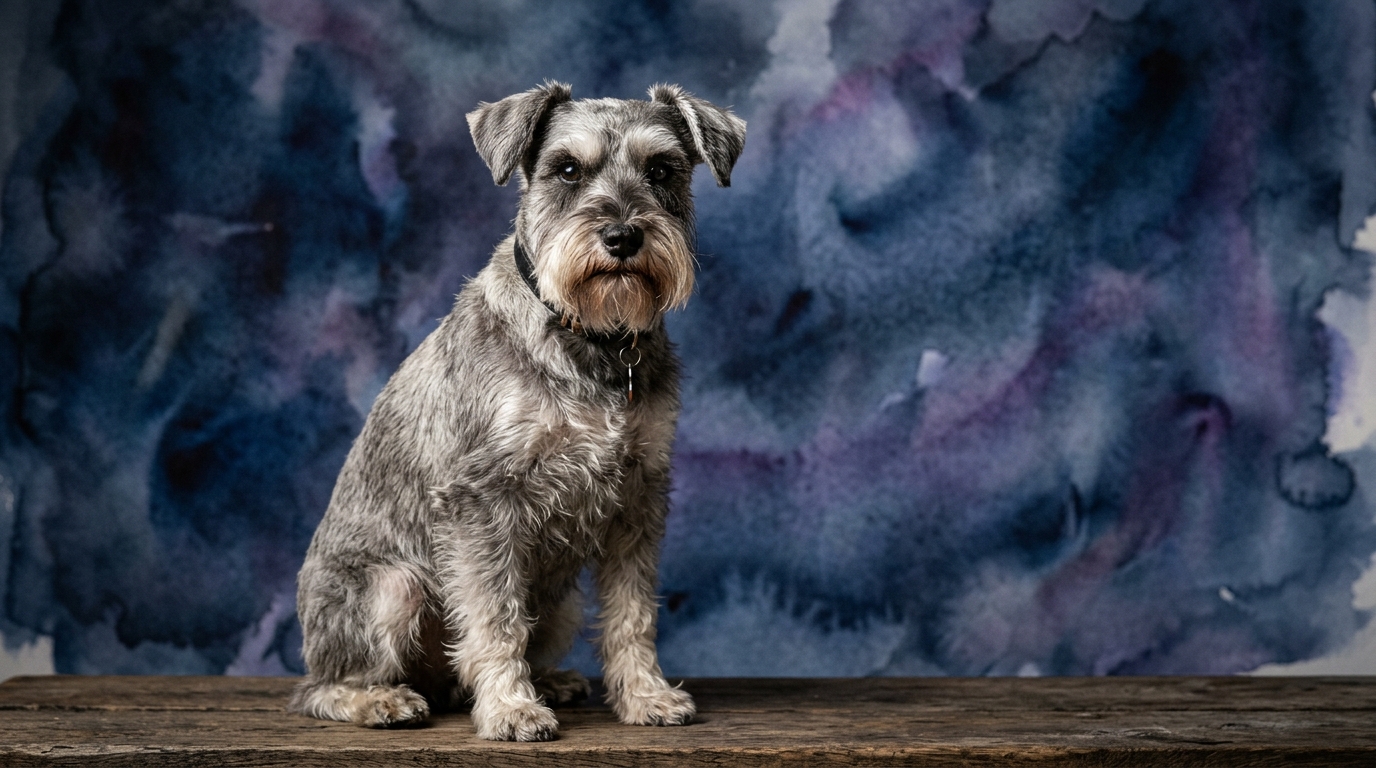

Side-by-Side Cognitive Profile: Miniature Schnauzer vs. Belgian Sheepdog (Groenendael)
At The Cosmic Pet Pet IQ Lab, we analyze canine intelligence across five key dimensions, providing a granular view of each breed's cognitive strengths. The Miniature Schnauzer, ranking #12 on the Coren intelligence scale, presents a balanced and robust cognitive blueprint. Their Problem Solving is rated 4/5, indicating a thoughtful capacity to navigate novel situations and figure out solutions to environmental puzzles, often with a strategic rather than purely trial-and-error approach. With a Training Speed of 5/5, they demonstrate exceptional quickness in grasping new commands and routines, making them highly receptive to instruction. Their Social Intelligence scores 4/5, reflecting a strong ability to interpret human cues and adapt behavior in social contexts, often forming close bonds and understanding household dynamics. An Instinctive Drive of 4/5 means they possess a noticeable inherent motivation, frequently expressed as a keen desire to engage in tasks or pursue perceived “prey,” characteristic of their terrier heritage. Finally, their Memory is 4/5, signifying effective retention of learned information and experiences, allowing for consistent performance of commands and recollection of past events.
The Belgian Sheepdog (Groenendael), holding rank #15 on the Coren scale, showcases a distinct set of cognitive strengths, particularly in areas demanding deep processing and retention. Their Problem Solving ability is an outstanding 5/5, indicating superior aptitude for dissecting complex issues and devising effective strategies, often with minimal guidance. Like the Schnauzer, their Training Speed is 5/5, meaning they absorb new lessons with remarkable efficiency and enthusiasm. However, their Social Intelligence is rated 3/5; while capable of forming deep bonds, their social perception is more focused, potentially leading to a more reserved or discerning interaction style with new people or environments. An Instinctive Drive of 3/5 suggests a moderate, yet purposeful, inherent motivation, often channeled into task-oriented activities, reflecting their herding background without overwhelming intensity. The Groenendael's Memory is truly exceptional at 5/5, denoting an outstanding capacity for information retention, remembering intricate sequences, extended training protocols, and specific environmental details with remarkable accuracy.
Where the Miniature Schnauzer Wins Cognitively
The Miniature Schnauzer excels particularly in its balanced social intelligence and moderate yet robust instinctive drive when viewed against the Groenendael. With a social intelligence score of 4/5, they tend to integrate into diverse social settings with greater ease, often displaying a more universally friendly and adaptable demeanor towards various people and other animals. This makes them adept at navigating the nuances of a busy household or public interactions without the same level of initial reservation. Their instinctive drive, rated at 4/5, provides ample motivation for engagement and learning without typically reaching an intensity that demands constant, highly structured outlets, offering a slightly more flexible management approach for owners. This combination results in a companion that is often more overtly expressive and socially accommodating in everyday life, making them excellent family dogs who adapt well to various social dynamics.
Where the Belgian Sheepdog (Groenendael) Wins Cognitively
The Belgian Sheepdog (Groenendael) demonstrates a distinct cognitive advantage in both problem-solving and memory, scoring a perfect 5/5 in both dimensions. Their exceptional problem-solving ability means they are uniquely equipped to tackle intricate tasks, understand multi-step commands, and even anticipate consequences, often finding creative solutions to novel challenges. This makes them superb candidates for advanced training disciplines or complex work that requires abstract thought. Complementing this is their superior memory, also 5/5, allowing them to retain vast amounts of information, recall extended sequences of commands, and remember specific details of past training or environmental layouts with remarkable precision. This deep cognitive retention facilitates advanced skill acquisition and consistency, making them highly reliable once a concept is learned and stored in their impressive long-term memory.
Which is Easier to Train and Why
Both the Miniature Schnauzer and the Belgian Sheepdog (Groenendael) share an impressive training speed, each earning a perfect 5/5. This indicates both breeds grasp new commands and routines with exceptional quickness. However, the *ease* of training can diverge based on their other cognitive profiles and underlying motivations. The Miniature Schnauzer, with its balanced social intelligence (4/5) and slightly higher instinctive drive (4/5) compared to the Groenendael, often approaches training with an eager-to-please attitude that is broadly directed. Their social acumen means they are generally highly tuned to their owner's emotional state and intentions, which can make initial motivation straightforward and rewards easily understood. The Groenendael, while equally fast at learning, possesses a more discerning social intelligence (3/5) and a lower instinctive drive (3/5) for generalized tasks, often requiring a more focused and engaging training approach. Their superior problem-solving and memory mean they excel at complex tasks, but their motivation might be more task-specific or require a deeper bond and clear purpose from their handler. For a novice owner, the Schnauzer's broader social engagement and adaptability might feel “easier” to harness in everyday training scenarios, whereas the Groenendael thrives with an owner who can consistently channel their advanced cognitive abilities into structured, purposeful, and mentally stimulating activities.
Which Suits Active Owners vs. Relaxed Owners
The decision between a Miniature Schnauzer and a Belgian Sheepdog (Groenendael) largely hinges on an owner's lifestyle and their capacity to meet specific cognitive and physical needs. Active owners who thrive on structured engagement and complex activities will find a profound partner in the Belgian Sheepdog (Groenendael). Their exceptional problem-solving and memory, coupled with a moderate yet purposeful instinctive drive, mean they excel in demanding dog sports like agility, obedience, and protection work, requiring consistent mental and physical challenges. They are not content with mere walks; they thrive on purpose-driven tasks that engage their sharp minds and provide a sense of utility. Conversely, the Miniature Schnauzer, with its robust instinctive drive (4/5) and balanced social intelligence (4/5), also benefits from activity but offers more flexibility. They enjoy vigorous play, walks, and learning new tricks, and their needs are often met with a wider range of activities, making them adaptable to owners who enjoy being active but might not dedicate themselves to high-level, specialized dog sports. For owners seeking a companion that integrates readily into family life with ample, but not overwhelming, mental and physical stimulation, the Miniature Schnauzer is a compelling choice, offering a spirited partnership without the intensity of a dedicated working breed.
The Verdict
Choose the Miniature Schnauzer if you seek a socially adaptable companion, quick to learn and eager to please, suitable for an active family lifestyle that appreciates a balance of engagement and independent spirit. Their balanced cognitive profile makes them a versatile and expressive household member.
Opt for the Belgian Sheepdog (Groenendael) if you are an experienced, active owner ready to dedicate significant time to advanced training and mental challenges, valuing a partner with exceptional problem-solving and memory for demanding activities. They thrive with purpose and a strong, consistent handler.
🧠 Find Your Pet's IQ Score
Our Pet IQ Lab assessment covers 25+ tests across 5 cognitive dimensions — personalized to your breed.
Take the Full IQ Test →Frequently Asked Questions
Do Miniature Schnauzers require extensive mental stimulation?
Miniature Schnauzers benefit greatly from mental stimulation, scoring 4/5 in problem-solving and 4/5 in instinctive drive. Regular training, puzzle toys, and varied activities are important to satisfy their curious minds and prevent boredom, though their needs are often less intense than some dedicated working breeds.
Is the Belgian Sheepdog (Groenendael) a good choice for first-time dog owners?
The Belgian Sheepdog (Groenendael), with its 5/5 problem-solving and memory, alongside a more discerning social intelligence (3/5), typically thrives with experienced owners. Their need for consistent, structured training and purposeful engagement might be overwhelming for a novice owner who isn't prepared for their advanced cognitive demands.
How do their social intelligence scores impact their interaction with strangers?
The Miniature Schnauzer's 4/5 social intelligence often means they are more readily accepting and adaptable to new people and environments, generally displaying a friendly curiosity. The Belgian Sheepdog's 3/5 social intelligence suggests they can be more reserved or discerning with strangers, often preferring to observe before engaging, and requiring careful socialization to ensure comfort in varied social situations.