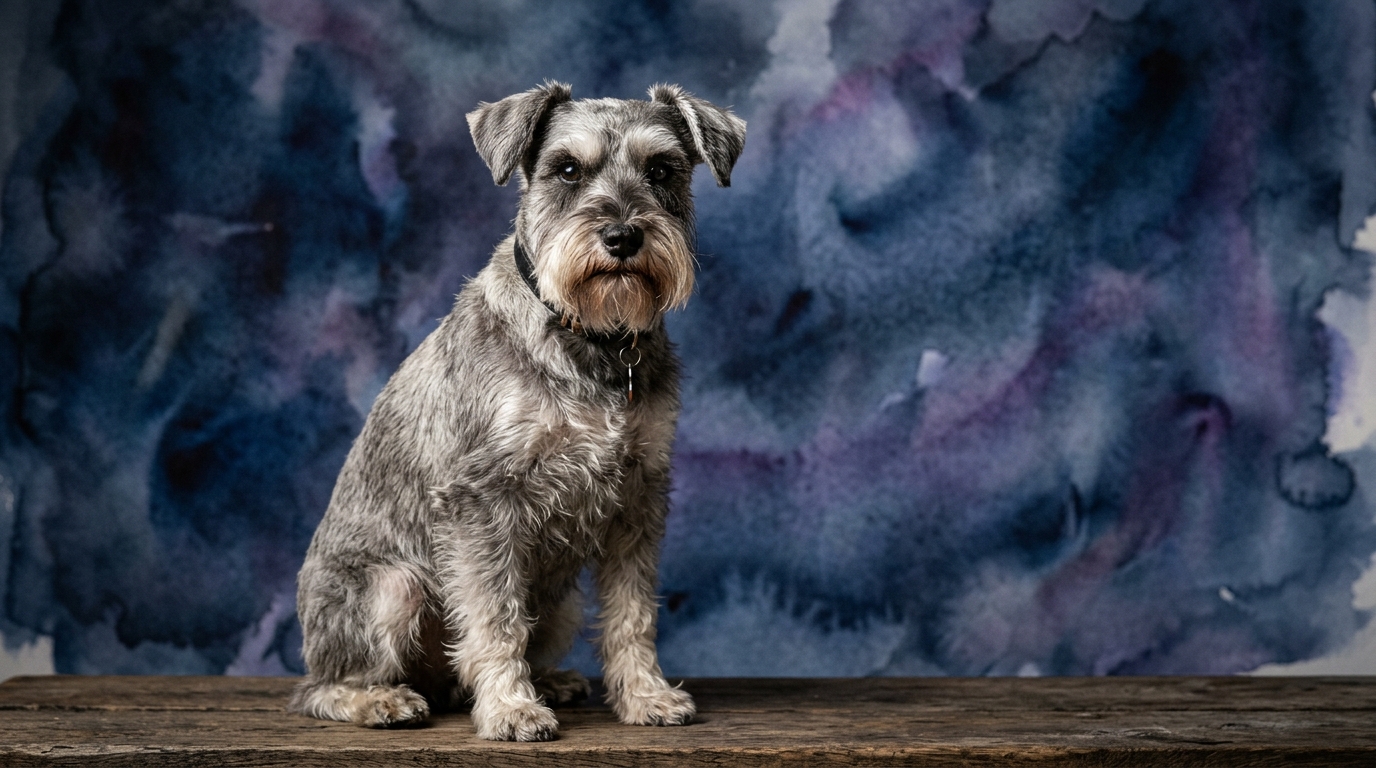
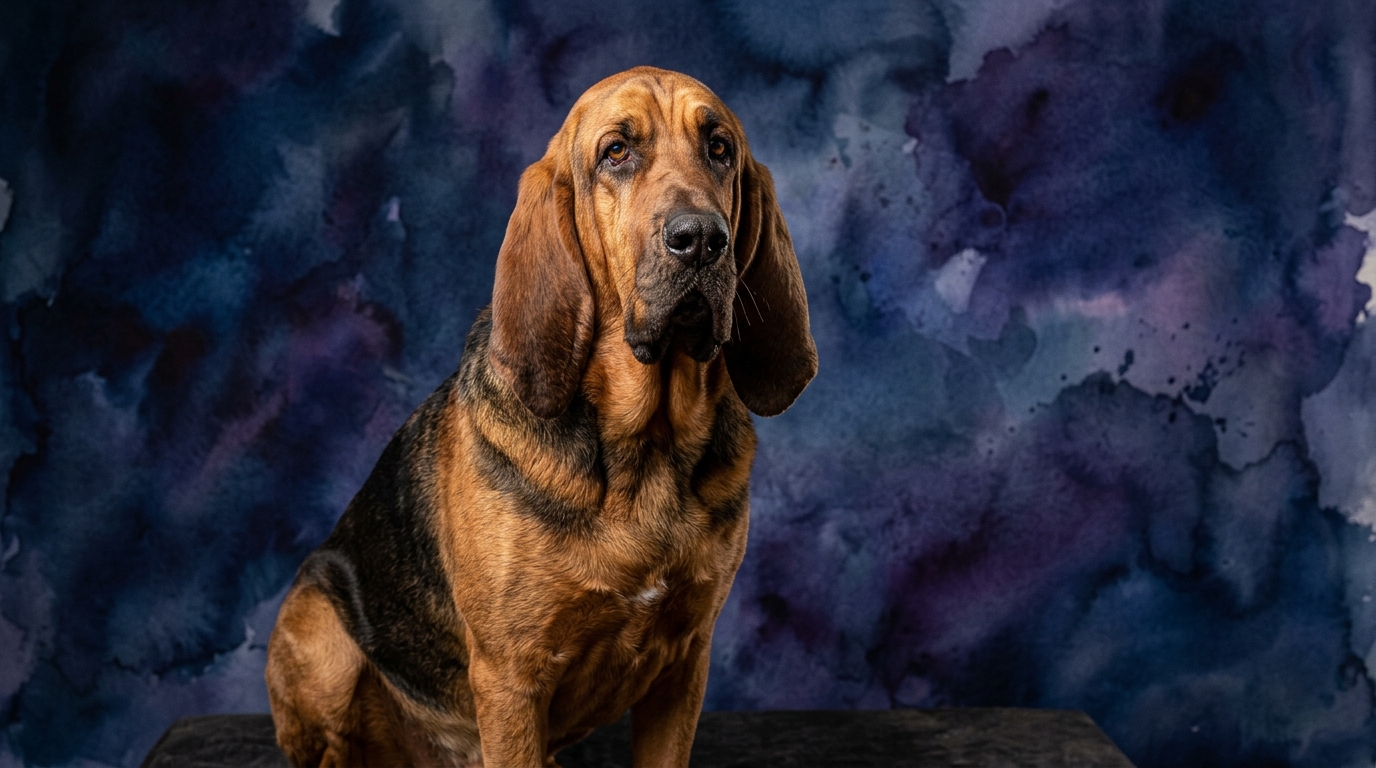
Side-by-Side Cognitive Profile: Schnauzer vs. Bloodhound
To truly understand the cognitive landscape of these two breeds, we examine their mental faculties across five key dimensions. The Miniature Schnauzer, a Terrier, holds a Coren rank of #12, reflecting its general trainability and working intelligence, while the Bloodhound, a specialized Hound, ranks #74, indicating a different set of priorities.
For Problem Solving, the Miniature Schnauzer scores 4/5. This breed exhibits a practical intelligence, quickly figuring out new situations and adapting to minor obstacles. They possess a curious tenacity that drives them to understand and manipulate their immediate environment, making them adept at navigating household challenges or learning complex sequences.
The Bloodhound, however, achieves a perfect 5/5 in Problem Solving, though this is highly specialized. Their problem-solving prowess is almost exclusively directed towards scent-related puzzles. They demonstrate sustained focus and methodical deduction to unravel complex trail challenges, exhibiting an unparalleled capacity for analytical thought within their olfactory domain.
In Training Speed, the Miniature Schnauzer excels with a 5/5. These dogs are remarkably fast learners, eager to please their human companions, and pick up commands and routines with impressive alacrity. Their responsiveness makes them highly amenable to structured training and acquiring new skills.
Conversely, the Bloodhound scores a challenging 1/5 in Training Speed. This isn't due to a lack of mental capacity but rather an overwhelming independence and single-minded focus on scent. They are notoriously slow to train in conventional obedience, often requiring immense patience and highly motivating, often scent-based, rewards.
Social Intelligence sees the Miniature Schnauzer at 4/5. They are generally good at reading human cues, form strong bonds with their families, understand social hierarchies, and are responsive to human interaction. This makes them highly integrated and reciprocal companions.
The Bloodhound’s social intelligence is rated at 2/5. They tend to be more aloof and independent, less attuned to subtle human social signals. Their primary social drive is often toward their pack or the pursuit of a scent, rather than human-centric interaction, making them less outwardly demonstrative of social responsiveness.
Instinctive Drive for the Miniature Schnauzer is 4/5. They possess a strong terrier prey drive and tenacity, enjoying digging, chasing, and guarding. This drive is channeled into a desire to work and protect, making them active and alert participants in their environment.
The Bloodhound boasts a 5/5 in Instinctive Drive. Their world is overwhelmingly defined by scent, possessing an unparalleled, relentless drive to follow a trail once engaged. This deep-seated, persistent cognitive drive overrides most other stimuli, making them the ultimate scent specialists.
Finally, for Memory, the Miniature Schnauzer scores 4/5. They have a solid memory for commands, routines, people, and places, retaining learned behaviors effectively. This contributes to their trainability and consistent behavior.
The Bloodhound earns a 5/5 for Memory, particularly for olfactory information. They possess an exceptional long-term memory for scents and associated experiences, allowing them to recall trails and individuals over extended periods. This cognitive superpower enables them to reconstruct past events purely through their nose.
Where the Miniature Schnauzer Shines Cognitively
The Miniature Schnauzer’s cognitive strengths are particularly evident in their adaptability and responsiveness. With a problem-solving score of 4/5, they demonstrate a practical intelligence that allows them to quickly assess and adjust to new environments or unexpected changes. Unlike the Bloodhound, whose cognitive framework is heavily specialized, the Schnauzer’s generalist approach means they can more readily navigate a variety of domestic challenges, from learning new household rules to figuring out how to retrieve a toy stuck under furniture. Their terrier heritage imbues them with a curious, persistent nature that encourages active mental engagement with their surroundings, making them adept at processing novel stimuli without becoming overwhelmed.
The Schnauzer’s social intelligence rating of 4/5 means they are generally more attuned to human emotions and intentions. They pick up on subtle shifts in tone, body language, and routine, making them excellent companions who seem to anticipate their owner's needs. This cognitive strength fosters a reciprocal relationship where the Schnauzer actively seeks to understand and engage with their human counterparts, contrasting with the Bloodhound's more self-directed focus. This heightened social awareness contributes significantly to their ability to integrate seamlessly into a human household, making them highly perceptive family members.
A training speed of 5/5 highlights the Miniature Schnauzer’s superior capacity for rapid learning and behavioral adjustment. They readily form associations between commands and actions, making them highly receptive to obedience training, tricks, and even complex agility courses. Their cognitive architecture supports quick acquisition of new information and efficient recall, allowing for a broad range of learned behaviors to be established with relative ease. This makes them highly malleable and responsive to structured learning environments, making them a joy for owners who enjoy teaching new skills and seeing rapid progress.
Where the Bloodhound's Mind Excels
While both breeds possess problem-solving skills, the Bloodhound's 5/5 score is rooted in a highly specialized, methodical form of deduction. Their cognitive strength lies in their ability to process and interpret an immense amount of olfactory data, meticulously piecing together a complex scent narrative over vast distances and varied terrain. This isn't about general household puzzles, but about sustained, single-minded focus on a highly specific cognitive task, demonstrating an unparalleled capacity for analytical thought within their domain. Their brain is wired for intricate olfactory analysis, allowing them to 'solve' the puzzle of a trail with incredible accuracy and persistence, often over challenging circumstances.
The Bloodhound’s 5/5 memory score is not just about remembering commands, but about an extraordinary capacity to retain and recall intricate scent profiles and the paths associated with them. They can 'remember' a scent trail for days, even weeks, and re-engage with it accurately, even if the trail has been disturbed. This long-term, highly detailed olfactory memory is a cornerstone of their operational success, allowing them to build complex mental maps based purely on scent. This is a cognitive superpower far beyond what most breeds possess, enabling them to reconstruct past events purely through their nose, making them invaluable in specific roles.
With an instinctive drive of 5/5, the Bloodhound demonstrates an almost unbreakable focus once their olfactory senses are engaged. This isn't merely a strong desire to chase; it's a deep-seated, persistent cognitive drive that overrides most other stimuli. Their entire mental faculty becomes dedicated to the task of trailing, showcasing a singular focus that few other breeds can match. This intense, innate motivation is a profound cognitive strength, allowing them to perform demanding tasks that require sustained mental effort and determination, regardless of distractions or the passage of time. Their drive is a testament to their specialized mental architecture.
Training Dynamics: Which is Easier and Why?
When considering ease of training, the Miniature Schnauzer stands out with a training speed of 5/5 compared to the Bloodhound's 1/5. This stark difference stems from several behavioral and cognitive factors. Miniature Schnauzers are generally eager to please, possess a higher social intelligence (4/5), and are typically more responsive to human direction, making them quick to grasp and execute commands. Their memory (4/5) is robust for learned behaviors, and their problem-solving (4/5) allows them to understand the cause-and-effect of training cues, reinforcing positive associations quickly.
In contrast, the Bloodhound's training challenge isn't a lack of raw cognitive ability, but rather a profound independence and an overwhelming instinctive drive (5/5) towards scent work. Once a Bloodhound catches a compelling scent, their world narrows to that single stimulus; human commands often become secondary or entirely unheard. Their lower social intelligence (2/5) means they are less motivated by human approval, and their exceptional memory (5/5) is primarily dedicated to olfactory information, not necessarily arbitrary obedience cues. Training a Bloodhound requires immense patience, creativity, and an understanding that their primary cognitive function is often elsewhere, demanding highly engaging, scent-based motivation rather than conventional methods. Owners must learn to work with, rather than against, their powerful natural instincts.
Matching Breeds to Owner Lifestyles
The cognitive profiles of these two breeds suggest different lifestyles for their owners. The Miniature Schnauzer, with its balanced instinctive drive (4/5), robust problem-solving (4/5), and high social intelligence (4/5), thrives with active owners who enjoy engaging in various activities. They appreciate consistent mental stimulation through training, agility, or interactive play, and their moderate energy levels mean they are typically up for walks, jogs, and adventures. They integrate well into family life, enjoying participation and interaction, making them suitable for owners who want an involved, versatile companion who is keen to learn and participate in daily routines.
Conversely, the Bloodhound, despite its powerful physique, isn't necessarily suited for 'active' owners in the conventional sense of running partners, unless that activity is dedicated scent work or long, exploratory walks where their nose can lead. Their overwhelming instinctive drive (5/5) and specialized problem-solving (5/5) mean they require owners who can accommodate their profound need for olfactory engagement. A 'relaxed' owner who expects a low-maintenance dog will be challenged by a Bloodhound's unwavering scent drive and need for extensive, often solitary, sniffing expeditions. They are better suited for owners who are patient, understand their unique cognitive wiring, and are prepared to provide outlets for their extraordinary nose, even if it means less traditional, human-centric interaction and more independent, scent-driven exploration.
The Verdict
Opt for a Miniature Schnauzer if you seek a highly trainable, socially responsive companion eager to learn and participate in diverse family activities, thriving on consistent interaction and mental engagement.
Select a Bloodhound if you are a patient owner fascinated by specialized canine intelligence and are prepared to dedicate significant time to their unparalleled olfactory drives, understanding their independent, scent-focused nature.
🧠 Find Your Pet's IQ Score
Our Pet IQ Lab assessment covers 25+ tests across 5 cognitive dimensions — personalized to your breed.
Take the Full IQ Test →Frequently Asked Questions
Does the Coren rank indicate overall intelligence?
The Coren rank primarily measures 'working and obedience intelligence,' reflecting a dog's ability to learn and respond to human commands. It doesn't fully capture specialized cognitive strengths like the Bloodhound's exceptional scent work or unique problem-solving abilities, which operate on a different mental plane.
Are Bloodhounds difficult to live with due to their low training speed?
While Bloodhounds have a low training speed for conventional obedience, they are not inherently difficult; they simply require an owner who understands and respects their unique cognitive priorities. Their independence and profound scent drive mean training must be highly engaging and often scent-based, requiring immense patience and creative motivation.
Can a Miniature Schnauzer excel at scent work like a Bloodhound?
Miniature Schnauzers possess a good instinctive drive (4/5) and can certainly enjoy and excel at scent-based games or even introductory scent work due to their tenacity. However, they lack the Bloodhound's unparalleled, genetically predisposed olfactory acuity and unwavering, singular focus, making deep-level trailing a different cognitive realm that the Bloodhound dominates.