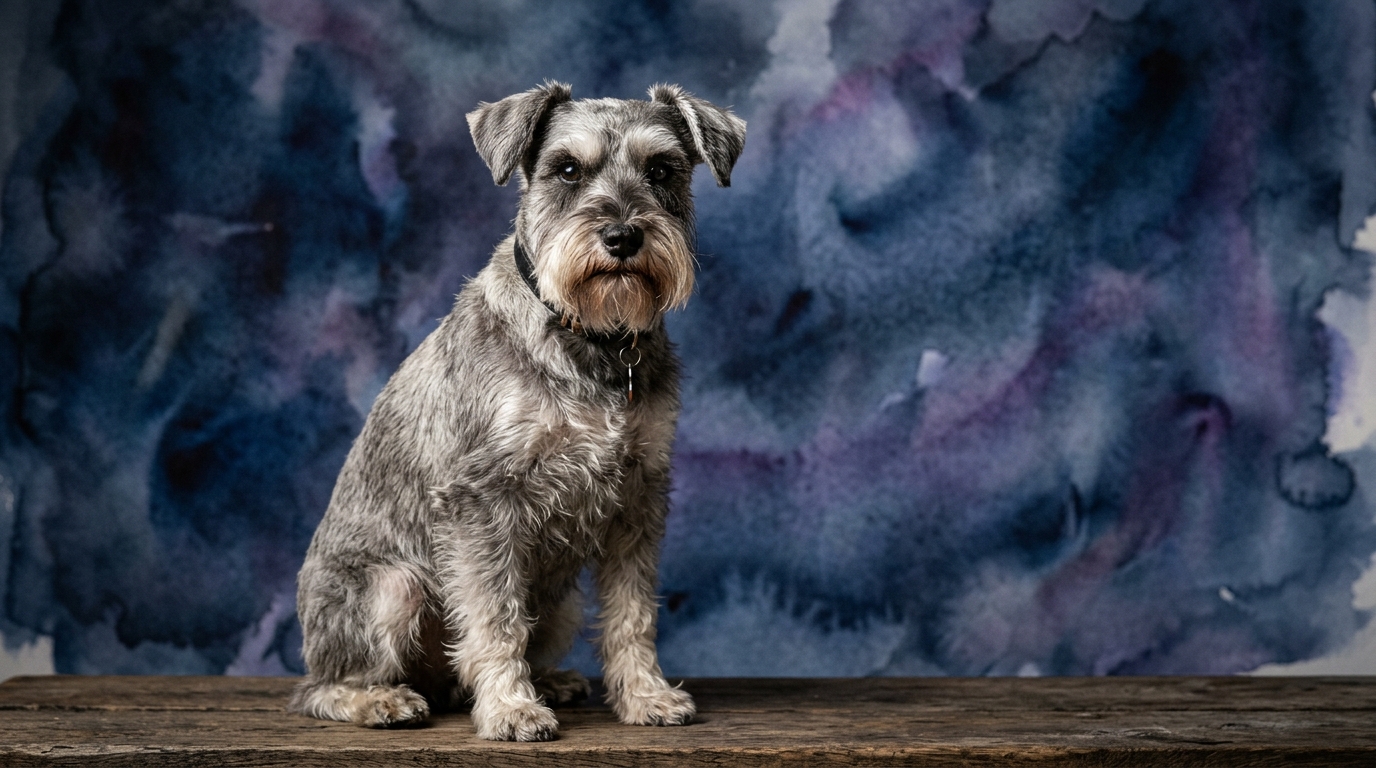
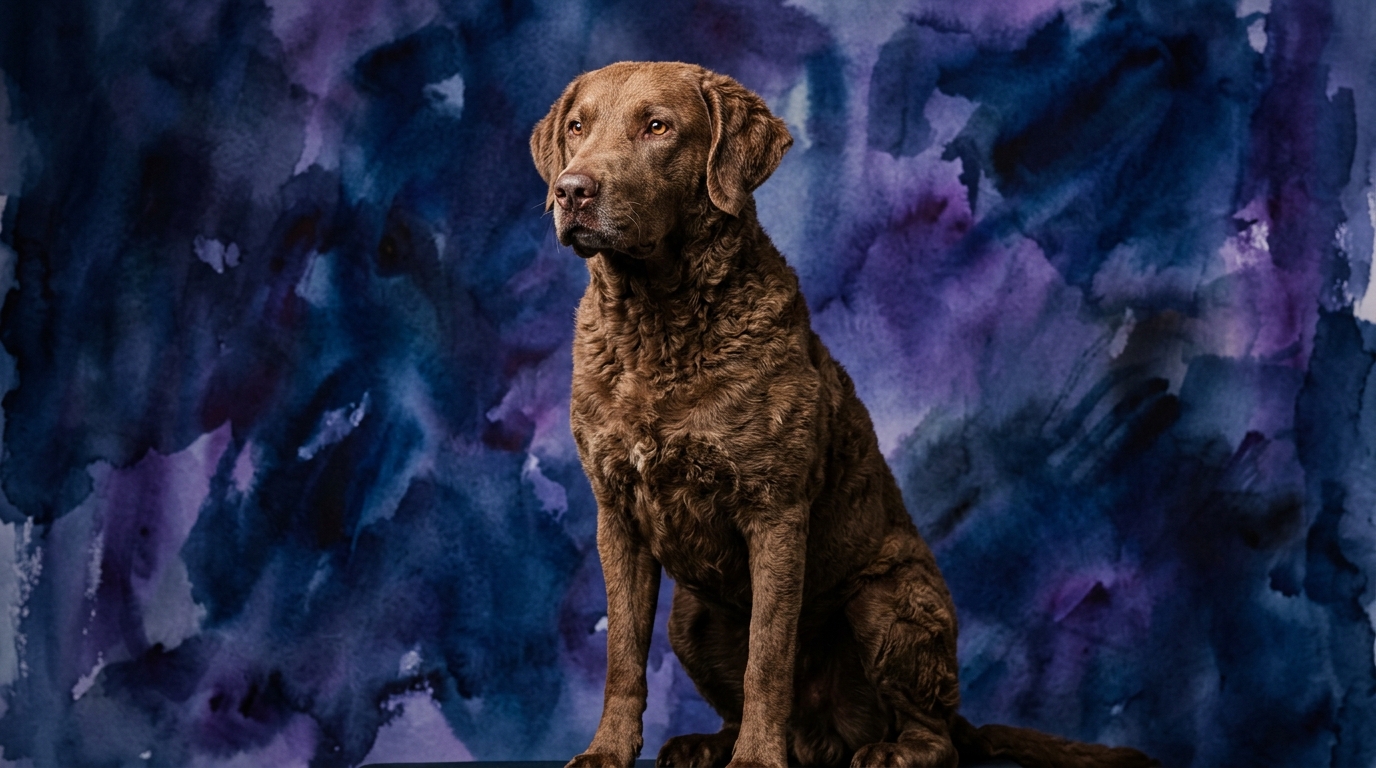
Side-by-Side IQ Profile: Miniature Schnauzer vs. Chesapeake Bay Retriever
The Cosmic Pet Pet IQ Lab employs a multi-dimensional approach to assess canine cognition, moving beyond simple obedience to capture a fuller picture of a breed's mental capacities. For the Miniature Schnauzer, our data paints a picture of a quick-witted and socially adept companion, ranking #12 in Coren's broader intelligence scale. Its Problem Solving score of 4/5 indicates a capacity for independent thought and resolution, while an exceptional Training Speed of 5/5 highlights its eagerness and ability to grasp new commands rapidly. Social Intelligence at 4/5 suggests a nuanced understanding of human cues and emotional states, complemented by an Instinctive Drive of 4/5, often manifested as a keen prey drive and alertness. A Memory score of 4/5 further underscores its ability to retain learned behaviors and experiences.
In contrast, the Chesapeake Bay Retriever, ranking #27 on Coren's scale, presents a profile geared towards robust, independent work. Its Problem Solving also registers at 4/5, indicating a strong capacity for navigating complex scenarios, particularly those related to its retrieving heritage. The Chessie's Training Speed of 4/5, while still commendable, suggests it learns effectively but might require more consistent motivation than the Schnauzer. Social Intelligence at 3/5 points to a more reserved or selective social engagement, often preferring its immediate family. An Instinctive Drive of 3/5 reflects a powerful, focused drive for specific tasks like retrieving, while its Memory, matching the Schnauzer at 4/5, ensures it can recall intricate patterns and learned tasks even after long periods.
Where the Miniature Schnauzer Wins Cognitively
The Miniature Schnauzer's cognitive strengths are particularly evident in its adaptability and social acumen. Its superior Training Speed of 5/5, compared to the Chessie's 4/5, means it generally picks up new commands and routines with remarkable alacrity. This isn't merely about rote learning; it reflects a pronounced willingness to engage with human instruction and a quick processing of cause and effect in training contexts. This translates to fewer repetitions needed and a greater enthusiasm for learning new tricks or sports.
Furthermore, the Schnauzer's Social Intelligence, rated at 4/5 against the Chessie's 3/5, gives it an edge in interpreting human emotions and intentions. This breed often demonstrates a nuanced understanding of household dynamics, making it highly responsive to its family's moods and capable of forming deep, empathetic bonds. This social awareness contributes significantly to its role as a versatile companion, capable of thriving in varied social settings and quickly integrating into family life, often anticipating needs or reacting appropriately to subtle cues.
Where the Chesapeake Bay Retriever Wins Cognitively
While the Miniature Schnauzer shines in domestic adaptability, the Chesapeake Bay Retriever's cognitive strengths are particularly evident in its specialized working capacity and resilience. Its Problem Solving at 4/5, matching the Schnauzer, often manifests as independent decision-making in complex outdoor environments, such as navigating challenging terrain or icy waters to locate and retrieve game. This specific application of problem-solving requires a robust mental fortitude and self-reliance that is a hallmark of the breed, allowing it to complete demanding tasks without constant human direction.
The Chessie's Instinctive Drive, while scoring 3/5 compared to the Schnauzer's 4/5, represents a profoundly focused and enduring drive tailored for its original purpose. This isn't just a general energy; it's a deep-seated compulsion to work, retrieve, and endure harsh conditions, demanding a specific kind of cognitive persistence and unwavering concentration that excels in field work. Coupled with a strong Memory of 4/5, the Chessie can retain complex retrieval patterns and navigate intricate environments, demonstrating a powerful capacity for specialized, long-term task retention under challenging circumstances where a more generalized intelligence might falter.
Which Is Easier to Train and Why
Based on our Pet IQ Lab data, the Miniature Schnauzer generally presents as the easier breed to train, primarily due to its superior Training Speed of 5/5 compared to the Chesapeake Bay Retriever's 4/5. Schnauzers are typically very keen to please their owners and possess a high degree of focus when engaged in learning. Their quick uptake means they often require fewer repetitions to master a command, making training sessions more efficient and less prone to frustration for both dog and owner. This eagerness to participate and their strong Social Intelligence further aid in building a responsive training relationship.
The Chesapeake Bay Retriever, while certainly trainable, often requires a more experienced and patient hand. Their independent nature, stemming from their heritage of making decisions in the field, can sometimes be perceived as stubbornness in a training context. They need consistent, positive reinforcement and clear motivation to stay engaged. While they learn and retain information effectively (Memory 4/5), their lower Social Intelligence score of 3/5 suggests they might be less inherently motivated by human approval alone, requiring trainers to tap into their strong instinctive drives, such as their love for retrieving, to maintain enthusiasm and compliance during sessions.
Which Suits Active Owners vs. Relaxed Owners
For owners seeking a highly active companion, both breeds require regular engagement, but their needs diverge in intensity and type. The Chesapeake Bay Retriever is unequivocally suited for highly active owners who can provide ample opportunities for strenuous physical exercise and mental stimulation, preferably involving water or retrieving tasks. Their robust build, dense coat, and powerful Instinctive Drive mean they thrive on long runs, swimming, hiking, and challenging field activities. A Chessie with insufficient outlets for its energy and cognitive drive can become bored and potentially destructive, making it a poor fit for a relaxed, sedentary lifestyle.
The Miniature Schnauzer, while an energetic terrier, offers more versatility. They are well-suited for active owners who enjoy daily walks, playtime, and engaging in dog sports like agility or obedience, leveraging their high Training Speed and Problem Solving. However, their physical exercise needs are generally less demanding than a Chessie's, making them adaptable to owners who might enjoy a brisk daily walk and indoor play rather than extreme outdoor adventures. They still require consistent mental stimulation to prevent boredom, but their smaller size and greater social adaptability make them a better choice for moderately active owners who appreciate a lively, responsive companion without the intense physical demands of a large working retriever.
The Verdict: When to Choose Each Breed
The Verdict
Choose the Miniature Schnauzer if you desire a highly trainable, socially adept companion eager to engage in diverse activities and thrive in a family setting, offering a balanced blend of activity and companionship. Its quick learning and responsiveness make it an excellent choice for first-time dog owners or those seeking a versatile, engaging partner.
Opt for the Chesapeake Bay Retriever if you are a dedicated, highly active individual or family seeking a robust, independent working dog for demanding outdoor pursuits, especially those involving water and retrieving. This breed thrives with owners who understand its need for consistent, challenging physical and mental engagement, valuing resilience over constant social appeasement.
🧠 Find Your Pet's IQ Score
Our Pet IQ Lab assessment covers 25+ tests across 5 cognitive dimensions — personalized to your breed.
Take the Full IQ Test →Frequently Asked Questions
Do Miniature Schnauzers need a lot of mental stimulation?
Yes, Miniature Schnauzers have a Problem Solving score of 4/5 and a strong Instinctive Drive, meaning they benefit greatly from mental challenges. Puzzle toys, training sessions, and learning new tricks are crucial to keep their quick minds engaged and prevent boredom-related behaviors.
Is a Chesapeake Bay Retriever a good choice for a first-time dog owner?
A Chesapeake Bay Retriever's independent nature and strong working drives, combined with a 4/5 Training Speed that requires consistent motivation, can be challenging for a first-time owner. They thrive with experienced individuals who understand how to channel their energy and provide firm, consistent guidance.
How do their memory capacities compare for training?
Both breeds score a robust 4/5 in Memory, indicating excellent retention of learned behaviors and experiences. While the Miniature Schnauzer might learn new tasks faster due to its 5/5 Training Speed, both breeds are capable of remembering a wide array of commands and routines over time, making long-term training effective for either.