Unpacking Their Cognitive Blueprints: A Side-by-Side IQ Profile
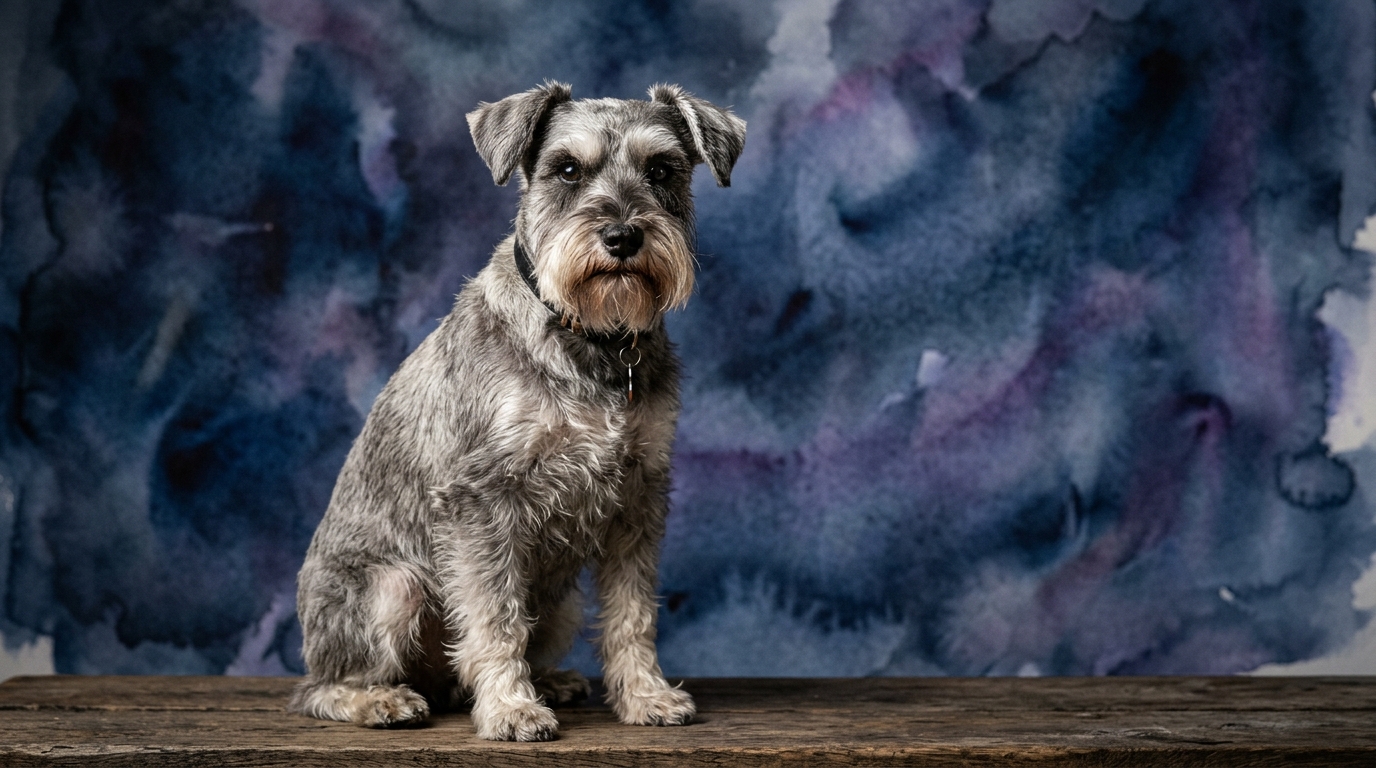
To truly appreciate the mental capabilities of the Miniature Schnauzer and the Curly-Coated Retriever, we examine them through five key intelligence dimensions, providing a granular view of their processing styles and inherent aptitudes. The Miniature Schnauzer, a Terrier, holds a Coren rank of #12, reflecting a significant capacity for obedience and working intelligence. Its IQ profile shows Problem Solving at 4/5, indicating an ability to navigate novel situations with thoughtful solutions; Training Speed at an exceptional 5/5, suggesting rapid acquisition of new commands and behaviors; Social Intelligence at 4/5, pointing to a strong understanding of human cues and complex social dynamics; Instinctive Drive at 4/5, highlighting its inherent terrier tenacity for tasks like vermin control; and Memory at 4/5, demonstrating solid retention of experiences and learned information.
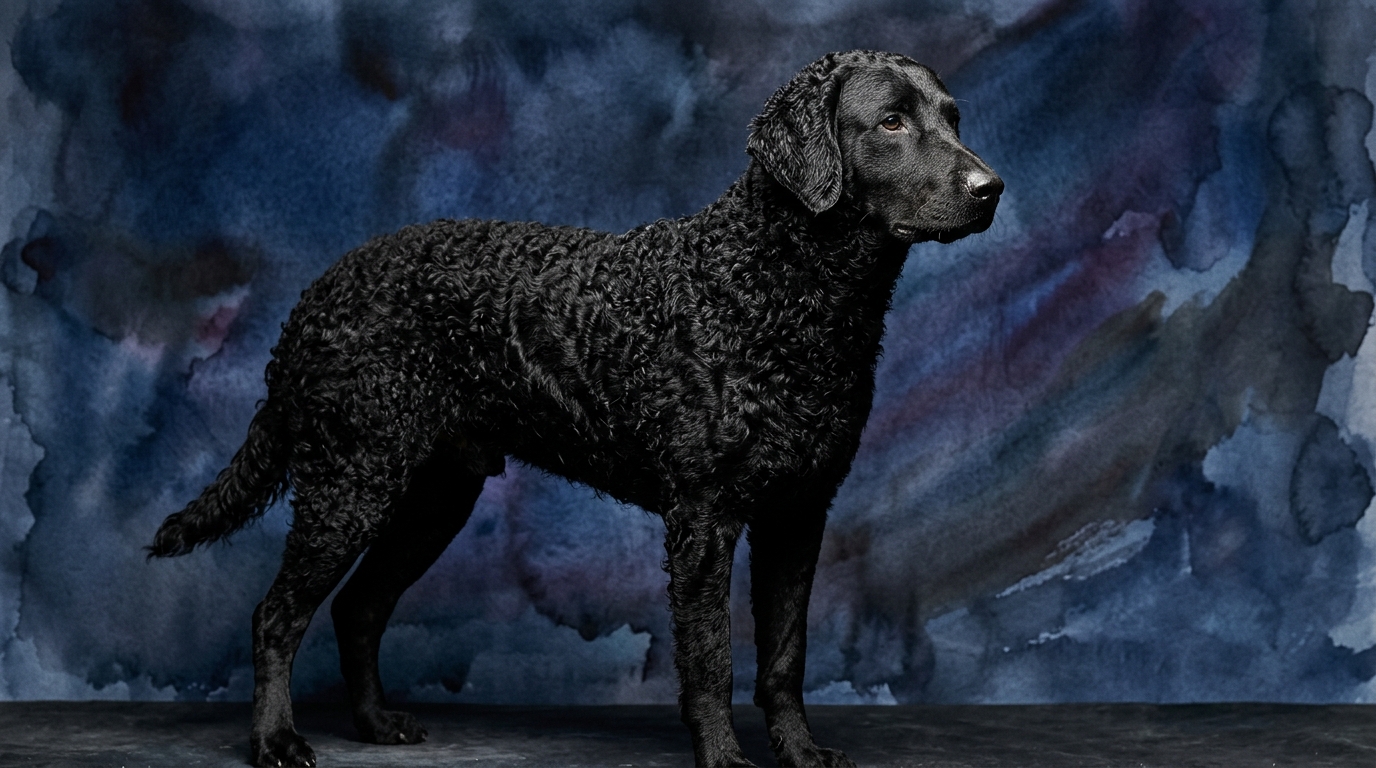
The Curly-Coated Retriever, a Sporting dog, registers a Coren rank of #41, placing it as a respectable performer in obedience and work. Its IQ breakdown paints a picture of consistent, moderate strengths across several areas. Problem Solving stands at 3/5, meaning it can tackle challenges, though perhaps with less spontaneous innovation than the Schnauzer. Its Training Speed is 3/5, signifying a steady learning pace that benefits from clear, consistent instruction. Social Intelligence is also 3/5, suggesting it understands social cues but might not interpret subtle human intentions with the same nuanced perception as a Schnauzer. Instinctive Drive, rated at 3/5, reflects its heritage as a water retriever, with a focus on purposeful fetching and interaction. Notably, its Memory matches the Schnauzer at 4/5, indicating an equally robust capacity for remembering lessons, routines, and past interactions.
Where the Miniature Schnauzer’s Cognition Shines Brightest
The Miniature Schnauzer demonstrates clear cognitive advantages in several areas, particularly in its problem-solving acumen and rapid learning. With a Problem Solving score of 4/5, Miniature Schnauzers often exhibit a cleverness in figuring out how to access desired items or navigate obstacles, a trait stemming from their terrier heritage where independent thought was crucial for hunting vermin. This isn't just about 'getting the treat,' but about understanding the mechanics of a puzzle or the sequence of actions required to achieve a goal. Their ability to quickly assess and adapt to new situations allows them to learn complex routines and tricks with impressive efficiency.
Furthermore, the Miniature Schnauzer’s exceptional Training Speed, rated at 5/5, means they pick up new commands and behaviors with remarkable alacrity. This isn't merely rote memorization; it's a swift grasp of the 'why' behind the command, enabling them to generalize learned behaviors to different contexts. Their high Social Intelligence (4/5) complements this, making them particularly attuned to human expectations and subtle cues, which further accelerates the training process. They are adept at reading body language and vocal intonations, using this information to anticipate desired responses and engage effectively with their handlers.
Curly-Coated Retriever: Subtle Strengths in Cognitive Performance
While the Curly-Coated Retriever's scores might appear lower in some categories compared to the Schnauzer, its cognitive profile reveals distinct strengths, particularly in its consistent memory and purposeful instinctive drives. The Curly's Memory score of 4/5, matching the Schnauzer, highlights its excellent recall for learned commands, past experiences, and the location of objects or people. This robust memory is a significant asset in field work, where remembering specific retrieves or complex routes is paramount, and equally valuable in a home environment for maintaining consistent routines and expectations.
Its Instinctive Drive, rated at 3/5, is specifically geared towards its retrieving heritage. This isn't just a general 'drive' but a focused inclination towards water work, fetching, and carrying, often with a calm persistence. This drive, while not as broad in scope as a terrier's, translates into a dog that excels in specific tasks it was bred for, demonstrating a deep satisfaction and focus when engaged in activities like retrieving a bumper from water. While its Problem Solving at 3/5 is moderate, it's often applied with a steady, methodical approach rather than impulsive experimentation, which can be advantageous in tasks requiring sustained effort rather than quick ingenuity.
Training Dynamics: Which Breed Learns with More Ease?
When considering ease of training, the Miniature Schnauzer generally holds an edge due to its superior Training Speed and Problem Solving capabilities. A Schnauzer's 5/5 Training Speed means it can often grasp new concepts and commands in fewer repetitions, making initial obedience training and the introduction of complex tricks a relatively swift process. Their 4/5 Problem Solving means they're also more likely to experiment and figure out solutions when faced with a new training challenge, rather than waiting for explicit guidance. For instance, if attempting to teach 'fetch' with multiple objects, a Schnauzer might more quickly generalize the concept of retrieving a specific item by name, even if it hasn't been explicitly taught for every single object.
The Curly-Coated Retriever, with a Training Speed of 3/5, requires a more consistent and patient approach. While capable of learning, they may need more repetitions and clearer, more structured training sessions to solidify new behaviors. Their 3/5 Problem Solving means they might not spontaneously offer solutions to training puzzles, relying more on direct instruction. For example, teaching a Curly-Coated Retriever a complex agility course might involve breaking down each obstacle into smaller, distinct steps with more reinforcement at each stage, whereas a Schnauzer might link sequences together more intuitively. The Curly's memory (4/5) is a strong asset here, as once a behavior is learned, it tends to stick, making consistent reinforcement the key to success.
Matching Lifestyles: Active Owners vs. Relaxed Companionship
The choice between a Miniature Schnauzer and a Curly-Coated Retriever often hinges on the owner's lifestyle and their capacity to meet the breed's specific needs for mental and physical engagement. Miniature Schnauzers, despite their compact size, possess a significant amount of terrier vigor and mental energy. Their 4/5 Instinctive Drive pushes them towards exploration, digging, and engaging with their environment, making them suitable for active owners who enjoy daily walks, interactive play, and consistent mental challenges like puzzle toys or obedience training. Their problem-solving inclination means they thrive when given tasks to figure out, making them excellent partners for agility or rally obedience. A relaxed owner might find themselves with a Schnauzer inventing its own, potentially mischievous, forms of entertainment if its cognitive needs aren't met.
Curly-Coated Retrievers, true to their sporting dog heritage, demand substantial physical activity, particularly those involving water or retrieving. Their 3/5 Instinctive Drive, while moderate, is deeply rooted in their purpose, making them ideal for owners who are committed to outdoor adventures, swimming, or field work. They are not dogs content with short strolls around the block; they require vigorous exercise to be truly fulfilled. While their social intelligence is 3/5, they are generally even-tempered and devoted companions once their physical needs are met, making them suitable for active families or individuals who spend a lot of time outdoors. For a truly relaxed owner seeking a low-energy companion, the Curly-Coated Retriever's need for consistent, robust exercise might prove challenging.
The Verdict
Choose the Miniature Schnauzer if you desire a quick-witted, highly trainable companion eager to engage in diverse mental challenges and thrives on social interaction.
Opt for the Curly-Coated Retriever if you seek a steadfast, robust companion for vigorous outdoor activities, particularly those involving water and retrieving, valuing consistency over spontaneous ingenuity.
🧠 Find Your Pet's IQ Score
Our Pet IQ Lab assessment covers 25+ tests across 5 cognitive dimensions — personalized to your breed.
Take the Full IQ Test →Frequently Asked Questions
Do Miniature Schnauzers require a lot of mental stimulation?
Yes, with a Problem Solving score of 4/5 and high Training Speed, Miniature Schnauzers thrive on mental challenges and learning. They benefit greatly from puzzle toys, obedience training, and varied activities to prevent boredom and channel their intelligence constructively.
Are Curly-Coated Retrievers good family dogs despite their active nature?
Absolutely. Curly-Coated Retrievers, with a 3/5 Social Intelligence and steadfast memory, are known for being devoted and even-tempered family members when their significant exercise needs are consistently met. Their calm demeanor indoors often follows vigorous outdoor activity.
Which breed is better for a first-time dog owner focused on obedience?
For a first-time owner prioritizing obedience, the Miniature Schnauzer's 5/5 Training Speed and 4/5 Social Intelligence can make the learning process more rewarding and quicker to see results. The Curly-Coated Retriever, while trainable, might require more patience and consistency from a novice handler due to its moderate training speed.