Side-by-Side Cognitive Profile
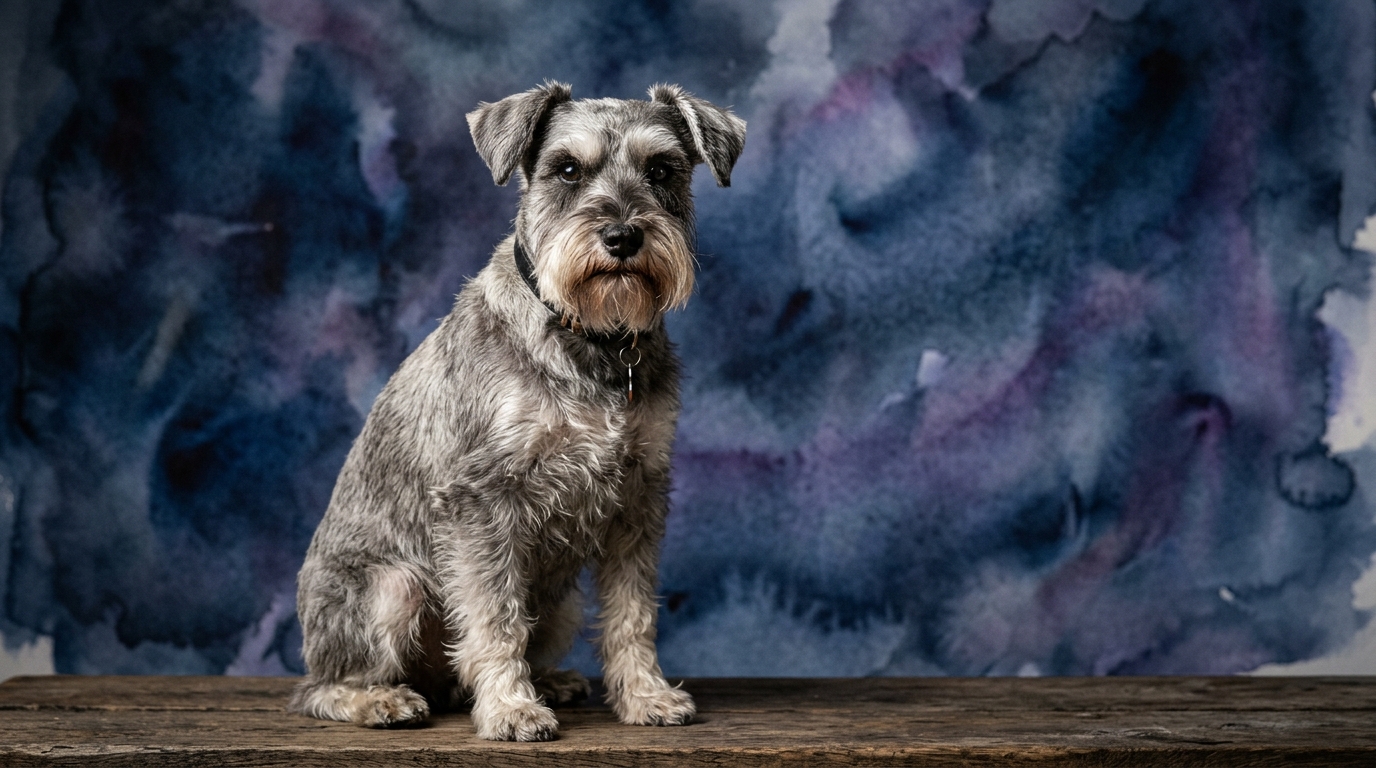
The Miniature Schnauzer presents a robust cognitive profile, as reflected in its Coren ranking of #12, signifying a considerable capacity for understanding new commands with few repetitions. Their problem-solving ability is rated 4/5, indicating a resourceful nature capable of figuring out complex tasks and navigating novel situations effectively. With a training speed of 5/5, these dogs are remarkably quick learners, often grasping new commands and behaviors with minimal instruction. Social intelligence, rated 4/5, highlights their adeptness at reading human cues and adapting to various social environments, making them responsive companions. Their instinctive drive, also 4/5, suggests a strong, alert nature, typical of a terrier, with a keen awareness of their surroundings and a persistent work ethic. Finally, a memory score of 4/5 means they retain learned information, routines, and recognition of individuals over extended periods, contributing to their reliability as consistent companions.
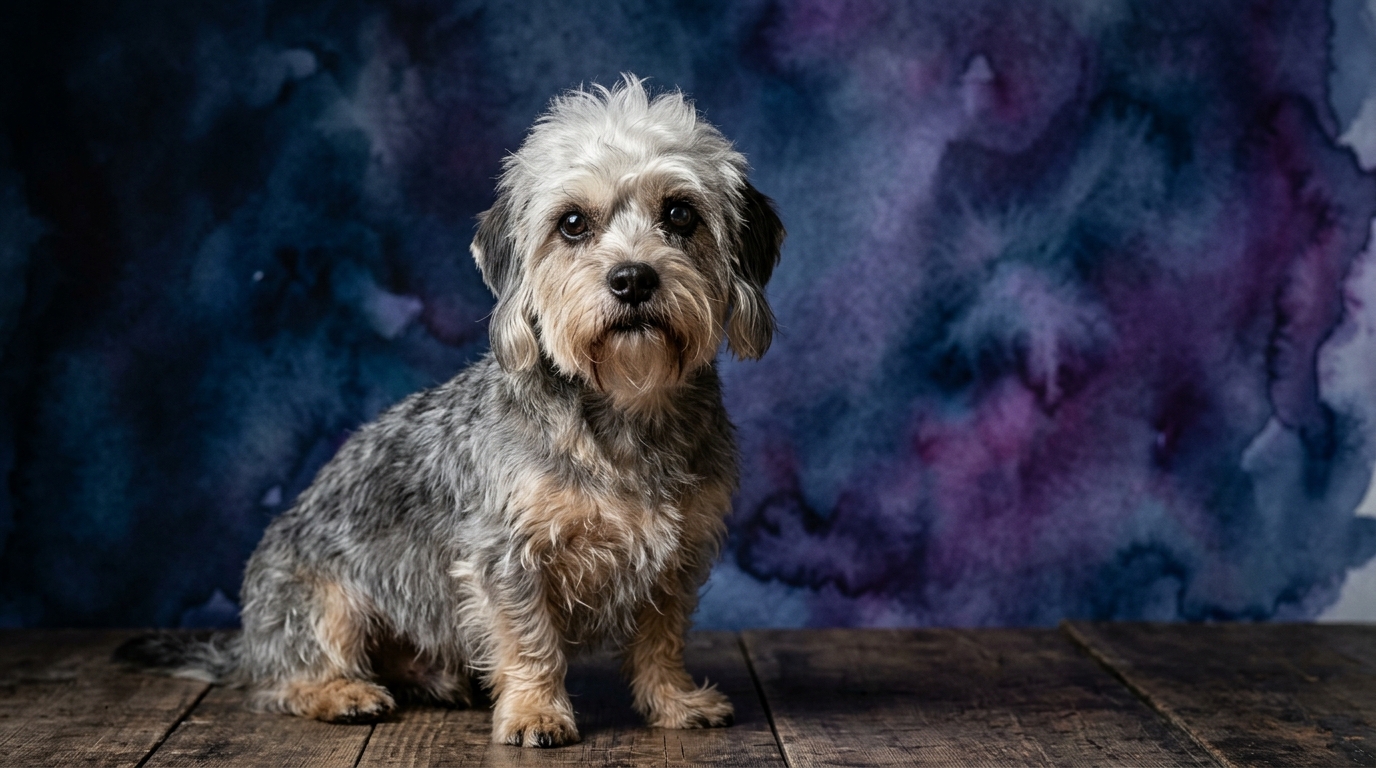
In contrast, the Dandie Dinmont Terrier, while not included in Coren's ranking, exhibits a distinct cognitive pattern. Their problem-solving aptitude is rated 3/5, suggesting they are capable of solving challenges but may approach them with more deliberation or require more explicit guidance compared to their Schnauzer counterparts. A training speed of 3/5 indicates a moderate learning pace, meaning consistency, patience, and engaging methods are key to successful instruction. Their social intelligence, also 3/5, points to a more discerning nature; they typically form deep, selective bonds with their closest family members and may exhibit reserve towards strangers, rather than a broad eagerness to connect. The instinctive drive of 3/5 reflects their heritage as a working terrier, possessing a focused persistence in pursuit, yet perhaps with less overt 'on-alert' intensity than some other terriers. A memory rating of 3/5 implies they retain familiar patterns and commands, though occasional refreshers might be beneficial to reinforce less frequently practiced behaviors.
Where the Miniature Schnauzer Wins Cognitively
The Miniature Schnauzer demonstrates clear cognitive advantages, particularly in areas demanding rapid assimilation and application of knowledge. Their superior training speed (5/5) means they can master a wide array of commands and tricks in significantly fewer repetitions, often showing an eagerness to engage in structured learning sessions. This aptitude extends beyond basic obedience, making them prime candidates for advanced dog sports such as agility, rally, and competitive obedience, where complex sequences and quick responses are paramount. Their problem-solving score of 4/5 empowers them to independently figure out puzzles, navigate challenging environments, or even learn to manipulate objects like latches or treat dispensers with notable efficiency. This breed's combination of quick learning and resourceful thinking allows them to adapt swiftly to new routines, environments, and even different trainers, showcasing a cognitive flexibility that sets them apart.
Where the Dandie Dinmont Terrier Wins Cognitively
While the Dandie Dinmont Terrier's cognitive profile might not emphasize speed, their strengths lie in a different realm of intellectual engagement, reflecting a unique terrier tenacity. Their 3/5 problem-solving ability, rather than indicating a deficit, suggests a methodical and persistent approach. They may not instantly grasp a solution, but they will often apply sustained effort to a task, demonstrating a thoughtful rather than rapid trial-and-error method. This persistence, combined with their 3/5 instinctive drive, translates into an unwavering focus when pursuing a scent or engaging with a task they deem important, making them excellent at activities requiring sustained attention. Furthermore, their social intelligence rating of 3/5 often translates into a profound, discerning loyalty. They form deep, meaningful bonds with their chosen human companions, exhibiting an understanding of their family's nuances that is less about broad social adaptability and more about intense, personal connection. This deep-seated bond, once forged, can be a powerful motivator in training and daily interaction, allowing them to 'win' through dedicated partnership rather than sheer speed.
Which Is Easier to Train and Why
When evaluating ease of training, the Miniature Schnauzer generally presents a more straightforward experience for most owners. Their Coren ranking of #12 places them among breeds that grasp new commands quickly, often with fewer than five repetitions, and obey the first command 95% of the time or better. This is directly supported by their 5/5 training speed and 4/5 social intelligence, meaning they are eager to please, highly responsive to positive reinforcement, and adept at interpreting human instructions and body language. They thrive on mental stimulation and often view training as an engaging game, making them highly motivated participants. In contrast, the Dandie Dinmont Terrier, with a training speed of 3/5 and social intelligence of 3/5, requires a more nuanced approach. These dogs possess an independent spirit characteristic of many terriers, which can sometimes be perceived as stubbornness. They may not be as universally eager to please as the Schnauzer and might need more consistent, patient, and engaging training sessions to maintain their focus. Their discerning social nature means a strong, trusting bond must first be established with the trainer, and once that connection is made, their inherent persistence can be harnessed for effective learning, albeit at a moderate pace. For the Dandie, motivation often comes from within or through a trusted relationship, rather than an inherent drive to perform for any human.
Suitability for Active vs. Relaxed Owners
For owners who lead an active lifestyle and wish to involve their canine companion in varied activities, the Miniature Schnauzer is often an ideal match. Their 4/5 instinctive drive, combined with their 4/5 problem-solving and 5/5 training speed, means they excel in environments offering consistent mental and physical challenges. They thrive on structured exercise, competitive dog sports like agility or obedience, and engaging puzzle toys, making them suitable for owners who enjoy hiking, long walks, or regular training classes. Their cognitive agility means they can keep pace with complex instructions and learn new skills rapidly, providing endless opportunities for shared activities. Conversely, the Dandie Dinmont Terrier, while certainly not a sedentary dog, may be a better fit for owners who appreciate a slightly more relaxed pace and a companion with a distinct personality. Their moderate energy levels, combined with a 3/5 instinctive drive, mean they enjoy daily walks and playtime but might not demand the same intensity or duration of activity as a Schnauzer. Owners who enjoy a consistent routine, are prepared for patient, reward-based training, and appreciate a dog that forms a deep, loyal bond but retains a degree of independent thought, will find the Dandie a charming and fulfilling companion. They are content with moderate engagement and thrive on quality time with their family rather than constant high-octane activity.
The Verdict
Owners seeking a highly trainable, adaptable, and mentally agile companion for diverse activities, from competitive dog sports to quick learning of household routines, will find the Miniature Schnauzer an engaging partner.
Those who appreciate a dog with a thoughtful, persistent nature, a deep, discerning bond, and are prepared for consistent, patient training will cherish the unique charm and steadfast companionship of the Dandie Dinmont Terrier.
🧠 Find Your Pet's IQ Score
Our Pet IQ Lab assessment covers 25+ tests across 5 cognitive dimensions — personalized to your breed.
Take the Full IQ Test →Frequently Asked Questions
Are Miniature Schnauzers good for first-time dog owners?
Yes, their high trainability and social intelligence (4/5) make them a good option for first-time owners who are committed to consistent training and early socialization, as they respond well to guidance.
Do Dandie Dinmont Terriers get along with other pets?
Dandie Dinmont Terriers can coexist with other pets, especially if introduced early and socialized appropriately, but their instinctive drive (3/5) means supervision with smaller, prey-like animals is always prudent.
How much exercise does a Miniature Schnauzer need compared to a Dandie Dinmont Terrier?
Miniature Schnauzers generally require more structured exercise and mental engagement due to their higher energy and cognitive drive (4/5 instinctive drive), while Dandie Dinmont Terriers are content with moderate daily walks and playtime, valuing quality interaction over sheer intensity.