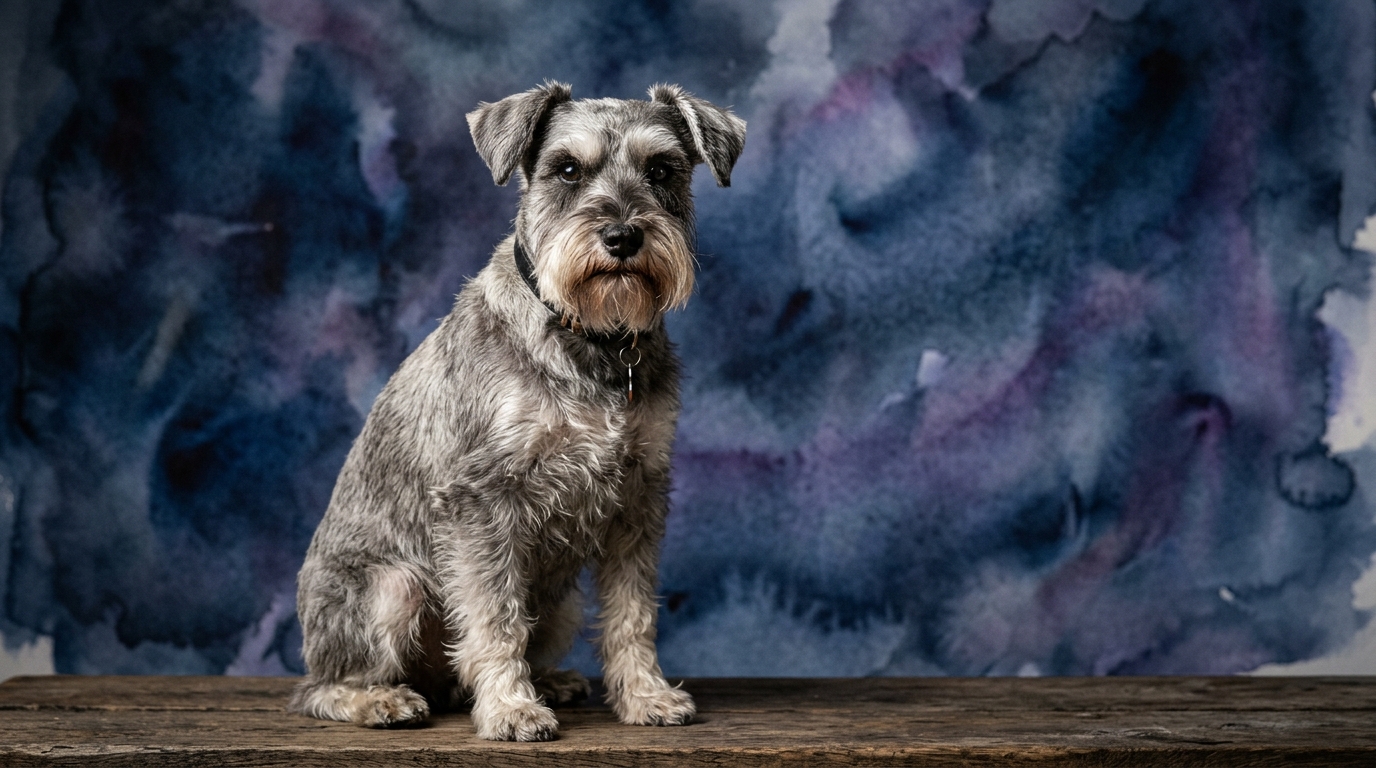
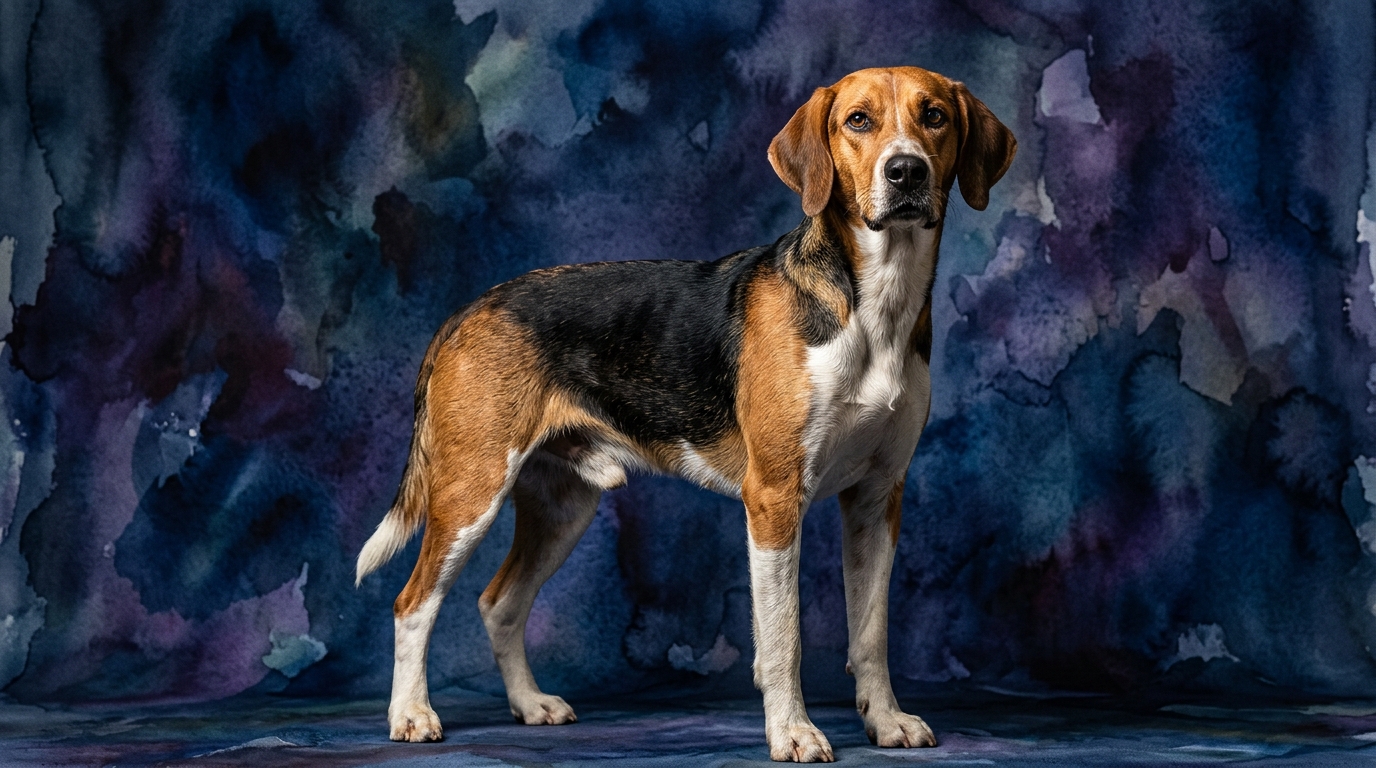
Side-by-Side IQ Profile: Schnauzer vs. Foxhound
The Cosmic Pet Pet IQ Lab provides a nuanced view of canine intelligence across five critical dimensions. For the Miniature Schnauzer, we observe a Coren rank of #12, indicating a high capacity for working and obedience intelligence, complemented by strong scores across our metrics: Problem Solving 4/5, Training Speed 5/5, Social Intelligence 4/5, Instinctive Drive 4/5, and Memory 4/5. This profile suggests a well-rounded, adaptive intellect.
In contrast, the English Foxhound, not Coren-ranked, presents a more specialized cognitive makeup, with consistent scores of 3/5 across all five dimensions: Problem Solving 3/5, Training Speed 3/5, Social Intelligence 3/5, Instinctive Drive 3/5, and Memory 3/5. This does not imply a lack of intelligence, but rather a different prioritization of cognitive functions, deeply rooted in its heritage as a working scent hound.
When assessing Problem Solving, the Miniature Schnauzer (4/5) displays a notable capacity for independent thought, often finding creative solutions to access desired items or manipulate objects. Their terrier heritage, requiring quick thinking to outsmart vermin, contributes to this adaptive problem-solving skill. The English Foxhound (3/5), while capable of solving problems related to its primary drive, such as persistent tracking through varied terrain, often exhibits problem-solving that is less about abstract manipulation and more about direct, instinct-driven persistence.
Training Speed is a significant differentiator. The Miniature Schnauzer (5/5) is exceptionally quick to learn, often picking up new commands after only a few repetitions. Their eagerness to please, combined with their focus, makes them highly receptive to instruction. Training a Foxhound (3/5) requires more patience and consistency; their inherent independence and powerful scent drive mean they often prioritize environmental stimuli over human directives, making new commands take more repetitions to solidify.
Regarding Social Intelligence, the Miniature Schnauzer (4/5) exhibits strong social acumen, often tuning into their owner's mood and responding with appropriate comfort or playfulness. They are adept at interpreting human body language and vocal tones, fostering a deep bond. The English Foxhound (3/5) possesses a functional social intelligence, particularly within a pack dynamic; while affectionate with their families, their social cues might be less nuanced or expressive than the Schnauzer's, often showing loyalty through presence rather than intricate emotional responses.
Instinctive Drive is central to understanding both breeds. The Miniature Schnauzer (4/5) retains a robust terrier drive, including a strong prey drive for small animals and an alert nature that makes them excellent watchdogs. This instinct translates into a keen awareness of their surroundings. The English Foxhound's (3/5) instinctive drive is profoundly centered on scent detection and pursuit; bred for endurance over long distances, their drive is less about a quick chase and more about persistent, unwavering tracking, often to the exclusion of other stimuli.
Finally, Memory also shows a contrast. The Miniature Schnauzer (4/5) demonstrates excellent memory, retaining commands, routines, and the locations of favored toys or treats with ease. This strong recall contributes to their quick training speed and adaptability. The English Foxhound (3/5) possesses a functional memory, particularly for scent trails and established routines within their hunting context; they remember their pack members and the layout of familiar territories, but their memory for arbitrary human commands might appear less robust when competing with a fresh scent.
Where the Miniature Schnauzer Wins Cognitively
The Miniature Schnauzer's cognitive profile consistently outpaces the English Foxhound in several key areas, largely due to its breed purpose as a versatile companion and working terrier. Their 4/5 score in Problem Solving means they are adept at independently navigating complex household situations, such as figuring out how to open a cabinet to retrieve a hidden treat or manipulating puzzle toys with impressive dexterity. This contrasts with the Foxhound's more task-specific problem-solving. Furthermore, their 5/5 Training Speed is a clear advantage; Schnauzers absorb new commands and routines with remarkable rapidity, often requiring fewer repetitions to achieve mastery. Owners can teach them a wide array of tricks, advanced obedience cues, or even agility courses, seeing quick and enthusiastic responses. The Schnauzer's 4/5 Social Intelligence also stands out, allowing them to form deep, nuanced bonds with their human companions. They are often highly attuned to subtle shifts in owner mood or body language, offering comfort or initiating play at just the right moment. This emotional responsiveness creates a highly interactive and empathetic relationship, a quality less pronounced in the more independent Foxhound. Finally, their 4/5 Memory ensures they retain learned behaviors and social cues over time, making for a consistently well-mannered and predictable companion once training is established.
Where the English Foxhound's Unique Cognition Shines
While the English Foxhound might not score as high in general adaptability or quick obedience, its unique cognitive strengths are profoundly tied to its specialized purpose as a scent hound. Its 3/5 Instinctive Drive, while numerically lower than the Schnauzer's, represents an unparalleled focus and endurance in scent tracking. This breed doesn't 'win' in broad cognitive versatility, but rather in the unwavering application of its primary instinct. A Foxhound's cognitive success lies in its ability to tirelessly follow a scent trail for miles, overriding distractions and physical discomfort with singular determination. Their problem-solving (3/5) in this context is about persistent navigation through varied and challenging terrain, using their olfactory senses to 'solve' the puzzle of a lost trail. This specialized form of intelligence means they excel in activities like competitive tracking or prolonged outdoor exploration, where their nose is the primary tool. Their memory (3/5) is particularly strong for scent patterns and the geography of a hunt, allowing them to remember where a trail was picked up or the layout of familiar hunting grounds. In essence, the English Foxhound's cognitive strengths are not about pleasing a human with tricks, but about executing a centuries-old, complex hunting task with remarkable dedication and physiological adaptation.
Training Dynamics: Which is Easier and Why
Without a doubt, the Miniature Schnauzer is considerably easier to train than the English Foxhound, a difference starkly reflected in their Training Speed scores of 5/5 versus 3/5. The Schnauzer's inherent eagerness to engage with its owner, coupled with its sharp focus and ability to quickly grasp new concepts, makes it a highly responsive student. They thrive on positive reinforcement and mental stimulation, often viewing training sessions as an enjoyable game. Their 4/5 Social Intelligence means they are keen observers of human cues, making it simpler for them to interpret what is being asked of them. In contrast, the English Foxhound's training journey is often more demanding due to its profound independent nature and overpowering instinctive drive. When a captivating scent is present, the Foxhound's brain is singularly focused on that olfactory stimulus, often rendering human commands irrelevant in that moment. Their 3/5 Training Speed indicates that while they can learn, it requires immense patience, consistent motivation, and a deep understanding of their hound mentality. Leash training can be a challenge due to their pulling urge when a scent is detected, and off-leash reliability is often a lifelong endeavor, requiring secure environments and dedicated training to overcome their innate desire to follow their nose.
Lifestyle Compatibility: Active vs. Relaxed Owners
When considering lifestyle compatibility, the Miniature Schnauzer offers greater versatility, making it suitable for a broader range of owners, including those with moderately active or even somewhat relaxed routines, provided mental stimulation is met. Their adaptable nature and moderate exercise needs mean they can thrive in various living situations, enjoying brisk walks, interactive play, and puzzle toys. Owners who enjoy teaching tricks, participating in dog sports like agility or rally, or simply engaging in frequent, varied play sessions will find the Schnauzer a willing and capable partner. While they appreciate activity, they are also content to settle down indoors, especially after their physical and mental needs have been addressed. The English Foxhound, however, is unequivocally suited for highly active owners. Their immense stamina and powerful instinctive drive (3/5) demand extensive physical exercise daily, often requiring long runs, hikes, or dedicated scent work to keep them content. A relaxed or sedentary owner would find a Foxhound a challenging companion, as insufficient outlets for their energy and nose can lead to boredom, destructive behaviors, or persistent vocalizations. They are ideal for individuals or families who embrace an outdoor, active lifestyle and are prepared to integrate their dog into rigorous physical activities, ideally those that engage their superior olfactory senses.
The Verdict
Choose the Miniature Schnauzer if you desire a highly trainable, socially intelligent companion eager to learn and participate in varied activities, adaptable to a range of home environments and owner lifestyles.
Opt for the English Foxhound if you are an exceptionally active owner seeking a dog with unparalleled stamina and a specialized drive for scent work, prepared to provide extensive outdoor exercise and consistent, patient training tailored to their independent nature.
🧠 Find Your Pet's IQ Score
Our Pet IQ Lab assessment covers 25+ tests across 5 cognitive dimensions — personalized to your breed.
Take the Full IQ Test →Frequently Asked Questions
Can an English Foxhound be a good family pet despite its lower training speed?
Yes, English Foxhounds can be loving family pets, but their independent nature and high exercise needs mean they thrive best with experienced, active owners. They are generally good with children and other dogs, especially if raised with them, but require consistent training and management of their strong scent drive.
Do Miniature Schnauzers require a lot of grooming due to their coat type?
Miniature Schnauzers have a dense, wiry double coat that requires regular grooming to prevent matting and maintain skin health. This typically involves brushing several times a week, professional grooming every 5-8 weeks for clipping or hand-stripping, and occasional bathing, especially if they are frequently outdoors.
Is the Coren rank a definitive measure of a dog's overall intelligence?
Coren's ranking primarily assesses 'working and obedience intelligence,' focusing on trainability and understanding human commands. While useful, it doesn't fully encompass all aspects of canine cognition, such as specialized instinctive drives, problem-solving in natural environments, or social-emotional intelligence, which the Pet IQ Lab metrics aim to capture more broadly.