Side-by-Side IQ Profile
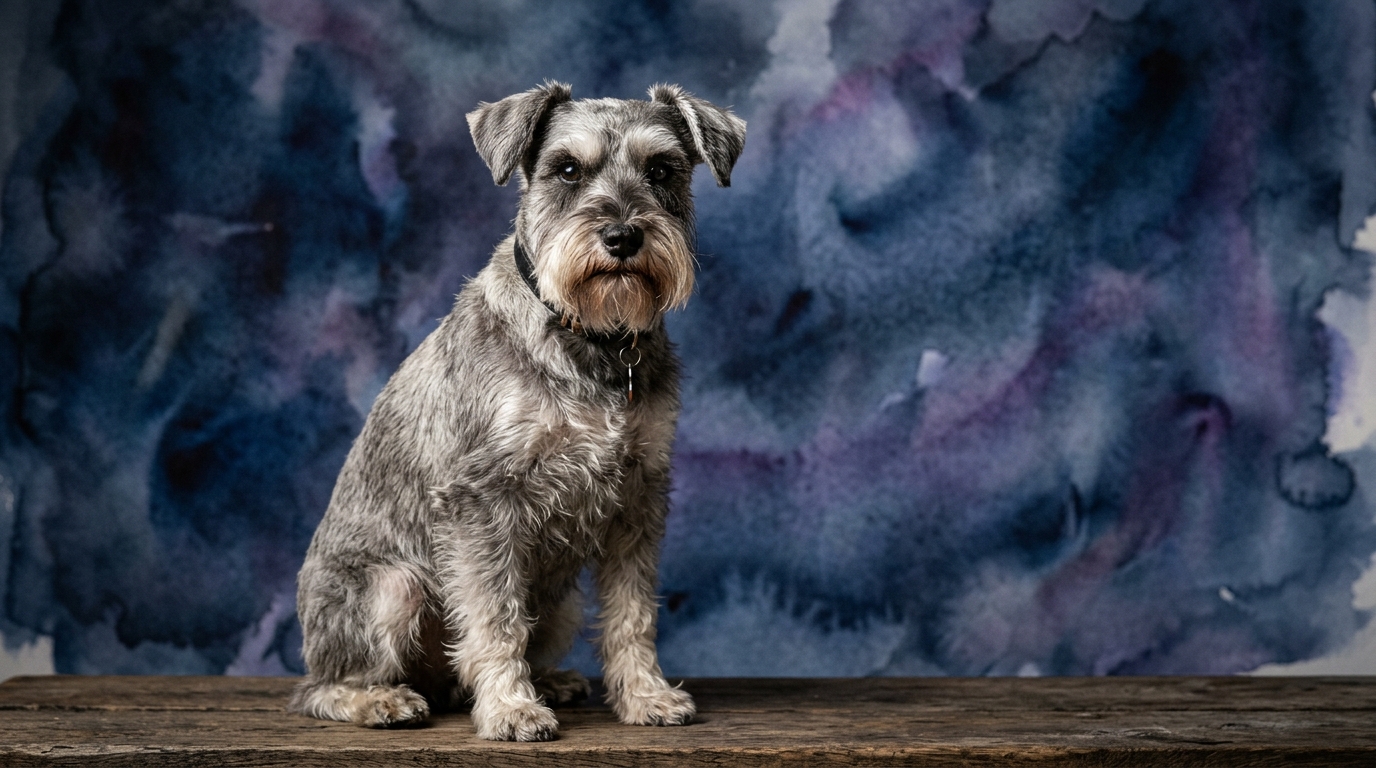
The Cosmic Pet Pet IQ Lab data reveals distinct cognitive landscapes for these two breeds. The Miniature Schnauzer, acknowledged by Stanley Coren as #12 among breeds, presents a robust cognitive profile. Its Problem Solving at 4/5 suggests an aptitude for navigating complex situations and devising solutions, whether it's figuring out a puzzle toy or circumventing a barrier to reach a desired object. Training Speed, rated 5/5, indicates an exceptional capacity for rapid learning and retaining new commands or routines, often picking up new cues after very few repetitions. Social Intelligence, also at 4/5, points to a nuanced understanding of human cues, emotions, and social structures, making them highly attuned companions. An Instinctive Drive of 4/5 reflects a strong, focused motivation, often manifesting in their terrier instincts for chasing or guarding, but also in a persistent approach to tasks. Finally, their Memory at 4/5 ensures that learned behaviors, positive or negative associations, and spatial layouts are retained effectively over time. This combination paints a picture of a quick-witted, highly adaptable canine.
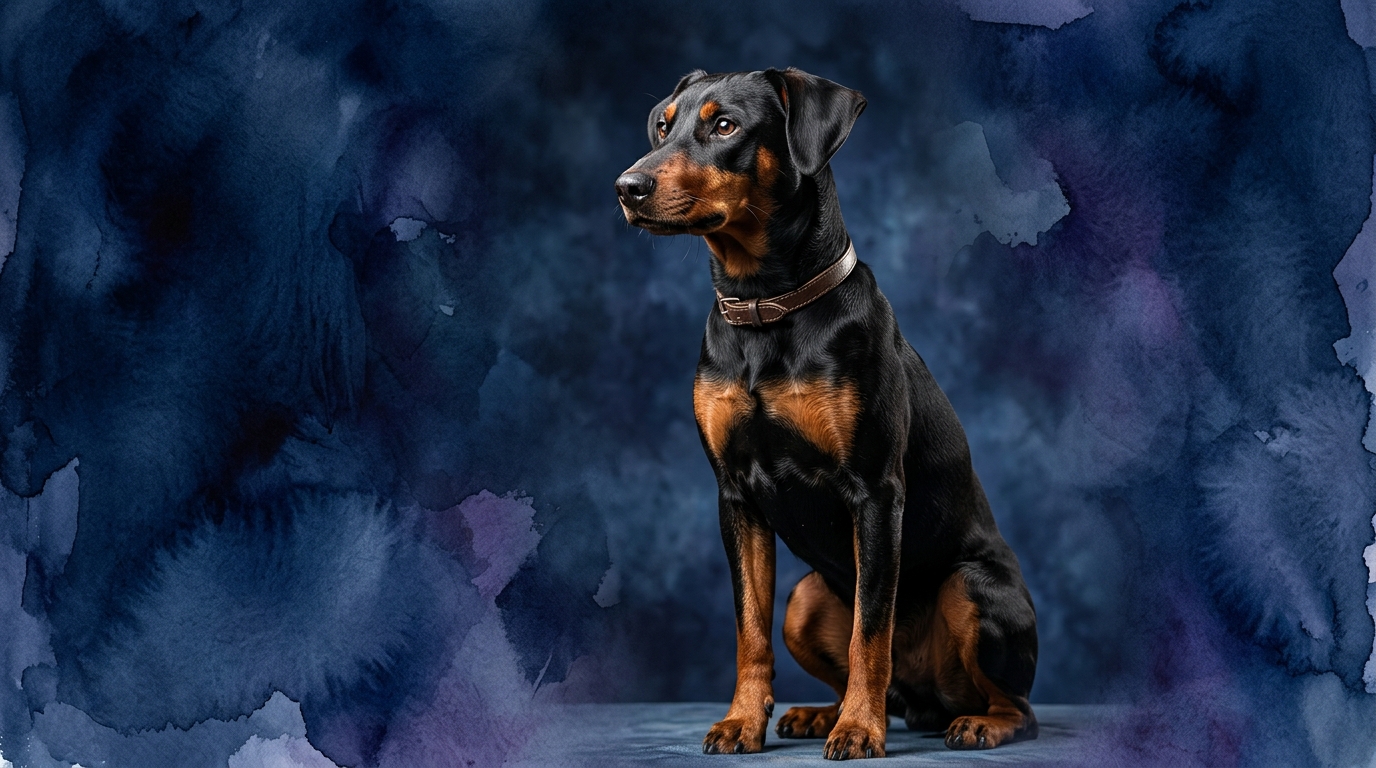
The German Pinscher, while not featured in Coren's rankings, possesses a balanced and competent cognitive makeup, with all five dimensions rated at 3/5. Its Problem Solving score of 3/5 means it is capable of tackling moderate challenges and learning through experience, though it might require more time or guided repetition than its Schnauzer counterpart to master complex sequences. Training Speed at 3/5 suggests a steady learning pace; they absorb information reliably, but perhaps not with the instantaneous grasp seen in the highest-ranked breeds. Social Intelligence at 3/5 indicates a solid ability to interpret human interactions and integrate into family dynamics, forming strong bonds, though they might be less overtly demonstrative in their understanding. An Instinctive Drive of 3/5 implies a moderate level of inherent motivation, allowing them to engage in activities like scent work or guarding without becoming overly obsessive, maintaining a practical focus. Their Memory, also 3/5, ensures they remember commands and routines, albeit potentially needing periodic refreshers for less frequently practiced skills. This profile describes a capable, self-possessed, and consistent learner.
Where Miniature Schnauzer Wins Cognitively
The Miniature Schnauzer clearly outperforms the German Pinscher across all five cognitive dimensions, making its advantages quite broad. Its 5/5 Training Speed is a standout, enabling it to grasp new commands and complex sequences with remarkable alacrity. This means an owner can introduce novel tricks, advanced obedience exercises, or even agility courses, and expect a faster acquisition of skills compared to the Pinscher. For instance, teaching a multi-step retrieve or a “find it” game with specific objects would likely see the Schnauzer connecting the dots much quicker. The Schnauzer's higher 4/5 Problem Solving also gives it an edge in independent thought and adaptability; confronted with a novel situation, such as a gate that requires a specific lever action, the Schnauzer is more prone to experiment and deduce the solution without direct human intervention. Its higher Social Intelligence (4/5) also means it is often more attuned to subtle human emotional shifts and vocal inflections, potentially making it a more responsive and emotionally intuitive companion, picking up on a handler's frustration or excitement more readily. This breed's robust Memory (4/5) ensures that once a lesson is learned, it is deeply ingrained, requiring less frequent reinforcement to maintain proficiency, a distinct advantage in long-term skill retention.
Where German Pinscher Wins Cognitively
While the German Pinscher's cognitive scores of 3/5 across the board might seem modest when directly compared to the Schnauzer's higher ratings, it's crucial to understand what a balanced 3/5 profile offers. A German Pinscher's 3/5 Instinctive Drive suggests a more measured and less intensely focused internal motivation compared to the Schnauzer's 4/5. This can translate into a dog that is less prone to the obsessive tendencies sometimes seen in breeds with higher drives, making them potentially easier to redirect from undesirable ingrained behaviors like excessive digging or persistent chasing. Their balanced cognitive profile also implies a consistent and predictable learning curve; while they may not pick up new skills at lightning speed (Training Speed 3/5), what they learn, they learn thoroughly and reliably, fostering a solid foundation without the potential for overthinking or becoming easily bored by repetition that higher-scoring breeds might exhibit. The 3/5 Problem Solving means they are capable of practical reasoning and can apply learned solutions to familiar challenges, without necessarily seeking out novel problems to solve, which can be a relief for owners not seeking a dog constantly testing boundaries. This breed often exhibits a self-possessed independence, which, while sometimes interpreted as stubbornness, can also mean they are less prone to separation anxiety, capable of entertaining themselves, and less reliant on constant human direction once a task is understood. Their balanced Social Intelligence (3/5) means they are affectionate and loyal, yet often possess a dignified reserve, making them excellent companions for those who appreciate a dog with a strong, independent character that isn't overly demanding of attention.
Which is Easier to Train and Why
Based on The Cosmic Pet Pet IQ Lab data, the Miniature Schnauzer is demonstrably easier to train, primarily due to its exceptional Training Speed rating of 5/5 compared to the German Pinscher's 3/5. This significant difference means a Miniature Schnauzer will typically form associations between commands and actions much faster, often requiring fewer repetitions to solidify a new behavior. For example, teaching a “stay” command might take a Schnauzer only a handful of sessions to master, while a German Pinscher might need consistent, patient practice over several weeks. The Schnauzer's higher Social Intelligence (4/5) also contributes to its trainability; it's more adept at reading human body language and vocal cues, making communication during training more fluid and responsive. They often exhibit a strong desire to please, which further motivates them to learn and comply. In contrast, the German Pinscher's 3/5 Training Speed means owners should anticipate a more deliberate learning process. While they are certainly capable of learning a wide array of commands, their independent nature, stemming from a balanced Instinctive Drive (3/5), means they might require more compelling motivation and consistent reinforcement. They are not necessarily “stubborn,” but rather less inclined to comply simply for the sake of pleasing, often needing to understand the “why” or benefit of a command. This translates into a training approach that demands more patience, clarity, and perhaps a wider variety of positive reinforcement techniques to maintain their engagement and ensure long-term retention.
Which Suits Active Owners vs Relaxed Owners
Both the Miniature Schnauzer and the German Pinscher are active breeds, but their cognitive profiles suggest slightly different demands that align with owner lifestyles. The Miniature Schnauzer, with its 4/5 Instinctive Drive and 4/5 Problem Solving, thrives with owners who can provide consistent mental stimulation in addition to physical exercise. These dogs enjoy engaging in activities like agility, obedience trials, puzzle toys, and learning new tricks that challenge their quick minds. An active owner for a Schnauzer is one who not only enjoys daily walks and playtime but also dedicates time to structured training sessions, brain games, or even canine sports. A relaxed owner might find a Schnauzer's unmet cognitive needs manifesting as boredom-driven behaviors like excessive barking or finding their own “problems” to solve, like counter-surfing. The German Pinscher, with its balanced 3/5 scores across all dimensions, also requires regular physical activity, but its needs are perhaps more straightforward. An active owner for a Pinscher enjoys brisk walks, running, or hiking, providing ample opportunity for the dog to burn energy. While they benefit from mental engagement, their 3/5 Problem Solving and Instinctive Drive mean they might be perfectly content with consistent physical activity and moderate training rather than constantly seeking novel intellectual challenges. A more relaxed owner, provided they can still commit to daily robust exercise, might find the Pinscher's independent streak and less intense cognitive demands a better fit, as they are often content to relax after their exercise needs are met, without constantly demanding complex mental tasks.
The Verdict
Opt for the Miniature Schnauzer if you desire a highly responsive, quick-learning companion eager for complex training and mental challenges, thriving on close cognitive engagement with its owner.
Select the German Pinscher if you appreciate a self-possessed, reliably capable dog with a balanced drive, valuing consistent physical activity and a steady, independent learning pace.
🧠 Find Your Pet's IQ Score
Our Pet IQ Lab assessment covers 25+ tests across 5 cognitive dimensions — personalized to your breed.
Take the Full IQ Test →Frequently Asked Questions
Are Miniature Schnauzers good for first-time owners?
Yes, their high trainability and social intelligence often make them suitable for novice owners, provided they are committed to consistent training and mental stimulation. Their eagerness to learn can simplify the training process significantly.
Do German Pinschers need a lot of exercise?
Absolutely. German Pinschers are energetic dogs requiring significant daily physical activity, such as long walks, runs, or vigorous play sessions. While their cognitive demands are balanced, their physical stamina is substantial.
How do these breeds compare in terms of shedding?
Miniature Schnauzers have a harsh, wiry coat that sheds minimally and requires regular grooming, including stripping or clipping. German Pinschers have a short, smooth coat that sheds moderately year-round and requires less intensive grooming.