Side-by-Side Cognitive Profiles: Schnauzer vs. Harrier
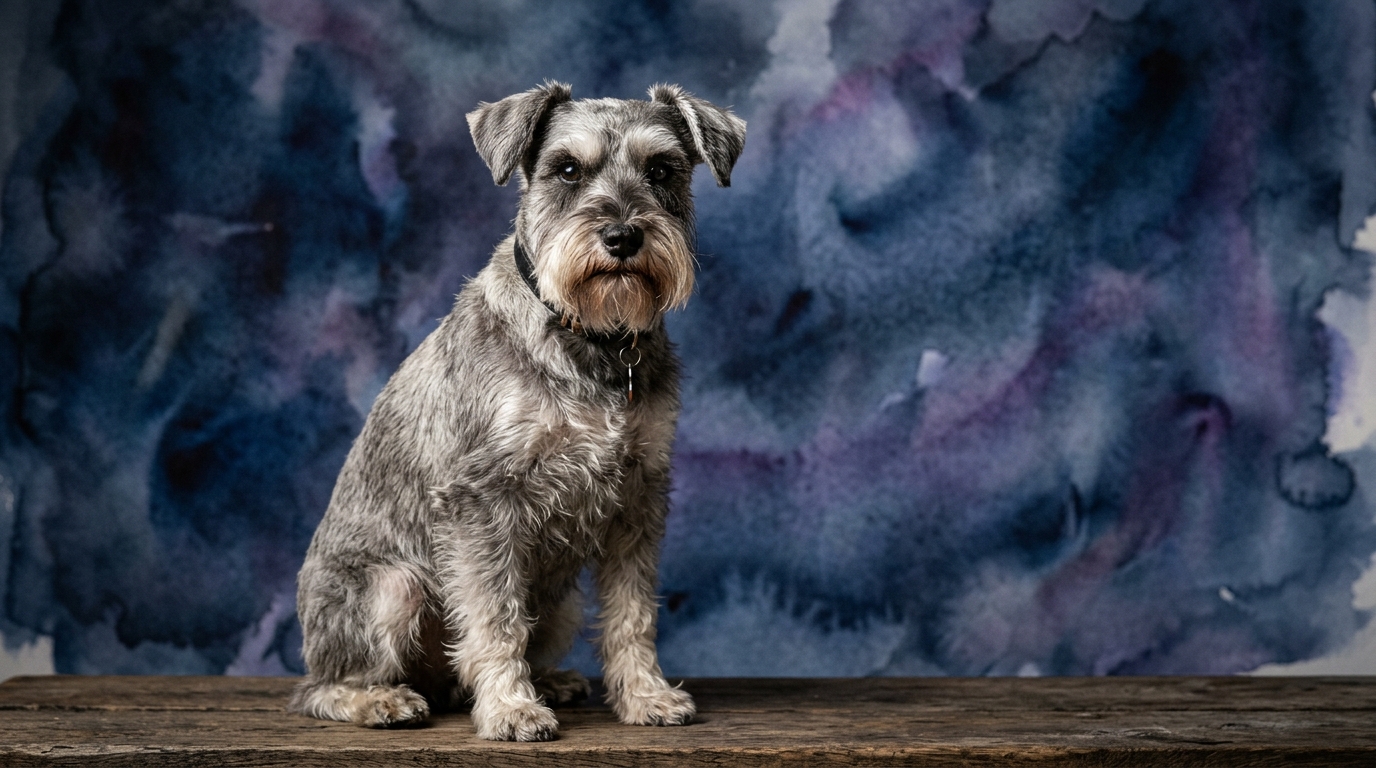
At The Cosmic Pet Pet IQ Lab, we assess canine intelligence across five key dimensions, offering a nuanced view beyond simple obedience. The Miniature Schnauzer, a Terrier group member, registers a Coren rank of #12, placing it among breeds that demonstrate a swift grasp of new commands and a strong working memory. Its individual IQ scores are notable: Problem Solving 4/5, Training Speed 5/5, Social Intelligence 4/5, Instinctive Drive 4/5, and Memory 4/5. This profile paints a picture of a mentally agile and engaged companion, capable of complex thought and quick learning.
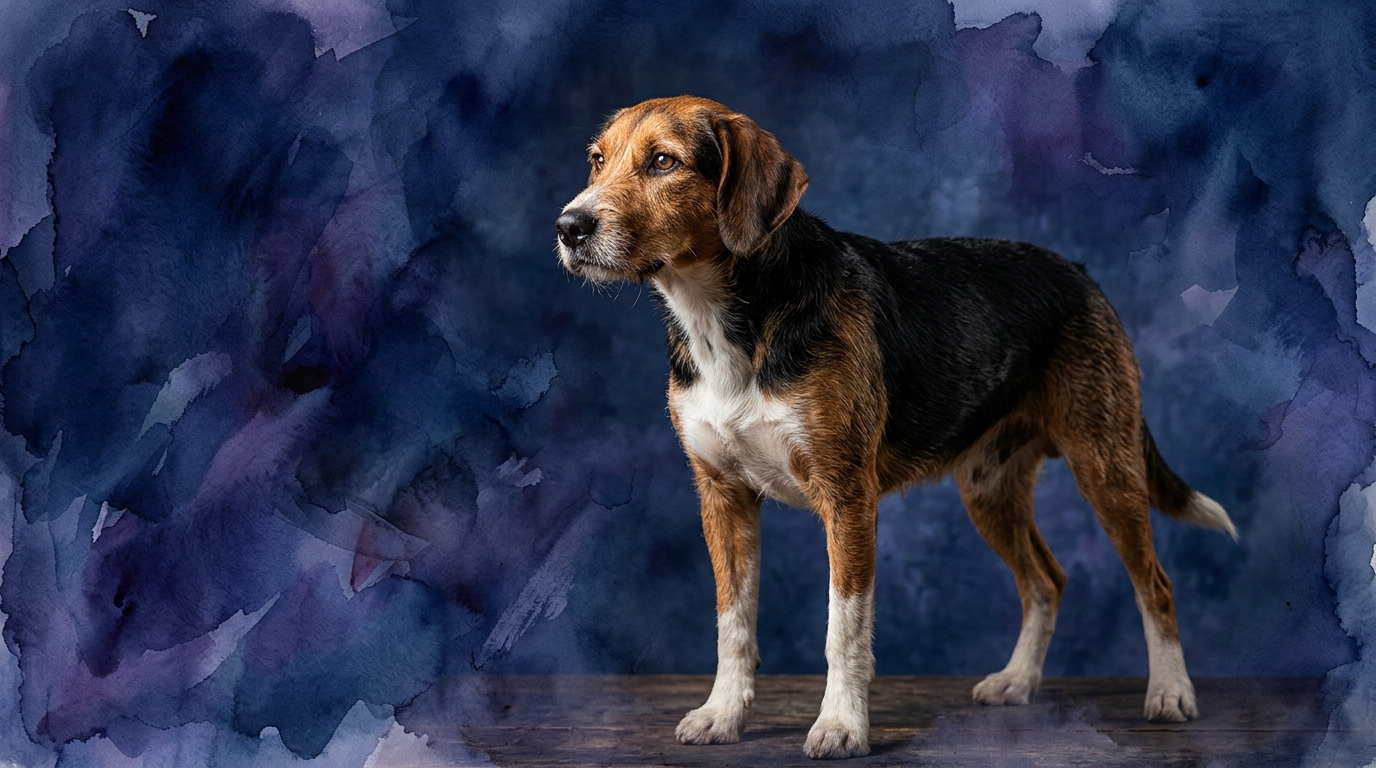
In stark contrast, the Harrier, a member of the Hound group, does not appear on the standard Coren ranking, often due to their specialized working intelligence which doesn't always translate to traditional obedience measures. Its Pet IQ Lab scores reflect a different set of strengths: Problem Solving 3/5, Training Speed 3/5, Social Intelligence 3/5, Instinctive Drive 3/5, and Memory 3/5. These scores suggest a more independent and instinct-driven cognitive style, where problem-solving and memory are often channeled into tasks directly related to their ancestral purpose rather than abstract challenges or rapid compliance with human directives.
Where the Miniature Schnauzer Shines Cognitively
The Miniature Schnauzer consistently demonstrates a cognitive edge in areas demanding adaptability and quick learning. Its Problem Solving score of 4/5 means these dogs are often adept at navigating novel situations, figuring out how to retrieve a toy from under furniture, or even manipulating latches. This is not just about physical dexterity; it's about a cognitive process of assessing a situation and devising a solution. Their high Training Speed (5/5) is a direct reflection of their attentiveness and willingness to engage with human instruction, making them remarkably receptive to learning new commands and routines with minimal repetition. Owners frequently report that Schnauzers seem to 'understand' what is asked of them almost immediately, often anticipating cues.
Furthermore, the Miniature Schnauzer's Social Intelligence (4/5) allows for a deep connection with their human family. They are perceptive to emotional nuances, often mirroring their owner's mood or offering comfort when sensing distress. This translates into a companion who not only follows commands but also understands the social context of their actions. Their strong Memory (4/5) reinforces both training and social interactions; they recall specific commands, past experiences, and the routines of their household with precision, contributing to their reputation as dependable and consistent companions in a home setting. This blend of attributes makes them particularly adept at a variety of dog sports and activities that require both mental and physical engagement.
Where the Harrier's Cognitive Strengths Lie
The Harrier's cognitive profile, while different from the Schnauzer's, reveals distinct strengths rooted in its hound heritage. Their Problem Solving score of 3/5, while lower, is highly specialized. Harriers excel at solving problems related to scent tracking and pursuit. Given a complex trail, a Harrier's ability to follow it, disregard distractions, and locate the source is a testament to a specific, highly developed form of intelligence. This isn't about opening a puzzle toy; it's about navigating intricate environmental data to achieve a specific, instinctual goal. Their instinctive drive (3/5) is less about general 'work' and more about the singular pursuit of a scent, a deep-seated cognitive program that overrides many other stimuli.
While their Training Speed and Social Intelligence scores are 3/5, this doesn't imply a lack of capacity, but rather a different motivational framework. Harriers are pack animals, and their social intelligence is geared towards cooperation within a hunting group, which can translate to a human family pack, but often with a more independent streak. They form strong bonds, but their focus can be redirected by a compelling scent. Their Memory (3/5) is strong for routines and locations, especially those associated with outdoor exploration and their hunting instincts. They remember trails and areas of interest, demonstrating a spatial and olfactory memory that is integral to their breed function, even if they might require more repetition for arbitrary commands.
Ease of Training: A Tale of Two Temperaments
When it comes to ease of training, the Miniature Schnauzer generally presents a more straightforward experience for owners due to its superior Training Speed (5/5) and strong Social Intelligence (4/5). These dogs exhibit a keen desire to please their human companions and quickly grasp new concepts, often requiring fewer repetitions to solidify a command. Their high Memory (4/5) ensures that once a command is learned, it is retained effectively, making subsequent training sessions build upon a solid foundation. Behavioral differences such as their focused attention and eagerness to participate in interactive tasks contribute significantly to their trainability, making them excellent candidates for obedience, agility, and other structured activities where a quick response is valued.
The Harrier, with a Training Speed of 3/5 and Social Intelligence of 3/5, presents a different training dynamic. Their independent hound nature, coupled with a powerful instinctive drive (3/5) for scent work, means they can be more challenging to motivate and keep focused on human-directed tasks. A Harrier's nose often takes precedence over verbal commands, requiring immense patience, consistent positive reinforcement, and high-value rewards to maintain their attention. While they are certainly trainable, their learning process is typically slower and requires more dedication from the owner, as their strong-willed temperament and propensity to follow a captivating scent can make off-leash reliability a significant undertaking. Their cognitive strengths are geared towards sustained, independent pursuit rather than immediate compliance.
Matching Canine Cognition to Lifestyle: Active vs. Relaxed Owners
The Miniature Schnauzer's cognitive profile makes it an ideal companion for owners who enjoy an active, engaged lifestyle and appreciate a dog that thrives on interaction and mental stimulation. With high scores in Problem Solving, Training Speed, and Social Intelligence, Schnauzers require consistent mental exercise beyond just physical walks. Owners who enjoy teaching tricks, participating in dog sports like agility or obedience, or even engaging in daily puzzle toy challenges will find the Miniature Schnauzer a highly responsive and gratifying partner. Their strong instinctive drive and memory mean they benefit from having a 'job' or regular activities that tap into their terrier tenacity, making them less suitable for individuals seeking a purely ornamental or low-engagement pet.
Conversely, the Harrier's cognitive and physical needs lean towards owners with a robust, outdoor-oriented lifestyle, even if their definition of 'activity' is different. While their Problem Solving, Training Speed, and Social Intelligence scores are moderate, their powerful instinctive drive for scent work demands significant opportunities for exploration and physical exertion. Owners who love long hikes, scent-tracking games, or have access to secure areas where a dog can safely follow its nose will find a Harrier's unique cognitive strengths shine. They are less suited for owners seeking a dog that will be content with minimal outdoor time or who desire a pet that is constantly seeking human interaction; the Harrier's independent spirit and deep connection to its olfactory world mean it can be quite content pursuing its own interests, making it a good fit for owners who appreciate a companion with a strong sense of self and an affinity for the natural world, provided their physical and scenting needs are met consistently.
The Verdict
Choose the Miniature Schnauzer if you desire a highly trainable, interactive companion that thrives on mental engagement, varied activities, and forms a deep, perceptive bond with its human family.
Opt for the Harrier if you are an active, outdoorsy owner who appreciates an independent, scent-driven partner for long explorations and can provide consistent outlets for its powerful ancestral instincts.
🧠 Find Your Pet's IQ Score
Our Pet IQ Lab assessment covers 25+ tests across 5 cognitive dimensions — personalized to your breed.
Take the Full IQ Test →Frequently Asked Questions
How does a Miniature Schnauzer's high memory score affect daily life?
A Miniature Schnauzer's memory (4/5) means they retain learned commands and household routines effectively, contributing to their consistency and reliability. They remember past interactions and training sessions, making them dependable companions who rarely forget what they've learned.
Can a Harrier be a good family pet despite its independent nature?
Yes, a Harrier can be an excellent family pet, as their social intelligence (3/5) allows them to bond with their pack, including children and other pets. Their independence means they might not be as constantly demanding of attention, but they are generally affectionate and enjoy being part of the family unit, especially if their exercise needs are consistently met.
Do Miniature Schnauzers require a lot of mental stimulation?
Absolutely. With a problem-solving score of 4/5 and high memory, Miniature Schnauzers thrive on mental challenges. Puzzle toys, regular training sessions, and varied environments keep their minds engaged, preventing boredom-related behaviors and fostering a well-adjusted temperament.