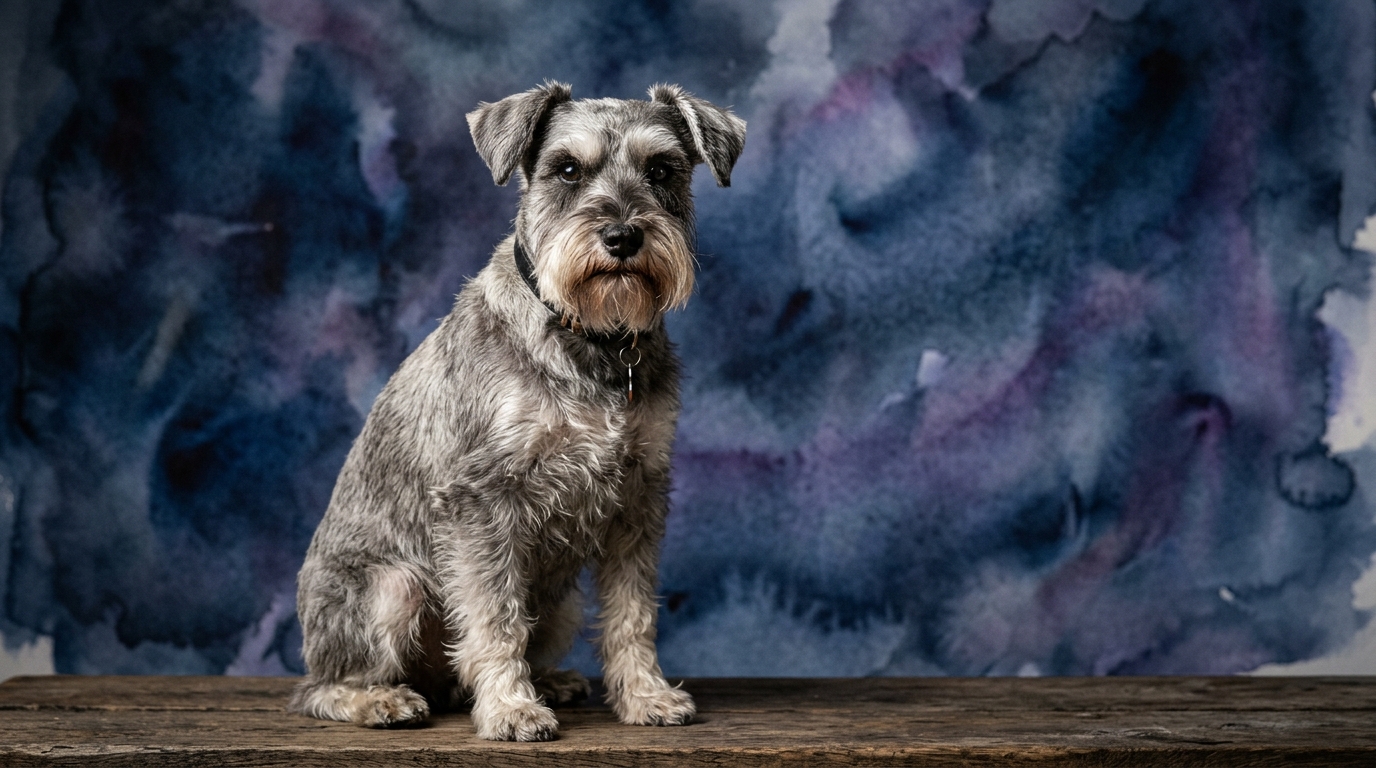
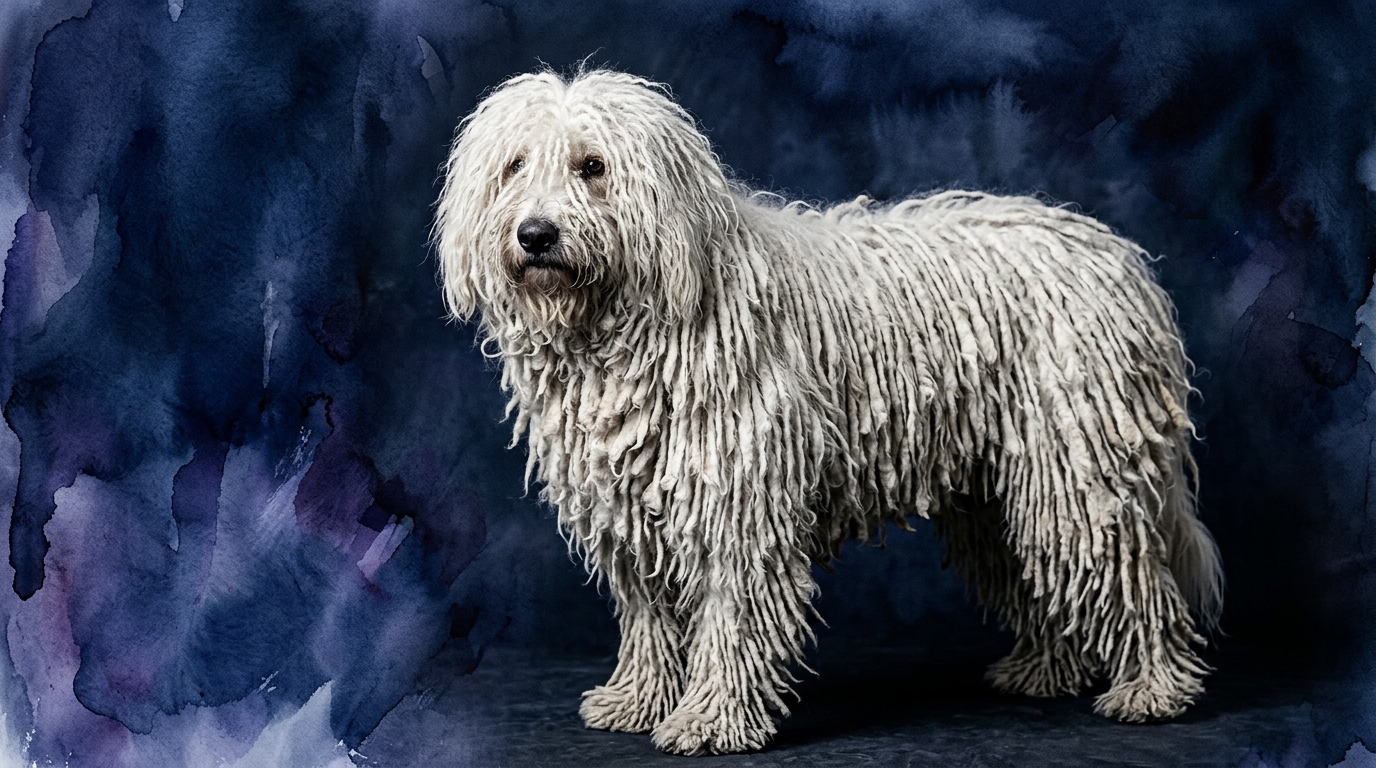
Side-by-Side IQ Profile: Miniature Schnauzer vs. Komondor
The Cosmic Pet Pet IQ Lab employs five dimensions to map canine cognition, offering a nuanced view beyond simple labels. For the Miniature Schnauzer, with a Coren rank of #12, its profile reflects a highly interactive and adaptable companion: Problem Solving 4/5, Training Speed 5/5, Social Intelligence 4/5, Instinctive Drive 4/5, and Memory 4/5. This paints a picture of a dog eager to engage with its environment and human partners.
In stark contrast, the Komondor, holding a Coren rank of #67, presents a different cognitive blueprint, shaped by centuries of solitary guardianship: Problem Solving 3/5, Training Speed 3/5, Social Intelligence 3/5, Instinctive Drive 3/5, and Memory 3/5. These scores do not indicate a lack of mental capacity but rather a specialization in areas critical for its historical role, focusing on independent judgment over human-directed cooperation.
Breaking down 'Problem Solving,' the Miniature Schnauzer's 4/5 score signifies a dog adept at figuring out novel challenges, whether it's manipulating puzzle toys to retrieve treats or adapting to new routines. Their terrier curiosity often drives them to explore and master their immediate environment. The Komondor's 3/5 in this area suggests its problem-solving prowess is more directed towards practical, real-world scenarios related to protection, such as assessing potential threats or strategically positioning itself within its territory, rather than engaging in abstract, human-designed puzzles.
The Miniature Schnauzer's exceptional 5/5 'Training Speed' is a hallmark of its breed. They absorb new commands with remarkable alacrity, often requiring only a handful of repetitions to grasp a concept and demonstrating a strong desire to perform for their handlers. This eagerness makes them highly responsive and a joy to teach. The Komondor's 3/5 'Training Speed,' however, reflects a more deliberate and independent learning style; they will eventually learn, but they require greater patience, consistency, and a clear understanding of the 'why' behind a command, often needing more repetition and reinforcement to solidify new behaviors.
Regarding 'Social Intelligence,' the Miniature Schnauzer’s 4/5 indicates a keen ability to read human emotions and cues, fostering deep bonds and often anticipating their owner's wishes. They thrive on interaction and are generally well-attuned to the dynamics of a human household. The Komondor’s 3/5 in 'Social Intelligence' highlights their more reserved and independent nature; while they form strong, loyal bonds with their families, their social interactions are often more measured, focused on establishing clear roles and boundaries rather than seeking constant emotional affirmation or elaborate social games.
Where the Miniature Schnauzer Wins Cognitively
The Miniature Schnauzer's cognitive strengths shine in its versatility and eagerness to engage in a wide array of learning tasks. Their 4/5 Problem Solving score means they excel at figuring out complex sequences or manipulating objects to achieve a goal, making them excellent candidates for advanced obedience, agility, or canine freestyle. This adaptability allows them to quickly pivot between different types of mental stimulation.
Furthermore, their 5/5 Training Speed, coupled with a 4/5 in Social Intelligence and Memory, makes them exceptionally receptive to human guidance. They not only learn quickly but also retain information efficiently and are highly motivated by the positive reinforcement and interaction that comes from training. This cognitive profile makes them adept at mastering intricate commands and performing reliably in various environments, always looking to their human companion for the next task or interaction.
Where the Komondor Wins Cognitively
The Komondor's cognitive strengths are profoundly rooted in its ancestral role as a livestock guardian, emphasizing independent judgment and situational awareness. Their 3/5 Problem Solving score, while lower in human-centric metrics, translates into a superior ability to assess environmental cues, identify potential threats, and make autonomous decisions without direct human intervention. This involves sophisticated spatial reasoning and a deep understanding of their territory and charges.
Their 3/5 Instinctive Drive, specifically geared towards protection, means their cognitive focus is expertly tuned to vigilance and defense. A Komondor's intelligence manifests in its capacity for sustained observation, its ability to differentiate between normal occurrences and genuine dangers, and its unwavering commitment to its guarding duties. This self-reliant processing of complex environmental data is a unique cognitive victory, allowing them to function effectively in situations where immediate human direction is not possible.
Which is Easier to Train and Why
Without question, the Miniature Schnauzer is significantly easier to train, primarily due to its exceptional 5/5 Training Speed and 4/5 Social Intelligence. Miniature Schnauzers possess an inherent desire to work with their human partners, actively seeking engagement and responding enthusiastically to positive reinforcement. Their quick grasp of commands and routines, combined with a willingness to please, makes the training process a rewarding experience for both dog and owner, often yielding rapid results in obedience, tricks, and dog sports.
The Komondor, with its 3/5 Training Speed and more independent nature, presents a greater challenge in traditional obedience training. Their historical role demanded self-sufficiency, meaning they are less inclined to perform actions simply to please a human. Training a Komondor requires immense patience, consistency, and a deep understanding of their guardian instincts. Instead of rote obedience, success often comes from building a relationship based on mutual respect and making the training relevant to their inherent drives, such as boundary setting or protection exercises.
Real behavioral differences highlight this disparity: a Miniature Schnauzer often eagerly awaits the next command, showing genuine excitement in learning new behaviors and performing them with gusto. A Komondor, conversely, might pause, evaluate the request, and decide if it aligns with its own priorities or perceived purpose. Their 'stubbornness' is often a manifestation of their independent thought process and a preference for making their own decisions rather than blindly following instructions, requiring an owner who can motivate through understanding rather than sheer command.
Which Suits Active Owners vs. Relaxed Owners
The Miniature Schnauzer is an ideal match for active owners who thrive on interaction and are eager to include their dog in various activities. Their 4/5 Instinctive Drive, coupled with high Problem Solving and Training Speed scores, means they require consistent mental and physical stimulation. Owners who enjoy daily walks, dog sports like agility or rally, puzzle games, and regular training sessions will find the Miniature Schnauzer to be an enthusiastic and capable partner, always ready for the next adventure.
Conversely, the Komondor is better suited for owners who appreciate a more relaxed, yet vigilant, presence and understand the demands of a working guardian breed. While they require space and regular patrolling of their territory, their daily energy output isn't typically focused on human-directed play or intense exercise routines. A Komondor's ideal owner is someone who respects their independent nature, provides a secure environment for them to patrol, and is comfortable with a dog whose primary 'activity' is watchful oversight rather than constant engagement.
For the relaxed owner seeking a low-maintenance companion in terms of interactive activity, the Komondor might seem appealing, but this is a misconception. While they don't demand constant play, their strong 3/5 Instinctive Drive for guarding means they require significant mental stimulation in the form of managing their territory and assessing their surroundings. This is a demanding mental task that requires an owner who can facilitate and understand this innate need, rather than an owner seeking a truly 'couch potato' companion.
The Verdict: When to Choose Each Breed
The Verdict
Choose the Miniature Schnauzer if you desire a highly trainable, versatile companion eager for diverse activities, close partnership, and consistent mental engagement. They thrive in interactive homes where their cognitive prowess can be regularly challenged and celebrated.
Opt for the Komondor if you need a dedicated, self-reliant guardian who excels in autonomous decision-making and territorial protection, thriving with clear boundaries and an owner who respects their independent, watchful nature.
🧠 Find Your Pet's IQ Score
Our Pet IQ Lab assessment covers 25+ tests across 5 cognitive dimensions — personalized to your breed.
Take the Full IQ Test →Frequently Asked Questions
Is one breed 'smarter' than the other?
No, their intelligence manifests differently; the Miniature Schnauzer excels in adaptability and human-directed training, while the Komondor's strength lies in independent guardian decision-making and situational assessment critical for its working role. Each breed possesses a specialized cognitive profile.
Can a Komondor be trained for obedience like a Schnauzer?
While a Komondor can learn commands, their independent nature means traditional obedience training requires significantly more patience, consistency, and an understanding of their motivations, often differing from a Schnauzer's inherent eagerness to please. Success is built on respect and understanding their purpose.
Which breed is better for a first-time dog owner?
A Miniature Schnauzer's high trainability, desire for interaction, and adaptability generally make them a more approachable choice for a first-time owner. A Komondor, with its independent nature and strong guarding instincts, typically requires an owner experienced with working breeds and their unique cognitive demands.