Side-by-Side IQ Profile: Miniature Schnauzer vs Maltese
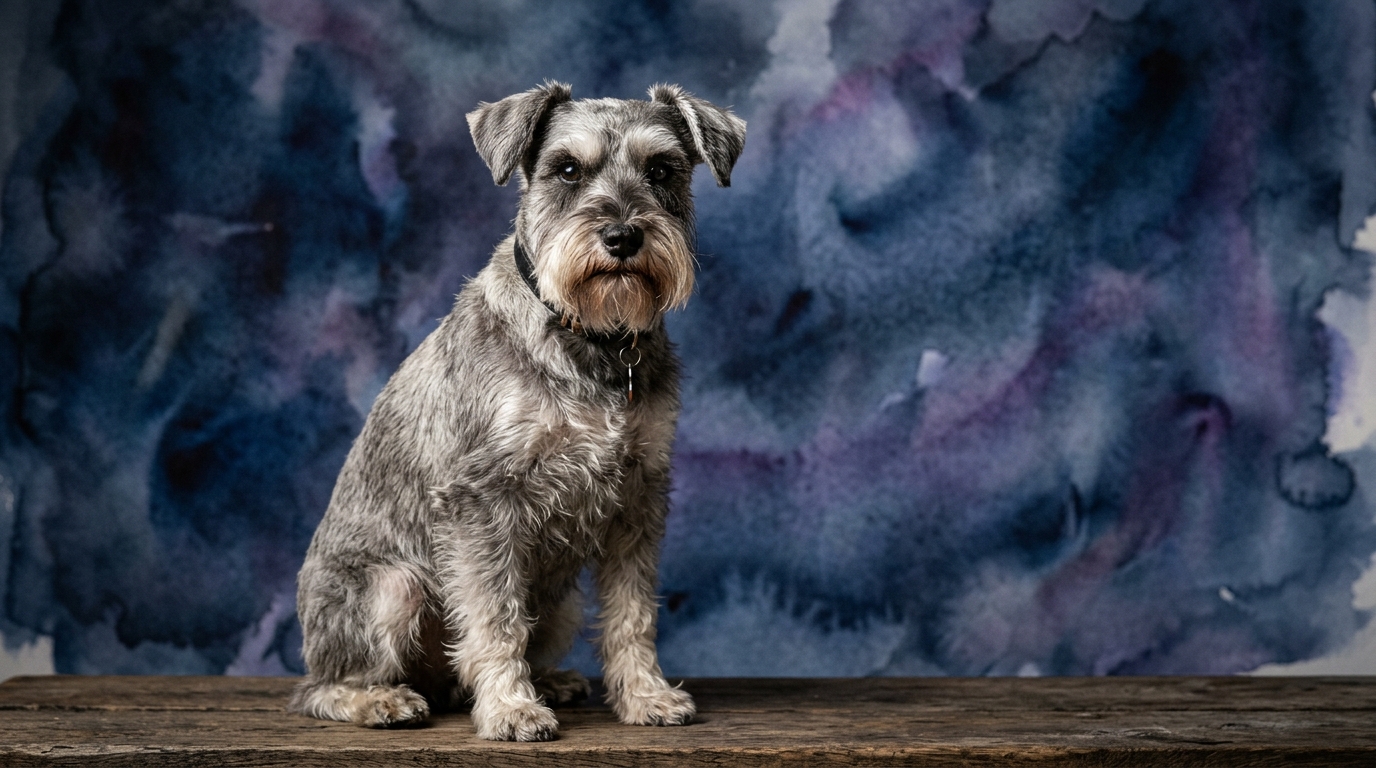
Our Cosmic Pet Pet IQ Lab employs five key dimensions to assess canine cognition, providing a nuanced understanding beyond simple rankings. For the Miniature Schnauzer (Terrier, Coren rank #12), our data reveals a robust cognitive profile: their Problem Solving is rated 4/5, indicating a strong capacity for independent thought and figuring out novel challenges. A remarkable 5/5 in Training Speed highlights their swift grasp of commands and routines, making them highly responsive to instruction. Social Intelligence at 4/5 points to a good understanding of human cues and emotional states, fostering strong bonds. Their Instinctive Drive, also 4/5, reflects a strong predisposition towards their breed's historical roles, translating into curiosity and tenacity. Finally, a 4/5 in Memory demonstrates a solid ability to retain learned behaviors and experiences over time.
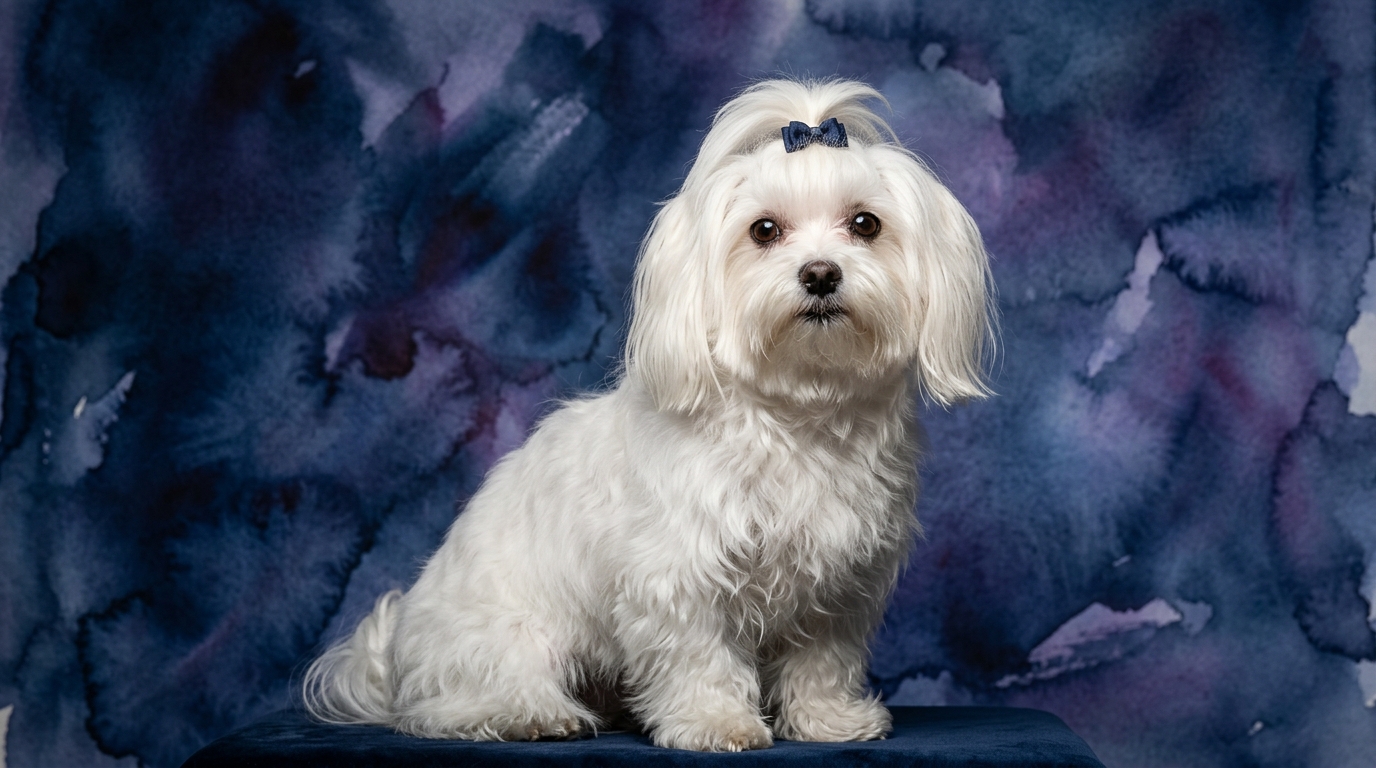
The Maltese (Toy, Coren rank #59) presents a distinct set of cognitive strengths, primarily centered around social engagement. Their Problem Solving is rated 3/5, suggesting a moderate ability to tackle new problems, often preferring guidance or relying on established routines rather than independent exploration. Training Speed also stands at 3/5, indicating they learn at a steady pace, requiring consistent repetition to solidify commands. However, the Maltese truly excels in Social Intelligence, earning a perfect 5/5; this highlights an exceptional capacity for understanding and responding to human emotions and social dynamics, fostering deep, intuitive connections. Their Instinctive Drive is a lower 2/5, showing a relatively low predisposition towards ancestral working traits and more focus on companionship. Memory is rated 3/5, reflecting a moderate ability to recall information, with less frequently reinforced lessons potentially fading over time.
Where the Miniature Schnauzer Wins Cognitively
The Miniature Schnauzer's cognitive profile reveals several distinct advantages, particularly in areas demanding independent action and rapid learning. With a Problem Solving score of 4/5 compared to the Maltese's 3/5, Schnauzers exhibit a more pronounced capacity for analyzing novel situations and devising solutions without constant human intervention. This aptitude makes them adept at navigating complex environments or figuring out how to access desired objects. Their Training Speed, rated at an impressive 5/5 against the Maltese's 3/5, signifies a remarkable ability to process and internalize new commands and routines with minimal repetition. This translates into an efficient learning curve, allowing them to master a broad repertoire of behaviors and respond reliably to cues. Furthermore, the Schnauzer's Instinctive Drive of 4/5, contrasted with the Maltese's 2/5, means they possess a stronger innate curiosity and a greater propensity for engaging with their environment through exploration and purposeful activity, stemming from their terrier heritage. This drive fuels their engagement in tasks and games. Lastly, their 4/5 Memory score, surpassing the Maltese's 3/5, suggests a more robust retention of learned information and experiences, contributing to consistent performance and a deeper understanding of their world over time.
Where the Maltese Wins Cognitively
The Maltese truly shines in the realm of social cognition, an area where they display a specialized aptitude that sets them apart. Earning a perfect 5/5 in Social Intelligence, compared to the Miniature Schnauzer's 4/5, the Maltese demonstrates an unparalleled ability to interpret human emotions, body language, and vocal inflections. This superior social acumen allows them to form extraordinarily deep and nuanced bonds with their human companions, often appearing to anticipate needs and offer comfort intuitively. Their keen sensitivity enables them to be exceptionally responsive to subtle shifts in household dynamics, making them highly attuned family members. This strong social orientation means they are adept at integrating into human routines and thrive on close interaction, using their perceptive skills to maintain harmonious relationships. While other cognitive dimensions are important, the Maltese's preeminent social intelligence underscores their role as perceptive and deeply connected companions, excelling in the art of interspecies communication and emotional resonance.
Which Is Easier to Train and Why
When considering ease of training, our Cosmic Pet Pet IQ Lab data strongly favors the Miniature Schnauzer. Their 5/5 Training Speed indicates a rapid acquisition of new commands and a quick understanding of desired behaviors. This efficiency is further bolstered by their 4/5 Problem Solving ability, which allows them to generalize learned concepts and apply them to various situations, reducing the need for extensive re-teaching in different contexts. A Schnauzer's higher Instinctive Drive (4/5) also means they often possess a natural eagerness to engage in activities and tasks, making them more receptive to structured training sessions and less prone to disinterest. For example, teaching a Schnauzer a multi-step agility course or complex trick will likely progress faster due to their quick processing and retention.
Conversely, the Maltese, with a 3/5 Training Speed and 3/5 Problem Solving, typically requires more consistent repetition and patience. While they are certainly capable of learning, their pace is generally slower, and they may require more creative motivation techniques. Their lower Instinctive Drive (2/5) means they might be less intrinsically motivated by tasks that don't directly involve close human interaction, demanding trainers to emphasize positive reinforcement and make training feel like a bonding experience rather than a chore. Therefore, for owners seeking a dog that picks up commands swiftly and demonstrates high trainability for diverse tasks, the Miniature Schnauzer presents a more straightforward path.
Which Suits Active Owners vs. Relaxed Owners
The choice between a Miniature Schnauzer and a Maltese often hinges on an owner's lifestyle and activity level, with their distinct cognitive profiles offering insights into their preferred pace of life. Miniature Schnauzers, with their 4/5 Instinctive Drive and 4/5 Problem Solving, thrive in environments that offer regular mental and physical stimulation. Their terrier heritage imbues them with a natural curiosity and a desire to explore, investigate, and engage in purposeful activities. This means they are well-suited for active owners who enjoy daily walks, hiking, structured play, or even dog sports like agility or obedience trials. They benefit from puzzle toys and training challenges that tap into their independent problem-solving skills, preventing boredom and potential destructive behaviors.
Conversely, the Maltese, possessing a lower 2/5 Instinctive Drive and a more moderate 3/5 Problem Solving ability, generally prefers a more relaxed and companion-centric lifestyle. While they still enjoy short walks and playtime, their primary cognitive and emotional fulfillment comes from close interaction with their human family. They are content with being lap companions, participating in gentle indoor games, and observing the household's daily rhythms. Their high Social Intelligence (5/5) makes them exceptionally attuned to their owner's emotional state, making them ideal for individuals or families seeking a devoted, calm presence that thrives on affection and companionship over vigorous activity. Therefore, the Schnauzer aligns with an active, engaging owner, while the Maltese is a perfect fit for a more relaxed, companionship-focused individual.
The Verdict
Choose the Miniature Schnauzer if you seek a highly trainable companion eager to engage in diverse activities and tackle mental challenges, thriving on structured tasks and outdoor adventures. Their robust problem-solving and rapid learning make them ideal for active individuals or families who appreciate a dog with a strong, purposeful drive.
Opt for the Maltese if your priority is an exceptionally socially intelligent and devoted companion that thrives on close human connection and offers intuitive emotional support. They are best suited for relaxed owners who value deep companionship and a gentle, affectionate presence over high-energy pursuits.
🧠 Find Your Pet's IQ Score
Our Pet IQ Lab assessment covers 25+ tests across 5 cognitive dimensions — personalized to your breed.
Take the Full IQ Test →Frequently Asked Questions
Is the Miniature Schnauzer prone to stubbornness during training?
While their Instinctive Drive (4/5) and Problem Solving (4/5) suggest independent thought, their high Training Speed (5/5) means they respond well to consistent, positive reinforcement. Any perceived stubbornness is often a sign of insufficient mental engagement or inconsistent training rather than a lack of ability.
Do Maltese dogs require a lot of mental stimulation despite their lower instinctive drive?
Yes, all dogs benefit from mental engagement, but for a Maltese, this often manifests through social interaction and gentle puzzle toys rather than intense problem-solving. Their 5/5 Social Intelligence means they are mentally stimulated by understanding and participating in family life and emotional exchanges.
How does Coren rank relate to the Cosmic Pet Pet IQ Lab scores?
Coren rank primarily assesses "working and obedience intelligence," focusing on trainability for commands, aligning closely with our "Training Speed" dimension. Our Cosmic Pet Pet IQ Lab scores offer a broader, multi-dimensional view of cognitive abilities, including problem-solving, social intelligence, instinctive drive, and memory, providing a more holistic understanding of a breed's mental aptitudes.