Side-by-Side IQ Profile: Miniature Schnauzer vs. Pointer
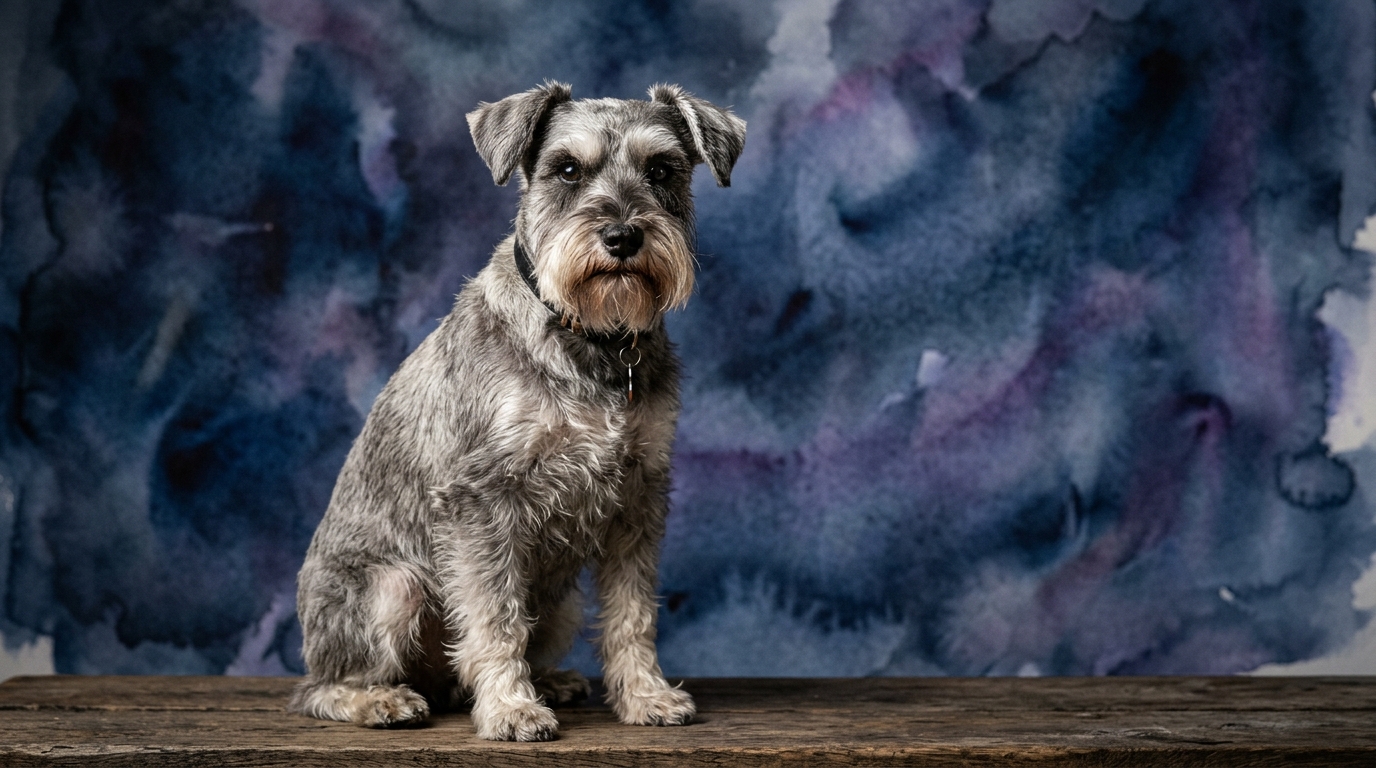
The Miniature Schnauzer, a robust member of the Terrier group, exhibits a sharp and often independent intellect, reflected in its high Coren ranking. Their problem-solving ability scores 4/5, showcasing a resourceful nature that enables them to independently navigate challenges, often finding inventive ways to achieve their desires, like opening a specific cabinet or strategically positioning themselves for a dropped crumb. Training speed is a standout at 5/5; these dogs typically grasp new commands with remarkable swiftness, often requiring fewer repetitions than many other breeds to master a skill. Social intelligence, rated 4/5, highlights their keen observational skills regarding human moods and intentions, allowing them to adapt their behavior to the household dynamic, though this can sometimes manifest as a calculated charm. Their instinctive drive, also 4/5, is a testament to their terrier heritage, encompassing a strong prey drive, guarding instincts, and a persistent determination that fuels their pursuits. Finally, their memory, at 4/5, ensures they retain learned behaviors, routines, and experiences effectively, making them reliable in established patterns but also holding onto past negative associations if not managed well.
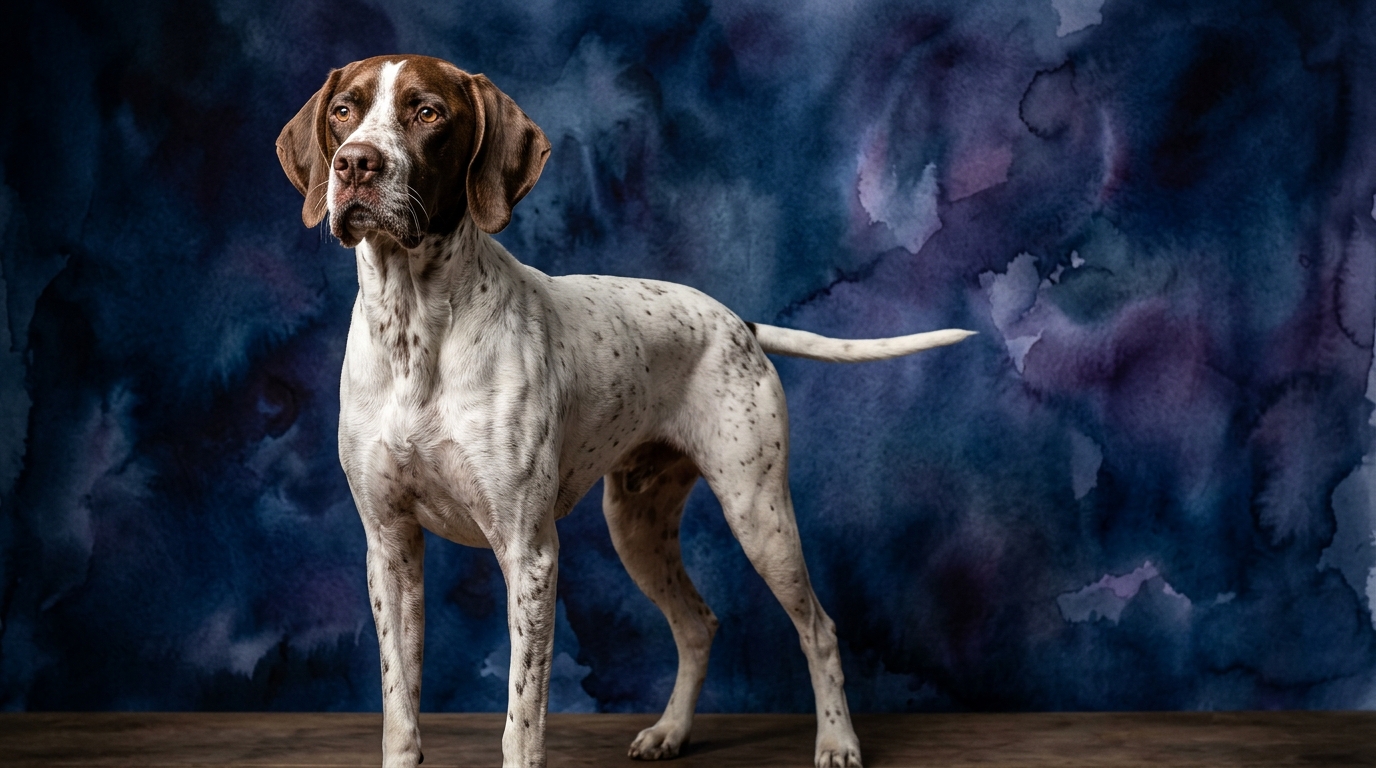
In contrast, the Pointer, a quintessential Sporting breed, displays a different cognitive blueprint, tailored for its historical role as a dedicated hunting companion. With a problem-solving score of 3/5, Pointers are capable learners who excel at executing specific tasks and sequences, particularly those related to their field work, but they are less inclined towards self-directed, abstract problem-solving outside of these learned contexts. Their training speed, also 3/5, indicates a steady and cooperative learning pace; they respond well to consistent, positive reinforcement, gradually building a repertoire of commands without the rapid acquisition seen in some breeds. Social intelligence, rated 3/5, suggests a generally affable and straightforward temperament; Pointers form strong bonds with their families and are typically good-natured, though they might not exhibit the same nuanced interpretation of complex human emotions or situations as some more socially intricate breeds. Their instinctive drive, 3/5, is highly specialized, focused on scenting, pointing, and retrieving game, rather than a generalized independent pursuit; this drive is about partnership and precision in their working role. Their memory, at 3/5, is solid for field commands and routines, allowing them to reliably recall vast amounts of information pertinent to their working life.
Where the Miniature Schnauzer Wins Cognitively
The Miniature Schnauzer’s cognitive profile clearly outpaces the Pointer in several dimensions, particularly in general cognitive flexibility and speed of acquisition, as evidenced by its Coren rank of #12 compared to the Pointer's unranked status. Their superior problem-solving (4/5 vs 3/5) means a Schnauzer is more likely to independently strategize and overcome household obstacles, whether it’s figuring out how to retrieve a cherished toy from under an awkward piece of furniture, manipulating a child-proof latch to access a treat cabinet, or even orchestrating a way to get attention. This inherent ingenuity contrasts sharply with the Pointer’s more task-specific problem-solving approach. The Schnauzer’s exceptional training speed (5/5 vs 3/5) is another significant advantage; they typically master new commands and complex tricks with remarkable efficiency, often picking up concepts after just a few repetitions and generalizing them quickly to various situations. Furthermore, their higher social intelligence (4/5 vs 3/5) suggests a greater capacity for interpreting subtle human cues, understanding emotional states, and adapting their behavior accordingly, which can make for a more responsive and interactive companion, capable of complex social interactions within a family dynamic. This overall cognitive agility allows them to excel in a broader array of intellectual challenges beyond a singular purpose.
Where the Pointer Wins Cognitively
While the Pointer's IQ scores are numerically lower across the board, their cognitive strengths lie profoundly in the *application* and *nature* of their intelligence, particularly in the realm of specialized partnership, unwavering focus, and physical endurance. The Pointer’s instinctive drive, rated 3/5, is not a measure of general ambition but of an exquisitely refined, highly specialized impulse for its purpose: an unwavering focus on detecting game scent, executing the classic 'point' stance with statuesque precision, and a tireless ability to cover vast expanses of ground in search of game. This specialized drive translates into unparalleled dedication, endurance, and consistency in the field, a cognitive attribute where generalized problem-solving might actually be a distraction from the task at hand. Their social intelligence (3/5), while perhaps less complex in interpreting nuanced human emotions or engaging in intricate social games, fosters a straightforward, cooperative partnership that is highly valued in a working context; Pointers are less inclined to engage in complex manipulative behaviors and are more geared towards earnest, predictable collaboration with their handler. The Pointer excels in sustained attention to a singular, often repetitive task, demonstrating a form of cognitive endurance and precision that is distinct from the Schnauzer's quicker, more varied intellectual engagement, making them supremely effective for their intended role.
Training Dynamics: Which is Easier and Why?
Determining which breed is 'easier' to train is highly dependent on the owner’s specific goals, experience, and preferred training style. The Miniature Schnauzer, with its impressive 5/5 training speed, undoubtedly picks up new commands and concepts at a faster rate. They are often eager to learn and excel in obedience, agility, and dog sports that demand quick thinking and precise execution. However, their 4/5 problem-solving ability combined with a strong terrier independence can mean they also quickly learn *what they can get away with* and may challenge boundaries or try to outsmart their handler if consistency is lacking. Training a Schnauzer requires a truly engaging approach, using their quick wit and intelligence to channel their energy constructively, demanding mental engagement as much as physical. In contrast, the Pointer, with a 3/5 training speed, learns at a more deliberate and steady pace. They may require more repetitions to solidify a command, but once learned, their performance tends to be exceptionally reliable, consistent, and biddable due to their cooperative nature and focused drive. Pointers are generally more eager to please their handler and less likely to engage in the independent decision-making or stubbornness that can characterize a terrier. For an owner seeking a highly responsive, consistent dog for complex, repetitive field work or a companion that adheres strictly to learned protocols without much deviation, the Pointer's steady, cooperative learning style can ultimately prove more 'easy' and predictable in its long-term application.
Lifestyle Match: Active vs. Relaxed Owners
The choice between a Miniature Schnauzer and a Pointer also hinges significantly on an owner’s lifestyle and activity level. The Miniature Schnauzer, despite being a smaller breed, possesses a substantial 4/5 instinctive drive and the typical terrier vitality, requiring regular physical exercise and, crucially, ample mental stimulation to prevent boredom and destructive behaviors. They thrive with active owners who enjoy daily walks, interactive play, and engaging their dog in training or puzzle toys, but their adaptability means they can also adjust to moderately active households that prioritize mental enrichment. A relaxed owner who cannot provide consistent engagement might find a Schnauzer's cleverness channeled into unwelcome antics. The Pointer, conversely, is unequivocally a breed for active owners. Their 3/5 instinctive drive, while numerically lower, translates into an immense need for physical exertion and purposeful activity, often demanding hours of robust outdoor exercise daily. They are bred to run, scent, and work for extended periods. A relaxed owner simply cannot meet the Pointer's profound need for physical and mental engagement in a manner that allows the dog to thrive, making them prone to restlessness and frustration indoors.
The Verdict
Choose the Miniature Schnauzer if you desire a quick-witted, highly interactive companion who thrives on mental challenges and can adapt to varied living situations, provided you offer consistent guidance and enrichment.
Opt for the Pointer if you lead an active outdoor lifestyle, value a dedicated and cooperative working partner, and can provide ample opportunities for your dog to fulfill its natural pointing and retrieving instincts through extensive exercise.
🧠 Find Your Pet's IQ Score
Our Pet IQ Lab assessment covers 25+ tests across 5 cognitive dimensions — personalized to your breed.
Take the Full IQ Test →Frequently Asked Questions
Is the Miniature Schnauzer truly smarter than a Pointer?
Based on The Cosmic Pet Pet IQ Lab's metrics and the Coren ranking, the Miniature Schnauzer shows higher general cognitive agility, particularly in problem-solving and training speed, indicating a broader capacity for varied learning. The Pointer's intelligence, while effective, is highly specialized for its sporting role, excelling in focused, cooperative tasks rather than independent strategizing.
Do Pointers require less mental stimulation due to their lower IQ scores?
Pointers do not necessarily require less mental stimulation, but rather a different *type* of stimulation. They thrive on tasks that engage their natural scenting and pointing instincts, which demand sustained focus, problem-solving within a specific domain, and strong partnership, rather than generalized, independent puzzle-solving.
Which breed is better suited for a first-time dog owner?
The Miniature Schnauzer's quick learning and adaptability can be very rewarding for a first-time owner willing to engage with their cleverness and provide consistent training, though their terrier will requires a clear leadership. Pointers demand a significant commitment to extensive exercise and specialized, consistent training for their working drives, which might prove more challenging for an inexperienced owner.