Side-by-Side Cognitive Profiles
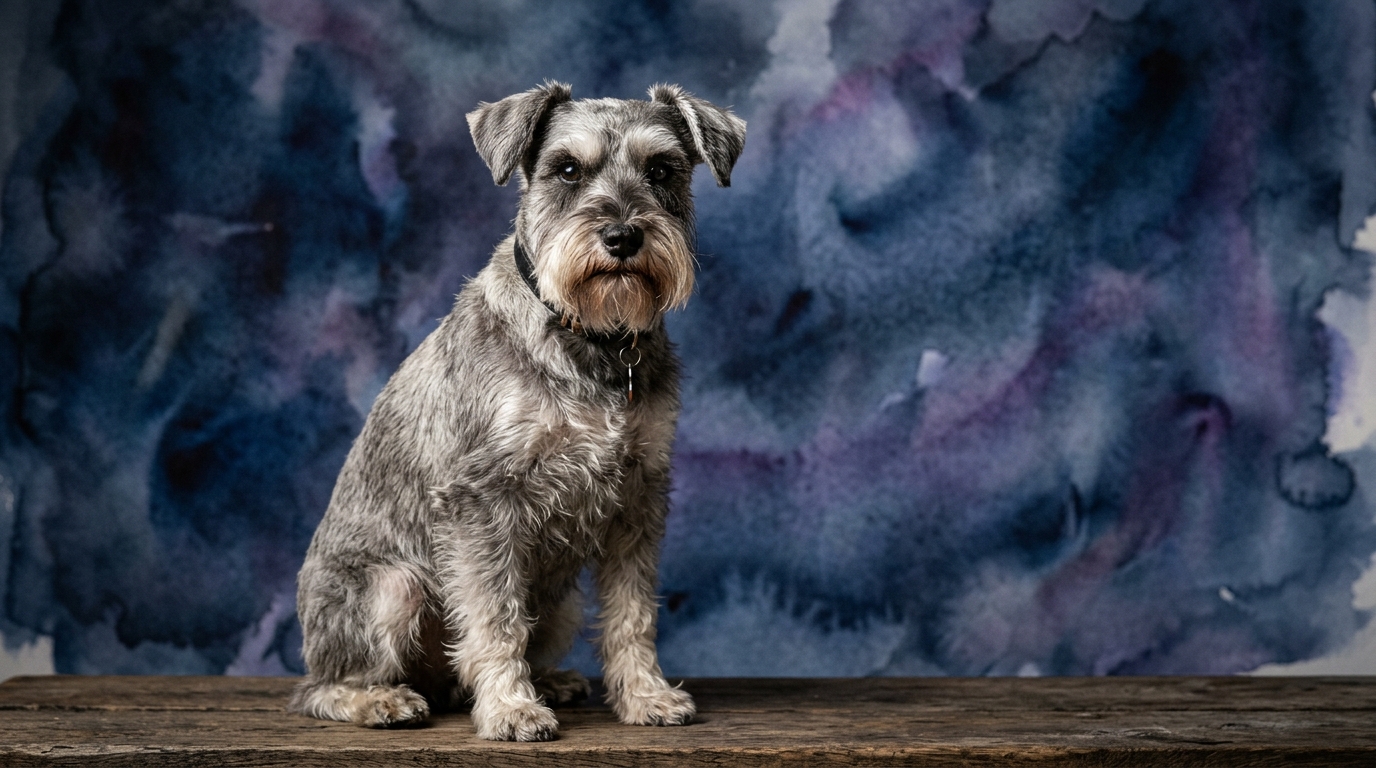
The Miniature Schnauzer presents a robust cognitive profile, reflecting its Coren ranking of #12. Its problem-solving aptitude is rated at 4/5, indicating a capacity for navigating novel situations and understanding complex tasks with relative ease. Training speed is notably high at 5/5, suggesting a breed eager to learn and quick to grasp new commands. Social intelligence also stands at a commendable 4/5, implying a strong ability to interpret human cues and engage interactively. An instinctive drive of 4/5 underscores its terrier heritage, channeling energy effectively, while its memory retention is also strong at 4/5, ensuring learned behaviors persist.
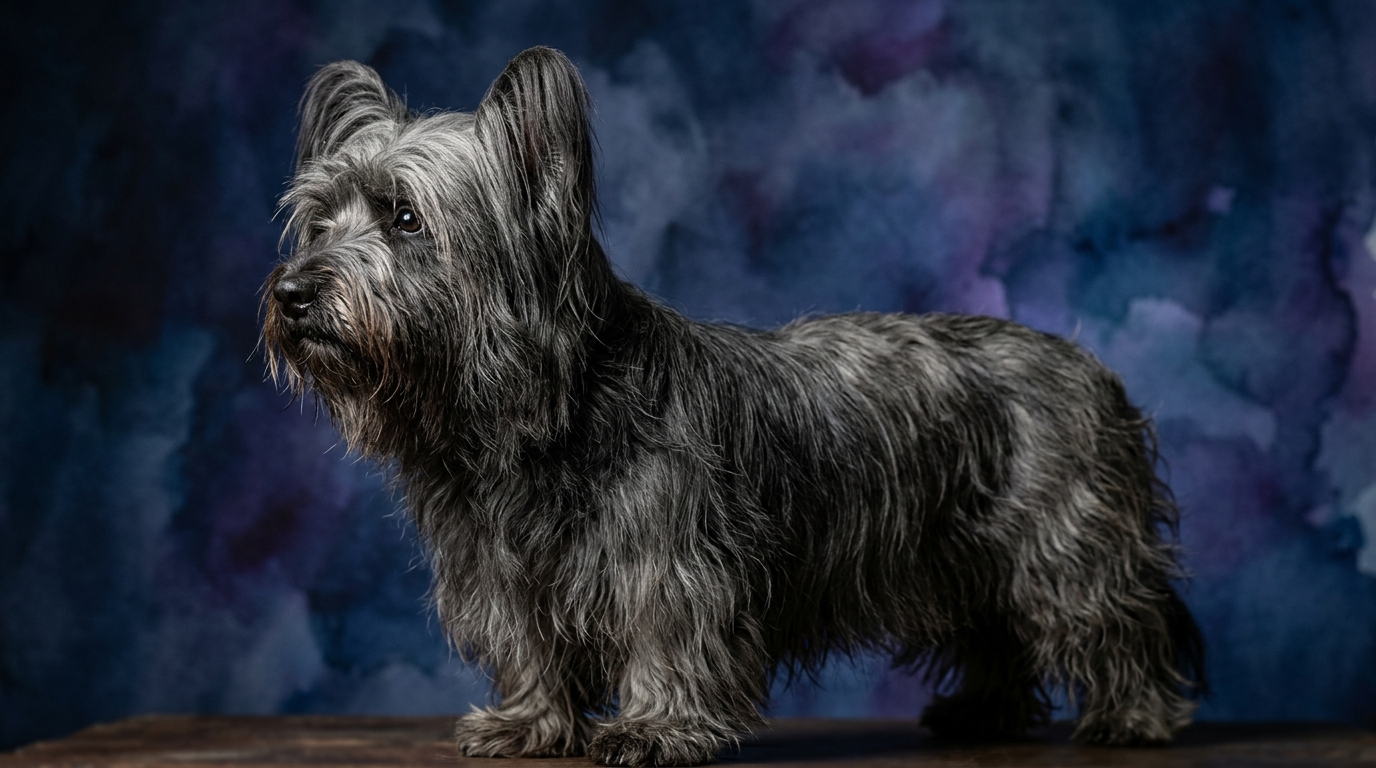
In contrast, the Skye Terrier, while not Coren-ranked, possesses a distinct cognitive makeup. Its problem-solving ability is rated at 3/5, indicating a thoughtful approach that may require more time or self-directed effort to overcome challenges. Training speed is also 3/5, suggesting that while capable of learning, it often proceeds at a more deliberate pace, requiring patience and consistent reinforcement. Social intelligence is similarly rated at 3/5, pointing to a more independent nature that may be less overtly attuned to constant human interaction. An instinctive drive of 3/5 reflects its working terrier roots, though perhaps expressed with less overt eagerness, and its memory is rated at 3/5, meaning learned concepts benefit from regular practice.
Where the Miniature Schnauzer Excels Cognitively
The Miniature Schnauzer's higher scores across the board translate into several cognitive advantages. Its 4/5 problem-solving aptitude means it's adept at figuring out puzzles, navigating new environments, and adapting quickly to changes in routine. This breed often demonstrates foresight, anticipating consequences and adjusting its behavior accordingly, making it a responsive companion in varied situations. The exceptional 5/5 training speed is a clear differentiator; Miniature Schnauzers absorb new commands and behaviors with remarkable alacrity, often requiring fewer repetitions to achieve proficiency. This quick learning curve makes them highly suitable for advanced obedience, dog sports, or complex trick training, as they readily connect actions with desired outcomes. Furthermore, their 4/5 social intelligence allows them to keenly observe and respond to human emotions and intentions, fostering a strong, reciprocal bond built on mutual understanding and clear communication.
Unique Cognitive Strengths of the Skye Terrier
While the Skye Terrier's scores might appear lower, its cognitive profile shines in specific contexts, particularly where independence and singular focus are assets. Its 3/5 problem-solving ability, coupled with a deliberate nature, means that once a Skye Terrier commits to solving a problem, it often does so with tenacious determination. They may take longer to process information or decide on a course of action, but their eventual solution is often well-considered and persistent. The Skye's 3/5 social intelligence can be interpreted as a strength for owners who appreciate a companion that is less 'clingy' and more self-assured in its own company. This means they are less prone to anxiety stemming from constant human validation, exhibiting a robust mental fortitude. Their instinctive drive, while 3/5, is geared towards focused, independent work, making them excellent at tasks that require sustained attention without constant human prompting, once they understand the objective. This self-reliance ensures they are not easily distracted from their chosen activity, a valuable trait for certain specialized tasks.
Training Ease: Miniature Schnauzer vs. Skye Terrier
When it comes to ease of training, the Miniature Schnauzer holds a distinct advantage. Its 5/5 training speed and 4/5 problem-solving capability mean it's eager to please and quick to pick up new cues. This breed thrives on positive reinforcement and consistent, engaging training sessions, often making rapid progress in obedience and socialization. Their innate desire to work alongside their human companions, coupled with their sharp memory, translates into a relatively straightforward training journey for most owners. They are generally responsive to commands and adapt well to structured learning environments, often enjoying the mental stimulation that training provides.
The Skye Terrier, with its 3/5 scores in both training speed and problem-solving, presents a different training experience. This breed requires an owner with significant patience, consistency, and a deep understanding of terrier independence. Skye Terriers learn, but at their own pace, and often need to be convinced that a task is worthwhile from their perspective. Their more self-reliant nature means they may not always prioritize human directives over their own inclinations, demanding creative and highly motivating training methods. While they retain information (3/5 memory), reinforcement needs to be regular and engaging to overcome their independent streak, making them a rewarding but more challenging project for the dedicated trainer.
Suitability for Active vs. Relaxed Lifestyles
The Miniature Schnauzer's cognitive profile makes it an excellent fit for active and engaged owners. Their high problem-solving ability and training speed mean they thrive on mental stimulation, enjoying activities like agility, obedience trials, or complex puzzle toys. These dogs are generally eager participants in family activities, whether it's brisk walks, hiking, or learning new tricks, and their social intelligence ensures they enjoy being at the center of attention. Owners who can provide consistent training, varied experiences, and regular interaction will find a Miniature Schnauzer to be an adaptable, enthusiastic, and highly responsive companion, perfectly suited for a dynamic household.
Conversely, the Skye Terrier's more independent and deliberate cognitive style makes it better suited for owners who appreciate a calmer, more self-contained companion, yet are committed to consistent, patient engagement. While they still require regular exercise to satisfy their instinctive drive, their social intelligence (3/5) suggests they are content with less constant direct interaction than a Schnauzer. Owners who prefer a dog that can entertain itself, or who are experienced in working with independent terrier temperaments, will find the Skye Terrier a loyal and affectionate, albeit discerning, companion. They thrive with owners who understand their need for personal space and respect their thoughtful approach to learning and interaction, making them a good match for a more relaxed but still dedicated lifestyle.
The Verdict
Choose a Miniature Schnauzer if you desire a highly trainable, socially responsive companion eager to engage in diverse activities and learn quickly.
Opt for a Skye Terrier if you appreciate a more independent, tenacious companion and are prepared for a patient, consistent training approach.
🧠 Find Your Pet's IQ Score
Our Pet IQ Lab assessment covers 25+ tests across 5 cognitive dimensions — personalized to your breed.
Take the Full IQ Test →Frequently Asked Questions
Which breed is quicker to house train?
The Miniature Schnauzer, with its 5/5 training speed and 4/5 problem-solving, is generally quicker to house train as it grasps concepts faster and is more attuned to human cues. The Skye Terrier's more deliberate learning pace means house training may require more patience and consistency.
Do Miniature Schnauzers and Skye Terriers differ in their adaptability to new environments?
Yes, Miniature Schnauzers tend to be more adaptable due to their 4/5 problem-solving and social intelligence, allowing them to adjust quickly to new places and routines. Skye Terriers, with 3/5 in these areas, may take more time to assess and become comfortable in unfamiliar surroundings, preferring predictability.
Which breed is better for first-time dog owners?
The Miniature Schnauzer is generally more suitable for first-time dog owners due to its higher trainability and social responsiveness. The Skye Terrier's independent nature and more challenging training requirements often make it a better fit for experienced owners who understand terrier temperaments.