Side-by-Side IQ Profile: Miniature vs. Standard Schnauzer
The Cosmic Pet Pet IQ Lab provides a granular view into the cognitive dimensions of various breeds, and for the Schnauzers, this comparison highlights their nuanced differences. Understanding these profiles moves beyond general observations, offering specific metrics to appreciate their mental aptitudes.
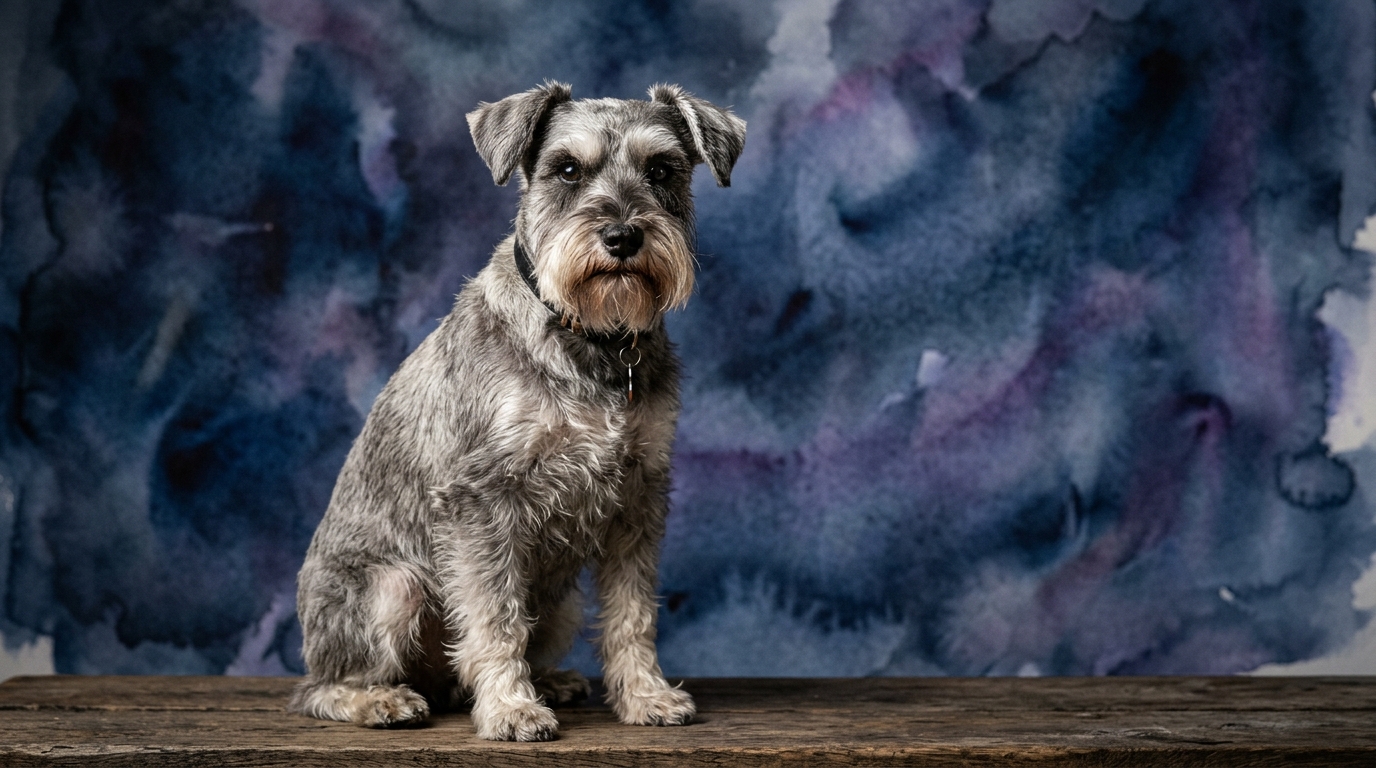
The **Miniature Schnauzer**, classified within the Terrier group and holding a Coren rank of #12, exhibits a vibrant cognitive spectrum. Their Problem Solving is rated at 4/5, indicating a sharp, adaptable mind capable of navigating complex situations and devising clever solutions. Training Speed stands at an exceptional 5/5, reflecting a remarkable capacity for rapid learning and command acquisition. Social Intelligence is strong at 4/5, suggesting a keen awareness of human emotions and social dynamics, fostering deep empathetic connections. Their Instinctive Drive, at 4/5, points to a robust curiosity and a natural inclination to explore and engage with their environment. Finally, their Memory is rated 4/5, signifying excellent recall for learned behaviors and past experiences.
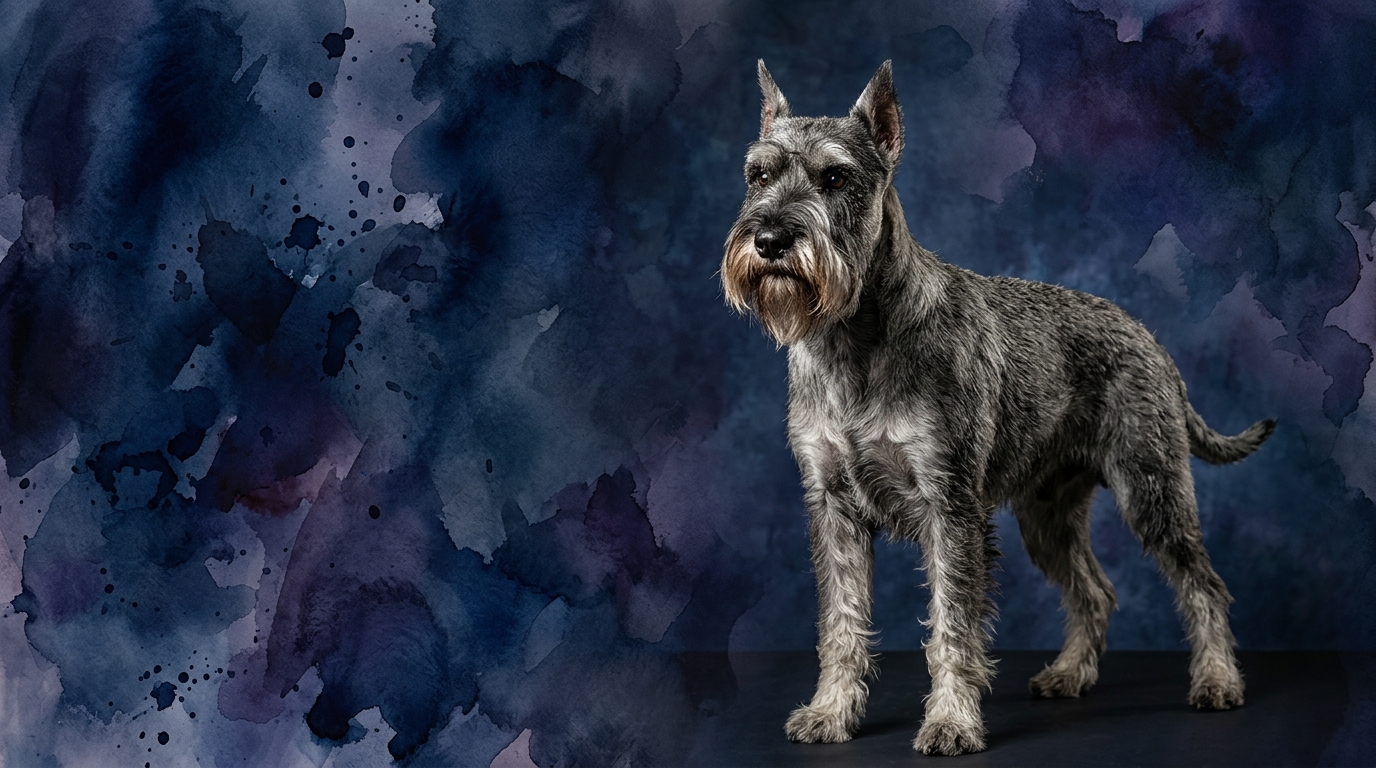
In contrast, the **Standard Schnauzer**, from the Working group and ranked #22 by Coren, presents a profile rooted in steadfastness and practical application. Their Problem Solving matches the Miniature at 4/5, demonstrating a robust, often methodical, approach to challenges. Training Speed is rated 4/5, indicating effective learning, though perhaps requiring a more consistent hand than their smaller cousins. Social Intelligence is rated 3/5, suggesting a more reserved and discerning nature, forming strong bonds within a select circle rather than with all acquaintances. Instinctive Drive, at 3/5, is moderate, reflecting a watchful nature and purpose-driven focus rather than a high-octane prey drive. Their Memory, like the Miniature, is 4/5, underscoring their ability to retain complex routines and information over time.
Where Miniature Schnauzer Wins Cognitively
The Miniature Schnauzer truly shines in areas demanding rapid assimilation and social dexterity, making them exceptionally responsive companions. Their **Training Speed (5/5)** is a definitive cognitive advantage, reflecting an extraordinary capacity for learning new commands and routines with remarkable efficiency. This isn't just about being eager; it signifies a neural plasticity that allows for quick pattern recognition and swift behavioral adaptation, meaning a Miniature Schnauzer often grasps complex sequences or nuanced cues in fewer repetitions than many other breeds.
Furthermore, their superior **Social Intelligence (4/5)** means they are often more attuned to human emotional states and subtle social signals. This cognitive edge allows them to integrate seamlessly into diverse family dynamics, anticipating needs and responding with a level of empathy that fosters profound companion bonds. They excel at reading situations, understanding unspoken cues, and adjusting their behavior accordingly, making them highly intuitive partners in daily life and capable of intricate interactions.
Their elevated **Instinctive Drive (4/5)**, while sometimes needing management due to their terrier nature, also translates into an enhanced curiosity and motivation to explore and engage. This intrinsic drive, when channeled appropriately through games or training, makes them incredibly enthusiastic participants in learning and activity, providing a constant spark for cognitive engagement and a spirited approach to life's adventures.
Where Standard Schnauzer Wins Cognitively
While not outscoring the Miniature Schnauzer in every raw metric, the Standard Schnauzer’s cognitive profile offers distinct advantages, particularly for owners who value steadfastness, deliberate problem-solving, and a more independent demeanor. Their **Problem Solving (4/5)**, matching the Miniature, is often expressed with a more deliberate, methodical approach. This isn't about quick, flashy solutions, but rather a sustained, thoughtful engagement with tasks, born from their working dog lineage. They are less likely to be distracted by peripheral stimuli when focused on a goal, demonstrating a robust mental stamina crucial for complex, sustained activities.
The Standard Schnauzer's slightly lower **Social Intelligence (3/5)** and **Instinctive Drive (3/5)**, while numerically lower, can be a cognitive 'win' for owners seeking a more independent and less frenetic companion. Their reserved social nature means they are less prone to separation anxiety and thrive with a trusted inner circle rather than requiring constant validation from every new acquaintance. This cognitive independence allows them to process information and make decisions without excessive reliance on human approval, fostering a self-reliant demeanor that many appreciate.
Their moderate instinctive drive, compared to the Miniature's more intense terrier instincts, means their curiosity and drive are often more focused and less scattered. This can translate to a more predictable and manageable dog in varied environments, less inclined to chase every squirrel or investigate every rustle, making them highly reliable in scenarios requiring composure and controlled focus. Their intelligence is often expressed as a calm, observant watchfulness, providing a robust presence without the constant demand for high-energy interaction.
Which is Easier to Train and Why
Based on The Cosmic Pet Pet IQ Lab data, the **Miniature Schnauzer (Training Speed 5/5)** is demonstrably easier and quicker to train than the **Standard Schnauzer (Training Speed 4/5)**. The Miniature's exceptional training speed stems from a powerful combination of factors: their intense desire to please, coupled with that high social intelligence (4/5) which makes them keenly aware of their trainer's intentions and feedback. They are quick to form associations between commands and actions, and their strong memory (4/5) solidifies these learnings rapidly. A Miniature Schnauzer often requires fewer repetitions to master a new skill and is remarkably forgiving of minor inconsistencies in training technique.
Their natural curiosity and high instinctive drive also mean they are often self-motivated to engage in learning activities, viewing training as a stimulating game. This inherent enthusiasm for participation, combined with their sharp cognitive processing, means they are eager pupils who thrive on positive reinforcement and consistent, engaging sessions. Owners will find a Miniature Schnauzer often anticipates commands and delights in demonstrating newly acquired skills, making the training process highly rewarding and efficient.
The Standard Schnauzer, while undoubtedly capable and intelligent, requires a more consistent and patient approach to training. Their slightly lower social intelligence (3/5) means they might be less overtly eager to please and may require more explicit motivation or clearer direction. They are not less capable of learning, but their learning curve is generally less steep, and they may need more repetitions to fully internalize a command. Their working dog heritage means they respond best to purpose-driven training, valuing clear structure and a sense of accomplishment in their tasks.
While they will learn and retain commands effectively (Memory 4/5), their independent streak means a trainer must establish clear leadership and make training sessions engaging to maintain their focus. Expect a Standard Schnauzer to deliberate more before executing a command, processing the request thoroughly rather than reacting instantly. This thoughtful approach means they are less likely to make impulsive mistakes, but it necessitates a trainer who appreciates their methodical nature and provides consistent, clear guidance.
Which Suits Active Owners vs. Relaxed Owners
For **active owners** seeking a dynamic, highly engaged, and constantly involved companion, the **Miniature Schnauzer** often aligns better with their lifestyle. Their elevated **Instinctive Drive (4/5)** means they possess a natural zest for exploration, play, and activity. They thrive on abundant mental and physical stimulation, making them ideal partners for agility sports, advanced obedience training, long hikes, or even just energetic, interactive play sessions around the home. Their high training speed and social intelligence also mean they are quick to learn new sports or activities and genuinely enjoy working closely and collaboratively with their owners.
A Miniature Schnauzer is a breed that truly benefits from, and indeed demands, regular engagement to channel their sharp minds and energetic bodies. Owners who enjoy teaching new tricks, participating in dog sports, or simply having a constantly 'on' companion who loves to be at the center of family activity will find the Miniature Schnauzer a fulfilling match, offering endless opportunities for shared adventures and cognitive challenges.
**Relaxed owners** who appreciate a more composed, yet still capable and vigilant presence, might find the **Standard Schnauzer** to be a better fit. While still requiring exercise and mental stimulation to prevent boredom, their **Instinctive Drive (3/5)** is generally more moderate and less frenetic than the Miniature's. This translates to a dog that can transition more easily between periods of activity and quiet observation, content to be a steadfast presence rather than a constant whirlwind of energy.
Their problem-solving ability and memory, combined with a discerning social intelligence, means they are content to observe and guard their home with a calm vigilance, rather than constantly seeking interaction or high-energy antics. They appreciate a routine and derive satisfaction from purposeful tasks, but are often less demanding of constant, high-octane entertainment. A Standard Schnauzer will enjoy a good walk or a focused training session, but might be equally content to supervise from a comfortable spot, offering a robust, loyal presence without the persistent need for entertainment or validation, making them excellent companions for a more tranquil household.
The Verdict
Choose the Miniature Schnauzer if you desire a highly trainable, socially astute companion eager for constant interaction and quick to master new skills, thriving on active engagement and a lively household.
Opt for the Standard Schnauzer if you prefer a self-reliant, methodical problem-solver with a composed demeanor, valuing a discerning loyalty and a robust, watchful presence over constant high-energy demands.
🧠 Find Your Pet's IQ Score
Our Pet IQ Lab assessment covers 25+ tests across 5 cognitive dimensions — personalized to your breed.
Take the Full IQ Test →Frequently Asked Questions
Do Miniature Schnauzers bark more than Standard Schnauzers?
Miniature Schnauzers, with their higher instinctive drive and terrier roots, often exhibit a more pronounced tendency to bark at perceived threats or novel stimuli, making them more vocal. Standard Schnauzers, while vigilant guardians, tend to be more reserved, barking as a purposeful alert rather than a frequent vocalization, showing a more controlled use of their voice.
Which Schnauzer is better with children?
Both breeds can be good with children, but the Miniature Schnauzer's higher social intelligence and eagerness to please often make them more adaptable and tolerant of the unpredictable energy of kids. Standard Schnauzers are protective but might require more structured introductions and supervision, preferring older, more respectful children due to their discerning and sometimes reserved nature.
Are Miniature or Standard Schnauzers more independent?
Standard Schnauzers generally exhibit a higher degree of independence due to their lower social intelligence score, making them less reliant on constant human validation and more self-sufficient in their decision-making. Miniature Schnauzers, with their higher social intelligence, thrive on interaction and tend to be more people-oriented, constantly seeking engagement and validation from their family members.