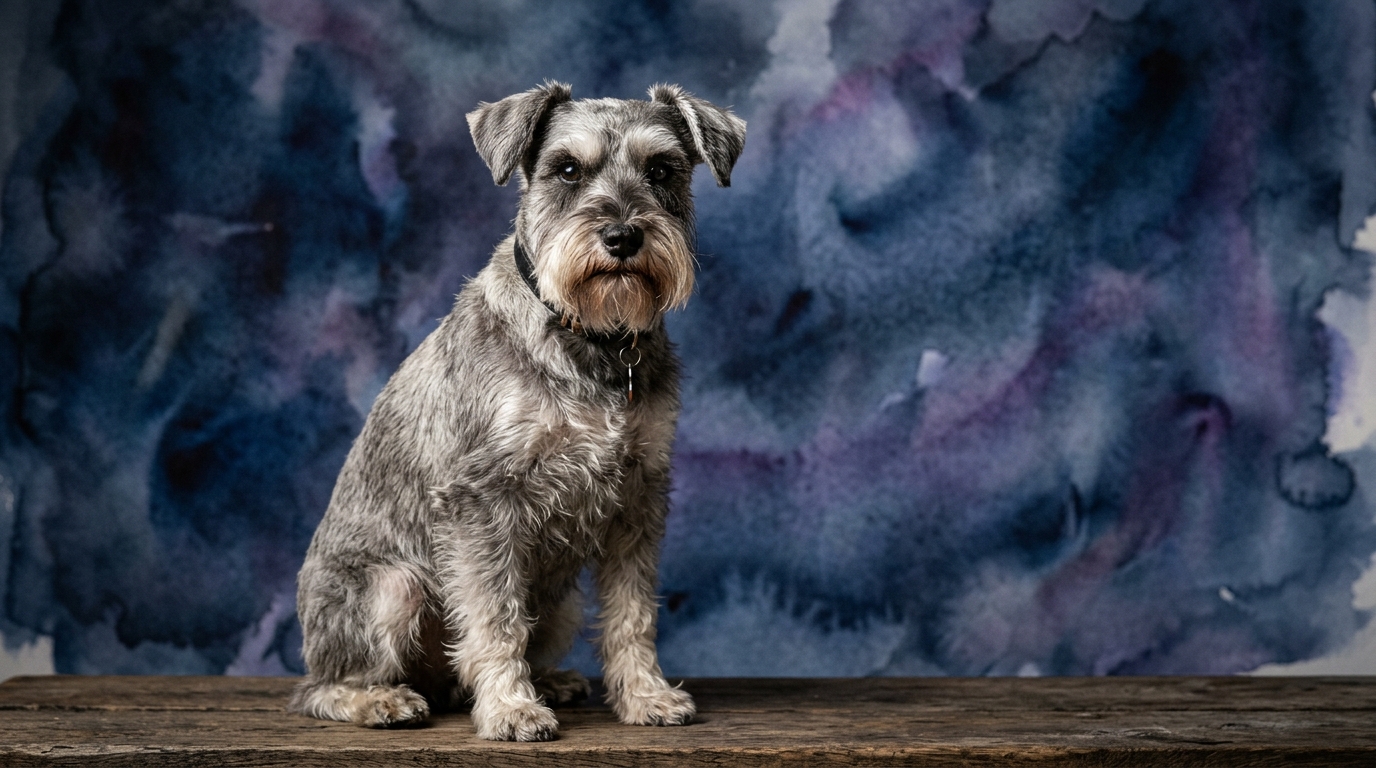

Side-by-Side Cognitive Profiles
The Miniature Schnauzer, a robust member of the Terrier group, consistently ranks high in cognitive aptitude, placing at Coren #12. Our Pet IQ Lab metrics reveal a well-rounded cognitive profile: a Problem Solving score of 4/5 indicates they adeptly navigate novel situations and figure out puzzles with relative ease, often demonstrating a resourceful approach. Their Training Speed of 5/5 means they grasp new commands and routines with remarkable alacrity, making them quick studies. Social Intelligence at 4/5 suggests a keen awareness of human cues and emotional states, fostering strong bonds and cooperative behavior. An Instinctive Drive of 4/5 reflects their history as ratters, showcasing tenacity and focus, while their Memory score of 4/5 ensures they retain learned behaviors and experiences effectively over time.
In contrast, the Sussex Spaniel, a Sporting group member, holds a Coren rank of #62, indicating a more moderate but equally functional cognitive style. Their Problem Solving is rated 3/5, meaning they are capable of tackling challenges, though they might require more direct guidance or a longer period to reach a solution compared to their Schnauzer counterpart. Training Speed also sits at 3/5, suggesting that patience and consistency are key to their learning process, with concepts solidifying over more repetitions. Social Intelligence at 3/5 implies they are attentive to their human companions, often developing deep, singular bonds, though perhaps less broadly perceptive of subtle social dynamics. An Instinctive Drive of 3/5 points to their gundog heritage, focusing more on scent work and flush-and-retrieve tasks rather than independent pursuit, and their Memory at 3/5 means they learn and retain, but regular reinforcement aids recall.
Where the Miniature Schnauzer Excels Cognitively
The Miniature Schnauzer's cognitive strengths are particularly evident in areas demanding quick uptake and independent thought. Their 5/5 Training Speed score means they absorb commands and complex sequences rapidly, often needing fewer repetitions than many other breeds. This quick learning translates into a dog that can master a wide repertoire of tricks, participate in advanced obedience, or even excel in dog sports like agility with impressive efficiency. Coupled with their 4/5 Problem Solving ability, Schnauzers are adept at figuring out how to open gates, retrieve hidden toys, or navigate obstacle courses, demonstrating a proactive approach to mental challenges.
Furthermore, their 4/5 Social Intelligence allows Miniature Schnauzers to readily interpret human intentions and moods, facilitating a more nuanced communication with their owners. This makes them highly responsive to verbal and non-verbal cues, often anticipating requests. Their robust 4/5 Memory ensures that once a lesson is learned or an experience is had, it is firmly etched, contributing to consistent behavior and a reliable understanding of household rules and routines over the long term. This combination makes them particularly well-suited for owners who enjoy engaging their dogs in continuous learning and collaborative activities.
Where the Sussex Spaniel Shines Cognitively
While the Sussex Spaniel's cognitive scores are generally moderate, their strengths lie in a different kind of mental aptitude, often characterized by a steady, focused persistence. Their 3/5 Instinctive Drive, rooted in their gundog history, means they possess a reliable aptitude for scent work and tracking, excelling in activities that leverage their nose. This drive is often less frenetic than that of a terrier, manifesting as a methodical, ground-covering search rather than an impulsive chase. Their moderate Problem Solving, while not as rapid, can lead to a more thorough and deliberate approach to tasks, where they might persist until a solution is found, albeit at their own pace.
The Sussex Spaniel's 3/5 Social Intelligence, while not indicating broad social acumen, often translates into a profound, unwavering loyalty and a deep, discerning bond with their primary caregivers. They may not be as universally outgoing, but their affection is typically concentrated and steadfast. Their 3/5 Memory, combined with their steady nature, means that once a concept is patiently taught and consistently reinforced, it becomes deeply ingrained, leading to reliable, predictable behavior. This consistent, less intense cognitive profile often makes them wonderfully calm and devoted companions for owners who appreciate a more measured and focused canine presence.
Training Ease: Miniature Schnauzer vs. Sussex Spaniel
When it comes to ease of training, the Miniature Schnauzer generally presents a more straightforward path. Their exceptional Training Speed of 5/5 means they pick up on new commands, tricks, and routines with remarkable efficiency. Owners often find that a Schnauzer can master basic obedience commands in just a few sessions, and their problem-solving abilities (4/5) allow them to generalize these learned behaviors to new situations without extensive re-teaching. Their higher social intelligence (4/5) also makes them more attuned to their handler's cues and intentions, fostering a cooperative learning environment where they actively seek to understand and comply with requests, making the training process feel more like a collaborative effort.
The Sussex Spaniel, with a Training Speed of 3/5, requires a more patient, consistent, and positive reinforcement-based approach. While they are certainly trainable, their rate of acquisition is slower, meaning owners should be prepared for more repetitions and a longer period for commands to become solidified. Their moderate instinctive drive might mean they are less prone to impulsive distractions during training than some other sporting breeds, but their focus can sometimes be more self-directed rather than handler-oriented, necessitating engaging and rewarding methods to maintain their attention. Owners who understand and embrace their steady learning pace will find a willing and capable student in the Sussex Spaniel, leading to a well-mannered companion through consistent effort.
Ideal Owners: Active Engagement vs. Relaxed Companionship
For owners leading an active lifestyle and seeking a canine partner eager for constant engagement, the Miniature Schnauzer is often an excellent match. Their combination of high problem-solving capacity, rapid training speed, and significant instinctive drive means they thrive on structured activities, mental challenges, and having a 'job' to do. These dogs excel in learning new tricks, participating in dog sports like agility, rally obedience, or earthdog trials, and enjoy varied daily routines that stimulate their minds. They are best suited for owners who are prepared to provide consistent mental and physical exercise, preventing boredom and channeling their keen intellect and energy into constructive outlets.
Conversely, the Sussex Spaniel often proves to be a more suitable companion for relaxed owners who appreciate a predictable routine and a less frenetic pace of life. While they are a sporting breed and enjoy their daily walks and outdoor exploration, their moderate instinctive drive and more placid cognitive profile mean they don't demand the same intensity of mental stimulation as a Schnauzer. They are content with leisurely strolls, quiet companionship, and patient, consistent training without the pressure for rapid mastery. They truly flourish in a home environment where they are cherished members of the family, receiving affection and a steady, calm presence, making them ideal for those seeking a devoted, easygoing, yet still engaged, canine friend.
The Verdict
Choose the Miniature Schnauzer if you seek an actively engaged companion eager to learn, excel in training, and thrive on consistent mental and physical challenges.
Opt for the Sussex Spaniel if you prefer a more placid, devoted companion who appreciates a predictable routine, patient guidance, and a less frenetic pace of life.
🧠 Find Your Pet's IQ Score
Our Pet IQ Lab assessment covers 25+ tests across 5 cognitive dimensions — personalized to your breed.
Take the Full IQ Test →Frequently Asked Questions
Do Miniature Schnauzers require more mental stimulation than Sussex Spaniels?
Yes, Miniature Schnauzers, with their higher problem-solving and training speed, generally require more consistent mental engagement to prevent boredom. They thrive on learning new tasks and participating in active play, whereas Sussex Spaniels are often content with moderate mental challenges and enjoy a steadier routine.
How do their social intelligence scores impact their family life?
The Miniature Schnauzer's 4/5 social intelligence suggests they are quite adept at understanding household dynamics and human emotions, often integrating smoothly into various family situations. The Sussex Spaniel's 3/5 indicates they may form deep, focused bonds with primary caregivers but might need more structured introductions to new people or situations to feel entirely comfortable and confident.
Are Sussex Spaniels difficult to train because of their lower training speed score?
No, 'difficult' isn't the right term; 'requiring more patience' is accurate. While a Sussex Spaniel might take longer to grasp new commands than a Miniature Schnauzer, they are perfectly trainable with consistent positive reinforcement and a clear, repetitive approach, leading to a well-mannered and devoted companion.