
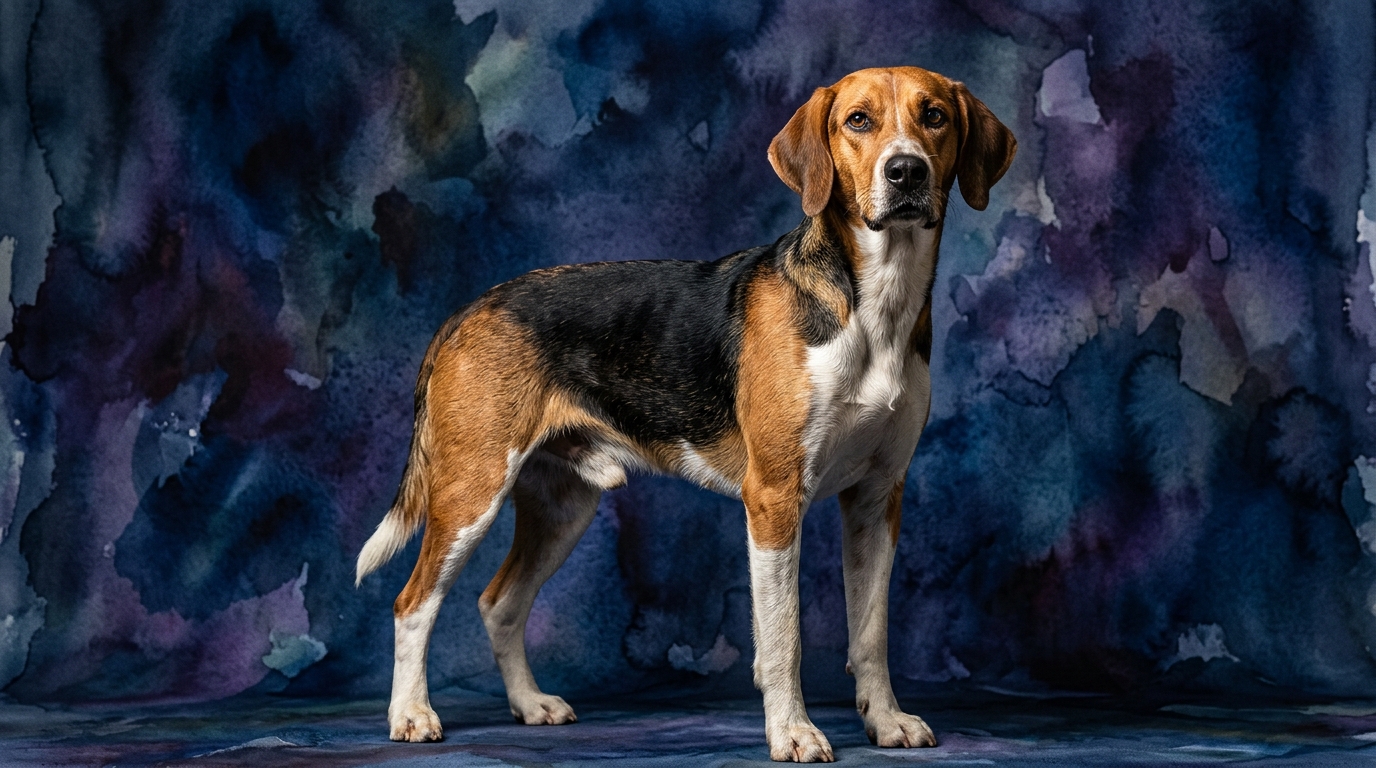
Side-by-Side IQ Profile: Neapolitan Mastiff vs. English Foxhound
The Neapolitan Mastiff's cognitive makeup is that of a thoughtful, protective guardian. Their Problem Solving (3/5) is rooted in practical, territorial defense; they excel at assessing threats within their domain and navigating their environment to effectively guard property and family. Their solutions are often direct, aimed at deterrence or containment, rather than abstract puzzles. Training Speed (3/5) requires patience and understanding of their independent, watchful nature; while capable of learning, compliance often stems from respect for a trusted leader, not inherent eagerness to please, making consistency key. Social Intelligence (3/5) is highly attuned to their immediate family's emotions and intentions, reading familiar human cues accurately, yet maintaining wariness of strangers; their social acumen is geared towards protection and bonding within their defined unit. Their Instinctive Drive (3/5) is overwhelmingly centered on guarding and protection, possessing a strong innate compulsion to survey territory and defend family, manifesting as territorial integrity rather than prey pursuit. Memory (3/5) is solid for routines, commands from trusted individuals, and distinguishing familiar from unfamiliar people/situations, retaining information relevant to their guarding duties.
In contrast, the English Foxhound embodies the unyielding tracker. Their Problem Solving (3/5) is almost entirely dedicated to olfactory challenges; they are expert navigators of complex scent trails, discriminating odors and overcoming obstacles to follow a specific scent. Their solutions are persistent and singularly focused on their hunting drive. Training Speed (3/5) indicates they are capable of learning, but their potent scent drive often overrides other impulses, making consistent recall a significant undertaking; it requires engaging methods and high-value rewards to compete with the allure of a good scent. Social Intelligence (3/5) sees them inherently social within a canine pack and generally friendly with people once introduced; their social intelligence revolves around understanding pack dynamics and functioning as part of a group, less on subtle individual human emotions. Their Instinctive Drive (3/5) is defined by an overwhelming drive for scent work and sustained pursuit, possessing incredible stamina and an insatiable desire to hunt, a powerful drive that often dictates their behavior. Memory (3/5) is excellent for scent trails and routes, recalling complex paths, and while they remember training routines, potent instinctive drives can frequently overshadow learned behaviors when a compelling scent is present.
Where the Neapolitan Mastiff Wins Cognitively
The Neapolitan Mastiff excels in nuanced situational awareness, particularly regarding their territory and the people within it. They demonstrate superior threat assessment, discerning subtle environmental changes or visitor demeanor indicative of concern. This involves refined social intelligence focused on evaluating intent from strangers and prioritizing family safety. For instance, they quickly differentiate welcomed guests from intruders based on observed cues, applying protective instincts with a degree of measured judgment. Their cognitive strength lies in security-focused problem-solving, demanding quiet vigilance and a strong memory for what constitutes "normal" in their environment.
Where the English Foxhound Wins Cognitively
The English Foxhound's cognitive triumphs are deeply embedded in its unparalleled olfactory processing and relentless pursuit. Their problem-solving abilities are masterfully applied to scent discrimination and tracking, enabling them to follow incredibly faint or complex trails over vast distances and varied terrain. This involves sophisticated mental mapping based entirely on scent, navigating obstacles and maintaining singular focus for hours. Their strength is filtering out irrelevant information to concentrate on their primary drive, demonstrating an extraordinary capacity for sustained attention within their specialized domain. Exceptional memory for specific scent patterns and routes allows them to recall and re-engage with trails.
Which is Easier to Train and Why
Despite identical 3/5 training scores, ease of training differs significantly between these breeds. Training the Neapolitan Mastiff hinges on establishing a strong, respectful bond and consistent leadership. They don't blindly obey; instead, they weigh commands against their protective duties, requiring patience and a firm, fair hand. Their independence means compliance is contingent on trust, not always speed; a recall might be ignored if a perceived threat exists. The English Foxhound presents greater hurdles due to overwhelming instinctive drive. Once on a scent, focus narrows, making recall notoriously difficult in open environments. Their social intelligence prioritizes pack dynamics over singular human direction when instinct takes over. Training requires extraordinary consistency, high-value rewards to compete with scent allure, and often secure spaces, as ingrained hunting instincts frequently override learned obedience.
Which Suits Active Owners vs. Relaxed Owners
The Neapolitan Mastiff generally suits a more relaxed owner in terms of physical exertion, needing moderate exercise like short walks and yard access, not endurance activities. However, they demand a highly attentive, confident leader for consistent socialization and firm guidance. Their cognitive needs involve mental stimulation through routine and a stable environment, managing their powerful presence and independent mind. The English Foxhound is unequivocally for an active owner. They possess immense stamina and need vigorous daily exercise and mental engagement via scent work. Long runs, extensive secure walks, or dog sports are essential. A bored Foxhound is prone to destructive behaviors, barking, and escape attempts, driven by powerful instincts and energy. They thrive with owners embracing an outdoor lifestyle, dedicated to fulfilling their needs for movement and mental stimulation.
The Verdict
Choose a Neapolitan Mastiff if you are an owner seeking a devoted, imposing guardian who values a calm, watchful presence and understands the commitment to consistent socialization, firm leadership, and patient training to manage a powerful, independent dog, providing a stable, structured environment over intense physical demands.
Opt for an English Foxhound if you possess an active lifestyle, enjoy extensive outdoor adventures, and are prepared to engage with a dog whose primary motivation is scent work and sustained physical activity, ready for challenges managing their powerful instincts, often requiring extensive containment and specialized training to channel their boundless drive effectively.
🧠 Find Your Pet's IQ Score
Our Pet IQ Lab assessment covers 25+ tests across 5 cognitive dimensions — personalized to your breed.
Take the Full IQ Test →Frequently Asked Questions
Do Neapolitan Mastiffs and English Foxhounds have similar temperaments due to their identical IQ scores?
Not necessarily. While their cognitive scores are identical across our dimensions, their underlying temperaments and how they apply their intelligence differ significantly. Neapolitan Mastiffs are typically reserved, watchful guardians, while English Foxhounds are more outgoing, energetic, and driven by scent.
Can an English Foxhound be trained for protection work like a Neapolitan Mastiff?
It is highly unlikely. The English Foxhound's instinctive drive is geared towards scent tracking and hunting, not territorial guarding or personal protection. Their social intelligence and problem-solving are focused on following a trail, whereas the Neapolitan Mastiff is inherently wired for discerning threats and defending its family and property.
Are either of these breeds suitable for first-time dog owners?
Generally, neither breed is recommended for first-time dog owners. Both have powerful instincts and independent natures that require experienced handling, consistent training, and a deep understanding of their specific breed traits to ensure they develop into well-adjusted companions.