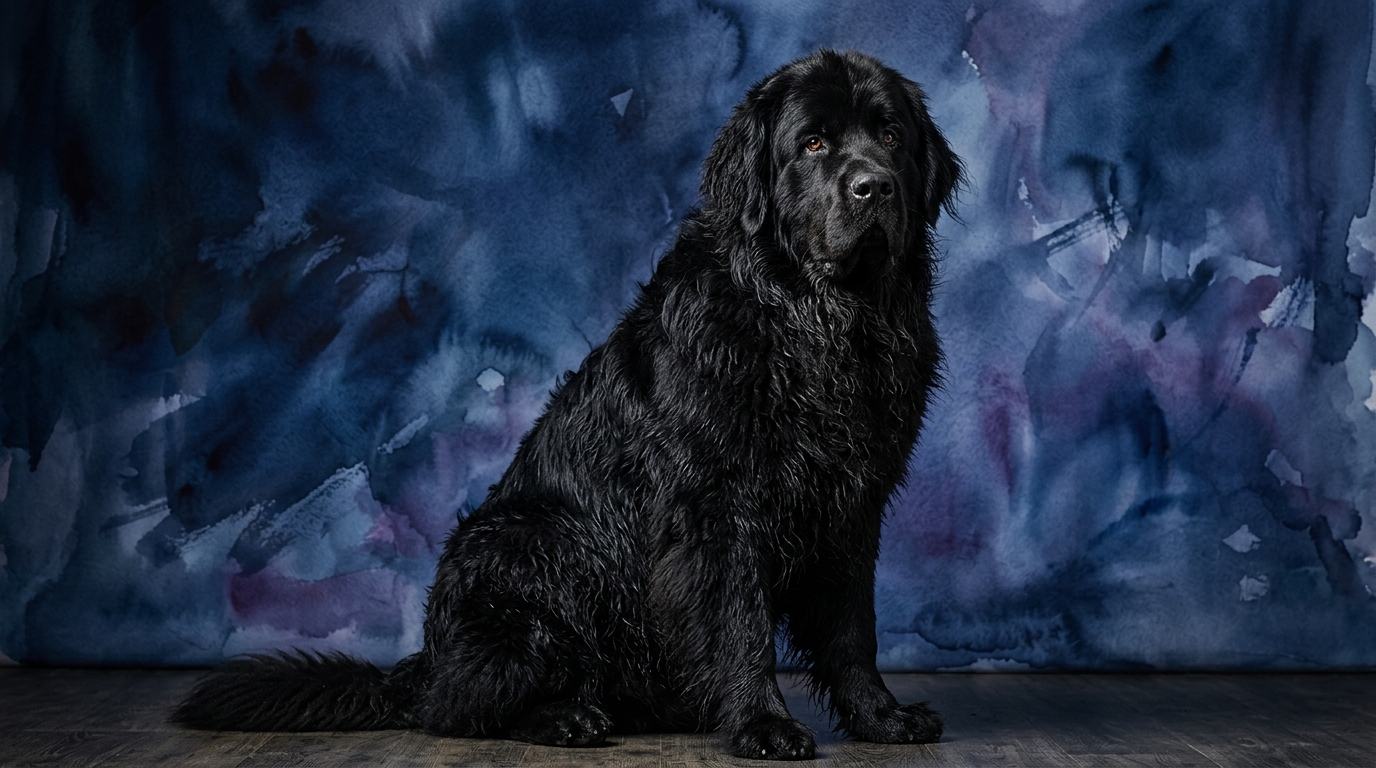

Side-by-Side IQ Profile: Newfoundland vs. Airedale Terrier
At The Cosmic Pet Pet IQ Lab, we analyze canine intelligence across five key dimensions. For the Newfoundland (Coren rank #34) and the Airedale Terrier (Coren rank #29), their scores illuminate distinct cognitive blueprints.
In **Problem Solving**, the Airedale Terrier scores 4/5, subtly outperforming the Newfoundland at 3/5. This suggests the Airedale often demonstrates greater ingenuity when faced with novel obstacles, perhaps more inclined to try different approaches independently. The Newfoundland, while capable, might prefer to follow established routines or seek human guidance when confronted with unfamiliar challenges.
Both breeds achieve a robust 4/5 in **Training Speed**. This indicates that both the Newfoundland and the Airedale Terrier are proficient at acquiring new commands and routines with appropriate instruction. The nuance lies not in their ability to learn quickly, but potentially in their motivation and compliance once learned, which ties into other cognitive dimensions.
A significant divergence appears in **Social Intelligence**, where the Newfoundland shines with a perfect 5/5, contrasting with the Airedale Terrier's 3/5. Newfoundlands possess an exceptional capacity to read human emotions, intentions, and body language, often appearing highly attuned to their owners' states. Airedale Terriers, while forming strong bonds, tend to be more independent in their social interactions, perhaps less inclined to continuously seek and interpret subtle human cues.
For **Instinctive Drive**, the Newfoundland again leads with 5/5, while the Airedale scores 3/5. This reflects the Newfoundland's powerful, innate inclination towards water rescue, guarding, and caretaking behaviors, deeply rooted in their heritage. The Airedale's instinctive drives are more aligned with their terrier roots—hunting, digging, and independent pursuit—but these are perhaps less directed towards collaborative working tasks with humans in the same way as the Newfoundland's.
Finally, both breeds share an impressive 4/5 score in **Memory**. This indicates both the Newfoundland and the Airedale Terrier possess strong recall for commands, routines, and experiences. They are capable of remembering learned behaviors over extended periods, making consistent training efforts fruitful in the long term.
Where the Newfoundland Wins Cognitively
The Newfoundland's cognitive strengths shine brightest in areas requiring empathy, cooperation, and a deep understanding of social dynamics. Their perfect 5/5 in social intelligence means they are master interpreters of human non-verbal communication, often anticipating needs or moods without explicit commands. This translates into a profound capacity for emotional support and intuitive companionship, making them highly responsive to distress or subtle shifts in their human family's demeanor.
Furthermore, their 5/5 instinctive drive isn't merely about physical capability; it speaks to a powerful, intrinsic motivation to protect and aid, particularly in water-related scenarios. This drive combines with their social intelligence to make them incredibly dedicated and reliable partners in tasks requiring selflessness and a strong sense of duty, such as therapy work or water rescue. While their problem-solving score is moderate, their robust memory (4/5) ensures they retain complex learned protocols for these crucial tasks, relying on practiced solutions rather than constant novel improvisation. A Newfoundland will often prioritize the well-being of their human companions, making decisions rooted in their strong social and protective instincts.
Where the Airedale Terrier Wins Cognitively
The Airedale Terrier's cognitive advantages are concentrated in areas demanding independent thought, resourcefulness, and adaptability to new scenarios. With a 4/5 in problem-solving, the Airedale often displays a greater knack for figuring out how to overcome obstacles or achieve goals without direct human intervention. This could manifest as cleverly opening gates, navigating complex environments, or devising unique strategies to retrieve a toy.
This self-reliance is a hallmark of their terrier heritage, where independent action was crucial for hunting vermin. While their social intelligence is lower (3/5), this doesn't imply a lack of affection, but rather a preference for processing information and making decisions based on their own assessment of a situation, rather than constantly deferring to human cues. Their 4/5 training speed and memory indicate they learn and retain commands effectively, but their application of these commands might be filtered through a lens of independence. An Airedale is more likely to challenge a command if they perceive a more efficient or engaging alternative, demonstrating a cognitive flexibility that prioritizes outcome over strict adherence. This breed thrives on mental challenges that allow them to exercise their ingenuity and critical thinking skills.
Which is Easier to Train and Why
While both breeds score identically (4/5) in training speed, the *ease* of training can differ significantly due to their other cognitive profiles. The Newfoundland, with its exceptional social intelligence (5/5) and strong instinctive drive (5/5), often presents as more straightforward to train for compliance. They possess a deep desire to please their human companions and are highly attuned to their trainers' feedback, making them eager participants in structured learning. Their powerful protective instincts also mean they are often inherently motivated by tasks that involve caretaking or helping.
When a Newfoundland learns a command, they are typically reliable in executing it because their social bond and inherent drive align with cooperation. Conversely, the Airedale Terrier, despite learning commands quickly (4/5), can be perceived as more challenging due to its higher problem-solving score (4/5) and lower social intelligence (3/5). An Airedale is a thinker, often weighing the utility of a command against their own perceived goals or interests. They might learn a behavior rapidly but choose to perform it only if it serves their purpose or if the reward is sufficiently enticing. Their independent nature means they require a trainer who can consistently engage their intellect, provide clear motivation, and establish a relationship built on mutual respect, rather than expecting unquestioning obedience. Training an Airedale often involves more creativity and patience to channel their independent spirit productively.
Which Suits Active Owners vs. Relaxed Owners
The choice between a Newfoundland and an Airedale Terrier often boils down to an owner's lifestyle and their preferred level of engagement. Relaxed owners, or those seeking a companion that integrates seamlessly into a calm household rhythm, will often find the Newfoundland more suitable. Their high social intelligence and gentle disposition mean they thrive on close family bonds and are generally content with moderate exercise, such as daily walks and opportunities for swimming. They are not typically driven by a need for constant mental puzzles or high-intensity physical activity beyond their specific working drives. A Newfoundland's cognitive makeup allows them to be incredibly patient and observant, making them excellent companions for quiet evenings or long, reflective periods.
Conversely, active owners who enjoy engaging their dogs in complex activities and consistent mental stimulation will likely find the Airedale Terrier a more fulfilling match. Their problem-solving acumen and independent spirit mean they require regular challenges to prevent boredom and destructive behaviors. Activities like advanced obedience, agility, tracking, or even mock hunting scenarios can tap into their cognitive strengths. An Airedale thrives with owners who can provide structure, consistent training, and diverse experiences that allow them to use their intellect and physical prowess regularly, making them ideal for individuals who lead dynamic lifestyles.
The Verdict
Choose a Newfoundland if you seek a deeply empathetic, gentle companion who thrives on social connection and cooperative tasks, valuing intuitive understanding and calm companionship.
Opt for an Airedale Terrier if you desire an independent, resourceful partner who excels at problem-solving and requires consistent mental and physical engagement from an active owner.
🧠 Find Your Pet's IQ Score
Our Pet IQ Lab assessment covers 25+ tests across 5 cognitive dimensions — personalized to your breed.
Take the Full IQ Test →Frequently Asked Questions
Do Newfoundlands enjoy learning new tricks?
Yes, Newfoundlands enjoy learning new tricks, especially when it involves pleasing their owners. Their strong social intelligence (5/5) and good memory (4/5) mean they pick up commands quickly and retain them well, making training a rewarding bonding experience.
Are Airedale Terriers good at figuring things out on their own?
Absolutely. Airedale Terriers score high in problem-solving (4/5) and are known for their independent nature. They often devise clever solutions to access desired items or navigate tricky situations, making them quite resourceful.
Which breed is more likely to follow commands without hesitation?
The Newfoundland, with its higher social intelligence (5/5) and eagerness to please, is generally more inclined to follow commands without hesitation. Airedale Terriers, while learning quickly, might pause to assess a command's utility or challenge it with their independent thought.