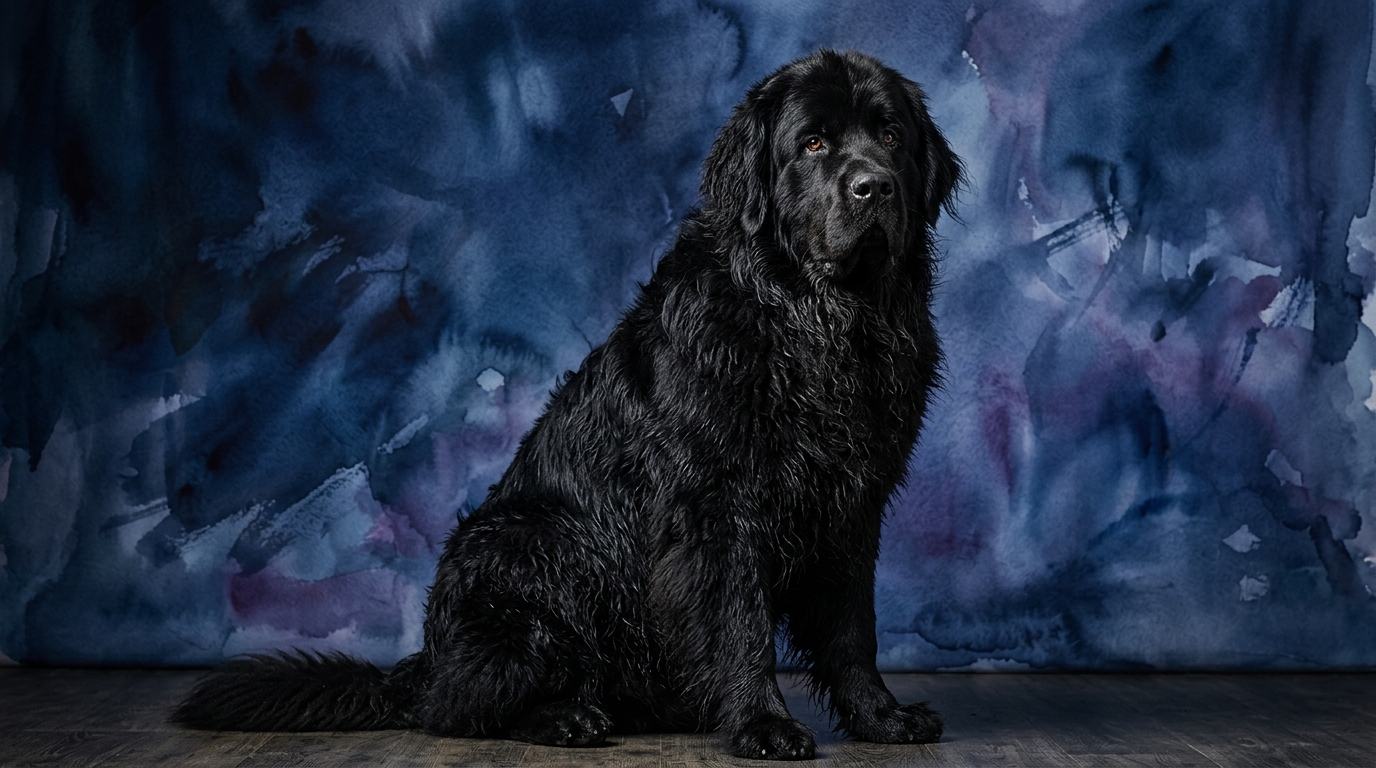
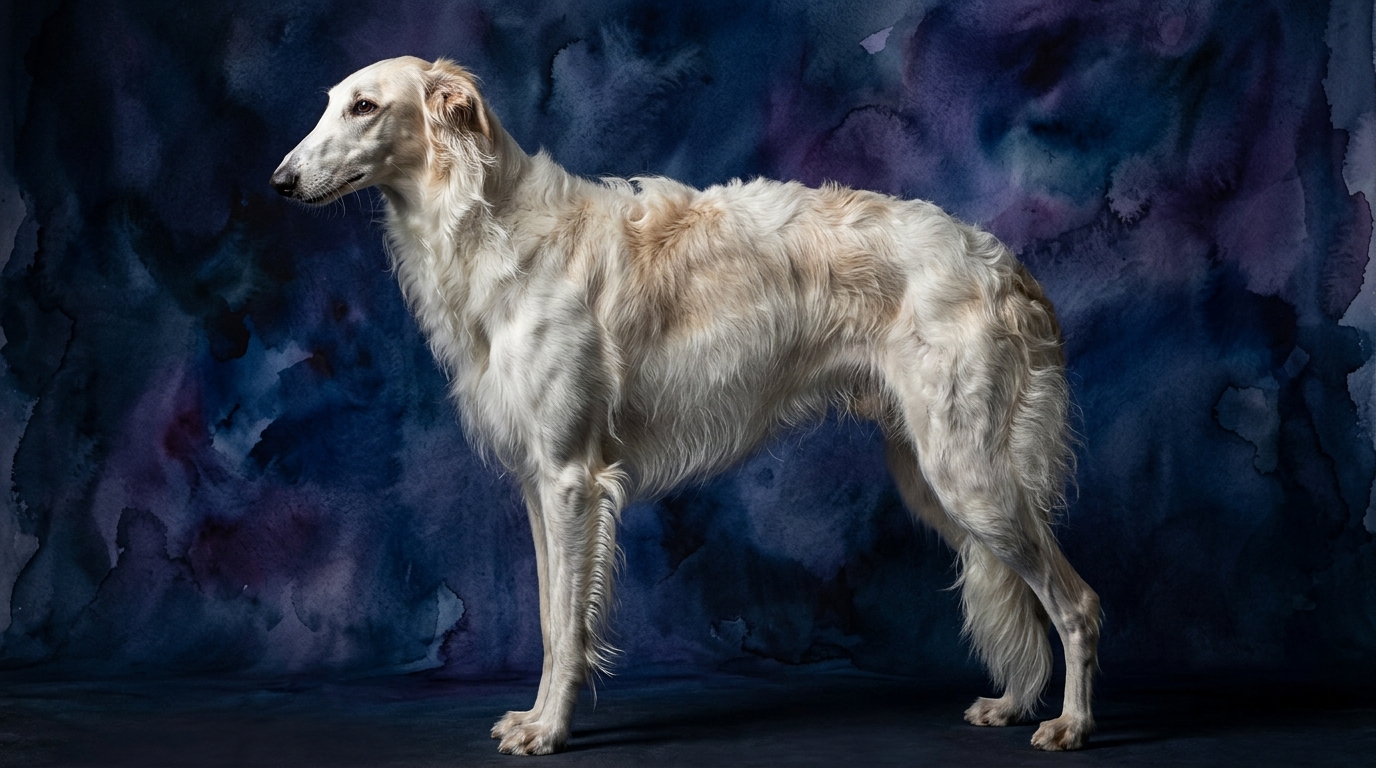
Side-by-Side IQ Profile: Newfoundland vs. Borzoi
The Newfoundland, ranked #34 in Coren's hierarchy, exhibits a cognitive profile deeply rooted in its working heritage. Its problem-solving ability, rated 3/5, allows it to navigate complex, real-world scenarios, particularly those involving water rescue or obstacle negotiation, demonstrating practical understanding rather than abstract puzzle-solving. Training speed is a strong 4/5, as these dogs are eager to please and highly responsive to positive reinforcement, grasping new commands quickly due to their desire for connection. Social intelligence stands out at a perfect 5/5, indicating an unparalleled capacity to read human emotions, anticipate needs, and form profound empathetic bonds, making them exceptional therapy and service animals. Their instinctive drive, also 5/5, is a powerful force geared towards water rescue and protection, guiding their actions with intrinsic motivation. Memory is rated 4/5, meaning they retain learned behaviors, training cues, and associations effectively over long periods, recalling specific people and places with clarity.
In contrast, the Borzoi, ranked #75, presents a cognitive makeup shaped by its sighthound legacy. Its problem-solving, rated 3/5, is acutely focused on tasks related to hunting, such as dynamically navigating varied terrain during a chase or anticipating prey movement; this intelligence is highly context-specific to their drive. Training speed is 3/5; while capable of learning commands, their independent nature often necessitates more repetition and consistent, interest-aligned motivation. Social intelligence is 3/5; Borzoi are affectionate with their immediate families but can be reserved with strangers, often preferring a dignified distance and more selective social interactions. Their instinctive drive is 3/5, primarily driven by a strong sighthound prey drive, intently focused on visual stimuli and the thrill of the chase, which is powerful but selective in its application. Memory is 3/5, allowing them to recall routines and commands, though their independent streak might sometimes suggest selective hearing; they retain important associations, particularly those related to their environment and family.
Where the Newfoundland Wins Cognitively
The Newfoundland's cognitive profile truly shines in areas demanding profound social understanding and proactive, selfless action. Their 5/5 rating in social intelligence isn't just about reading a wagging tail; it signifies an exceptional capacity to interpret subtle human cues, anticipate needs, and offer comfort or assistance without direct command. This breed can often sense distress before it's explicitly shown, making them unparalleled as emotional support or rescue partners. Furthermore, their instinctive drive, also rated 5/5, is geared towards collaboration and preservation. Unlike a prey drive, which is singular in its focus, the Newfoundland's drive is a complex interplay of protective instincts, water affinity, and an innate desire to aid. This translates into an ability to independently assess dangerous situations, such as a person struggling in water, and initiate a rescue, often making complex decisions on the fly without human intervention. Their strong memory (4/5) further supports this by allowing them to quickly recall safety protocols and previous successful strategies in critical moments.
Where the Borzoi Wins Cognitively
The Borzoi’s cognitive strengths are deeply rooted in their sighthound heritage, offering a distinct set of advantages primarily revolving around independent pursuit and environmental navigation. While their problem-solving is rated 3/5, this score reflects a specific kind of intelligence: the ability to rapidly analyze and adapt to dynamic, fast-paced situations during a chase. They excel at spatial reasoning, calculating trajectories, and anticipating the movements of a fast-moving target across varied terrain. This isn't about solving a puzzle box, but rather about real-time, high-stakes decision-making in an open field. Their instinctive drive (3/5), though lower than the Newfoundland's, is acutely focused on visual stimuli and the mechanics of the chase. This singular focus allows for incredible precision and speed in action, unburdened by the need for constant human direction once a target is sighted. This independent decision-making during a pursuit is a hallmark of their intelligence, allowing them to operate autonomously and efficiently in their specialized role, leveraging their memory (3/5) to recall successful hunting patterns and terrain features.
Which is Easier to Train and Why
When considering ease of training, the Newfoundland generally presents a more straightforward path for the average owner. Their 4/5 training speed rating is directly bolstered by their exceptional social intelligence (5/5) and strong desire for companionship. Newfoundlands are highly attuned to their owner's emotions and body language, making them keen learners who actively seek to understand and comply. They respond very well to positive reinforcement, viewing training as a collaborative activity that strengthens their bond with their human. Their inherent working drive means they enjoy having a 'job' and thrive on purposeful interaction, making them receptive to various commands and complex tasks. For example, a Newfoundland will quickly understand that retrieving a specific item for their owner earns praise and reinforces their bond, making them eager to repeat the action.
In contrast, the Borzoi, with a 3/5 training speed, demands a different approach. Their sighthound independence means they are less inherently motivated to simply 'please' their human and are more inclined to follow their own instincts, particularly if something visually stimulating catches their eye. Training a Borzoi requires immense patience, consistency, and finding ways to make the learning process engaging and rewarding *for them*, often by incorporating elements of chase or problem-solving that appeal to their natural drives. While perfectly capable of learning, their selective attention and preference for autonomy mean that owners must be creative in maintaining their focus and motivation, understanding that a Borzoi might choose to 'consider' a command before executing it. For instance, teaching recall might require making the 'come' command synonymous with an exciting chase game rather than just a polite request.
Which Suits Active Owners vs. Relaxed Owners
The terms 'active' and 'relaxed' owner take on different meanings when considering these two breeds. A Newfoundland, while not a high-speed athlete, requires an owner who is actively engaged in their mental and social well-being. Their deep social intelligence and working drive mean they thrive on purposeful interaction, structured training sessions, and opportunities to 'help.' Owners who enjoy long, steady walks, water-based activities, or even canine good citizen work will find a Newfoundland a willing and enthusiastic partner. They are suited for owners who are active in their companionship and dedicated to regular grooming, but perhaps less so for those seeking a running buddy for marathons; their activity is more about endurance and collaboration. This breed seeks an owner who actively participates in their daily life beyond just physical exercise.
Conversely, the Borzoi is an ideal match for owners who understand and can accommodate their unique physical activity needs: intense, short bursts of running in a safely enclosed space. While they are often described as '45 mph couch potatoes' indoors, they absolutely require outlets for their powerful sighthound instincts. This means owners must be active in providing secure areas for full-speed sprints, but they can otherwise be very relaxed companions within the home, content to lounge elegantly for much of the day. They suit owners who appreciate their independent nature and can provide dedicated time for their specific exercise requirements without expecting constant mental engagement or structured activities. An owner who enjoys a tranquil home life but can commit to daily, high-intensity outdoor sprints will find a Borzoi a fitting companion.
The Verdict
Choose a Newfoundland if you seek a deeply empathetic, collaborative companion eager to engage in structured activities and capable of making independent, selfless decisions in real-world scenarios. Their devotion and working drive make them exceptional family members and partners in purpose-driven tasks.
Opt for a Borzoi if you appreciate a dignified, independent companion who thrives on intense bursts of physical activity and excels at autonomous decision-making in pursuit. They are suited for owners who can provide secure spaces for their powerful sprints and value a calm, elegant presence in the home.
🧠 Find Your Pet's IQ Score
Our Pet IQ Lab assessment covers 25+ tests across 5 cognitive dimensions — personalized to your breed.
Take the Full IQ Test →Frequently Asked Questions
Do Newfoundlands bark a lot?
Newfoundlands are generally not excessive barkers. They may bark to alert their family to strangers or unusual situations, but their social intelligence means they are often discerning and not prone to nuisance barking.
Are Borzoi good with other pets?
Borzoi can coexist peacefully with other pets, especially if raised with them from a young age. However, their strong sighthound prey drive means caution is needed with smaller, fast-moving animals, and proper introductions are crucial.
What kind of mental stimulation do Newfoundlands need?
Newfoundlands thrive on mental stimulation that involves problem-solving, learning new commands, and engaging in collaborative tasks. Activities like scent work, puzzle toys, and advanced obedience training satisfy their desire for purpose and connection.