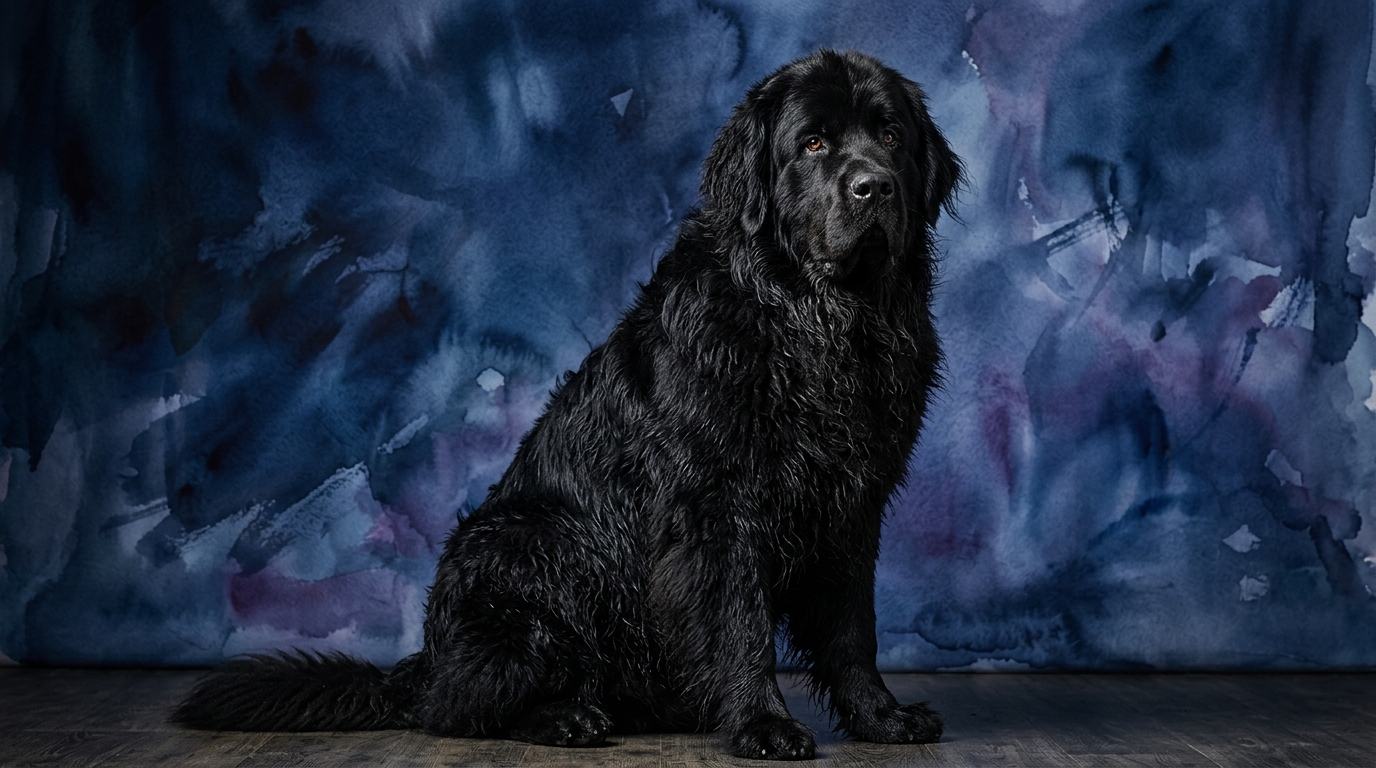

Side-by-Side IQ Profile: Newfoundland vs. Cane Corso
The Cosmic Pet Pet IQ Lab employs a multi-dimensional approach to assess canine intelligence, moving beyond simple obedience to explore problem-solving, training speed, social intelligence, instinctive drives, and memory. For the Newfoundland, a breed ranked #34 by Coren for working and obedience intelligence, these metrics paint a picture of a highly intuitive and cooperative companion.
Newfoundland Cognitive Profile: Problem Solving (3/5) — These dogs demonstrate an average capacity for navigating novel challenges, capable of figuring out moderately complex tasks with some persistence. They aren't typically the ones to invent elaborate escape routes, but they can adapt to routine changes and learn sequential actions effectively. Training Speed (4/5) — The Newfoundland exhibits an above-average pace in acquiring new commands and behaviors. Their receptiveness to instruction and desire to please often translates into relatively swift learning sessions, making them responsive students. Social Intelligence (5/5) — Here, the Newfoundland truly shines, possessing an exceptional ability to interpret human emotions, body language, and social cues. This profound empathy allows them to form deep bonds and respond intuitively to their family's needs, often anticipating desires. Instinctive Drive (5/5) — Their ancestral role as water rescue dogs manifests in an exceptional, innate drive to aid and protect, particularly in aquatic environments. This powerful instinct is deeply ingrained, guiding their natural inclination towards service and vigilance. Memory (4/5) — Newfoundlands showcase an above-average memory, retaining learned commands, routines, and experiences over extended periods. This reliability contributes to their consistent performance and ability to recall past interactions.
The Cane Corso, while not Coren-ranked, presents a distinct cognitive makeup, geared towards their historical role as guardians and protectors.
Cane Corso Cognitive Profile: Problem Solving (3/5) — Like the Newfoundland, the Cane Corso displays an average aptitude for problem-solving. They can assess and address moderate environmental challenges, often relying on their physical presence and direct approach rather than intricate strategizing. Training Speed (3/5) — The Cane Corso learns at an average pace, requiring consistent, clear instruction and repetition to solidify new commands. Their training progress is steady, but may not be as rapid as breeds with higher scores in this dimension. Social Intelligence (3/5) — This breed possesses an average understanding of social cues, capable of discerning basic human intentions but perhaps not with the nuanced sensitivity of more socially astute breeds. Their focus tends to be more on their immediate task or perceived threat. Instinctive Drive (3/5) — The Cane Corso’s instinctive drives, primarily related to guarding and protection, are present at an average intensity. While dedicated to their role, these drives are typically focused and less broadly expressed than the Newf's encompassing rescue instinct. Memory (3/5) — Exhibiting an average memory, Cane Corsos retain information adequately, remembering commands and past experiences. Consistency in training and routine helps to reinforce their recall.
Where Newfoundland Wins Cognitively
The Newfoundland's cognitive profile reveals distinct advantages, particularly in their social and instinctive capacities. Their exceptional social intelligence (5/5) allows them to connect with humans on a deeply empathetic level, interpreting subtle shifts in mood and intention with remarkable accuracy. This means a Newfoundland often seems to "know" when a family member needs comfort or space, responding with an innate gentleness that few breeds can match. This high social acumen contributes significantly to their role as devoted family companions and therapy animals, where understanding nuanced human interaction is paramount.
Furthermore, their superior training speed (4/5) compared to the Cane Corso (3/5) means Newfoundlands typically grasp new commands and routines more quickly, reducing the overall time and effort required in basic and advanced obedience. This responsiveness stems from a strong desire to cooperate and a clear understanding of human directives. The Newfoundland's powerful instinctive drive (5/5), specifically for water rescue, is a specialized cognitive strength. While it's a drive, it's underpinned by a complex understanding of how to assess a situation and act decisively to help, demonstrating a unique application of problem-solving in a life-saving context. This isn't just brute force; it's an intelligent application of their physical capabilities guided by a strong ethical compass.
Where Cane Corso Wins Cognitively
While the Cane Corso's individual cognitive scores might appear average compared to the Newfoundland's peaks, their strength lies in the cohesive application of their attributes for specific purposes. Their problem-solving (3/5) combined with their instinctive drive (3/5) for protection, while not as high as the Newf's in raw score, translates into a focused, resilient cognitive approach to guardianship. They excel at assessing potential threats and making independent decisions within their designated territory, often without requiring direct human instruction in every instance. This capacity for autonomous, situation-specific judgment is a profound cognitive asset for their role.
Unlike the Newf's broad, empathetic social intelligence, the Cane Corso's more contained social understanding allows for a less emotionally reactive, more objective assessment of strangers or unusual circumstances. This can be an advantage in roles requiring a certain level of detachment and vigilance. Their average memory (3/5) and training speed (3/5), while not flashy, mean they are capable of solid, reliable learning when consistency is provided. Their cognitive approach is often characterized by a determined focus and a practical, no-nonsense application of their abilities, making them exceptionally reliable in their protective duties once trained. They exhibit a stoic persistence, which, while not scoring high on "speed," demonstrates a robust mental fortitude.
Which is Easier to Train and Why
Based on their cognitive profiles, the Newfoundland is generally easier to train than the Cane Corso. The primary drivers for this difference are the Newfoundland's superior social intelligence (5/5 vs. Cane Corso's 3/5) and faster training speed (4/5 vs. Cane Corso's 3/5). A Newfoundland's exceptional ability to read human cues means they are highly attuned to their owner's intentions, tone of voice, and body language. This profound understanding allows them to quickly grasp what is being asked of them, often anticipating commands or responding to subtle signals. Their strong desire to please and cooperate, stemming from their social acumen, makes them eager participants in training sessions.
For instance, a Newfoundland is more likely to offer a desired behavior after just a few repetitions because they've accurately interpreted the human's reward signals and intent. In contrast, the Cane Corso, with its average social intelligence, may require more explicit, consistent, and less nuanced communication during training. They tend to be more independent thinkers, which means they might evaluate a command and decide whether it aligns with their current priorities before complying. Their average training speed suggests that while they are certainly capable of learning, the process will typically require more repetitions and a more direct, perhaps less emotionally-driven, approach from the trainer. Behavioral differences manifest in the Newf's tendency to be highly receptive to positive reinforcement and praise, thriving on the social connection forged during training. The Cane Corso, while also responding to positive reinforcement, might require a more structured, firm, and consistent approach to establish authority and ensure compliance, particularly given their guarding instincts.
Which Suits Active Owners vs. Relaxed Owners
Understanding the cognitive and inherent drives of these breeds helps align them with suitable lifestyles. The Newfoundland, despite its impressive physical presence, often thrives with more relaxed owners who can appreciate their calm demeanor and profound social connection. Their exceptional social intelligence (5/5) means they are highly content being a central, integrated part of family life, often preferring quiet companionship to constant high-intensity activity. While they certainly need regular exercise, especially swimming to satisfy their instinctive drive (5/5), they are not typically high-strung and adapt well to a comfortable home environment. Owners who enjoy long, leisurely walks, water activities, and a deeply affectionate, gentle presence will find a Newfoundland a perfect match. Their above-average memory (4/5) and training speed (4/5) also mean they integrate smoothly into established routines without constant mental stimulation demands that might challenge other breeds.
In contrast, the Cane Corso is better suited for active, experienced owners who can provide consistent structure, firm guidance, and ample mental and physical engagement. Their problem-solving (3/5) and instinctive drive (3/5) for protection, while not as overtly expressed as the Newf's, require an owner who understands how to channel these traits productively. They are not dogs content to be couch potatoes; they need a "job" or purpose, whether it's structured training, protection work, or demanding physical exercise. An active owner who enjoys rigorous daily exercise, advanced obedience, or dog sports will find the Cane Corso a dedicated partner. Their average social intelligence means they require clear, consistent leadership to thrive, making them a better fit for individuals comfortable establishing and maintaining a strong hierarchical relationship.
The Verdict
Choose a Newfoundland if you seek a profoundly empathetic companion who integrates seamlessly into family life with a gentle nature, quick training response, and a strong, innate desire to connect and serve.
Opt for a Cane Corso if you are an experienced, active owner ready to provide consistent, firm leadership and structured engagement for a steadfast, protective companion with a robust, independent cognitive approach.
🧠 Find Your Pet's IQ Score
Our Pet IQ Lab assessment covers 25+ tests across 5 cognitive dimensions — personalized to your breed.
Take the Full IQ Test →Frequently Asked Questions
Does a Newfoundland's high instinctive drive make them difficult to manage?
Not necessarily; their exceptional instinctive drive for water rescue is often channeled positively. With proper training and opportunities to engage this instinct, such as swimming, it becomes a fulfilling outlet rather than a management challenge, reflecting their innate desire to help.
Given the Cane Corso's average social intelligence, do they struggle to bond with their families?
No, Cane Corsos form deep bonds with their families, but their expression of social intelligence is different. While they may not read subtle human emotions with the same nuance as a Newfoundland, they are fiercely loyal and protective, demonstrating their bond through steadfast vigilance and dedication to their inner circle.
How does the Coren ranking affect the perception of the Cane Corso's intelligence?
The Coren ranking primarily assesses obedience and working intelligence in specific, structured tasks. The Cane Corso not being ranked doesn't mean a lack of intelligence, but rather that their cognitive strengths might lie more in independent thought, situational awareness, and problem-solving within their guarding role, which isn't directly measured by the Coren scale.