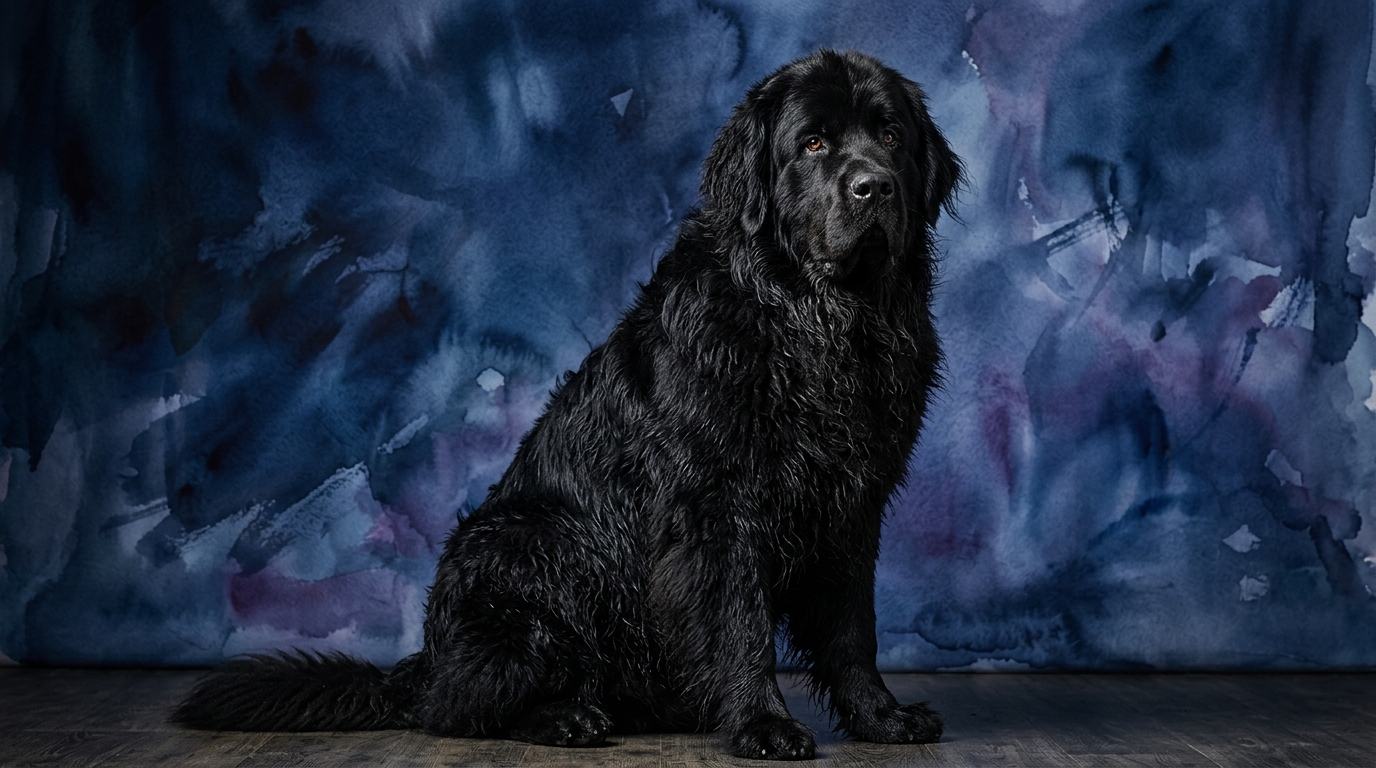
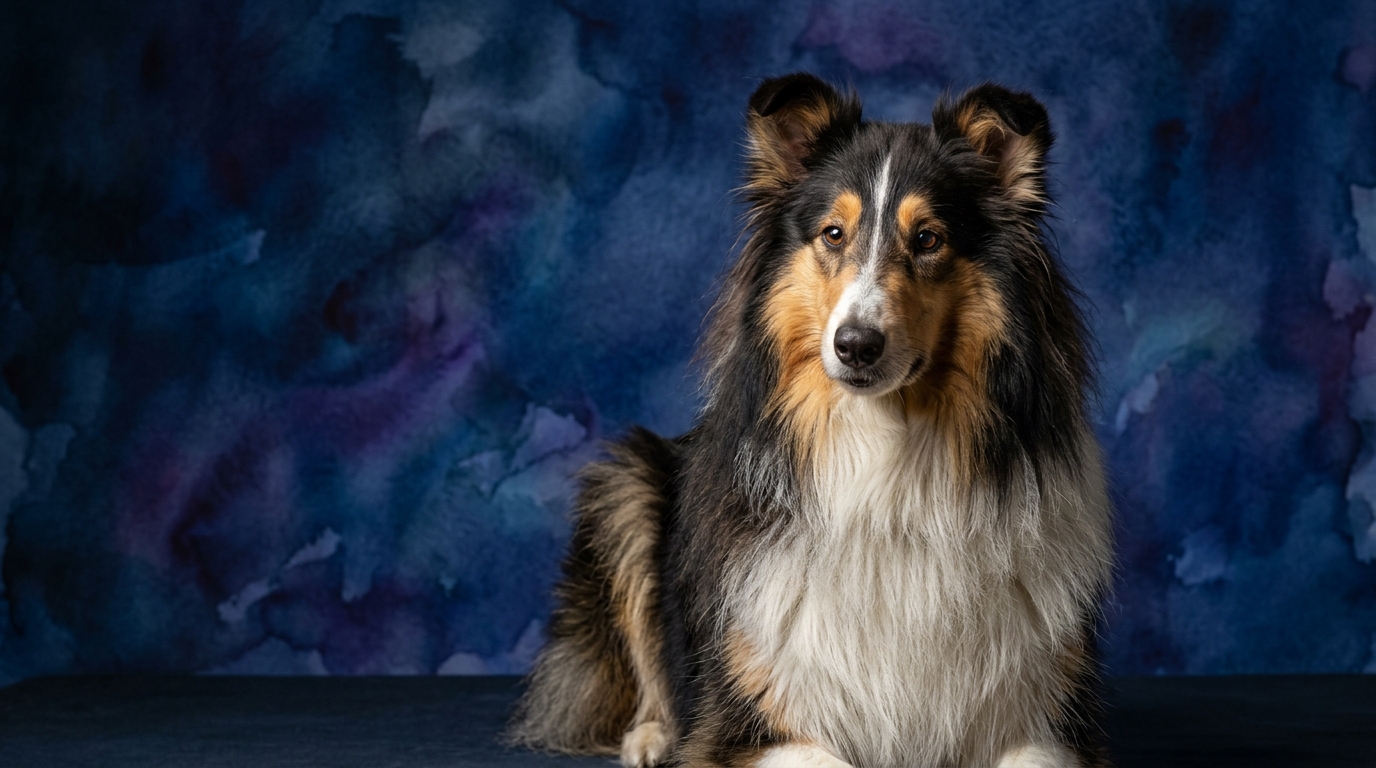
Side-by-Side IQ Profile: Newfoundland vs. Rough Collie
The Cosmic Pet Pet IQ Lab employs a five-dimensional framework to assess canine intelligence, moving beyond simple obedience to encompass a broader spectrum of cognitive abilities. For the Newfoundland and the Rough Collie, these dimensions illuminate their unique mental landscapes, shaped by centuries of selective breeding for distinct tasks.
Newfoundland (Working Group, Coren Rank #34): This gentle giant’s cognitive strengths reflect its heritage as a water rescue and working dog.
Problem Solving (3/5): Newfoundlands exhibit practical problem-solving skills, primarily centered on achieving direct, robust solutions for tasks like water rescue, rather than engaging in complex abstract reasoning or multi-step puzzles unrelated to immediate, tangible objectives.
Training Speed (4/5): These dogs learn new commands and routines efficiently, with their eagerness to please and strong handler bond contributing to rapid comprehension, especially when training aligns with their cooperative and service-oriented nature.
Social Intelligence (5/5): A hallmark trait, Newfoundlands possess exceptional social acumen, demonstrating a deep attunement to human emotions and subtle social cues, which makes them outstanding therapy animals and empathetic family companions.
Instinctive Drive (5/5): Their powerful instinctive drive, rooted in their lineage as working water dogs, manifests as an innate desire to assist, rescue, and protect, motivating them strongly in tasks leveraging these natural, cooperative inclinations.
Memory (4/5): Newfoundlands retain learned commands, established routines, and significant experiences over time with good capacity, contributing to their consistent performance and reliability in various roles.
Collie (Rough) (Herding Group, Coren Rank #16): The elegant Rough Collie's intelligence is a testament to its pastoral origins, requiring independent thought and quick reflexes.
Problem Solving (4/5): Rough Collies display a more advanced capacity for strategic problem-solving, often devising creative solutions to novel obstacles, a trait honed by their herding background requiring independent decision-making and adaptability.
Training Speed (4/5): Similar to Newfoundlands, Rough Collies acquire new commands and behaviors with impressive speed, their desire to work and focused attention on their handler fostering rapid skill acquisition and responsiveness.
Social Intelligence (3/5): While affectionate within their families, Rough Collies possess a moderate level of social intelligence, tending to be more reserved or discerning with strangers and less overtly empathetic in broad social interactions outside their immediate circle.
Instinctive Drive (3/5): The Rough Collie's instinctive drive is primarily focused on herding, translating into a desire to gather, control, and protect, which is strong within its specific domain but less broadly applied to generalized assistance compared to the Newfoundland.
Memory (5/5): Collies excel in memory, demonstrating an outstanding ability to recall commands, complex sequences, and environmental details, crucial for intricate herding patterns, advanced obedience, and competitive sports.
Where Newfoundland Wins Cognitively
The Newfoundland's 5/5 score in social intelligence is a defining cognitive strength; this breed doesn't merely tolerate human interaction but actively seeks to comprehend and respond to it with profound empathy, making them exceptional emotional support animals and companions for those desiring a deeply intuitive canine presence that processes social information with remarkable depth.
With a 5/5 instinctive drive, the Newfoundland's natural inclination is towards cooperative service, particularly in water rescue and assistance, manifesting as an inherent desire to help and be useful in ways that directly benefit humans, especially in situations of distress, focusing on active, compassionate intervention rather than control.
Where Collie (Rough) Wins Cognitively
The Rough Collie's 4/5 problem-solving ability surpasses the Newfoundland's, showcasing a more strategic and adaptable approach to novel situations, a trait refined by their herding heritage where independent decisions to manage livestock were paramount; they are more prone to experimenting with solutions and learning from trial and error, making them adept at complex puzzle toys or multi-step logical tasks.
Scoring a perfect 5/5 in memory, the Rough Collie demonstrates superior recall, allowing them to master intricate sequences of commands, remember complex routes, and retain vast amounts of information over extended periods, a significant cognitive asset for owners interested in advanced obedience, agility, or competitive dog sports requiring precision and consistent performance.
The Rough Collie's higher Coren rank (#16 versus Newfoundland's #34) suggests a greater average capacity for understanding and obeying new commands; while Coren's ranking primarily assesses 'working and obedience intelligence,' their stronger problem-solving and memory contribute to this higher placement, indicating a quicker grasp of complex instructions and more consistent execution in structured tasks.
Which is Easier to Train and Why
Both breeds achieve a 4/5 in training speed, indicating efficient learning of new commands; however, the *nature* of their trainability diverges significantly: the Newfoundland's high social intelligence and strong cooperative instinctive drive mean they are profoundly motivated by pleasing their handler and being an integral part of a team, responding exceptionally well to positive reinforcement as training aligns with their innate desire to serve and bond.
The Rough Collie, equally swift in learning, leverages its superior problem-solving and memory, quickly grasping the *mechanics* of a command and retaining it with remarkable precision, often excelling in tasks demanding accuracy and sequential behaviors; while also eager to please, their motivation frequently stems from the satisfaction of mastering a task and the mental engagement it provides, making their training experience more intellectually driven and focused on intricate patterns.
Which Suits Active Owners vs. Relaxed Owners
Despite their considerable size, Newfoundlands are generally better suited for owners seeking a relaxed companionship, provided their specific needs for swimming or moderate, consistent exercise are met; their high social intelligence and lower demand for constant mental puzzles mean they thrive on routine, affection, and being an integrated, intuitive family member, with their 'active' needs often fulfilling their instinctive water work drive rather than high-impact sports.
Rough Collies, with their higher problem-solving and memory scores, are better suited for active owners who can consistently provide mental stimulation and engaging tasks; their herding background means they flourish when given a 'job,' whether it's advanced obedience, agility, trick training, or varied walks offering new sensory input, requiring owners who enjoy teaching new skills and participating in mentally challenging activities.
The Verdict
Opt for a Newfoundland if your home prioritizes profound social connection, an empathetic companion attuned to emotional nuances, and a dog with a gentle, innate drive to protect and assist, thriving in environments that appreciate their calm, cooperative nature and desire for closeness.
Select a Rough Collie if you seek a mentally agile partner for intricate training, enjoy engaging in problem-solving activities or dog sports, and appreciate a dog with exceptional recall and a strong desire for consistent, purposeful mental stimulation and complex tasks.
🧠 Find Your Pet's IQ Score
Our Pet IQ Lab assessment covers 25+ tests across 5 cognitive dimensions — personalized to your breed.
Take the Full IQ Test →Frequently Asked Questions
Is the Newfoundland truly less intelligent than the Rough Collie based on Coren rank?
Coren's ranking primarily assesses "working and obedience intelligence," focusing on how quickly a dog learns and obeys new commands. While the Rough Collie's higher rank suggests faster acquisition of obedience commands, the Newfoundland excels in other cognitive domains like social intelligence and instinctive cooperative drive, which Coren's ranking doesn't fully capture, indicating a different *type* of intelligence.
Do Newfoundlands and Rough Collies shed a lot?
Yes, both breeds possess thick double coats and are known for shedding. Newfoundlands have a dense, water-resistant coat that sheds moderately year-round with heavier seasonal shedding, while Rough Collies have a long, flowing coat that also sheds consistently, both requiring regular grooming to manage their fur.
Are these breeds good with children?
Newfoundlands are renowned for their gentle, patient, and protective nature, making them excellent family dogs and particularly good with children due to their high social intelligence and calm demeanor. Rough Collies are also generally good with children, often displaying a gentle and watchful demeanor, though their herding instincts might lead to gentle "nipping" or circling behaviors with very active children if not properly channeled and trained.